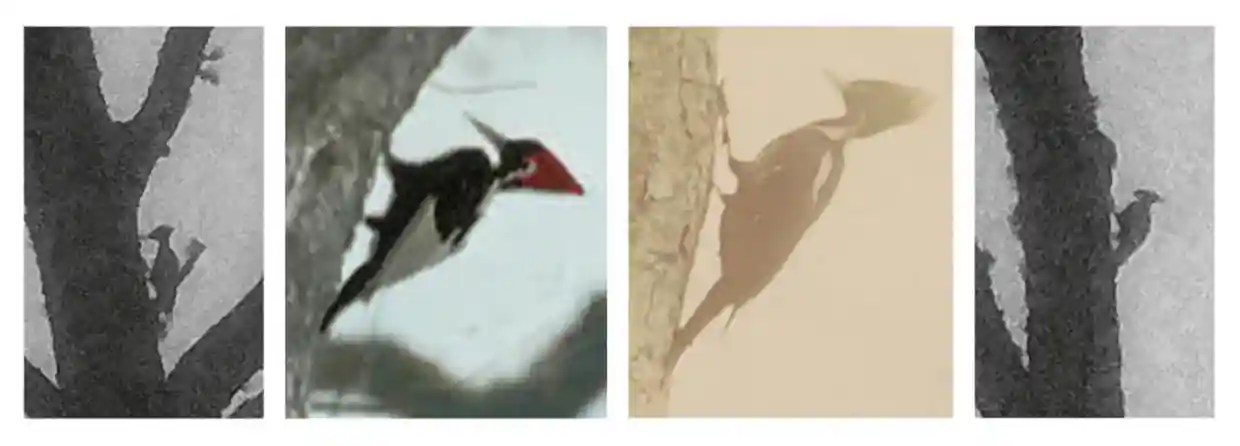
Comparison of photographs taken of apparent ivory-billed woodpeckers in Louisiana from this study (A, D), with a colorized ivory-billed woodpecker, also from Louisiana (B), and a pale-billed woodpecker taken in Central America (C). Photograph: The Guardian
The title of this post should have a question mark at the end of it, or should be considered clickbait. For bird nerds this is likely not even news. But it is important in terms of natural history in general. Ivory-billed woodpeckers have been mentioned a couple of times in our pages; but the chance of seeing one these days was considered to be zero. We can now hope we were wrong about that:
Back from the dead? Elusive ivory-billed woodpecker not extinct, researchers say
An expedition to the forests of Louisiana say extinction of bird, last definitively seen in 1944, has been exaggerated
In terms of elusiveness, it is the Bigfoot or Loch Ness monster of the bird world, so rare and undetectable that the US government declared it extinct last year. But the ivory-billed woodpecker is, in fact, still alive and pecking in the forests of Louisiana, a team of researchers has claimed. Continue reading

 Organikos