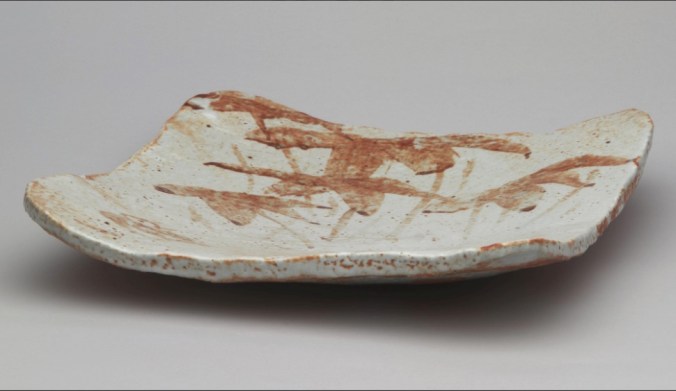
Kitaoji Rosanjin. Square platter with rounded edges. 1954
In preparing to exhibit things we believe represent Costa Rica well enough that we would want travelers to take some such things home with them, MOMA’s The Value of Good Design provides a valuable pause. The image above, from the MOMA show, is an example of good design of a tactile thing. As the video below shows that is what good design means in MOMA’s estimation, namely things that you want to look at as much as you want to touch or use.
Costa Rica, and its visitors, would benefit from an exhibition of things that are useful, inspiring, and/or in good taste. Our contribution to this effort has focused on coffee, so we are inclined to think about taste in the gustatory sense, as in what flavors and aromas please. This type of pleasure is more ephemeral than something you can look at and touch over and over.
 Another sense of good taste, which also has value: we do not consider it in good taste to sell things in Costa Rica that are foreign-made replicas of Costa Rican traditional arts and crafts. And that has been very much on our mind. It is a challenge we have signed on to. The MoMA exhibition inspired Nikil Saval to share a few thoughts about How “Good Design” Failed Us and they strike me as relevant to our own current challenge to be tasteful:
In 1958, the American radical sociologist C. Wright Mills was invited to address the International Design Conference, in Aspen. The lecture he gave, “Man in the Middle: The Designer,” criticized a number of its audience members for being willing dupes in the grand illusion that was consumer society. Continue reading


 Organikos