The Grey Parrots Go Missing


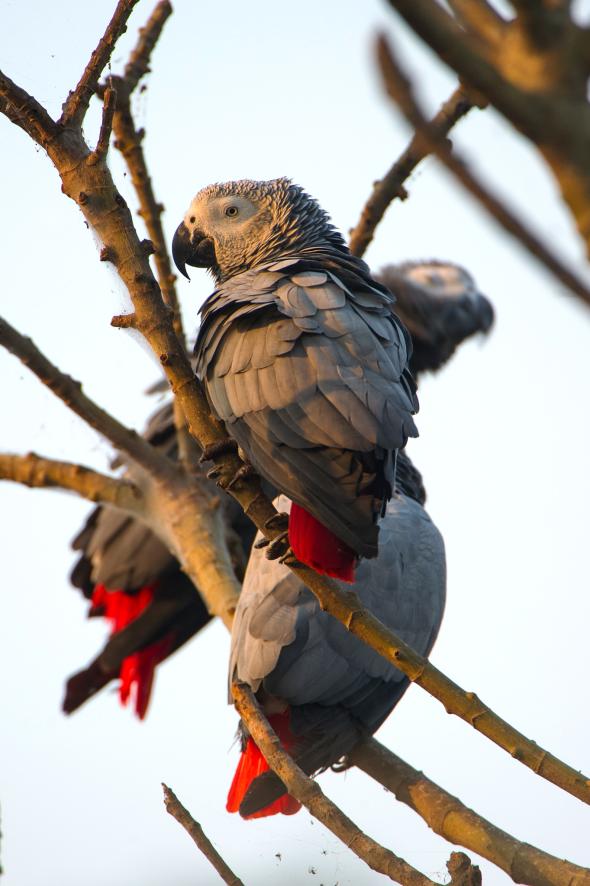
These African Grey parrots were rescued from smugglers and released on Ngamba Island in Lake Victoria. The African Grey parrot is the single most heavily traded wild bird. PHOTO: CHARLES BERGMAN

These African Grey parrots were rescued from smugglers and released on Ngamba Island in Lake Victoria. The African Grey parrot is the single most heavily traded wild bird. PHOTO: CHARLES BERGMAN

In all that we write about conservation, a related tag – unfortunately – happens to be extinction. Brought about by forest loss, miscalculated development plans, social and political apathy towards ecosystems, lack of awareness – the reasons we’ve all heard of. Now, National Geographic reports on the disappearance of the ‘talking bird’:

Flocks of chattering African Grey parrots, more than a thousand flashes of red and white on grey at a time, were a common site in the deep forests of Ghana in the 1990s. But a 2016 study published in the journal Ibis reveals that these birds, in high demand around the world as pets, and once abundant in forests all over West and central Africa, have almost disappeared from Ghana. Uncannily good at mimicking human speech, the African Grey (and the similar but lesser-known Timneh parrot) is a prized companion in homes around the world. Research has shown that greys are as smart as a two-five year-old human childcapable of developing a limited vocabulary and even forming simple sentences.
Continue reading

How Much Does an Elephant Eat?

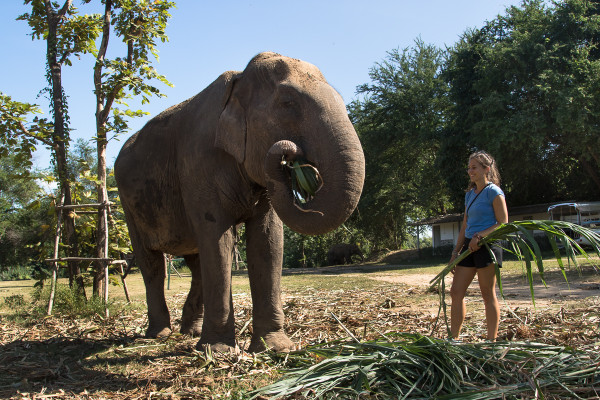
An elephant takes in a meal at Elephant’s World, Thailand. PHOTO: Jay Simpson

An elephant takes in a meal at Elephant’s World, Thailand. PHOTO: Jay Simpson

Our love for pachyderms has found multiple expressions on this blog. With us now journeying with Asian Oasis in Thailand and Kerala as home, this love links our efforts in both these lands, serving as common ground for all that we hope to do in tandem with nature. For all that we’ve penned on elephants, we’ve not stopped to think what or rather how much food keeps their giant souls (and stomachs) happy.

Both captive and wild elephants eat a lot, but what else would you expect from one of the largest land animals on the planet? Wild Asian elephants (Elephas maximus) can spend an average of 16-18 hours of every day eating. In the wild they forage for food, constantly searching for roots, small trees, bamboo, grasses, and any other edible plants.

Continue reading

The Power of Parks

yosemite

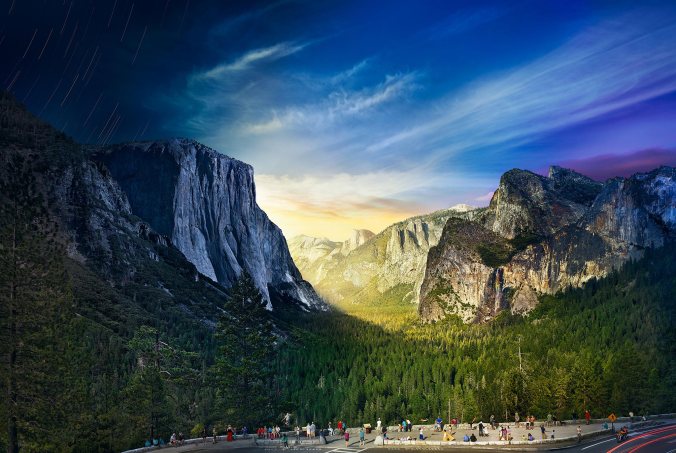
Photographs of Yosemite National Parks composed by Stephen Wilkes. Courtesy: National Geographic

Which side are you on – the one that believes national parks are the past or to the side that sees the future in these stretches? As long as national parks figure on your maps and feature in your scheme of things, you must know that the National Park Service is celebrating its centennial this year.  In commemoration, National Geographic looks at how to preserve these wild spaces:

“In March 1868 a 29-year-old John Muir stopped a passerby in San Francisco to ask for directions out of town. “Where do you wish to go?” the startled man inquired. “Anywhere that is wild,” said Muir. His journey took him to the Yosemite Valley in California’s Sierra Nevada, which became the spiritual home of Muir’s conservation movement and, under his guidance, the country’s third national park. “John the Baptist,” he wrote, “was not more eager to get all his fellow sinners into the Jordan than I to baptize all of mine in the beauty of God’s mountains.” Today around four million people a year follow their own thirst for the wild to Yosemite.”

Continue reading

A Tiny Land and Its Large Ocean Reserve

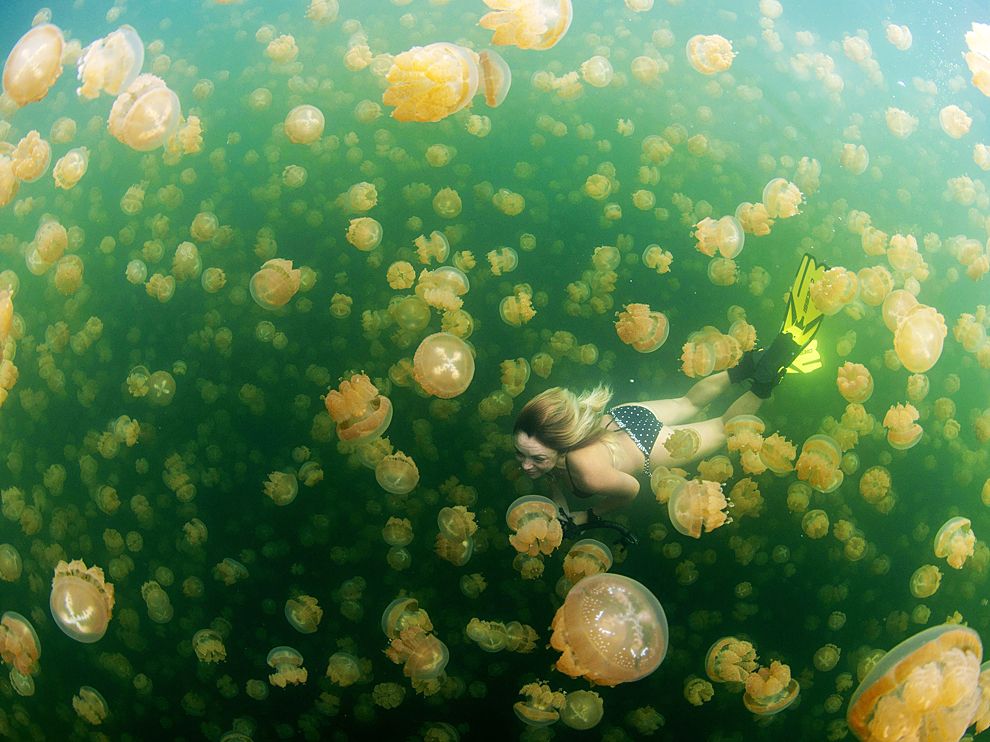
The president of Palau signed legislation Wednesday designating a reserve that's about 193,000 square miles (500,000 square kilometers) in size. This makes it one of the five largest fully protected marine areas in the world. PHOTO: National Geographic

The president of Palau signed legislation Wednesday designating a reserve that’s about 193,000 square miles (500,000 square kilometers) in size. This makes it one of the five largest fully protected marine areas in the world. PHOTO: National Geographic

The Chilean government recently announced that it has created the largest marine reserve in the Americas by protecting an area hundreds of miles off its coast roughly the size of Italy. The new area, called the Nazca-Desventuradas Marine Park, constitutes about eight percent of the ocean areas worldwide that have been declared off-limits to fishing and governed by no-take protections. Now, the Pacific island nation of Palau has resolved to protect nearly 80% of its oceans.

Continue reading

When a Way of Life Melts With the Ice

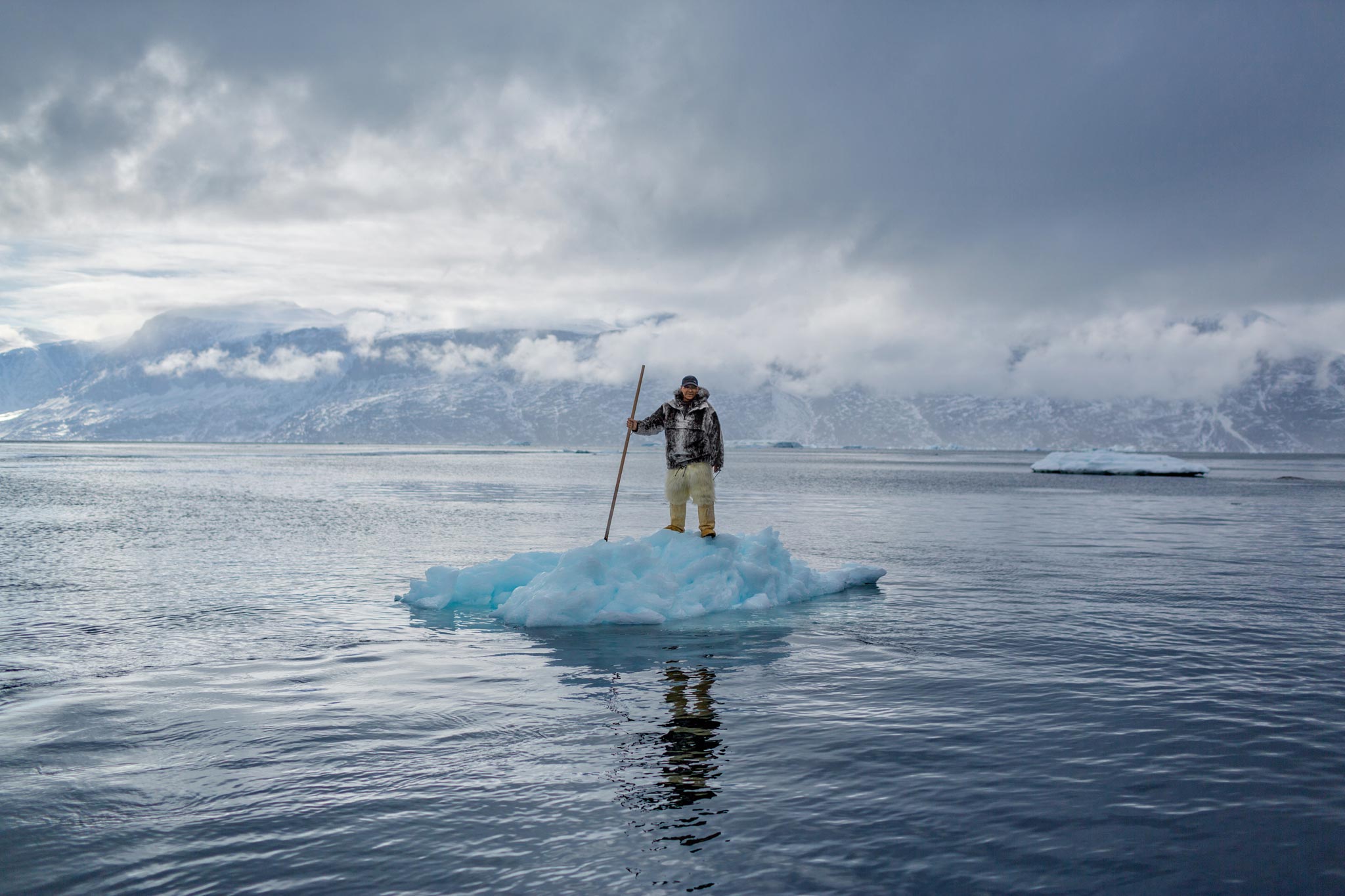
Albert Lukassen’s world is melting around him. When the 64-year-old Inuit man was young, he could hunt by dogsled on the frozen Uummannaq Fjord, on Greenland’s west coast, until June. This photo shows him there in April. PHOTO:  Ciril Jazbec

Albert Lukassen’s world is melting around him. When the 64-year-old Inuit man was young, he could hunt by dogsled on the frozen Uummannaq Fjord, on Greenland’s west coast, until June. This photo shows him there in April. PHOTO: Ciril Jazbec

Climate change – a situation that choices can better, but circumstances see it go from bad to worse. Much talk, much less done. Temperatures rise, glaciers melt, and seas begin to usurp shores. Also, people like the natives of Kiribati and now the Inuit are forced to rethink ways to survive on their lands which once provided for all. And did not threaten their lives. National Geographic reports from the North:

Something else is vanishing here too: a way of life. Young people are fleeing small hunting villages like Niaqornat. Some of the villages struggle to support themselves. And now a culture that has evolved here over many centuries, adapting to the seasonal advance and retreat of sea ice, is facing the prospect that the ice will retreat for good. Can such a culture survive? What will be lost if it can’t?

Continue reading

Wedded to Their Land Despite the Tides

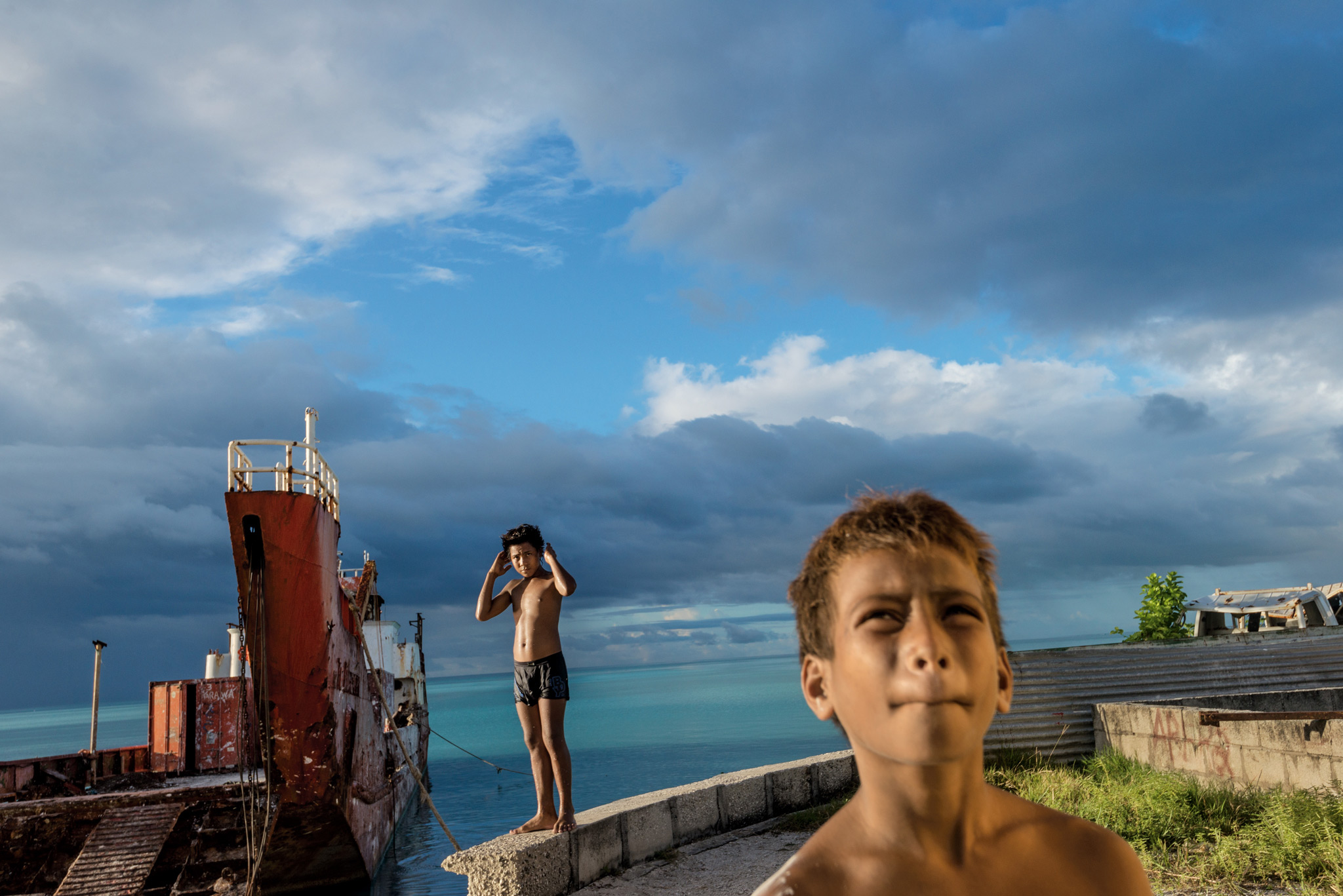
 Kiribati—33 coral islands in an expanse of the central Pacific larger than India—is “among the most vulnerable of the vulnerable” to climate change. PHOTO: Kadir Van Lohuizen

Kiribati—33 coral islands in an expanse of the central Pacific larger than India—is “among the most vulnerable of the vulnerable” to climate change. PHOTO: Kadir Van Lohuizen

They do not think of themselves as “sinking islanders,” rather as descendants of voyagers, inheritors of a proud tradition of endurance and survival.

That’s how National Geographic captures the spirit of the people of Kiribati, a spirit that forgives the seas despite the threats that its warming, rising, acidifying waters pose to their native islands. A people who believe that planting mangroves will stop the encroaching sea in its tracks, a people whose lives are centered on the seas that without it, they maybe forced to question who they are. This is their story then, from “the front line of the climate-change crisis.”

Continue reading

What Lies Beneath Your Feet

Farmers harvest sesame in Syria. PHOTO: JIM RICHARDSON

Farmers harvest sesame in Syria. PHOTO: JIM RICHARDSON

The 68th UN General Assembly declared 2015 the International Year of Soils. It aims to increase awareness and understanding of the importance of soil for food security and essential ecosystem functions. According to scientists, soil is being eroded faster than that the Earth can replace it. So the next time the words ‘dirt cheap’ come up, think again and take not the soil below your feet for granted.

Dirt is not only rare, but it’s complicated. To the uninitiated, dirt may look like grubby generic mush, but actually it has character, individuality, and a taxonomy all its own. Soil scientists recognize twelve major orders of dirt, each divided into suborders, groups, subgroups, families, and series, according to its various allotments of minerals and organic matter. Each dirt has a pedigree. Furthermore, dirt is proactive. It’s not an inert blanket; it’s a dynamic entity.

Continue reading

Chile Looks Beneath the Waters

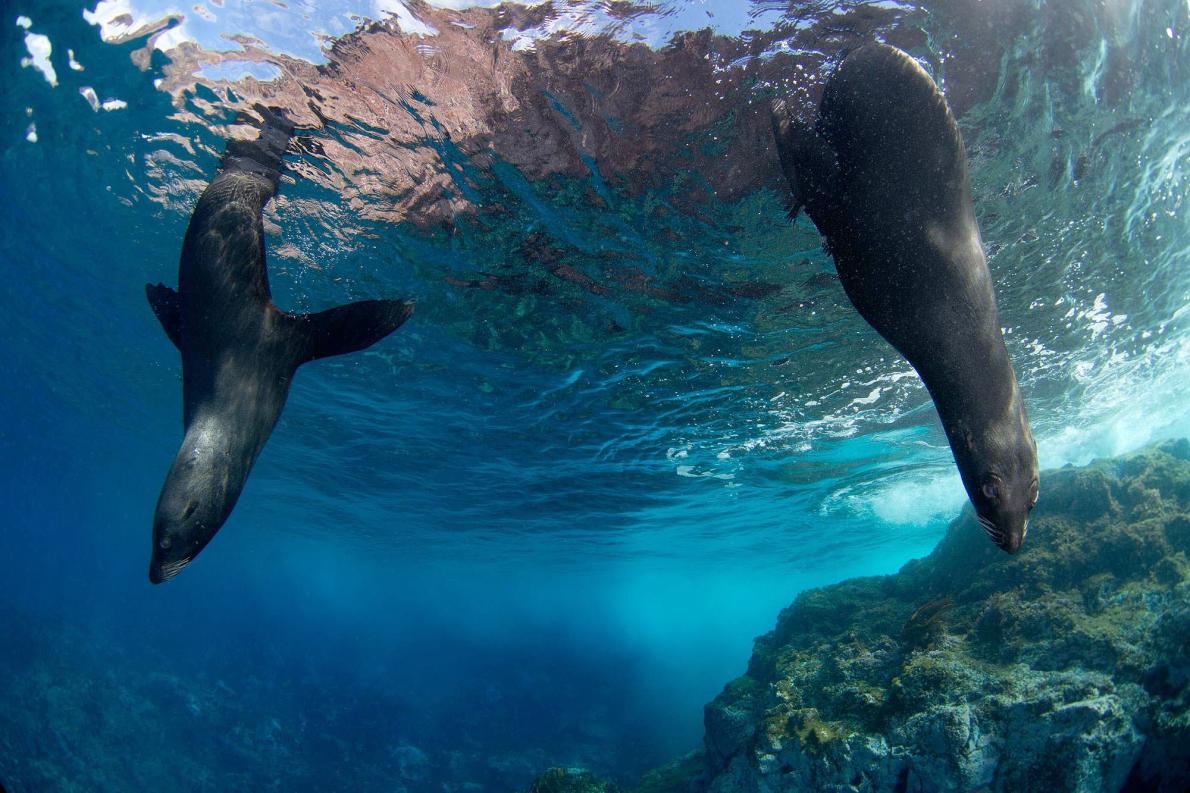
Two Juan Fernandez fur seals (Arctocephalus philippii) slide through the water off the Desventuradas Islands about 559 miles (900 kilometers) west of Chile. Divers snapped this picture during a 2013 expedition to an area that is now the largest no-take marine reserve in the Americas. PHOTO:  ENRIC SALA

Two Juan Fernandez fur seals slide through the water off the Desventuradas Islands. Divers snapped them during a 2013 expedition to an area that is now the largest no-take marine reserve in the Americas. PHOTO: ENRIC SALA

Here’s another win for those who vouch for the ecosystem wealth that lie beneath the waters. The Chilean government on Monday announced that it has created the largest marine reserve in the Americas by protecting an area hundreds of miles off its coast roughly the size of Italy.

The new area, called the Nazca-Desventuradas Marine Park, constitutes about eight percent of the ocean areas worldwide that have been declared off-limits to fishing and governed by no-take protections, says Russell Moffitt, a conservation analyst with the Marine Conservation Institute in Seattle, Washington. (Read about the world’s largest marine reserve in the Pacific Ocean.)

Continue reading

Leaving the Map Behind

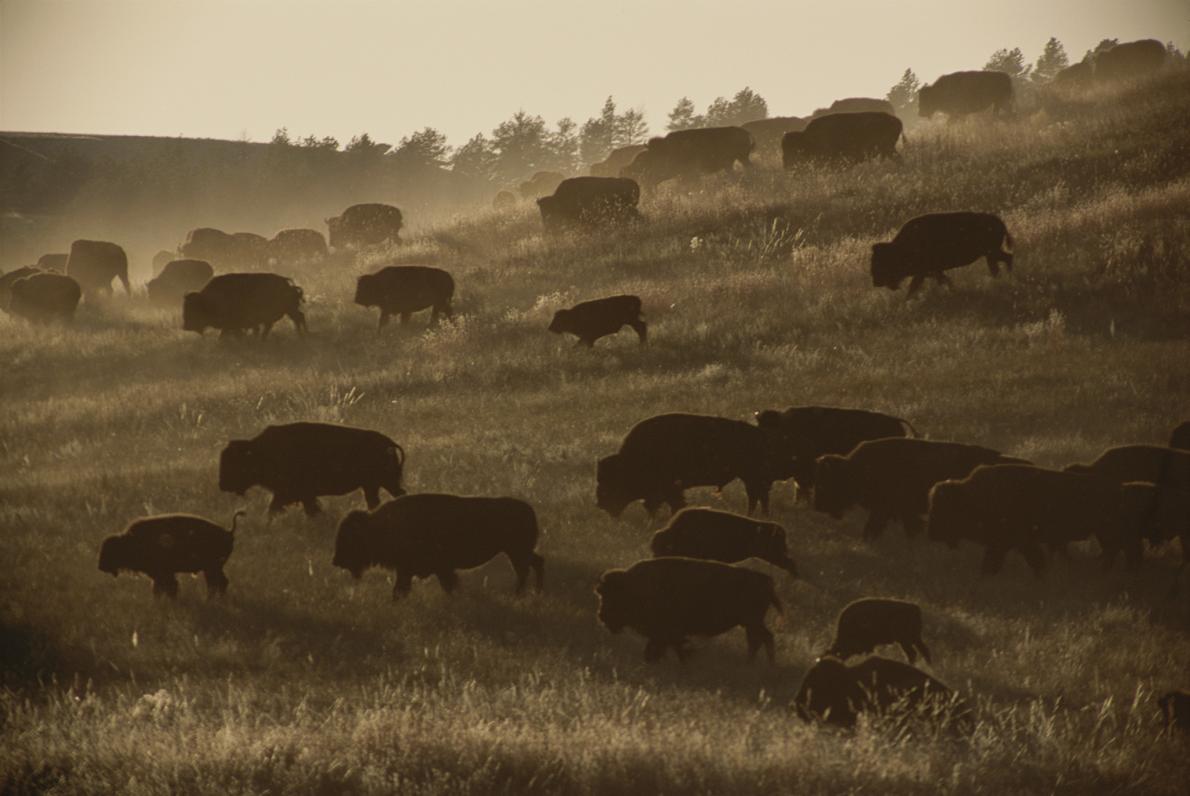
Bison, like these at Custer State Park, in South Dakota, were central to the Plains Indians. But when the U.S. National Parks Service tried to reintroduce them to Lakota lands, it tore the community apart.  PHOTO: SARAH LEEN, NATIONAL GEOGRAPHIC CREATIVE

Bison, like these at Custer State Park, in South Dakota, were central to the Plains Indians. But when the U.S. National Parks Service tried to reintroduce them to Lakota lands, it tore the community apart. PHOTO: SARAH LEEN, NATIONAL GEOGRAPHIC CREATIVE

Rewilding is the idea that, having extirpated many species, by returning large animals and birds like the California condor to the landscape, we can restore key ecosystem functions. The most famous example is probably the reintroduction of grey wolves to the northern Rockies and the Mexican grey wolf to the desert Southwest in the mid-late’90s. There’s a phenomenon called trophic cascade, which means that a large predator like a wolf has a regulatory effect on the entire food chain. In Yellowstone, the return of wolves has meant that the elk can’t be fat and lazy and start to browse in a different fashion, which in turn allows aspen and beavers to come back.
If 20th-century conservation was about drawing lines on a map and saying, this is a park or preserve, 21st-century conservation is about filling in those lines, bringing back animals that have been extirpated.

Rewilding, the need and benefits of having places that are off the map, modern day cave woman Lynx Vildern make for some pages of Satellites In The High Country: Searching For The Wild In The Age Of Man, by Jason Mark, cofounder of the largest urban farm in San Francisco.

Continue reading

A Picture Perfect World

PHOTO: Raghu Rai

PHOTO: Raghu Rai

When is the last time you saw someone sans a camera? No device in their hands and none dangling around their necks? Well, “we can’t seem to recollect” is our answer, too. And, may be there are reasons for it. More than the power to immortalize fragments of time, a photograph brings together all the pictures you’ve seen, the books you’ve read, the music you’e heard, the people you’ve loved. To take a photograph is to participate in another person’s (or thing’s) mortality, vulnerability, mutability. Precisely by slicing out this moment and freezing it, all photographs testify to time’s relentless melt, say others. And ace Indian photographer, Raghu Rai, protégé of Henri Cartier-Bresson, pens his own take in Nat Geo Traveler.

I am called a photographer, and my dharma is photography but I think of myself as an explorer. To me, the best way to explore life is through photography. Life changes constantly, so the more you explore the more you are enriched.

Continue reading

The Impressiveness of Cephalopod Sight

Photo via EuclidLibrary

We’ve long known that octopuses have some of the most powerful eyes among invertebrates, but a recently published article in the Journal of Experimental Biology titled “Eye-independent, light-activated chromatophore expansion (LACE) and expression of phototransduction genes in the skin of Octopus bimaculoides” is showing that members of cephalopoda (octopus, squid, cuttlefish) may also have light-sensitive cells in their skin that effectively transform the large outer organ — already famous for its color- and shape-shifting qualities — into a perceptive one as well. The science sections of the New York Times and The Guardian, along with National Geographic‘s Phenomena webpage, all cover the story (click on the reporter’s name to reach the original articles):

Octopuses can mimic the color and texture of a rock or a piece of Continue reading

Largest Marine Reserve, 2015 Edition

Pitcairn’s residents implored the UK government to protect the area, which is threatened by illegal fishing.

Pitcairn’s residents implored the UK government to protect the area, which is threatened by illegal fishing.

We hope they keep getting formed in larger and larger swaths of territory, and we will celebrate every time the ante gets upped this way:

British Prime Minister David Cameron’s government announced the creation of the world’s largest contiguous ocean reserve on Wednesday, protecting 322,000 square miles around the remote Pitcairn Islands in the South Pacific. To put that in perspective, that’s three and a half times the size of the United Kingdom and bigger than the state of California, according to National Geographic. Continue reading

The Gears in Planthopper Nymph Legs

Igor Siwanowicz’s image of planthopper nymph gears won 9th place in the Olympus BioScapes International Digital Imaging Competition. Photo by Igor Siwanowicz, HHMI Janelia Research Campus, Ashburn, Virginia. Via Science Friday.

In September of 2013, Science published a paper by Malcolm Burrows and Gregory Sutton titled, “Interacting Gears Synchronize Propulsive Leg Movements in a Jumping Insect.” The two British biologists were discussing the fascinating structures they had found in the legs of small insects called planthoppers. At the top joints of each pair of legs, the tiny jumping insects had gears with interlocking teeth that synchronized the kicking motion between the two appendages, so that the planthoppers could jump straight rather than slightly to the left or right if one leg had acted even slightly before the other.

Covering the story back in September, Joseph Stromberg wrote for Smithsonian Magazine that:

To the best of our knowledge, the mechanical gear—evenly-sized teeth cut into two different rotating surfaces to lock them together as they turn—was invented sometime around 300 B.C.E. by Greek mechanics who lived in Alexandria. In the centuries since, the simple concept has become a keystone of modern technology, enabling all sorts of machinery and vehicles, including cars and bicycles.

Continue reading

Kleptothermy

Photo of Blue-lipped sea krait (Laticauda laticaudata), Anemone Reef, Thailand. Credit: Jon Hanson.

We’ve featured a post on biological theft before, under the name of mycocleptism. In that case the thief was a species of beetle that lived off the fungal tunnels of another beetle species, and now we are learning of a different type of behavior: stealing heat. Apparently certain reptiles, which are unable to bask in the sun at night, have found an effective method of transferring warmth that does not involve time travel. Instead, they snuggle up in the nests of birds. Brian Switek reports on the phenomenon for Nat Geo below, but one question that seems to remain unanswered is whether the feathered members of the deal are getting anything out of their reptilian visitors. For example, sea snakes like the ones mentioned in the referenced article are venomous — could it be that their presence in a shearwater nest would protect the birds from potential predators?

You could bask in the sun to remedy the cold. That’s a classic reptile way of working some warmth back beneath those scales. But there’s another option. You could steal your warmth. All you’d have to do is find some seabirds.

Continue reading

The Differences Between Rabbits and Hares

A female European hare (right) boxes with a male in Wales. PHOTOGRAPH BY ANDY ROUSE, 2020VISION/NATURE PICTURE LIBRARY/CORBIS. Via National Geographic.

Thank you to Liz Langley from National Geographic for highlighting differences that we have always been curious about but never thought about looking into until they were laid out so clearly in a single place. And with cute photos and a couple puns to boot. The article below comes from Nat Geo’s “Weird Animal Question of the Week,” which we will be sure to visit in the future.

Hares and rabbits are in the same family, Leporidae, but they’re “different species, like sheep and goats are different species,” Steven Lukefahr, a geneticist at Texas A&M University in Kingsville, said via email.

Hares are also larger, have longer ears, and are less social than rabbits. The “most profound difference” is seen in baby hares versus baby bunnies, said Philip Stott, a wildlife ecologist at the University of Adelaide in Australia. (See National Geographic’s pictures of baby animals.)

First off, a hare’s pregnancy lasts 42 days, compared with rabbits’ 30-31 days with a bun(ny) in the oven.

Continue reading

Sloths’ and Armadillos’ Sight Stinks

Photo credit: Mwcolgan8. Via National Geographic.

Watching the pair of nine-banded armadillos in this video root around the forest floor looking for food, you’d think that in addition to their snuffling and sensitive noses, the armored mammals would also be using their eyes to spot scurrying insects or the white flash of a grub in the dirt. And a three-toed sloth like the one in this other video should definitely be able to scan the skies for predatory birds when it is taking care of its vulnerable young, right? Well actually, as NatGeo contributor Ed Yong reports, scientists at UC Riverside believe the genes that build color-detecting cone cells in eyes are broken in sloths, armadillos, and several other mammal species descended from the same burrowing ancestor:

Armadillos have terrible vision. In 1913, American zoologists Horatio H. Newman and J. Thomas Patterson wrote, “The eyes [of the nine-banded armadillo] are rudimentary and practically useless. If disturbed an armadillo will charge off in a straight line and is as apt to run into a tree trunk as to avoid it.”

The three-toed sloth isn’t much better. “If an infant sloth is placed five feet away from its mother on a horizontal branch at the same level, at once the young sloth begins to cry, the mother shows that she heard it calling and turns her head in all directions. Many times she looks straight in the direction of her offspring but neither sight, hearing nor smell apparently avail anything,” wrote Michel Goffart in 1971. And more comically: “Infuriated male [sloths] try to hit each other when they are still distant by more than a metre and a half.”

Continue reading

Humans Have DNA For Making Feathers

Siberian Turkamanian Eagle Owl by Chris Paul. Via NatGeo.

We’ve always found feathers fascinating, both from an aesthetic and a biological perspective. Recently, the Cornell Lab of Ornithology’s bird guide website AllAboutBirds uploaded an interactive page solely focused on feathers, which is quite a wonderful mine of interesting information, cool animation, and amazing videography. But now, about a month late, we’ve learned that DNA researchers working on the genetic recipe for feathers have found that the sequences responsible for most of the steps involved in creating feathers are actually much, much older than feathers themselves. This indicates that we humans should have a sizable chunk of the feather-making genetic recipe as well! Carl Zimmer reports for the Phenomena section at National Geographic’s website:

Feathers are like eyes or or hands. They’re so complex, so impressive in their adaptations, so good at getting a job done, that it can be hard at first to believe they evolved. Feathers today are only found on birds, which use them to do things like fly, control their body temperature, and show off for potential mates. The closest living relatives of birds–alligators and crocodiles–are not exactly known for their plumage. At least among living things, the glory of feathers is an all-or-nothing affair.

Continue reading

Fruit Bats Can Echolocate With Wing-beats

Lesser short-nosed fruit bat. Photo by Anton Croos via National Geographic.

Bats represent an enormous amount of the mammal species alive today, but we still have a lot to learn about them. We have direct experience with a particularly large species of fruit bat called the Indian flying fox or Greater Indian Fruit Bat, and we’ve also learned earlier this year about insectivore bats in Thailand that can protect rice paddies from pests. Now we hear that fruit bats, contrary to prior scientific belief in much of the bat-biology community, can also use sonar echolocation to navigate the way insect-eating bats do. Whereas all insectivorous bats use vocal projections of sound to echolocate and find prey, most fructivorous bats have large eyes that they use to locate fruit or nectar. Three species of the fruit-eaters, however, have now been shown to use a very crude and relatively inaccurate form of echolocation using clicks created by their wingbeats. National Geographic writer Ed Yong reports:

Together with Sara Bumrungsri and Yossi Yovel, [Arjan Boonman] studied the cave nectar bat, as well as the lesser short-nosed fruit bat and the long-tongued fruit bat. He found that as the animals flew in a pitch-black tunnel, they all made audible clicks. The clicks aren’t accidents of flight. The team showed that the bats can adjust the rate of these sounds, and they click more furiously when flying in the dark than in dim light. Perhaps they actually use these noises to find their way around.

Continue reading

Electric Eels Can Paralyze Prey

Photo via National Geographic

We’ve seen eel art before, but actually don’t know much about these fish or their biology. Electric eels are even more fascinating for obvious reasons, but of course are also that much more mysterious to us. National Geographic science writer Ed Yong fills us in with the help of Vanderbilt University biologist Ken Catania below:

A fish swims in the Amazon, amid murky water and overgrown vegetation. It is concealed, but it’s not safe. Suddenly, two rapid bursts of electricity course through the water, activating the neurons that control the fish’s muscles. It twitches, giving away its position, and dooming itself. Now, it gets zapped by a continuous volley of electric pulses. All its muscles contract and its body stiffens. It can’t escape; it can’t even move. Its attacker—an electric eel—moves in for the kill.

Continue reading

Ithaca Featured in NatGeo’s Intelligent Travel Section

Cornell’s McGraw Tower. Photo by S. Inman

Over the last several years, dozens of our interns have been Cornellians, and some have even been born-and-bred Ithacans. It is often said that Ithaca is “ten square miles surrounded by reality,” for reasons that we won’t go into here and might be gleaned from the text below. But if Ithaca is sometimes seen as a bubble, then it can be expected that students at Cornell University or, to a lesser degree, Ithaca College live in an even more insulated shell that separates them from the city of Ithaca.

So it’s somewhat refreshing to see a descriptive post by an Ithaca resident–but McGill University graduate–in National Geographic’s Intelligent Travel section. Under the “Beyond the Guidebook” category, Alizé Carrère wrote a quick but information-packed list of things that she loves about her city, which you can read below or here:

Summer is the best time to visit my city because that’s when Ithaca really comes to life. Many of the college students leave for summer break, so the city opens up and all of the best outdoor attractions are in their prime. You can enjoy waterfall hikes, summer concerts in the park, patio happy hours, fresh produce in local restaurants, and twilights that stretch into the nine o’clock hour.

You can see my city best from the top floor of Cornell University’s Johnson Art Museum, which reveals a near 360-degree view of Ithaca, including Cornell’s beautiful campus and the south end of Cayuga Lake. The museum itself, which looks like a giant sewing machine, was designed by renowned architect I.M. Pei, the creative mind behind the striking (and once controversial) glass pyramid in front of the Louvre.

Continue reading