Paul Watson, Inspiring Parley In 2024

Visit the website of Parley to learn more. We knew Paul Watson‘s reach was far and wide, so no surprise that talent like this has followed his lead:

Everything starts with inspiration. In pirate lore, a parley is a conference or discussion, especially between opposing sides as a negotiation for terms of a truce. The root of the word parley is parler, French for “to speak” or “to talk.” Parley was founded to create a space where seemingly disparate parties can talk, think and act together to negotiate peace between humankind and the life-giving ecosystem that connects us all: the oceans.

Before growing a global network, we launched with a series of Parley Talks. Each session is a curated gathering with a dedicated topic. The talks are meant to give an overview of the state of the oceans, present a specific cause and garner support for a related initiative, and inspire actual change — be it at home, on a campus, in the workplace, across an industry or around the world.
Greenpeace @ 50

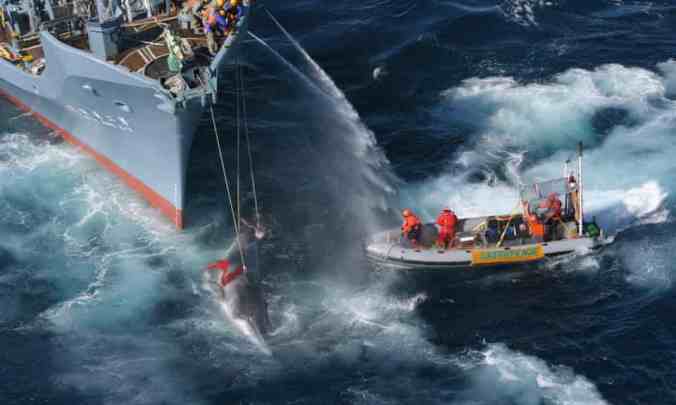
Greenpeace ship MY Esperanza and activists try to hinder the shooting of a minke whale by the Yushin Maru No.2 catcher ship. Photograph: Kate Davison/Greenpeace

Paul Watson and Sea Shepherd were favorite post topics for a while, but long time no see. With a major anniversary for Greenpeace, a look at other important images from their history seems a fitting tribute:

Greenpeace: half a century on the frontline of environmental photo activism

On the organisation’s 50th anniversary, former head of photography at Greenpeace International talks about the motives behind the creation of its picture desk

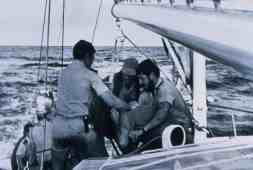
Vega boarded by French commandos in Moruroa, 1973. Photograph: Ann-Marie Horne

Fifty years ago, on 15 September 1971, a ship named the Greenpeace set out to confront and stop US nuclear weapons testing at Amchitka, one of the Aleutian Islands in south-west Alaska.

Two years later a small boat called the Vega, crewed by David McTaggart, Ann-Marie Horne, Mary Horne and Nigel Ingram sailed into the French nuclear test site area at Moruroa, French Polynesia in the southern Pacific Ocean. Continue reading

Paul Watson Speaks

merlin_81011591_6f2b6bd7-4d1d-4c32-8d90-471604eed16a-jumbo.jpg

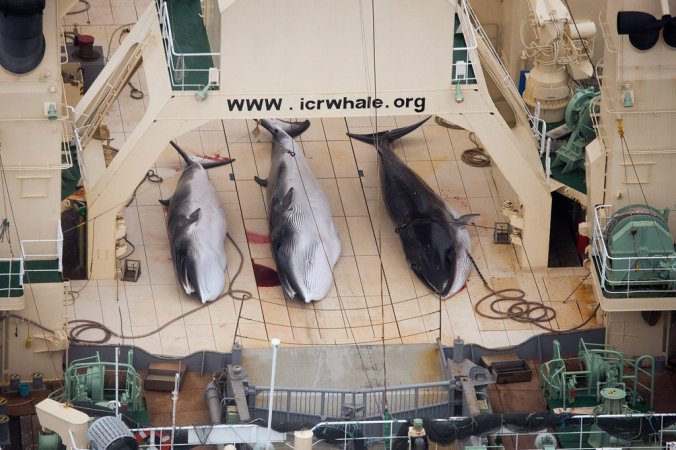
A photo from 2013, released by the environmentalist group Sea Shepherd, showing minke whales on the deck of a Japanese ship in the Antarctic. Japan says it will restrict whalers to its own waters as it resumes commercial whaling. Credit Tim Watters/Sea Shepherd Australia, via EPA, via Shutterstock

I had to read to the end to see Paul Watson’s name, and more importantly his proclamation on the significance of Japan’s withdrawal. It has been a long time since we have seen him or Sea Shepherd in our pages. My thanks to Daniel Victor and his employer for this important story:

Japan to Resume Commercial Whaling, Defying International Ban

Japan said on Wednesday that it would withdraw from an international agreement and resume commercial whaling, a defiant move to prop up an industry that still has cultural significance there, despite plummeting demand for whale meat.

Yoshihide Suga, Japan’s chief cabinet secretary, said the country would leave the International Whaling Commission, which established a moratorium on hunting whales that took effect in 1986.

The international agreement never stopped Japanese whaling, because it allowed the country to continue killing whales for scientific research while selling the meat. Critics considered the research a sham, little more than a cover for commercial whaling. Continue reading