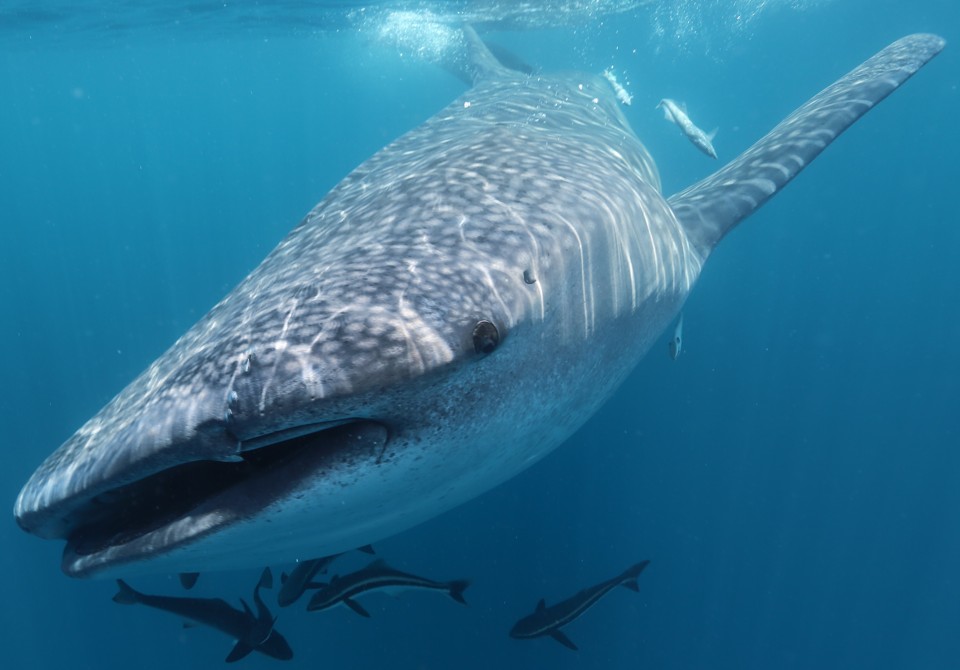
A whale shark in the Persian Gulf. Steffen Sanvig Bach
This is the future of marine ecosystem science (thanks as always to Ed Yong and the Atlantic’s ongoing commitment to compelling coverage of environmental issues):
The World’s Biggest Fish in a Bucket of Water
Scientists used DNA floating in just 30 liters of seawater to count the endangered whale shark across two oceans.
ED YONG
If you lean over the side of a boat and scoop up some water with a jug, you have just taken a census of the ocean. That water contains traces of the animals that swim below your boat—flecks of skin and scales, fragments of mucus and waste, tiny cells released from their bodies. All of these specks contain DNA. And by sequencing that DNA gathered from the environment—which is known as environmental DNA, or eDNA—scientists can work out exactly what’s living in a patch of water, without ever having to find, spot, or identify a single creature.
And that helps, even when the creature in question is 18 meters long. Continue reading
 Organikos