Rewilding In New Jersey

It has been some time since we featured a story on rewilding, which occasionally involves iconic urban areas. New Jersey may not sound iconic, but it is the home to one of the masters of long form so we are happy to share this late great masterpiece of his:

Direct Eye Contact

The most sophisticated, most urban, most reproductively fruitful of bears.

Improbably, I developed a yearning, almost from the get-go, to see a bear someday in the meadow. While I flossed in the morning, looking north through an upstairs bathroom window, I hoped to see a bear come out of the trees. If this seems quixotic, it was. This was four miles from the campus of Princeton University, around which on all sides was what New Yorkers were calling a bedroom community. Deer were present in large familial groups, as they still are in even larger families. They don’t give a damn about much of anything, and when I walk down the driveway in the morning to pick up the newspaper I all but have to push them out of the way. Beforehand, of course, I have been upstairs flossing, looking down the meadow. No bears. Continue reading

Rewilding Minelands

Flatwoods_WFA_2.10.17-26_web

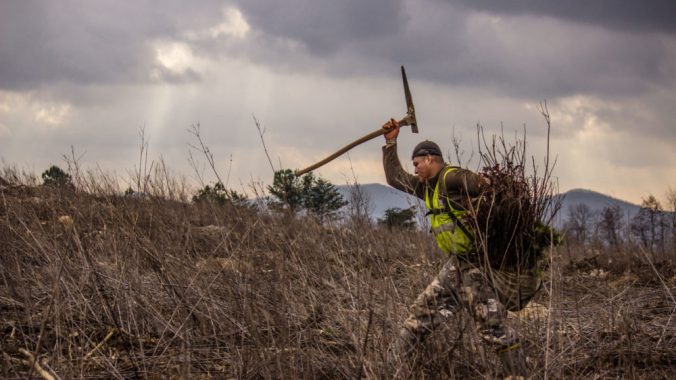
A contractor for Green Forests Work plants native hardwood and evergreen seedlings on a reclaimed mine site in Dorton, Kentucky. GREEN FORESTS WORK

Thanks to Yale 360 for this story about Green Forests Work, in a part of North America that is often considered lost, from an ecological perspective:

Reclaiming Appalachia: A Push to Bring Back Native Forests to Coal Country

Previous efforts to restore former coal mine sites in Appalachia have left behind vast swaths of unproductive land. Now, a group of nonprofits and scientists are working to restore native trees to the region — even if it means starting the reclamation process from scratch.

5.5.17_Monongahela-36_web

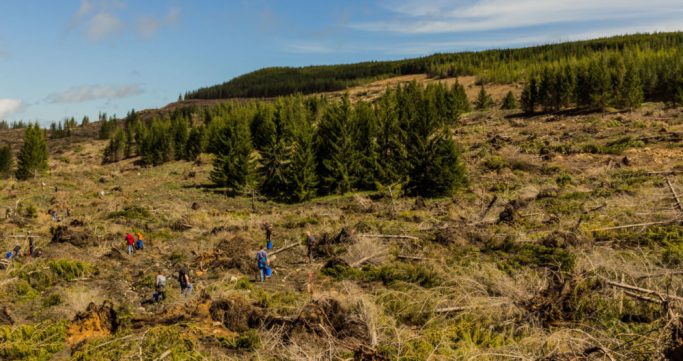
Volunteers fan out over a recently bulldozed plot on Cheat Mountain to plant red spruce and other native seedlings. GREEN FORESTS WORK

Near the top of Cheat Mountain in West Virginia, bulldozer operator Bill Moore gazes down a steep slope littered with toppled conifers. Tangled roots and angled boulders protrude from the slate-colored soil, and the earth is crisscrossed with deep gouges.

“Anywhere else I’ve ever worked,” Moore says, “if I did what I did here, I’d be fired.” Continue reading

Rewilding Europe, Alive & Well


RewildBear

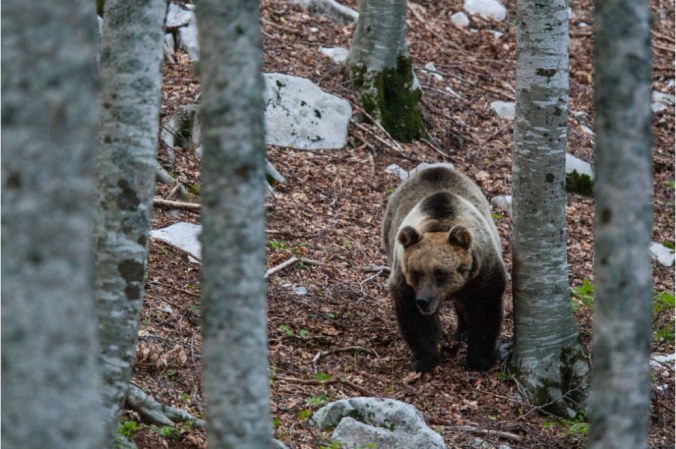
Salviamo L’Orso is committed to conserving the critically endangered Marsican brown bear (pictured here in its central Apennines habitat), and has already won many grants for its grassroots projects. Bruno D’Amicis / Rewilding Europe

It has been some time since we regularly featured news on the topic of rewilding. This announcement is as good a reason as any to revisit rewilding:

A Salviamo l’Orso project titled “Let’s take action for the Bear” was approved for funding by members of EOCA in early November, together with four other proposals from around the world.

With only 50 to 60 individuals remaining, all living in a relatively small area of the Central Apennines, the endemic Marsican brown bear (Ursus arctos marsicanus) is today critically endangered. The Salviamo l’Orso project, which comprises four conservation activities, will enhance the habitat of these magnificent animals and hopefully help them to expand their home range. Continue reading

Bison Awareness In Europe

21xp-bison-master768

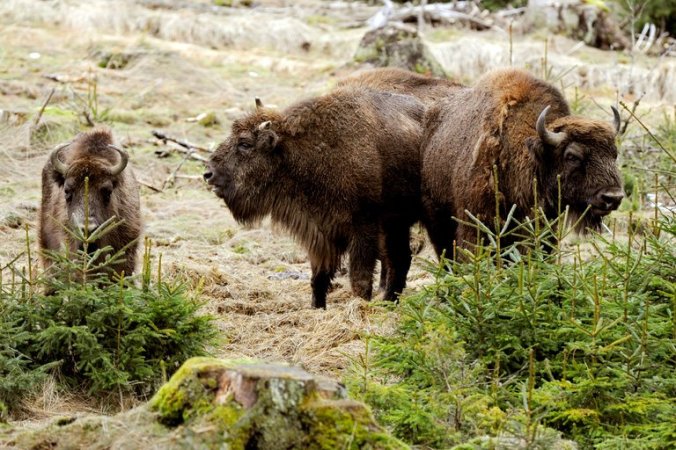
European bison near the town of Bad Berleburg, Germany, in 2013. Credit Marius Becker/Picture Alliance, via Associated Press

Bison in Europe have not been on our agenda for a while, though rewilding in Europe remains a topic we monitor and share here with regularity. Progress seemed more the rule than the exception; so this recent story from Germany takes us by complete surprise:

Last week, a rare wild bison was spotted wandering alone near the town of Lebus in eastern Germany. A local official, alarmed that the animal could be dangerous, ordered hunters to shoot it and one of them did, using a rifle to kill an animal that had not freely roamed Germany for several hundred years, conservationists say.

The killing of the mature male European bison on Sept. 14, which was first reported by local news outlets, set off an outcry among conservationists, who have worked to protect the species and increase its population. The World Wide Fund for Nature in Germany has begun a lawsuit against the local official who gave the order, Heiko Friedemann, setting off a state investigation before it goes to court. Continue reading

Rabbit Returning

Released_NEC_TomBarnes_USFWS1-1260x708.jpg

Zoo-bred New England cottontail being released. Photo © Tom Barnes / USFWS

Thanks to Ted Williams at Cool Green Science for this story:

Recovery: Second Chance for Yankee Cottontails

Stunned but delighted is how Dr. Robert McDowell, Director of Wildlife at the University of Connecticut, sounded when I arrived at his office to learn about New England cottontail rabbits.

Finally someone other than himself was interested in these vanishing natives. We pored over skulls and skins and vainly patrolled early successional woods for live specimens. McDowell seethed about the mindset of state fish and game bureaucrats: we can’t waste time on a few native rabbits when we have so many look-a-like non-natives and when license buyers want more pheasants, ducks and deer. Continue reading

Rome Rewilded

viscosa.jpg

Image: Planet World / Flickr

Thanks again to one of our most reliable sources for the summary of conservation-oriented science, and specifically to Brandon Keim for this one:

An Anthropocene wildness grows in Rome

Even in one of the most densely urbanized places on Earth, wildness and natural abundance may yet flourish again, sustained by both neglect and stewardship. Continue reading

Rewilding, Panthers & People

Filkins-The-Return-of-the-Florida-Panther.jpg

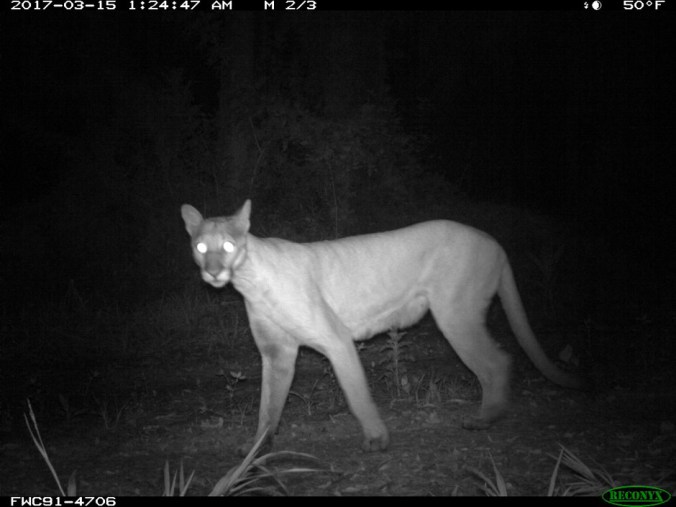
As Florida panthers have begun to multiply, they’ve been forced to search for new home ranges. PHOTOGRAPH COURTESY FLORIDA FISH AND WILDLIFE / FLICKR

Rewilding is a topic I started linking to as a matter of solidarity. While based in south India, I had plenty of exposure to residual evidence of the complicated–sometimes resplendently beautiful and other times brutally tragic–relationship between mankind and wild animals as played out over millennia, and still evolving. So I have kept an eye open for these stories, and have posted so many times on the topic that it might give the impression that it is a thing. As if it is happening more or better than it is really happening. But it is happening so I will keep the links coming.

Now I am in Belize most of the year, where the man-cat relationship is also millennia old, and as constant challenge as ever. But I am seeing it from well within the confines of Chan Chich Lodge and its surrounding hundreds of thousands of acres of healthy cat habitat. I know there are big cats in the USA, but not enough. That is why this story is a thrill. Dexter Filkins, never yet cited in these pages but whose reporting I depend on for other kinds of stories, was not a byline I expected to see on this story, but thanks to him for it:

For years, the Florida panther, a majestic creature that lurks in and around the forests of the ovbnm,./, has teetered on the edge of permanent disappearance. Closely related to the mountain lion, the panther once roamed across much of the South, but the ever-advancing modern world pushed it into a tiny corner of Southwest Florida. By the late nineteen-seventies, fewer than thirty survived.

Since then, the panther has been coming back, helped by a government- and privately backed expansion of its habitat. Florida panthers are now thought to number around two hundred. Indeed, there are so many big cats in the Everglades that they are venturing out in search of new territory. Continue reading

Rewilding, South Atlantic Edition

rainforest-animals

Galetti et al. “Reversing defaunation by trophic rewilding in empty forests.” Biotropica. 2016.

Thanks to Anthropocene:

A recipe for rewilding the Atlantic forest

Rewilding, North America Edition

636129948116675648-elk-in-pickens-county-by-caleb-cassell

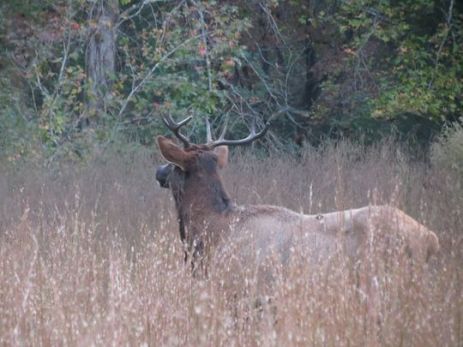
An elk, the first seen in South Carolina in centuries, gazes across a field in northern Pickens County. (Photo: provided/Caleb Cassell)

We would much rather that original nature was protected in its original state, but that does not keep us from celebrating the various efforts we see to reintroduce species, especially when they show signs of success as in this case from South Carolina, USA:

In Pickens County, first elk sighting in state for centuries

Ron Barnett

For the first time since the Upstate was Cherokee territory, a wild elk has been seen roaming the woodlands of South Carolina. Continue reading

Better To Have Fizzled Than To Have Never Tried

20threlkeld-web1-master768

Hikers on Blencathra, in the Lake District in England. Two years ago, ramblers, climbers and hill-lovers banded together to try to buy the peak, but the effort has now fizzled. Credit Phil Moore for The New York Times

I admit to being partial to the idea of rewilding, as I have come to know about it, which I admit is limited; but with our bias for restoration of wildlife habitat clearly stated I find this story worth sharing:

In English Lake District, Tradition and Conservation Clash

By

THRELKELD, England — It was to have been a grand gesture, a deal that would transfer a mountain in the fabled English Lake District from the landed gentry to those who roam its heights, reversing a centuries-old pattern of ownership by the upper-crust few. Continue reading

Rewilding’s Great Rewards

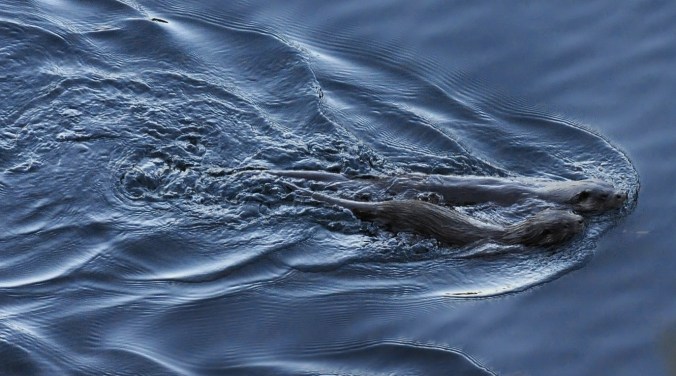
Otters near Shieldaig Island, Loch Shieldaig, Scotland. Photograph: Steve Carter

Otters near Shieldaig Island, Loch Shieldaig, Scotland. Photograph: Steve Carter

Although he may not use the term, George Monbiot believes in biophilia. His devotion to the concept of rewilding is evident in both his actions and his words, and his expressive writing about nature’s resilience and the richness of “ecological interactions” prove the point. His description of a recent trip to the Scottish highlands exemplifies both the draw of nature and his response to it:

As I came over a low ridge, I noticed a disturbance in the water below me, a few metres from the shore. I dropped into the heather and watched. A moment later, two small heads broke from the sea, then the creatures arced over and disappeared again.

After another moment, the larger one – the dog otter – scrambled out of the water with something thrashing in its mouth. He dropped it on to the rocks, gripped it again, then chewed it up. Then the bitch emerged from the sea beside him, also carrying something, that she dispatched just as quickly. They plunged in again, and I watched the trails of bubbles they made as they rummaged round the roots of the kelp that filled the shallow bay. Continue reading