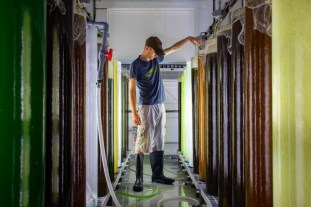
An image of a man in boots in a kelp hatchery
Since kelp grows as fast as two feet per day, it absorbs a huge amount of carbon through photosynthesis. (Jamie Walter / Running Tide)
Kelp has featured in our pages frequently enough to be considered an important topic. It will be a partial solution to something big. Thanks, as always, to Robinson Meyer for the weekly newsletter that sometimes depresses the spirit but on other occasions, like this one, titled How to Fight Climate Change With Buoys That Look Like Ramen Noodles, points a small ray of hope in an unexpected direction:
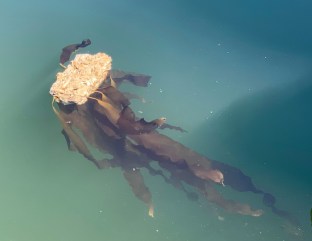
Running Tide’s buoys are made of reclaimed waste wood, limestone, and kelp seedlings. (Jamie Walter / Running Tide)
Last month, somewhere off the coast of Maine, a small group of researchers and engineers released a series of tiny, floating objects into the water. The team called them “buoys,” but they looked more like a packet of uncooked ramen noodles glued to a green party streamer than anything of the navigational or weather-observing variety. These odd jellyfish had one role in life: to go away and never be seen again. With any luck, their successors would soon be released into the open ocean, where they would float away, absorb a small amount of carbon from the atmosphere, then sink to the bottom of the seafloor, where their residue would remain for thousands of years. Continue reading
 Organikos