Tasting The Place

aarvlisalt

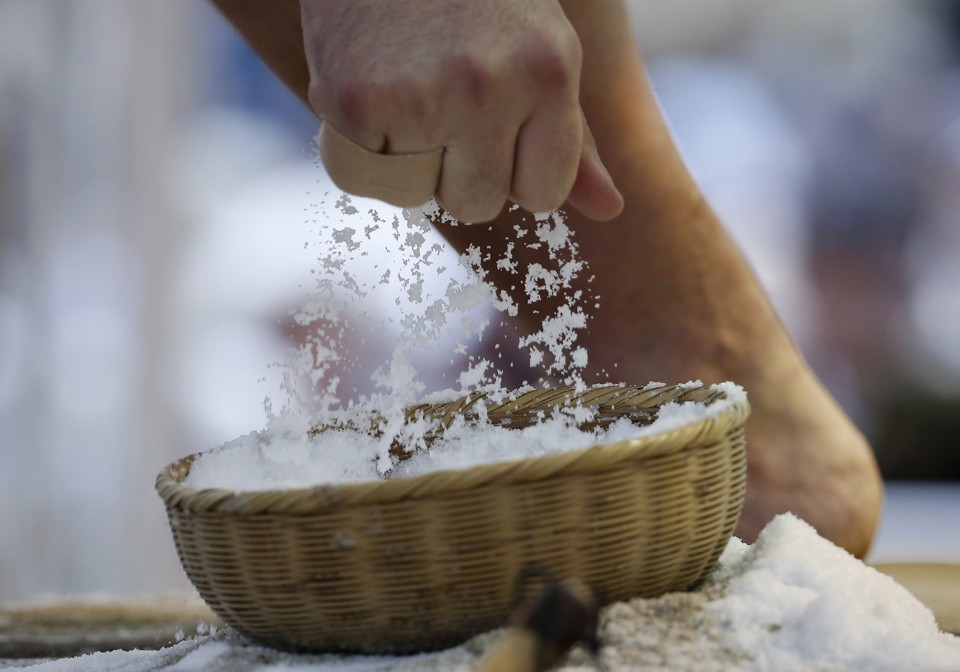
Where I am located, since last week and until next, there is an abundance of flavors; both in terms of intensity and in terms of diversity. Thanks to a longstanding tradition of ensuring that those flavors pop, there is not only salt, but salt inspection. Only the finest will do, and the finest is also harvested locally. Just as the fish is harvested locally as in the photo below, taken a few hundred meters from where I am typing right now.

img_5532

Continue reading

Podcast: The Magic of Salt

Yuya Shino / Reuters via The Atlantic

Almost exactly five years ago, I quoted Mark Kurlansky’s book focused on the history of an Atlantic fish species, Cod. I knew he’d written another book on the history of salt, but haven’t read it yet. With a podcast episode from Gastropod that was featured in The Atlantic recently, I got a nice summary of the subject and learned even more about the current issues revolving around sodium.

Salt is a magical substance. It reduces bitterness, enhances sweetness, boosts flavor, and preserves perishable foods. Without it, we would die: The human body can’t make sodium, but our nerves and muscles don’t work without it. It was considered rare until quite recently, so it’s hardly surprising that, throughout history, salt has been the engine behind empires and revolutions. Today, there’s a new battle in the salt wars, between those who think that we eat too much of it and it’s killing us—and those who think most of us are just fine. Join us for a serving of salt, seasoned with science, history, and a little politics.

Continue reading

Know Your Salt

salts_750

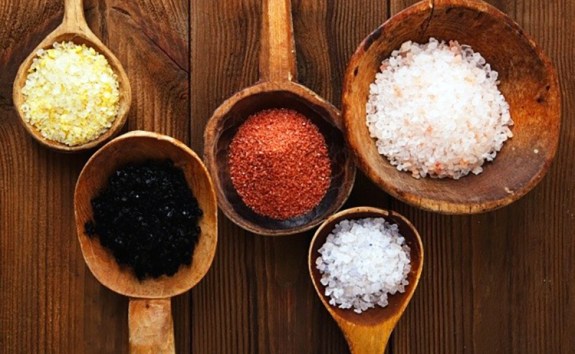
What once was a simple decision between iodized table salt or sea salt has become a sensory overload. Walk into Whole Foods to restock on salt and you’ll be confronted with a dazzling array of colors, textures and price points.

Thanks to EcoWatch for this primer on the various salt choices we face:

Salts have exploded with popularity. What once was a simple decision between iodized table salt or sea salt has become a sensory overload. Walk into Whole Foods to restock on salt and you’ll be confronted with a dazzling array of colors, textures and price points. But, what really differentiates specialty salts? Are expensive salts actually worth the money?

Here is a guide to nine different culinary salts that will help you decide what salt is best for your needs.

1. Table

Table salt is created by superheating natural salt to 1,200 degrees Fahrenheit, which destroys most beneficial compounds. Fortified with essential iodine, table salt is also bleached and devoid of trace elements, so it’s certainly not the healthiest salt you can shake. This type of salt can often contains additives to slow moisture absorption so it is easy to sprinkle in your salt shaker. Continue reading

From India to Houston, the 40-year-old Yogurt

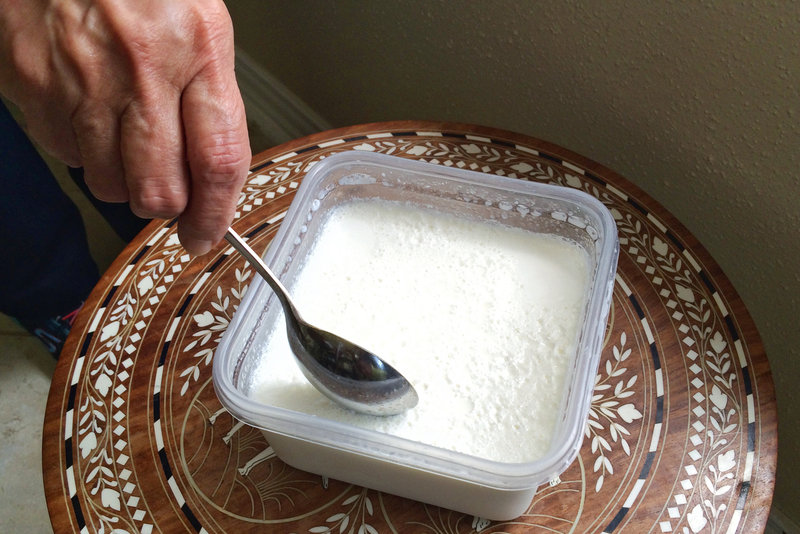
A recent batch of Veena Mehra's yogurt in Houston. She's been making yogurt the same way, with the same starter, for about 40 years. PHOTO: Nishta Mehra

A recent batch of Veena Mehra’s yogurt in Houston. She’s been making yogurt the same way, with the same starter, for about 40 years. PHOTO: Nishta Mehra

If you’re making your own yogurt at home, you need an old batch to make a new batch. And the community of microbes in that yogurt starter — and the flavor — should remain relatively unchanged if you make it the same way every time. That’s what Rachel Dutton, an assistant professor of microbiology at the University of California, San Diego who studies cheese and other dairy products, says, anyway.

Continue reading