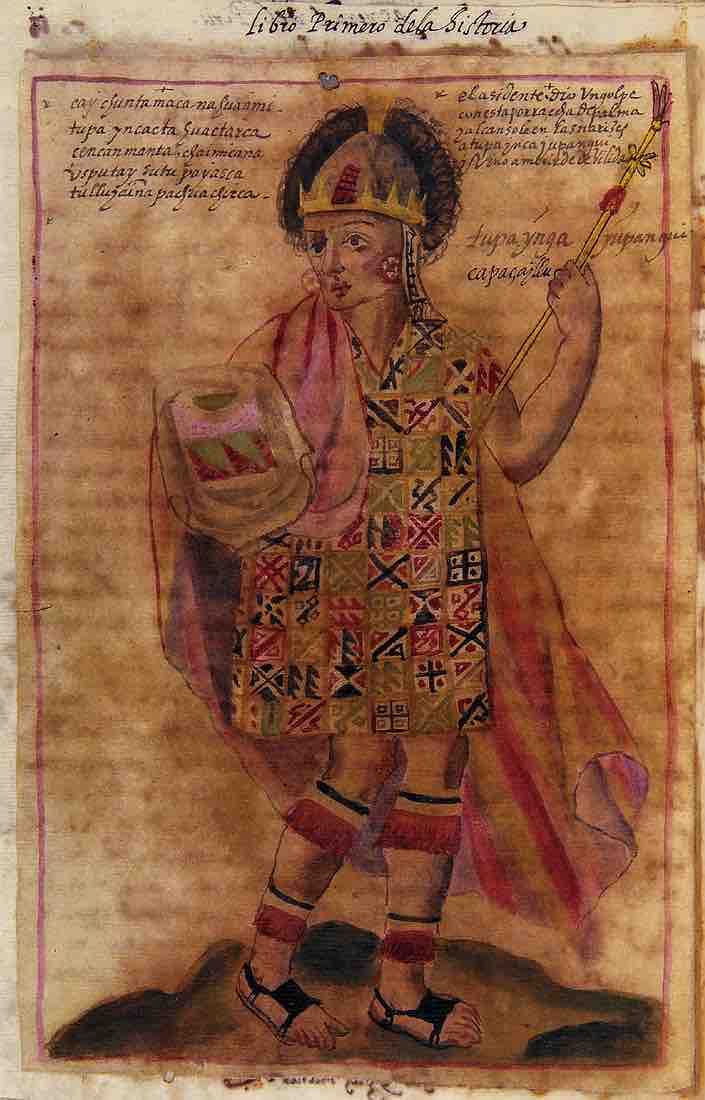
Illustration of Tupac Inca Yupanqui (an Inca emperor) c. 1590, by an unknown artist. | USED WITH PERMISSION / PRIVATE COLLECTION
In this article by Max J. Krupnick we are given reason to rethink the notion that the Incas had no written language. There is plenty of evidence that they were capable of advanced communication aesthetically:
Unraveling an Inca masterpiece’s secrets
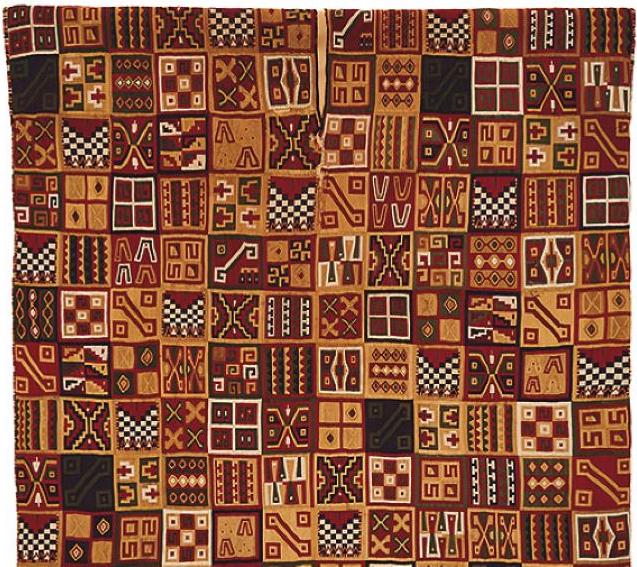
WITH STITCHES as dense as an iPad’s pixels, this woven tunic represents the pinnacle of Inca artistry. The brutal Spanish conquest and the unforgiving march of time have destroyed most Inca textiles, but the tunic now at Dumbarton Oaks in Washington, D.C., survived. Although its symbols captivate visitors and scholars alike, much is left to be learned about the garment. Who made it? Who wore it? Is it truly authentic?
Tunic | ©DUMBARTON OAKS, PRE-COLUMBIAN, WASHINGTON, D.C.
Robert Bliss, who cofounded Dumbarton Oaks, Harvard’s center for Byzantine, Pre-Columbian, and landscape studies, purchased the tunic for his personal collection, so its acquisition history is not well documented. Added to the institute’s holdings in 1963, the tunic attracted scholarly attention as researchers attempted to decode its symbols, which they believed comprised a written language, despite evidence that the Incas did not write. Continue reading
 Organikos