Grasslands, Underdogs & Hope

tnc_88008054_preview_cropped-1260x708.jpg

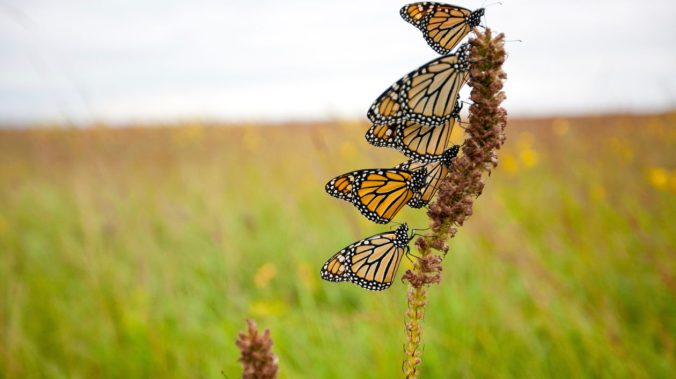
Butterflies congregating on the Nature Conservancy’s Bluestem Prairie, considered one of the largest and best northern tallgrass prairies in the United States, designated by Minnesota as a state natural area. Photo © Richard Hamilton Smith

We agree with the sentiment, never underestimate the underdog; more often than not, we root for the underdog. Thanks to the Nature Conservancy’s Cool Green Science for the reminder, in an ecological context:

Can Grasslands, The Ecosystem Underdog, Play an Underground Role in Climate Solutions?

By Marissa Ahlering

Never underestimate the underdog — in sports or in ecosystems. My favorite baseball teams, the Royals and the Cubs, reminded us of this over the last two years, and prairies (the underdog in the world series of ecosystems) proved this again recently in an analysis demonstrating that grasslands have a role to play in our climate change solutions (Ahlering et al. 2016).

Globally, grasslands are one of the most converted and least protected ecosystems (Hoekstra et al. 2005). The rich soil of Earth’s grasslands plays an important role in feeding the world and because of this much of our grassland has been converted to row-crop agriculture. Loss of grasslands is a big problem for two reasons: Continue reading

Economic Models Adapting To Evolving Challenges

tnc_61185884_preview_cropped.jpg

Aerial view of flooded rice fields participating in California’s BirdReturns program. White areas are dense gatherings of birds. Photo © Drew Kelly for The Nature Conservancy

The Moneyball approach to thinking about how to make the next big breakthroughs in conservation–not surprising that we are hearing this from The Nature Conservancy’s best and brightest:

Economics: The Next Frontier in Conservation Science

BY ERIC HALLSTEIN, SARAH HEARD

Engaging in markets is not new for The Nature Conservancy. But with our roots as a land trust, we thought about markets in a very specific way. We bought property to protect biodiversity using donor and public funding. We were in the market for “externalities.” Continue reading

Birding By Season

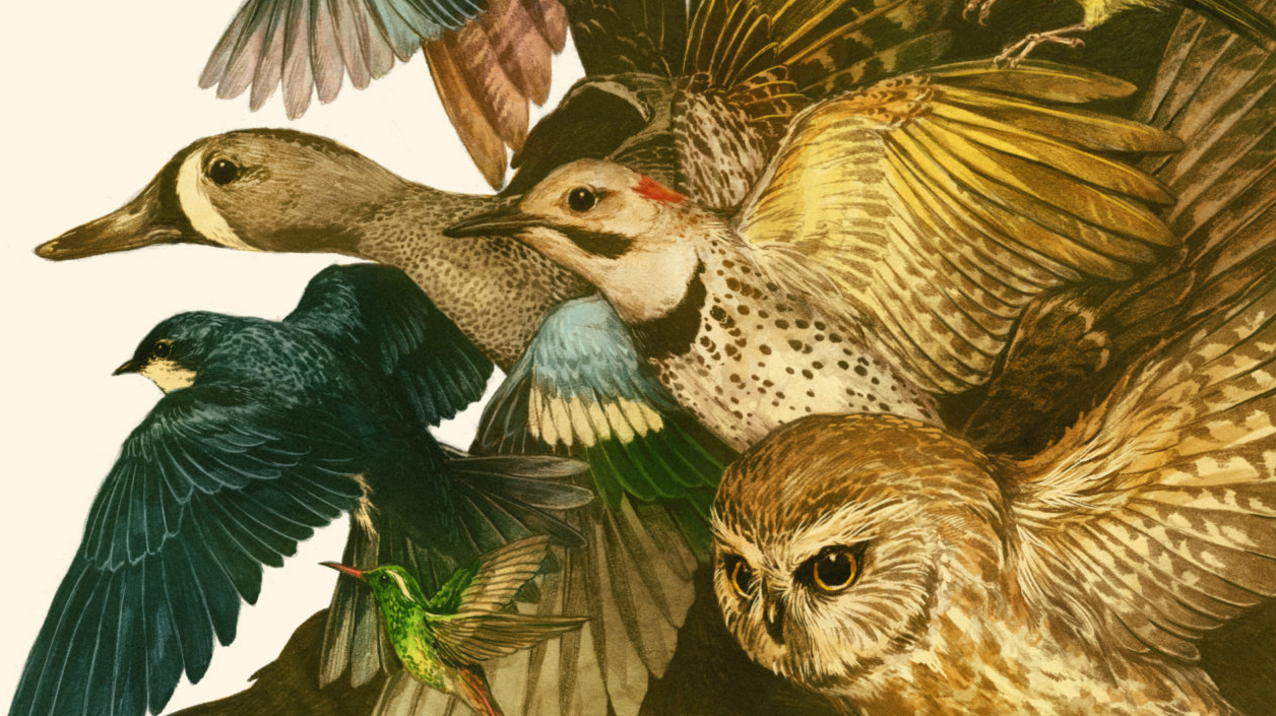
Violet-crowned, blue-throated and magnificent hummingbirds, along with a dozen other bird species, have been recorded at the the Conservancy’s 380-acre Ramsey Canyon Preserve. © Teagan White

Violet-crowned, blue-throated and magnificent hummingbirds, along with a dozen other bird species, have been recorded at the the Conservancy’s 380-acre Ramsey Canyon Preserve. © Teagan White

Thanks once again to the Nature Conservancy’s Cool Green Science blog for simultaneously highlighting conservation history as well as inspiration to spend time outdoors. We stand with the TNC and all organizations in support of the legendary legislation that illustrates the core principles of wildlife and land stewardship.

The Audubon Society states it simply, the Migratory Bird Treaty Act protects birds from depredatory human activities. And the more we involve ourselves in birding activities, the more appreciation and awareness we have for the fragility of our ecosystems and the biodiversity they sustain.

 A Birding List for the New Year

In 2016, birders celebrated the centennial of the signing of the United States’ Migratory Bird Treaty. In 1918, the resulting legislation became one of the country’s first major pieces of environmental law. Today birders reap the benefits of the act, which barred, among other things, the hunting of migratory birds during nesting and mating seasons.

Continue reading

Fish & Coconuts & Conservation

S.W. Reddy’s discussion of the islands where she carried out empirical research in the behavioral economics vein reminds of some fundamental similarities to Kerala, especially the fish and coconuts part. Thanks to the Nature Conservancy’s Cool Green Science for bringing this to our attention (if you do not have 15 minutes for the video now, save the text below for later reading):

Bringing Behavioral Insights into Conservation Programs and Policies

By Sheila Walsh Reddy

Behavioral science and economics have provided important insights for health, finance, and many other domains, but are largely untapped resources for conservation. A new paper in Conservation Letters helps practitioners tap into behavioral sciences. Continue reading

Urban Tracking And Other Soft Local Adventures

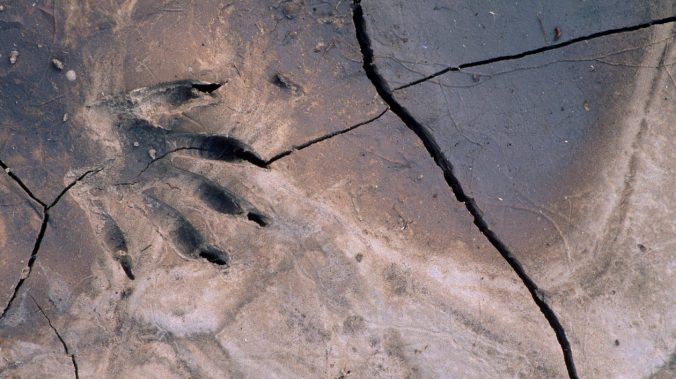
raccoontrack-1260x708

Raccoon track in mud along stream. Sarpy County, Nebraska. October 1996. Central Tallgrass Prairie Ecoregion. Photo © The Nature Conservancy (Chris Helzer)

It seems to go hand in hand with today’s other post, so thanks to The Nature Conservancy as always for this one:

A Field Guide to Tracking in Your Neighborhood

By Matt Miller

Tracking is one of the most family-friendly wildlife activities; you can enjoy it anywhere there is a patch of open ground. As I’ve written previously, kids love deciphering the mysteries of animal tracks. Even my two-year-old son loves checking out the tracks in our yard.

Continue reading

Camera Trap, Australia Edition

Thanks to the Nature Conservancy’s blog for this addition to our growing file of stories about non-intrusive filming of wild animals in remote places:

Camera Trapping in the Australian Desert

BY JUSTINE E. HAUSHEER

When trying to drink out of a tiny waterhole, camels hit approximately a 9.5 on a scale from 1 to Exceptionally Awkward. Continue reading

Droning Over Wetlands

Thanks to The Nature Conservancy’s Cool Green Science team for helping us realize we almost missed this story:

Flight Over the Bas-Ogooué: Using Drones to Map Gabon’s Wetlands

BY JUSTINE E. HAUSHEER

How do you map a nearly inaccessible 9,000-square-kilometer African wetland that is home to hippos, forest elephants, crocodiles, and the notorious Gaboon viper?

Enter the drones.

Nature Conservancy scientists are using unmanned aerial vehicles to create the first-ever detailed wetlands habitat map of coastal Gabon, in collaboration with scientists from NASA, and other conservation groups working in Gabon. Continue reading

The Gift Of The Camera Trap

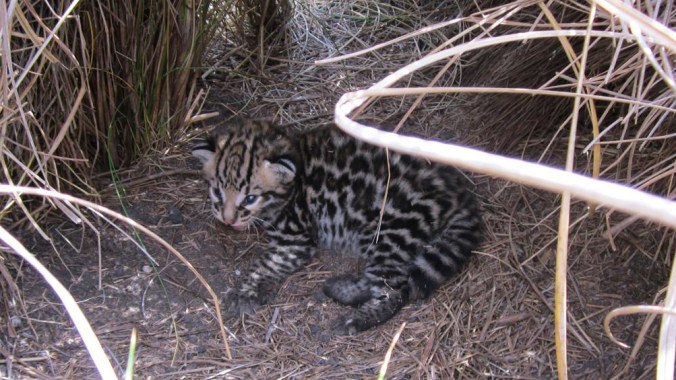
3-week-old-male-kitten-at-den-site-Laguna-Atscosa-NWR.jpg

Three week old male ocelot kitten. Photo courtesy of US Fish and Wildlife Service

Thanks to Matt Miller and TNC’s Cool Green Science:

Camera Trap Captures Images of Texas Ocelot Kittens

Great news for ocelots: This year, several females with kittens were documented in South Texas using remote cameras.

The U.S. Fish and Wildlife Service (USFWS) issued a public service announcement brimming with good news, including the first ocelot den documented in 20 years on Laguna Atascosa National Wildlife Refuge, and ocelots with kittens on the Yturria Ranch, a private ranch protected by conservation easements held by The Nature Conservancy and USFWS. Continue reading

‘Tis the Season for Creative Arborescent Decision-Making

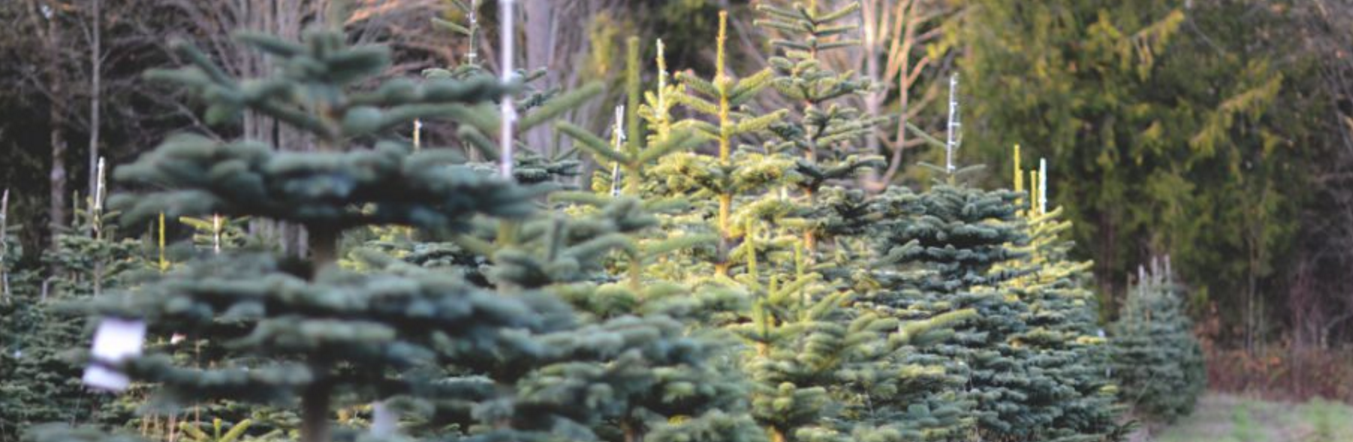
photo credit: Carol Fernandez

photo credit: Carol Fernandez

Real Vs. Fake Trees – Which is Better for the Environment?

Tis the season for an age-old question: Which kind of Christmas tree – real or fake – is better for the environment?

We love this question, because it’s an example of a simple choice that anyone and everyone can make that can reduce our impacts on the environment.

We also love this question because, like many environmental issues, the answer isn’t as simple as you might think. Our #1 recommendation? Buy a real tree. Read on for more details on the impacts of both real and fake Christmas trees, and then make the choice that’s right for you. And check out our 12 Tree Tips for other earth-friendly holiday decoration tips.

REAL CHRISTMAS TREES

In 2015, 26.9 million trees were purchased from live Christmas tree farms – more than twice the number of fake trees purchased (12 million).   Continue reading

Save Energy to Save Land

Aerial view of the Elk River Wind Project near the small town of Beaumont, in the southern Flint Hills region of Kansas. This 150 MW wind farm came on-line in December 2005. The one hundred 1.5 MW wind turbines are located several miles South of Beaumont. © Jim Richardson via Cool Green Science

Aerial view of the Elk River Wind Project near the small town of Beaumont, in the southern Flint Hills region of Kansas. This 150 MW wind farm came on-line in December 2005. The one hundred 1.5 MW wind turbines are located several miles South of Beaumont. © Jim Richardson via Cool Green Science

As the human population around the world grows, demand for food and energy will increase. Land conversion will become more and more rampant as countries grow crowded for space – any unprotected forests are sure to be felled to make way for people, and if not people, then their cows/crops, and if not that, then their fossil fuel wells. That’s a pretty dire picture, but there are always measures that can be taken to try limiting the development of land for new energy production, in an effort to slow the loss of nature and habitat for wildlife. A new article in the peer-reviewed journal PLOS ONE claims that demand for energy will be the largest driver of land conversion, at least in the US.

The main solutions that the researchers offer to mitigate “energy sprawl” are “Improved siting, energy conservation, and more end-use energy production like rooftop solar.” according to lead author Anne Trainor. That way, energy production will have a lower carbon footprint and less impact on natural areas as well. My main takeaway from Trainor’s thoughts on her paper, which Cara Byington covered for Cool Green Science, is that, “If you’re saving energy, you’re saving land.”  Continue reading

World Orangutan Day

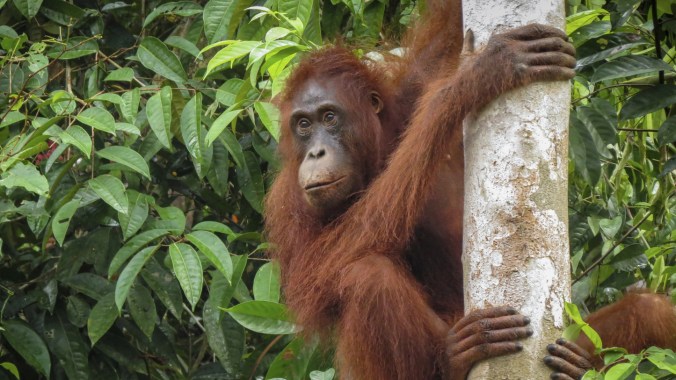
tnc_56625009_preview_cropped

An orangutan in Tanjung Puting National Park in Borneo, Indonesia. All photos from: The Nature Conservancy

About a week ago we celebrated World Lion Day. Today we celebrate a different, long-limbed animal that likes to climb trees, the Orangutan. There are two species of this magnificent arboreal ape, both of which are facing potential extinction due to deforestation, poaching, the illegal pet trade and forest fires. As of last month, the status of the Bornean orangutan was classified as “critically endangered,” but conservationists are not giving up and are taking significant measures to improve forest management by working together with local communities and developing public-private partnerships.

The harmony between humans and apes began to unravel with the arrival of European explorers, who hunted them extensively during the 19thcentury. But it was not until the mid-20th century that human activities began to imperil orangutans’ existence. Extensive deforestation not only directly threatened orangutan habitat, it made the forest more easily accessible to humans. This led to both conflicts with orangutans, as the apes will eat crops, and made it easier for poachers to hunt the animals.

Continue reading

Horseshoe Crabs in the Delaware Bay

Horseshoe crabs coming ashore in Delaware Bay © Gregory Breese/USFWS

We’ve posted about them before, but did you know that horseshoe crab blood is not only a powder blue color, but also is used in the medical industry to detect any trace of bacterial contamination in humans, even if that infection is only one part per trillion?  And that they are more closely related to scorpions than true crabs? Or that they’ve been having the longest-running mass-breeding efforts on the planet, given that they haven’t changed much in hundreds of millions of years? Marah Hardt writes for The Nature Conservancy on the importance of these crawling Chelicerates to their ecosystem:

The lapping waves and silent dunes of the Delaware Bay shoreline create a perfect backdrop for a moonlit summer stroll. But a few weeks ago, this beach was not nearly so quiet. Instead, the silver light of the full moon shone upon jostling crowds of horseshoe crabs.

“If the crabs were rocks,” says Moses Katkowski, marine conservation coordinator with The Nature Conservancy, “you could walk on their backs the entire stretch of beach and never touch the sand.”

Continue reading

You’ve Seen Bird Cams – How About a Salmon Cam?

Resolution is low, probably due to poor internet where the fish is and where I am, but you can see a coho, just like they say you might when watching the cam!

Resolution is low, probably due to poor internet where the fish is and where I am, but you can see a coho, just like they say you might when watching the cam!

We’ve shared various of the “bird cam” projects here before: websites, often run by universities like Cornell’s Lab of Ornithology, that host a live-streaming video of a nest somewhere so that people around the world with internet can tune in to the parent or chicks’ activities at any time of day. In some circles, similar videos of cats are also available. Now, not necessarily for the first time but at least the first I’ve heard of personally, there’s a live-streaming site of a real-life stream owned by The Nature Conservancy (I’m surprised their blog writers didn’t pun their way into that one). Matt Miller and Chris Babcock write about the new Salmon Cam:

Welcome to Salmon Cam, where you can enjoy the underwater happenings of a California salmon river throughout the day, on your computer or device.

The Salmon Cam is located in a tributary creek on The Nature Conservancy’s Shasta Big Springs Ranch. The camera is powered on in daylight hours (currently between 7 am and 7 pm Pacific time). Throughout the season, it will provide a view of migrating Chinook and coho salmon and steelhead trout.

Continue reading

Ginseng Memories

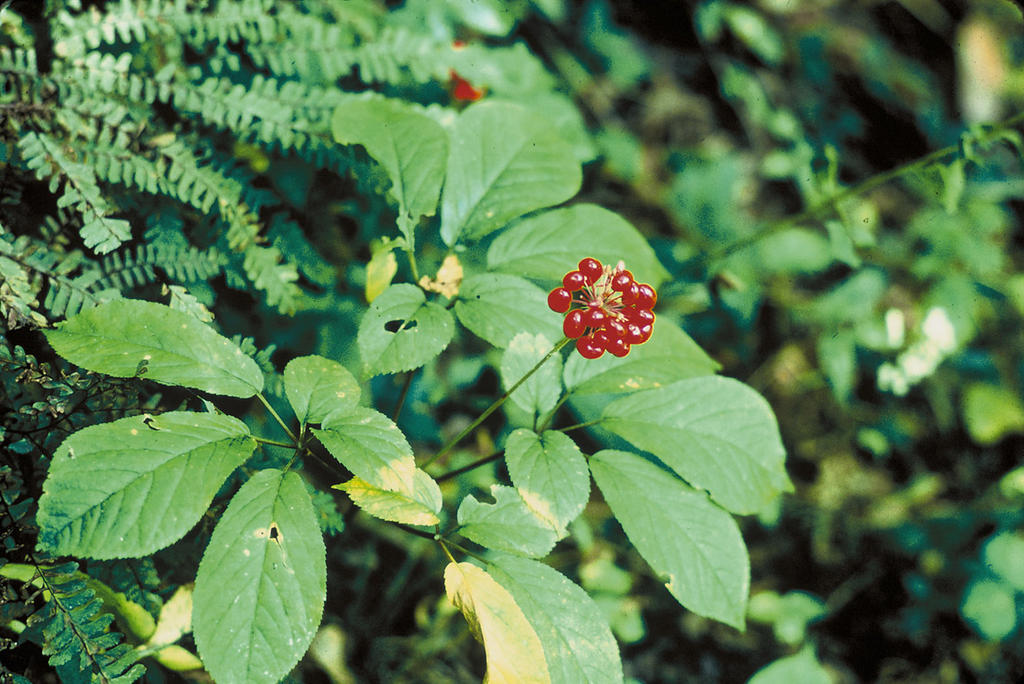
Ginseng with berries. Photo by US FWS via Wikimedia Commons

We first heard of ginseng in the New Yorker, where Burkhard Bilger wrote an article titled “Wild Sang” that explored the history of ginseng hunting and the very modern efforts to protect remaining plants from poaching in the Smoky Mountains. This week in Cool Green Science, the nature writer and conservationist Hal Herring reflects about his own personal experiences hunting ginseng in Alabama, and thinks about the future of the root:

I grew up in the flat-topped foothills of the Cumberland Mountains in north Alabama, and my mother was a student of wild herbs, wildflowers, and native medicinal plants. On my desk right now is a book called Tales of the Ginseng that my parents gave me for my twelfth birthday in 1976. It is a book of collected lore, of Manchurian folktales, of kings who become ginseng roots, of ginseng plants that withdraw, just ahead of the digger, to lure them into a deep-earth spirit-world from which they never return.

Continue reading

Conservation Reserve Program

The Hull family has partnered with U.S. Department of Agriculture (USDA) Farm Service Agency (FSA) Conservation Reserve Program (CRP) in Vermont to conserve sensitive riparian areas on their dairy farm by establishing forested buffer zones and installing high-tensile fence, stream crossings and other water handling equipment. Photo © USDA / Flickr through a Creative Commons license

This article by Kris Johnson for The Nature Conservancy is reminiscent of a post on paying for ecosystem services published here five years ago, where watersheds that would otherwise be affected by agriculture are better protected with incentives from conservation programs. From Cool Green Science today:

Ask someone in the rural Midwest what the Conservation Reserve Program (CRP) does, and a likely answer is: “It pays farmers not to farm.” But, research recently published in the journal Ecosystem Servicessuggests a better answer would be: It pays farmers to grow clean water.

It’s a better answer because with nutrient pollution threatening drinking water supplies, impacting boating and fishing on lakes and rivers throughout the Midwest and causing a persistent “dead zone” in the Gulf of Mexico, figuring out how to produce clean water is a critically important challenge. And the Conservation Reserve Program (CRP) is key to solving it.

Continue reading

Graylings Recovering

Spawning Arctic Grayling at Green Hollow Genetic Brood Reserve. Photo © Emily Cayer FWP

Graylings sound like wild beings out of a fantasy series, but in fact they’re a type of fish found all over the world in different species, some threatened with population decline, and some stable. The Arctic grayling, found in Russia and Canada but also some areas in Alaska, Montana and Wyoming, has suffered extirpation from certain spots in the latter two states during the last hundred years or so, due to anthropogenic effects. Ted Williams reports for The Nature Conservancy:

The Arctic grayling’s spotted, orange-trimmed dorsal fin looks as if it had been photoshopped. It’s half as long as the body and just as wide; and it glows with impossible shades of violet, green and turquoise. This gaudy trout cousin was deposited by the retreating glacier in the coldest, clearest waters of the contiguous states.

So common was the species in Michigan that a city, Grayling, took its name. And as recently as the early 20th century grayling abounded in the upper Missouri River system. While these fish still thrive in Alaska and Canada, they’ve been wiped out in Michigan and persist only in about 15 percent of their historic range in Montana and Wyoming.

Continue reading

Using Soil to Capture Carbon

© NSW Gov, Australia

A few weeks ago several news outlets publicized a new carbon-capture method tested in Iceland, but there’s also a low-tech way of storing carbon in the ground that people can consider, which is restoring degraded lands that once held large amounts of carbon and could become fertile again if we follow certain practices. Stephen Wood reports for Cool Green Science:

Soils have twice as much carbon as the atmosphere. Which means there’s a lot of interest in figuring out if soil can hold even more carbon—to help fight climate change.

Sequestering carbon in soil is like saving money in your bank account—simple in theory, but challenging in practice. If you’re frugal enough you may end up fighting climate change. Spend too much and you could make the situation worse.

Continue reading

Community Conservation in the Arnavon Islands

ACMCA ranger Dickson Motui clears a path for the hatchlings. Photo © The Nature Conservancy (Justine E. Hausheer)

We value sea turtles as an important part of the ocean ecosystem, and are always happy to hear about new conservation stories regarding them. In many coastal areas, the sea-faring reptiles are hunted for their meat and their eggs are harvested from sandy nests, quite often illegally. We report on poaching frequently here, but have good news from the Solomon Islands, where The Nature Conservancy is helping with community conservation in the Arnavons:

After a 40-year history punctuated by arson, conflict, and poaching, conservation efforts in the Arnavon Islands are yielding a glimmer of hope for hawksbill sea turtles. Now, Conservancy scientists are working with local communities to make these critical islands the first site to be registered under the Solomon Islands’ 2010 Protected Areas Act.

Continue reading

Weeding and Stopping Compost Hurts Farms

NatureNet Science Fellow Danny Karp checking on his field experiments in an organic romaine lettuce field. © The Nature Conservancy (Cara Byington)

We regularly report on innovations in agriculture, such as biofeedback and “certified transitional” ingredients, but also on tried-and-true methods like composting, or removing weeds in alternative ways. Cara Byington from The Nature Conservancy’s Cool Green Science blog reports on a recent study on nature and farmers:

A new paper in the Journal of Applied Ecology finds that two farm-based food safety practices – removal of non-crop vegetation in and around fields, and abandonment of composting – actually hurt farmers without making food safer.

“The practices are unnecessary,” said Danny Karp, lead author on the study. “Not only are they ineffective for their intended purpose, they damage growers by decreasing crop yields and pest control.”

Continue reading

The King of Sting

I’ve heard about the Schmidt Pain Scale before, having lived and worked in the tropics for long enough to have seen first-hand, and countless times, two of the insects with the most painful stings on his index: the bullet ant and the tarantula hawk. Of course, I haven’t sought out their stings and will actively avoid the two hymenopterans as much as possible, but Justin Schmidt has been doing the opposite with insects around the world for years. From the TNC Cool Green Science blog:

A yellow jacket just stung you. You jump, scream and shout expletives.

Or, if you’re Justin Schmidt, you describe the sting as such: “Hot and smoky, almost irreverent. Imagine W.C. Fields extinguishing a cigar on your tongue.”

Schmidt might be called the King of Sting: He’s spent much of his career researching bees, wasps and ants, including the chemical make-up of their venom. He’s traveled to six continents to track down stinging insects.

Continue reading