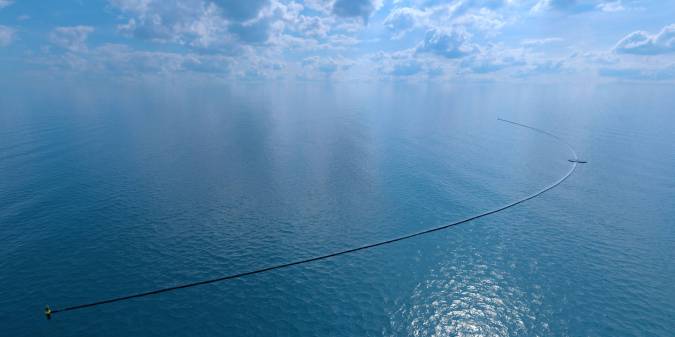
Thanks to Christina Caron for this story that raises important questions about an awesome-sounding technology. Best to first read from The Ocean Cleanup website, and if you have been following the stories we pay attention to you will understand how we might get hooked on the idea:
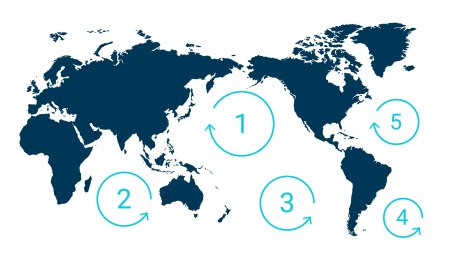
Ocean garbage patches are vast and dispersed
Ocean currents concentrate plastic in five areas in the world: the subtropical gyres, also known as the world’s “ocean garbage patches”. Once in these patches, the plastic will not go away by itself. The challenge of cleaning up the gyres is the plastic pollution spreads across millions of square kilometers and travels in all directions. Covering this area using vessels and nets would take thousands of years and cost billions of dollars to complete. How can we use these ocean currents to our advantage?
THE IMPACT OF CLEANUP
Our models indicate that a full-scale system roll-out could clean up 50% of the Great Pacific Garbage Patch in 5 years.
Research shows the majority of plastic by mass is currently in the larger debris. By removing the plastic while most of it is still large, we prevent it from breaking down into dangerous microplastics.
Combining the cleanup with source reduction on land paves the road towards a plastic free ocean by 2050.
The story in the New York Times raises important questions, not least of which is that Peter Thiel is involved:
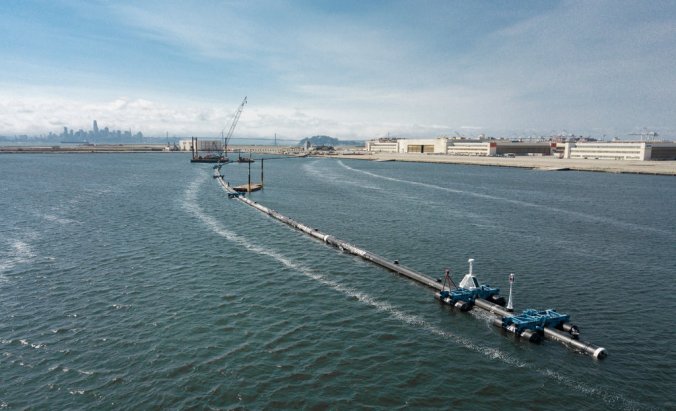
A 2,000-foot-long floating boom, designed by the Ocean Cleanup, a nonprofit, will be used to corral plastics littering the Pacific Ocean. Credit The Ocean Cleanup, via Associated Press
…But the ocean can be unpredictable, and simulation models are no guarantee of future performance.
“There’s worry that you can’t remove the plastic without removing marine life at the same time,” said George Leonard, chief scientist at the Ocean Conservancy. “We know from the fishing industry if you put any sort of structure in the open ocean, it acts as a fish-aggregating device.” Continue reading
 Organikos