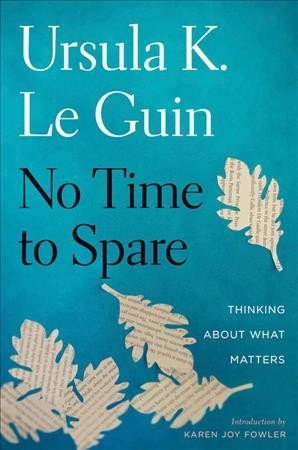
Thinking About What Matters

9781328661593_custom-98a5c984a54b82218a0fc4bb11b82f1021da6b56-s400-c85The author does not frequently show up in these pages. But when she does, it is worth noting because she says things that matter, and that gets us thinking. In the case of this book she is stating the obvious, that there is no time to spare. But sometimes it is good that someone of her stature states it anyway. Thanks to National Public Radio (USA) for this review:

Ursula K. Le Guin’s mastery of fiction has remained so consistent throughout her decades-long career, it’s easy to overlook her accomplishments in other forms. Sure, she’s the author of iconic, award-winning science fiction novels such as 1969’s The Left Hand of Darkness and 1971’s The Lathe of Heaven, not to mention the beloved fantasy series The Earthsea Cycle, which began in 1968. But those distinct works share Le Guin’s firm grasp of poetic language, science, and history. Accordingly, she’s a brilliant poet, albeit a less recognized one. Even further down on her résumé are her wins as a nonfiction writer. Her 2016 collection of essays and reviews, Words Are My Matter, won the Hugo Award for Best Related Work in 2017, despite the fact that the book did not focus exclusively on science fiction — nor do her other nonfiction collections, including The Wave in the Mind from 2004 and now, No Time to Spare, a new book that assembles some of her most cogent ruminations on everything from gender politics to anthropology to, yes, science fiction and fantasy. Continue reading
Resistance, Change, Art, Words–Liberating

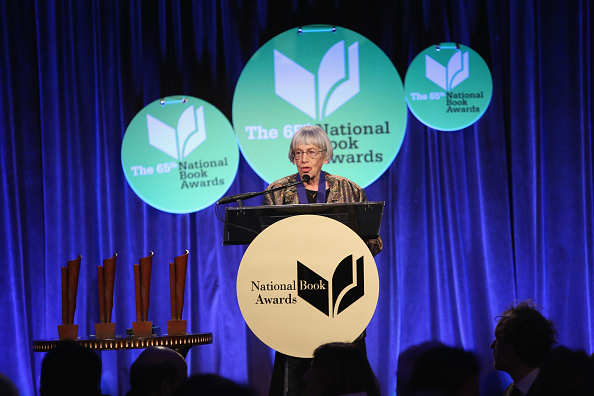
NEW YORK, NY - NOVEMBER 19:  Ursula K. Le Guin attends 2014 National Book Awards on November 19, 2014 in New York City.  (Photo by Robin Marchant/Getty Images)

NEW YORK, NY – NOVEMBER 19: Ursula K. Le Guin attends 2014 National Book Awards on November 19, 2014 in New York City. (Photo by Robin Marchant/Getty Images)

We do not normally pay attention to awards ceremonies, but this one catches our attention. We have said on occasion why we think books matter, why libraries matter, why the fate of publishing matters. On a good day, in our line of work, we approach the same ideal of books: to create experiences different from those encountered in normal, every day lives and by virtue of such experiences, to liberate. Comfort. Beauty. Taste. Wonderment, awe, perspective, yes yes yes.

But going somewhere. And that somewhere is freedom from the confines of norms, from the confines of places devoid of nature. The freedom of the road, a cliche that nonetheless has meaning.  Thanks to the New Yorker‘s Rachel Arons for pointing us to the short, powerful comment from an author who influenced many of us early in life to do what we do for a purpose:

…But it was Ursula K. Le Guin, accepting the Medal for Distinguished Contribution to American Letters early in the evening, who gave the definitive remarks of the ceremony, gliding through the genre debate and the Amazon-Hachette debacle on her way to explaining the crucial role that literature must play in our society.

Continue reading

Maps, More Than A Practical Tool

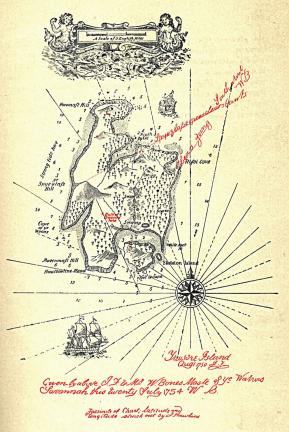
Map of Treasure Island, from Robert Louis Stevenson’s “Treasure Island.”

Map of Treasure Island, from Robert Louis Stevenson’s “Treasure Island.”

Travel without a map can be fun, sometimes, if adventure is the objective; but context and direction helps more than it hurts most of the time. The same is true when maps are there just for the sheer pleasure or comfort, in environmentally sensitive, creative graphic design, or for historical research. This post on the New Yorker‘s website captures the sentiment well:

For years, I carried the same map wherever I went. When I wasn’t travelling, Scotch Tape held it to the back of my bedroom door: it was visible to me when the door was closed, but invisible to almost everyone else. That map moved from dorm rooms to apartments and houses, from the Eastern Shore of Maryland to New England, from New England to the United Kingdom, and back again.

When I felt homesick, I would drag my fingers up and down the map’s paper folds, tracing its shorelines and rivers, wishing they were the real thing. But touching that map only made me more homesick. Continue reading