Winds Over The Water Serving Those On Shore

00windpower-superjumbo

The Block Island Wind Farm’s turbines off the coast of Rhode Island in August. They began spinning on Monday and will deliver electricity to Block Island, a community nearby. Credit Kayana Szymczak for The New York Times

 Thanks to the Science section of the New York Times:

America’s First Offshore Wind Farm Spins to Life

By

Until this week, all of the wind power generated in the United States was landlocked. Continue reading

Look At the Germans

Wind turbines surround a coal-fired power plant near Garzweiler in western Germany. Renewables now generate 27 percent of the country’s electricity, up from 9 percent a decade ago. PHOTO: Nat Geo

Wind turbines surround a coal-fired power plant near Garzweiler in western Germany. Renewables now generate 27 percent of the country’s electricity, up from 9 percent a decade ago. PHOTO: Nat Geo

Germany has been one of the few countries that have successfully moved away from nuclear energy. Germany has so far successfully shut down its nine units that had the capacity of generating enough power for at least 20 million homes in Europe. In fact, the contribution of nuclear power in Germany’s electricity generation has now fallen to just 16 percent and renewables are now the preferred source of electricity generation in the country.

Germany is pioneering an epochal transformation it calls the energiewende—an energy revolution that scientists say all nations must one day complete if a climate disaster is to be averted. Last year about 27 percent of its electricity came from renewable sources such as wind and solar power, three times what it got a decade ago and more than twice what the United States gets today. The change accelerated after the 2011 meltdown at Japan’s Fukushima nuclear power plant, which led Chancellor Angela Merkel to declare that Germany would shut all 17 of its own reactors by 2022.

Continue reading

The Greenest Island in the World?

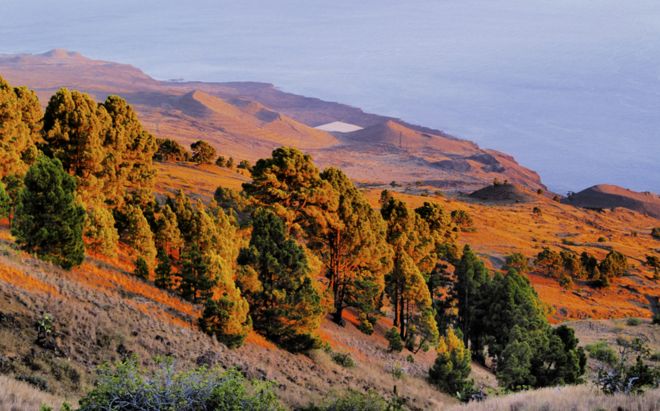
The smallest and most isolated of the Canary Islands, El Hierro, has a way of combining hydro and wind power that may allow it, one day, to get all its energy from renewable sources. PHOTO: BBC

The smallest and most isolated of the Canary Islands, El Hierro, has a way of combining hydro and wind power that may allow it, one day, to get all its energy from renewable sources. PHOTO: BBC

The question is not about who has the densest forests or flora resources showing up high estimates in green. It is one of keeping up a sustained model of efficient use of alternative and natural sources of energy. And on that front, El Hierro seems like it’s well on its way to self-sufficiency on the energy front.

For more than 30 years, El Hierro has been dreaming of becoming self-sufficient. And this year it took a big step forward. At the end of June its new hydro-wind facility, Gorona del Viento, came fully on stream and in July and August it provided roughly half of the island’s energy needs.That means the island’s 10,000 inhabitants are suddenly less reliant on supplies of diesel arriving over unpredictable seas from Tenerife, 200km away. In July, Gorona del Viento saved 300 tonnes of fossil fuels, but that is predicted to rise to 500 tonnes per month before long – the equivalent of saving 40,000 barrels of oil and 19,000 tonnes of emitted CO2 per year.

Continue reading

Bamboo Wind Chimes for Birds

One of the finished chimes

The picture above shows one of a couple bamboo wind chimes that Seth and I built to put up around Xandari. The sound is, err, rather wooden–but definitely mild and pleasant! You may be asking why we took it upon ourselves to demonstrate our mighty artistic prowess. Well, we really had the birds of Xandari in mind with this project. Specifically, a poor Buff-throated Saltator who had thrown himself against the spa window so many times that he had Continue reading