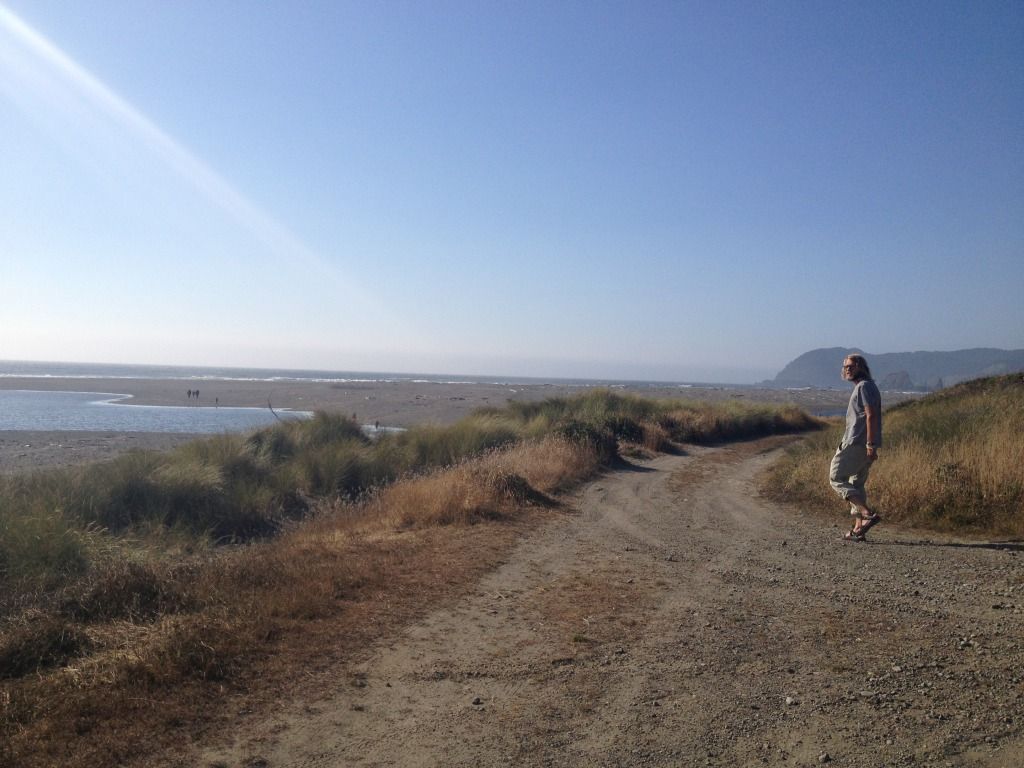
Taking a Quick Stop on the Pacific Coast Highway (Carl)
This is the third in a series of posts on a summer trip; see the second.
In Fort Bragg, the first thing we did was eat a substantial breakfast, since we had missed supper the night before. We ate at a curious Wizard of Oz themed restaurant called “Eggheads,” complete with a yellow-brick road (of linoleum tile) running through the center of the building. We asked the proprietor what had prompted the theme—had the young Judy Garland frequented the coastal town? Were the pots and pans castoffs of the Tin Man’s suit? As it turns out, the answer was rather more mundane: Eggheads’ bathroom is difficult to find. Those wanting to make the trip must go through the dining area and kitchen, exit into a lot behind the building, and hang a left around a corner before finding the small cottage hiding the commode nestled between a few sheds and next to some old gardening equipment. The circuitous route defeats expectations so soundly that, about thirty years ago, management decided to create a prominent trail for customers. When a dull saffron floor tile was chosen, the yellow brick road was born—and all of the many allusions to the Wizard of Oz which thereafter sprung up on the menu and storefront.
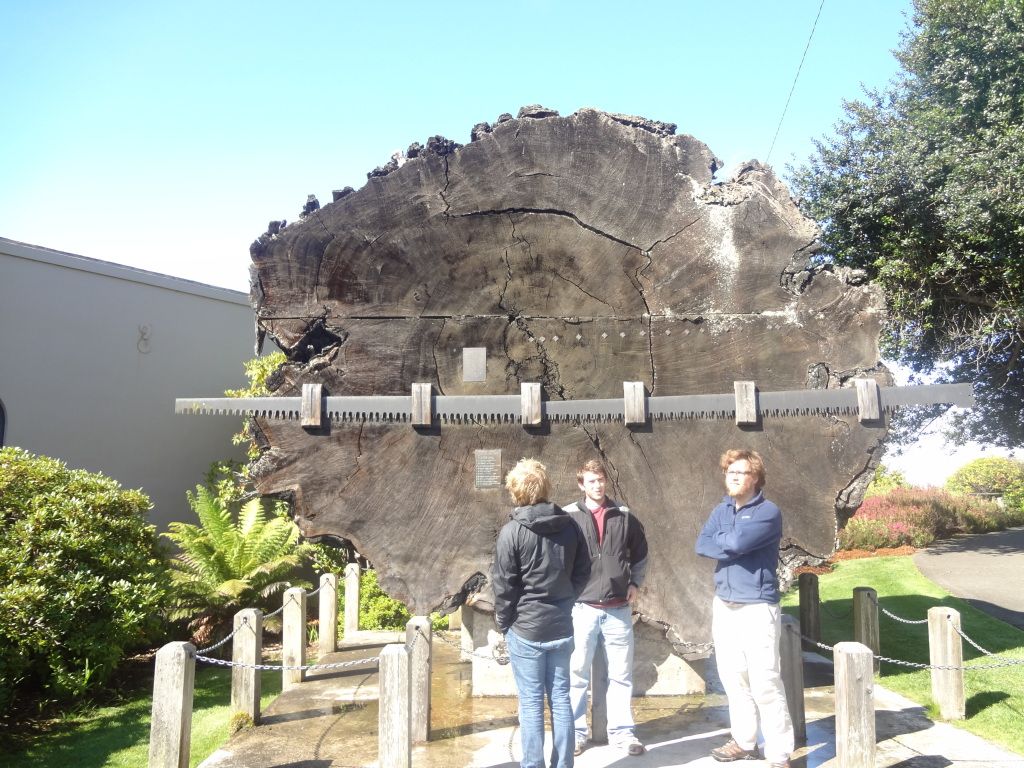
Trying to Make a Decision in Fort Bragg
After leaving Eggheads, we made a stop in a local camping supply store to find out more about northern California’s famed “Lost Coast,” a stretch of rugged coast mostly undeveloped because of the challenges to construction its mountainous terrain affords. Visiting its extensive trail loop, and camping on the beach after our thwarted effort in Point Reyes, was something we had set our sights on. After speaking to a fairly knowledgeable employee, who strongly
encouraged our visit and assured us that there would be no problems with camping, we exited the store to get back on the Pacific Coast Highway. Armed with a tide chart (necessary because certain parts of the trail are simply inaccessible at high tide) and a map of the undeveloped region, we would hike up the black pebble beach and pitch a tent somewhere reasonably hospitable. We stopped in at a local grocery store and grabbed a few cans of baked beans and some materials for s’mores (delicious melted marshmallow, chocolate, and graham cracker treats) before returning to Route1’s twisty roads.
After a few hours of travel (stopping at the Pacific Ocean along the way), we found ourselves drawing closer to the coast. Before long, all signs of paved roads were gone; shortly afterwards, the bumpy dirt road had contracted into one narrow, vertiginous route crawling up and down the area’s wooded slopes. Travel was inevitably slow, as a head-on collision around one of the many blind turns very well could have sent us caroming down the steep grade a few feet away. Although beautiful, the drive became grueling: we alternated between incredibly steep, windy stretches going up, and incredibly steep, windy stretches going down. Sure enough, the road eventually took its toll. Because we hadn’t been using the engine brake frequently enough, we had torched the brake pads. On one particularly long downhill, I noticed that the brakes felt mushy; even putting as much force as I could on the pedal, our deceleration was only moderate. We quickly pulled off into a turnout that presented itself, and leapt out of the car. We were assaulted by the acrid smell of burned rubber, and the sight of thick clouds of smoke literally pouring from the front brake wells. A break from the devilish road had been forced onto us, it seemed.
After practicing hatchet-throwing skills and tossing around a boomerang for a few minutes, we deemed it safe to continue the journey, especially because we had reason to believe we were close to the beach trailhead. A few more minutes, indeed, saw us in the trail’s parking lot. We popped the trunks, emptied our bags of clothes, and began to pack for the hike in. We didn’t have the recommended bear canister, so instead we packed a few lengths of rope away to hoist our food. Soon, we were on Black Sands beach; we had packed a pretty decadent dinner, and were lugging along a stove and giant tent, so we didn’t want to hike too far down the coast. (We weren’t exactly planning on roughing it!) There was a seven-mile stretch before we reached any real campground, so we planned instead just to find a nice spot on the beach somewhere in that length and set up camp.
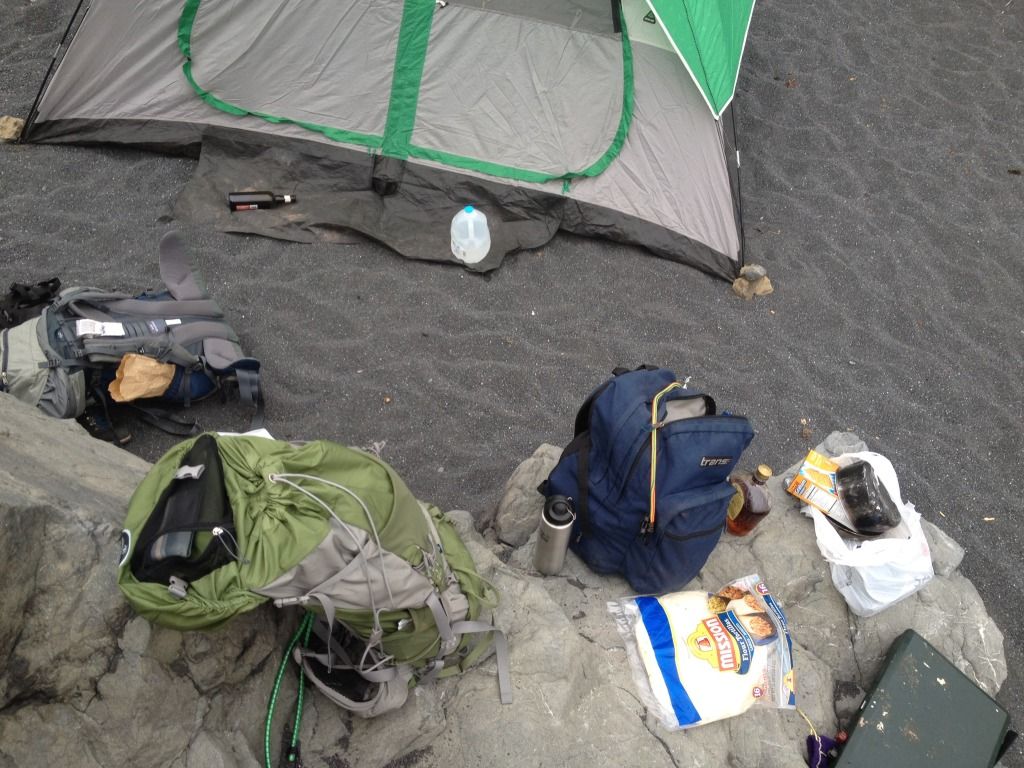
Pitching Our Tent
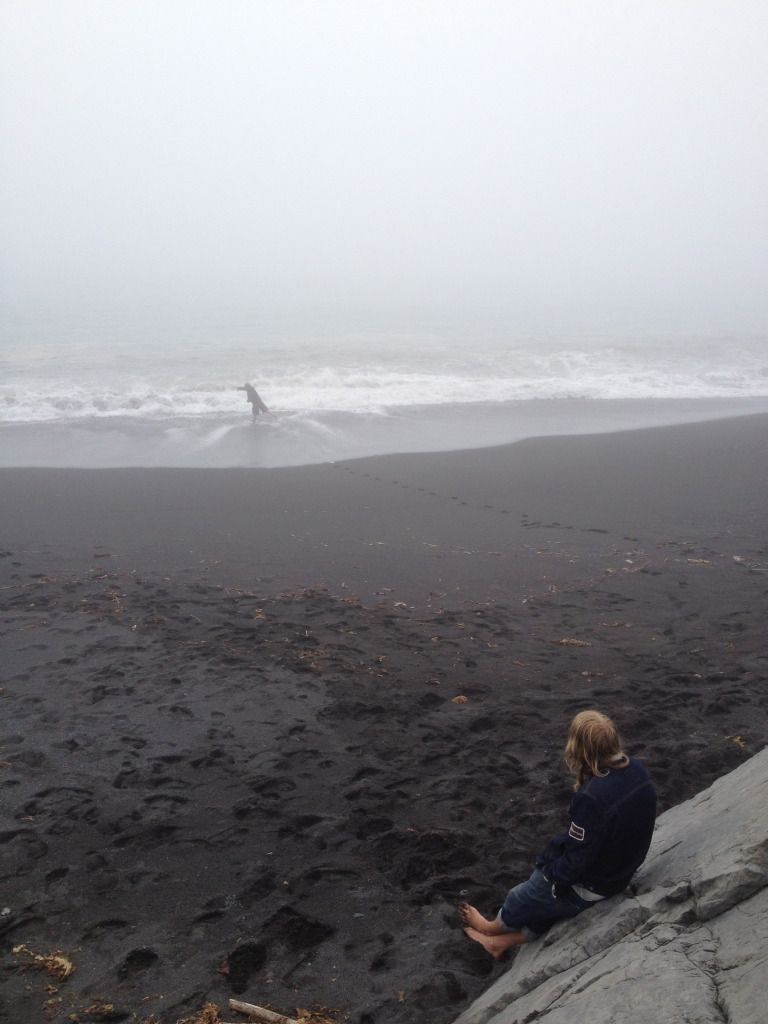
Trying to Fish on the Black Sands
The walk was difficult, but incredible. The sand under feet gave way at every step, so each step felt like two or three on firm ground. And as with so many stretches of the Pacific Coast, a pall of thick gray cloud hung low over us, straining the sun’s feeble rays of light through its cottony mass. We were enveloped in a muted solitude, even a wildness: any sound beyond the ocean’s heaving swells struggled to pierce the damp air, and the steep peaks on our right hand, beginning just where the beach ended, were lost in the gauzy mist. Although we weren’t that far from our car, the heavy atmosphere seemed to put a world between the lined tarmac and us. We were beginning to understand another sense (intentional or not) to the name “Lost” Coast. This effect only increased as the evening progressed; long before nightfall, our visibility had already dropped to a dozen or so meters. But for now, there was still enough light, even through the cloud layer, for us to marvel at the billions of tiny pebbles strewn along the beach. Where the ocean’s waves pounded the coast, the black sand was incredibly fine. But with each step away from the water, the pebbles increased in size—never, however, deviating from their perfectly smooth, spheroid shape. Gradually, they grew to the size of peas, then marbles, then a clenched fist. Among these were scattered rocky globes the size of our heads, presumably the much-diminished fathers of all of the grains spread about them. (Chips off the old block, right?)
We eventually came to a grouping of massive rocks jutting from the beach. A few pieces of burned wood scattered about led us to believe that this had been a common campsite. Indeed, the rocks provided shelter from the sea spray, a felled log for sitting, and ideal perches on the crags for reading, talking, and admiring the surroundings. We decided to settle here for the night, and unpacked our belongings and pitched our tent. We spent the rest of the evening exploring the area and gathering firewood as the fog grew denser. We never really knew exactly when the sun set, because long before it was dark the world beyond our campsite was rendered opaque by the thickening mists. A few hikers passed through our camp at one point, returning from the flats further down the beach, but otherwise we had no visitors. Carl and Nick tried their hand at fishing, but discovered that the rod we’d brought was missing its handle. They attempted to simply throw a weighted hook on a fishing line into the surf, but it was invariably tossed back in midflight towards the shore because of the strong wind. Soon we had lost all of our line, so they were forced to give up the endeavor.
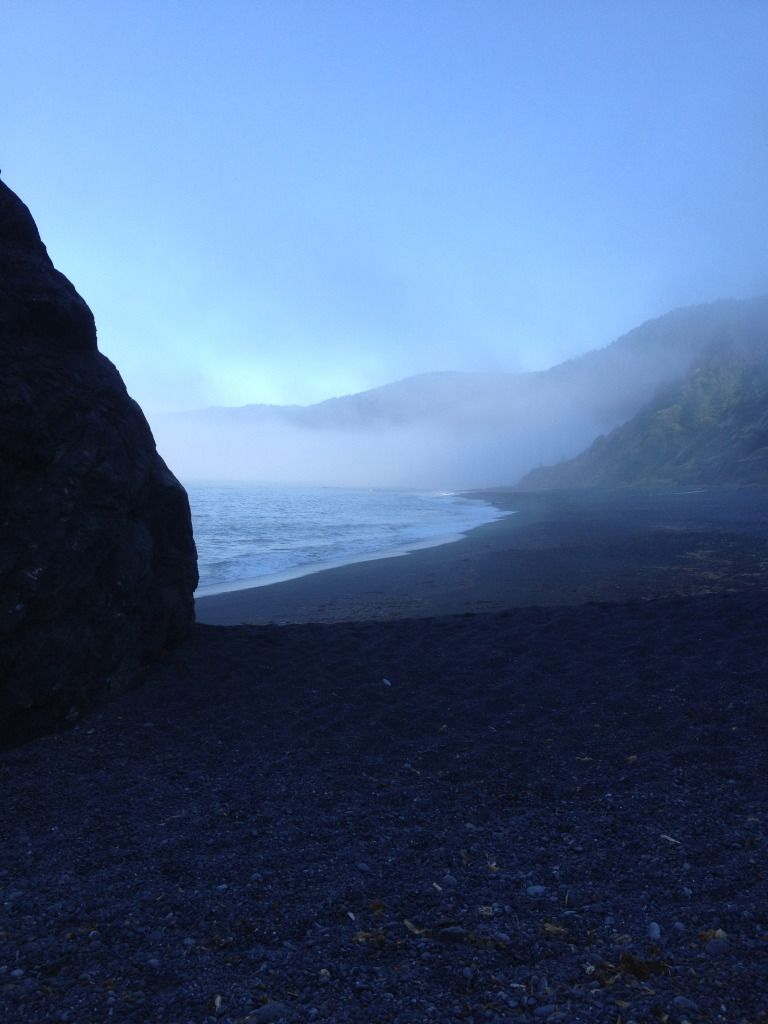
Getting up on Black Sands Beach
After roaming the beach and gathering the bleached wood we found along the shore for our fire, we rolled a portion of a felled tree’s trunk next to an overhanging rock to create a makeshift bench and built a bonfire in the lee the crag provided. This turned out to be providential, as the rock provided us shelter from the constant, heavy sea spray the wind whipped off the ocean. After eating a large dinner (burritos from canned beans, corn, and rice), we hoisted our trash and enjoyed the roaring fire. One by one, we drifted off to the tent to catch up on the sleep we’d lost in Sebastopol the previous night. The night passed uneventfully, and we woke to a brief but incredible sunrise as the clouds thinned in the early morning; before long, the thick clouds had swallowed up the sky again. We ate a small breakfast of grits before packing up our tent and trash and hiking back to the car.
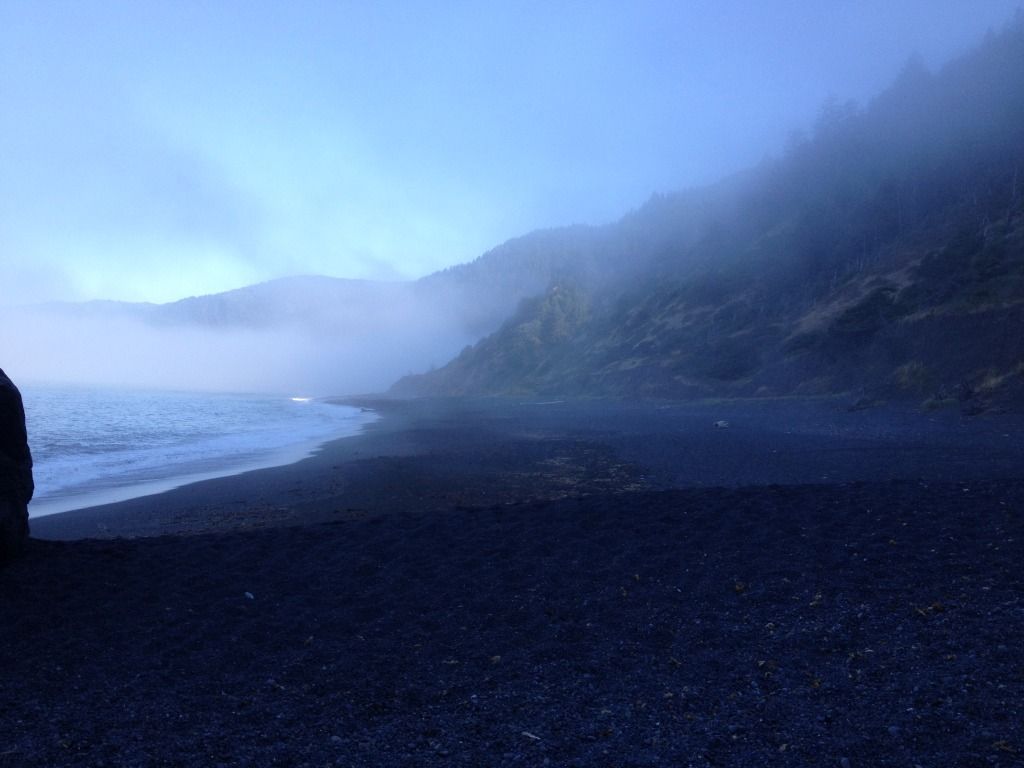
Sunrise on Black Sands Beach, Lost Coast, California
 Organikos