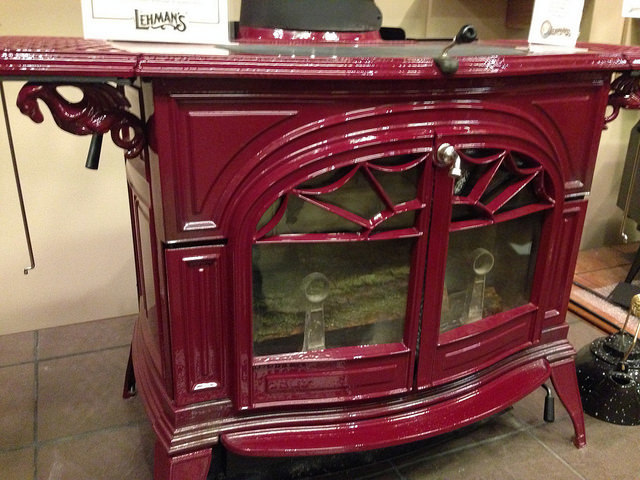
A wood-fired stove at Lehman’s (Photo: sonja/Flickr)
What started as a small hardware store serving the local Amish in Kidron, Ohio, grew into something much bigger than founder Jay Lehman ever dreamed. Gathering four pre-Civil War era buildings under one soaring roof, today the store is a place to embrace the past: from old-fashioned treats and sodas to practical, non-electric goods for a simpler life.
The story of the Lehman store is one of “peddling historical technology”. A story of being old-school. And being good at it. Their top-selling products have not changed for decades. Wood stoves, gas refrigerators, oil lamps, water pumps, and water filters are always popular: if you don’t have electricity, you still need ways to store food, stay warm, light the night, and access water.
“We’ve known the term ‘off-the-grid’ for many, many years,” Ervin says. “But now it’s a thing.”
Jay Lehman first got into the business of peddling “historical technology,” as the store calls it, in 1955, when he came home from serving overseas and was looking for a job. A hardware store, in Kidron, Ohio, about an hour south of Cleveland, was up for sale. With a loan co-signed by his father, Lehman bought it and set about learning how to run it.
“Most people who had a hardware store in 1955 grew out of that business model, says Ervin. “Dad did not.” Older technology appealed to him, because it’s simple enough to fix up when something goes wrong. “He has a 1923 Model T that he drives around in,’ she says. “He likes to be able to look at something, see what’s wrong with it, and fix it.”
Lehman’s always stocked non-electric technology for its Amish customers. But, in the 1970s, the Lehman family first started to understand that there were other groups of people who would benefit from old-school technology as well. Jay Lehman spent much of the 1960s working in Africa for a church-run travel agency that helped facilitate travel for missionaries. When he came home, he grew recommitted to selling products that people living in places without good access to electricity would need, including wood-fired heating and cooking stoves.
In the early 1970s, the manufacturers of these stoves, though, were seeing demand dry up, so much so that they were planning on ending production. When Lehman went to put in an order, the manufacturer required that he buy a three-year supply, in order to ship them at all.
This was just before the 1973-1974 oil embargo hit, and when it did, all of a sudden, the demand for wood-fire stoves jumped. “His three-year supply was gone in six months,” says Ervin, “and when he went back to the stove manufacturers, he was kind of first in line.”
Read more here.
 Organikos