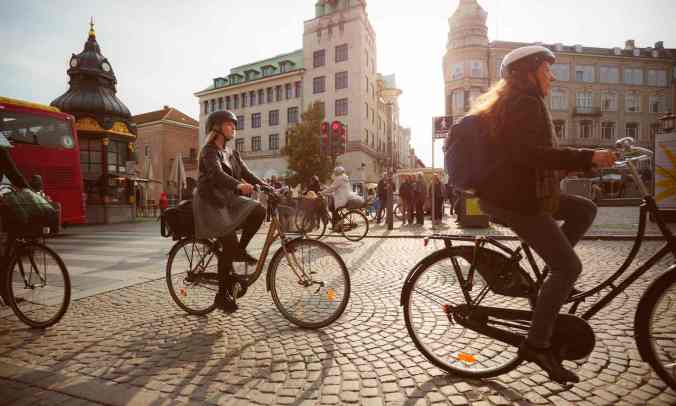
Copenhagen has recorded 13,100 more bikes than cars in the city centre over the past year. Photograph: Michal Krakowiak/Getty Images
Scandinavia in general (and Denmark in particular) is famous for forward thinking initiates, both socially and environmentally. Thanks to the Guardian for sharing this milestone.
Two-wheel takeover: bikes outnumber cars for the first time in Copenhagen
Denmark’s capital has reached a milestone in its journey to become a cycling city – there are now more bikes than cars on the streets. Can other cities follow?
Bicycle sensors in Copenhagen clocked a new record this month: there are now more bikes than cars in the heart of the city. In the last year, 35,080 more bikes have joined the daily roll, bringing the total number to 265,700, compared with 252,600 cars.
Copenhagen municipality has been carrying out manual traffic counts at a number of city centre locations since 1970, when there were 351,133 cars and 100,071 bikes. In 2009, the city installed its first electric bike counter by city hall, with 20 now monitoring traffic across the city.
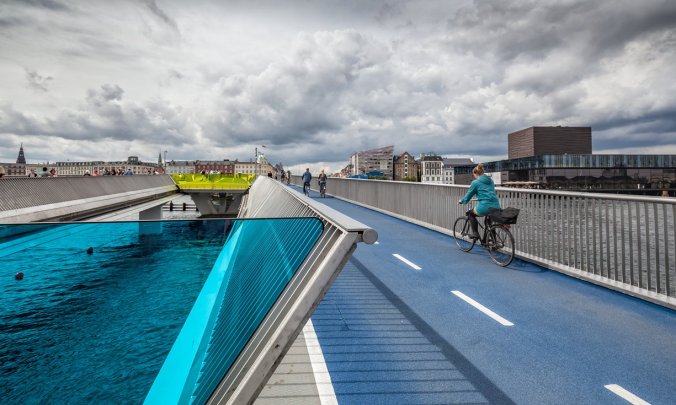
The Danish government has invested 1bn kroner in cycling infrastructure. Photograph: Angel Villalba/Getty Images
Copenhagen’s efforts to create a cycling city have paid off: bicycle traffic has risen by 68% in the last 20 years. “What really helped was a very strong political leadership; that was mainly Ritt Bjerregaard [the former lord mayor], who had a dedicated and authentic interest in cycling,” says Klaus Bondam, who was technical and environmental mayor from 2006 to 2009 and is now head of the Danish Cycling Federation. “Plus, a new focus on urbanism and the new sustainability agenda broke the glass roof when it came to cycling.”
Since 2005, 1bn Danish kroner (£115m) has been invested in cycling infrastructure, from several new bike and pedestrian-only bridges such as Cykelslangen (the Cycle Snake) to the recently opened Kissing Bridge. “Cycling went from being a normal part of daily life to a core identity for the city,” says Bondam.
For Morten Kabell, the current mayor of technical and environmental affairs, the cycling city is “a constantly evolving goal”. He sees “the central core of town between Nørreport, City Hall and Kongens Nytorv becoming car-free within a decade”, and is striving for 50% of all commutes to be made by bike across Greater Copenhagen by 2025 – not such a lofty goal, given that the current figure is 41%.
However, he believes this figure will actually fall when the metro extension opens in 2019. “There’s no doubt it will take some of the bike traffic; but the important thing for me is to have a green transport system. As long as it’s fossil-free and alleviates congestion and air pollution, I’m cool with that,” he says…
Read the entire article here.
 Organikos
Very nice post.