
German artist Diane Scherer creates low-relief sculptures made from plant roots. DIANA SCHERER
Thanks to Wired for this bit of intrigue:
Artist Teaches Roots To Grow In Beautiful, Alien Patterns
by MARGARET RHODES
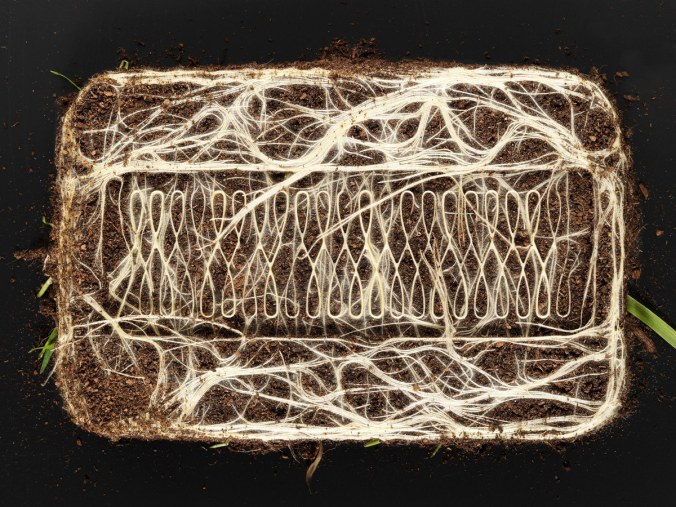
THE HUMAN RACE has a long history of bending nature to its will. The results of this relationship can be devastating—but they can also be strikingly beautiful, as German artist Diane Scherer skillfully proves with her low-relief sculptures made from plant roots.
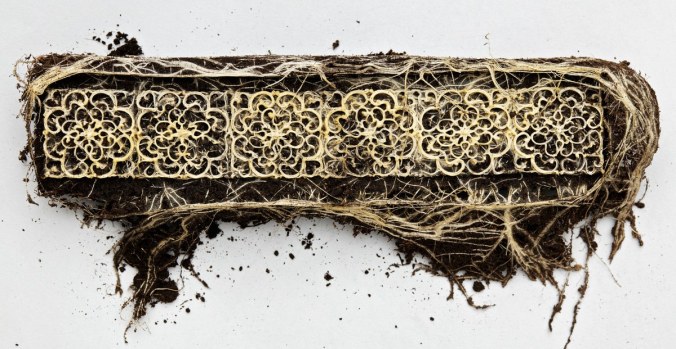
Scherer grows these works of art by planting oat and wheat seeds in soil, and then carefully, meticulously, warping the growth pattern. DIANA SCHERER
Scherer grows these works of art by planting oat and wheat seeds in soil, and then carefully, meticulously, warping the growth pattern. She prefers to train her roots into geometric patterns found in nature, like honeycomb structures, or foliate designs reminiscent of Middle Eastern arabesques.
She prefers to train her roots into geometric patterns found in nature, like honeycomb structures, or foliate designs reminiscent of Middle Eastern arabesques. DIANA SCHERER
But even with that botanical theme, applied to a botanical substance, Scherer’s pieces look distinctly alien—like the plant equivalent of women who’ve trained their waists with corsets, or feet with foot binding. “I think that people, they cherish nature, but on the other hand they are really quite cruel with nature,” Scherer says.
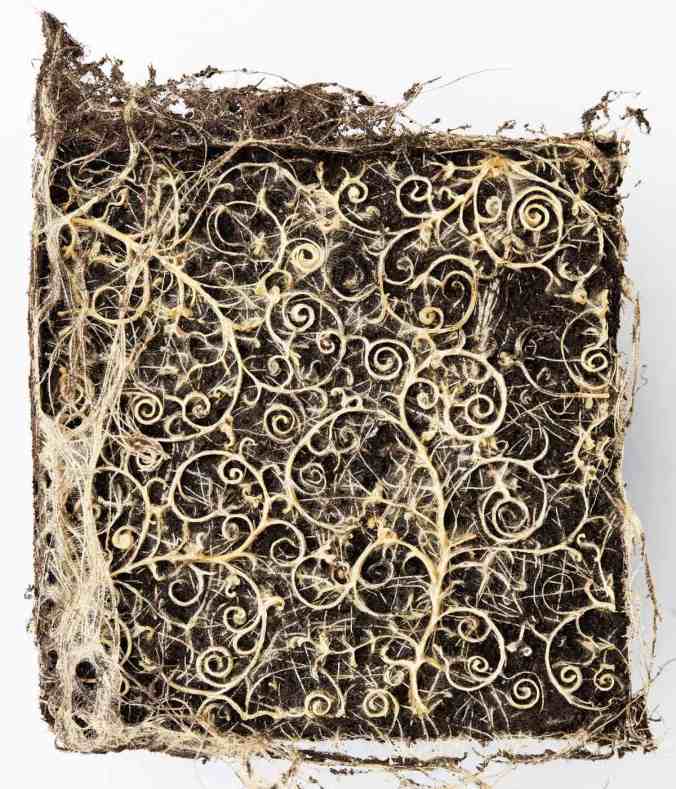
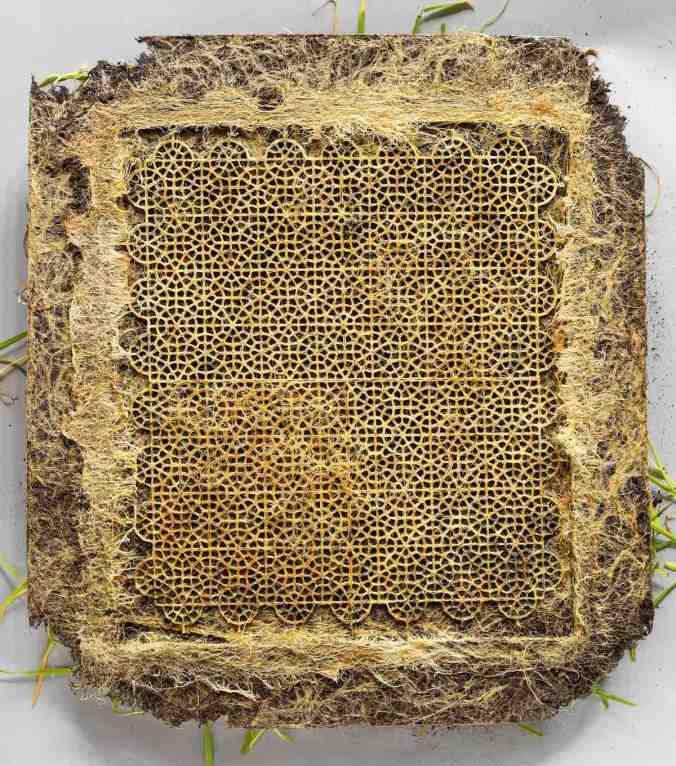
Still, Scherer’s pieces look distinctly alien—like the plant equivalent of women who’ve trained their waists with corsets, or feet with foot binding. DIANA SCHERER
“Like the gardener is telling us he loves nature, but the garden has to look like what he wants it to in his mind. He has to crop and prune and use poison.” Scherer makes no claims to a nobler process. Her artistic impulse, she says, is to control the roots in her pieces. “The roots that I domesticate, they have to do what I tell them.”
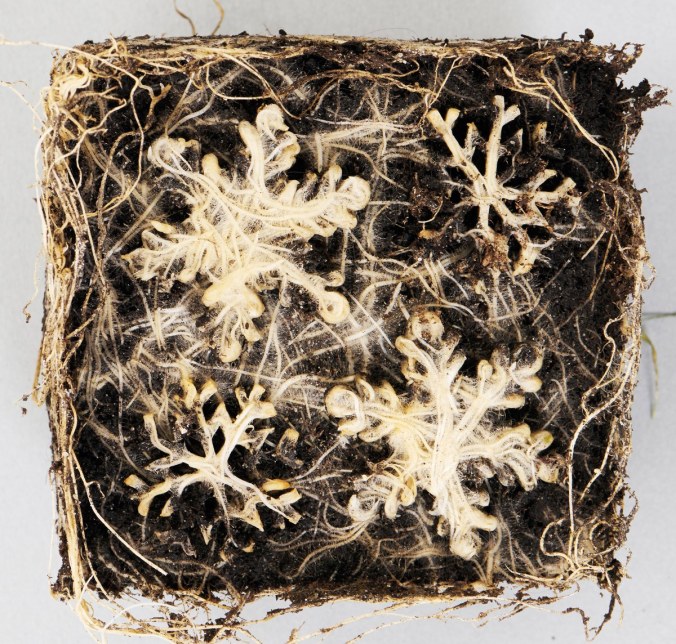
Since 2012, she’s developed and honed a technique which involves a “template,” which functions like a mold.DIANA SCHERER
Scherer started contemplating what she calls root system domestication in 2012, during work on a series called “Nurture Studies.”…
Read the whole story here.
 Organikos
Beauty
This makes me sad. It’s like the circus, but with plants.
That’s a powerful perspective Amelia. Thanks so much for the comment. We wish you a beautiful 2017!
Thank you La Paz Group, I also wish you the very best for 2017. And thank you so much for your beautiful work of reporting Nature’s wonders.
🙂