
Photo illustration by Lauren Peters-Collaer
If conservation failure is an option, then assisted evolution is a necessary consideration. Emily Anthes walks us through the idea:
Should We Change Species to Save Them?
When traditional conservation fails, science is using “assisted evolution” to give vulnerable wildlife a chance.
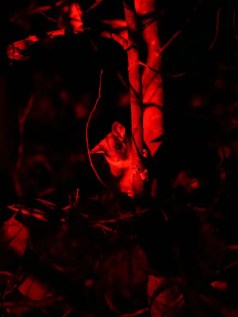
Scientists are trying to save lowland Leadbeater’s possums, tree-dwelling marsupials known as forest fairies, by crossbreeding them with possums from a separate highland population, a strategy known as genetic rescue.
For tens of millions of years, Australia has been a playground for evolution, and the land Down Under lays claim to some of the most remarkable creatures on Earth.
It is the birthplace of songbirds, the land of egg-laying mammals and the world capital of pouch-bearing marsupials, a group that encompasses far more than just koalas and kangaroos. (Behold the bilby and the bettong!) Nearly half of the continent’s birds and roughly 90 percent of its mammals, reptiles and frogs are found nowhere else on the planet.
Australia has also become a case study in what happens when people push biodiversity to the brink. Habitat degradation, invasive species, infectious diseases and climate change have put many native animals in jeopardy and given Australia one of the worst rates of species loss in the world.
In some cases, scientists say, the threats are so intractable that the only way to protect Australia’s unique animals is to change them. Using a variety of techniques, including crossbreeding and gene editing, scientists are altering the genomes of vulnerable animals, hoping to arm them with the traits they need to survive.
“We’re looking at how we can assist evolution,” said Anthony Waddle, a conservation biologist at Macquarie University in Sydney.
It is an audacious concept, one that challenges a fundamental conservation impulse to preserve wild creatures as they are. But in this human-dominated age — in which Australia is simply at the leading edge of a global biodiversity crisis — the traditional conservation playbook may no longer be enough, some scientists said.
“We’re searching for solutions in an altered world,” said Dan Harley, a senior ecologist at Zoos Victoria. “We need to take risks. We need to be bolder.”…
Read the whole story here.
 Organikos