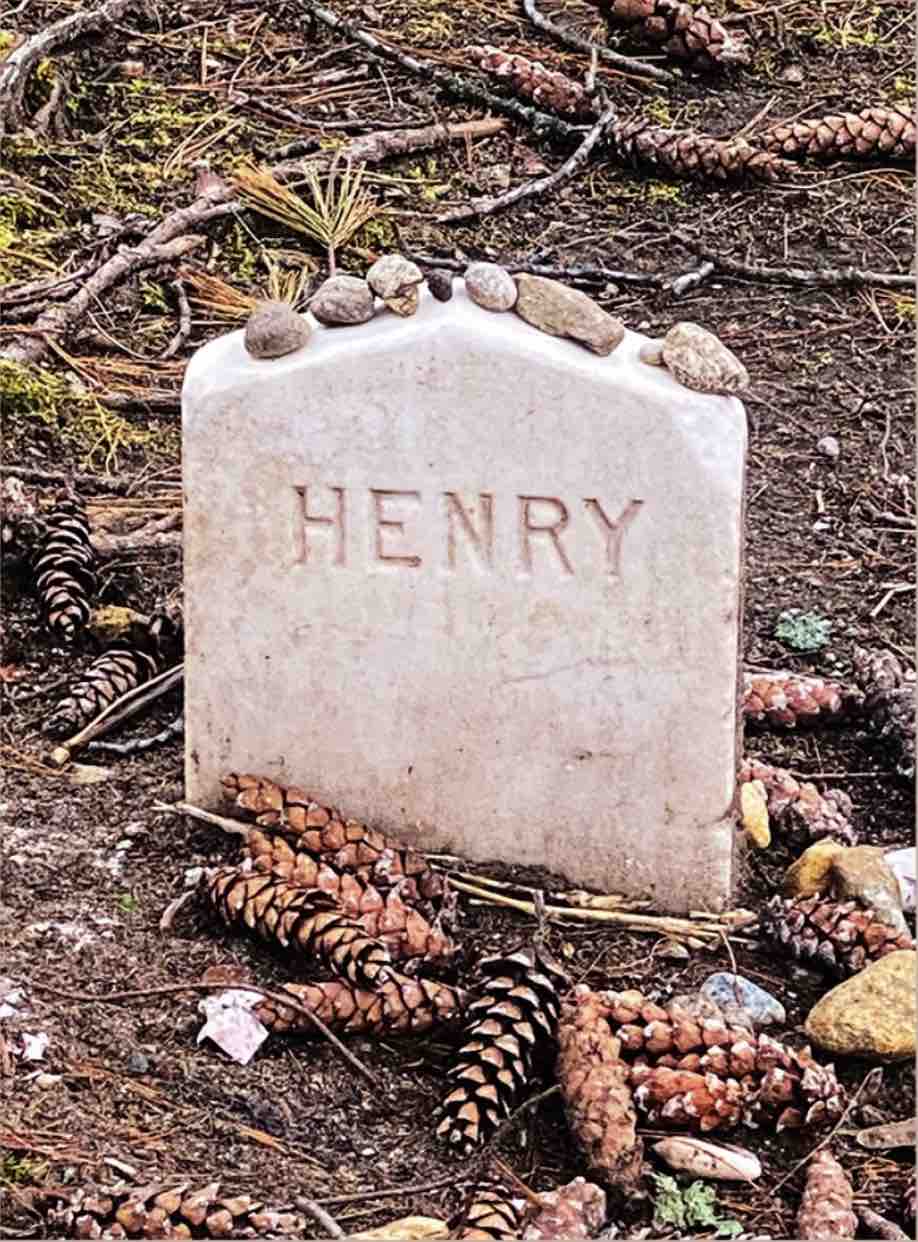
Henry David Thoreau’s grave, Concord, Massachusetts (Jeffrey Goldberg)
Jeffrey Goldberg has not appeared in our pages directly before, but his work has had a profound impact on how we see the world. His editorship of The Atlantic, starting in 2016, overlaps with an increase in that magazine’s coverage of climate change in ways that we have found useful. His introduction to the summer issue of the magazine is a fitting example of his commitment to the topic:
In Wildness Is the Preservation of the World
Returning the planet to some sort of climate equilibrium is a universal interest.
Loyal readers of this magazine know that we are preoccupied with matters of climate change, and that we worry about the future of our home planet. I appreciate (I really do) Elon Musk’s notion that humans, as a species, ought to pursue an extraplanetary solution to our environmental crisis, but I believe in exploration for exploration’s sake, not as a pathway to a time share on Mars.
So we at The Atlantic are focused intensely on, among other things, the relationship between humans and the natural world they currently inhabit. We have a long history of interest here. The great conservationist John Muir more or less invented the national-parks system in The Atlantic. John Burroughs defended Charles Darwin in our pages. Rachel Carson wrote her earliest essays, about the sea, for us. And, of course, The Atlantic published much of Thoreau’s finest and most enduring writing.
In our lead essay this month, our senior editor Vann R. Newkirk II argues that America owes a debt to other nations for its role in accelerating climate change, and that paying this debt may be the best way for the world to save itself. “For at least the immediate future, wealthy Americans will be protected from the worst of the climate crisis,” he writes. “This comfort is seductive, but ultimately illusory.”
Climate change is one reason I asked our staff writer George Packer, the author of the National Book Award–winning The Unwinding, to identify a place that could somehow stand in for America’s fundamental quandaries, hypocrisies, and powers of self-correction and improvement. Against his better judgment (he doesn’t like the heat very much), Packer found himself returning again and again to Phoenix, where, he became convinced, the future is being determined—not merely our political future, but our relationship with the natural world, on which our survival depends. Packer’s cover story possesses the grand sweep, capacious reporting, and powerful insight our readers expect from him…
Read the whole article here.
 Organikos