
Starship, the upper stage of SpaceX’s new rocket, at its launchpad in Boca Chica, Texas. Conservationists are concerned with the environmental impact space operations have on the area.
After assurances about protecting the environment, damage was done. They declined responsibility (the words they used included “…it’s cool”). Not cool:
Wildlife Protections Take a Back Seat to SpaceX’s Ambitions
A New York Times investigation found that Elon Musk exploited federal agencies’ competing missions to achieve his goals for space travel.
As Elon Musk’s Starship — the largest rocket ever manufactured — successfully blasted toward the sky last month, the launch was hailed as a giant leap for SpaceX and the United States’ civilian space program.
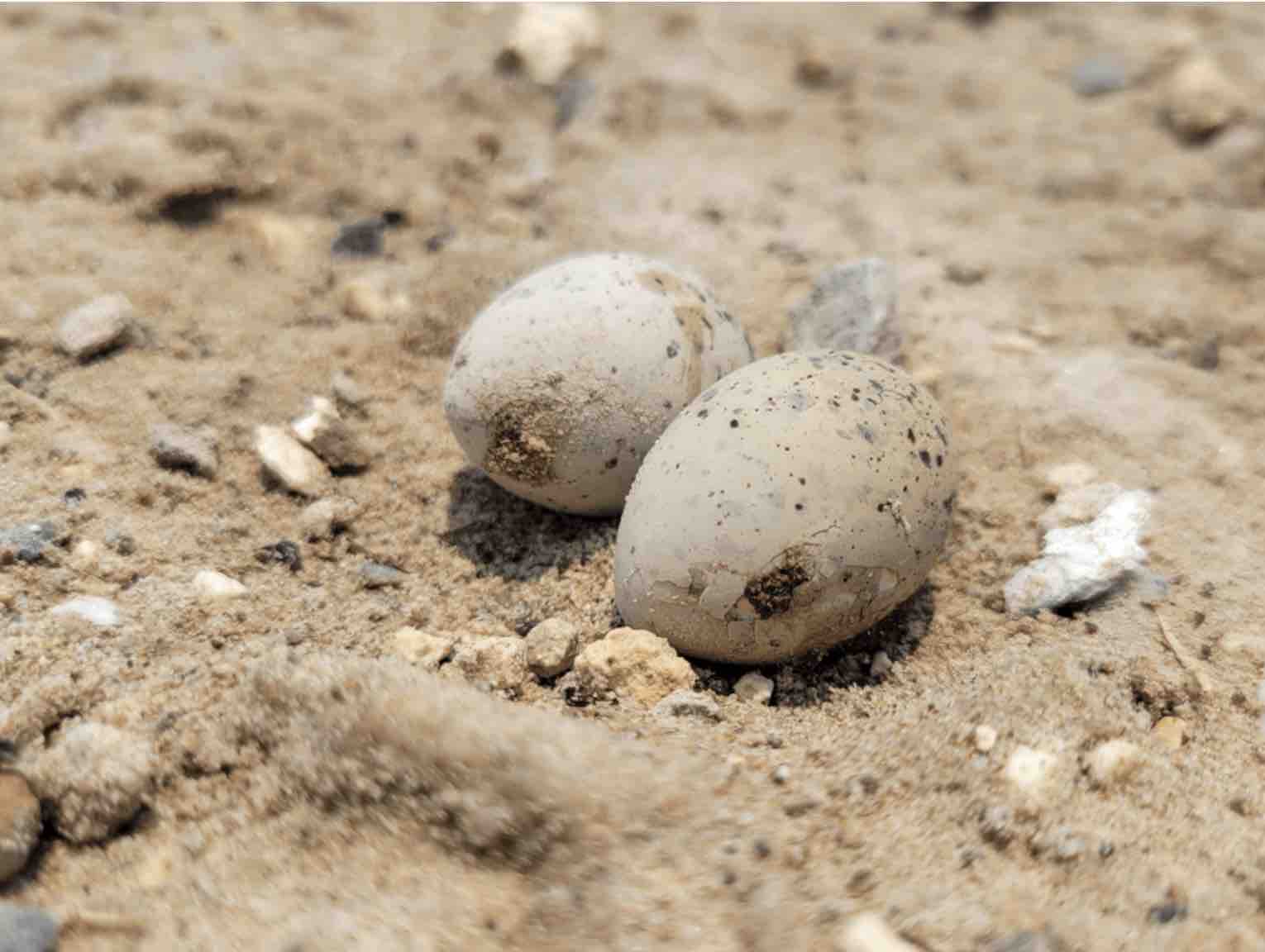
Figure 9. LETE 1 showing both eggs with large holes/cracks and dried egg contents emerging on June 6, 2024.
Two hours later, once conditions were deemed safe, a team from SpaceX, the U.S. Fish and Wildlife Service and a conservation group began canvassing the fragile migratory bird habitat surrounding the launch site.
The impact was obvious.
The launch had unleashed an enormous burst of mud, stones and fiery debris across the public lands encircling Mr. Musk’s $3 billion space compound. Chunks of sheet metal and insulation were strewn across the sand flats on one side of a state park. Elsewhere, a small fire had ignited, leaving a charred patch of park grasslands — remnants from the blastoff that burned 7.5 million pounds of fuel.
Most disturbing to one member of the entourage was the yellow smear on the soil in the same spot that a bird’s nest lay the day before. None of the nine nests recorded by the nonprofit Coastal Bend Bays & Estuaries Program before the launch had survived intact.
Egg yolk now stained the ground.
“The nests have all been messed up or have eggs missing,” Justin LeClaire, a Coastal Bend wildlife biologist, told a Fish and Wildlife inspector as a New York Times reporter observed nearby.
The outcome was part of a well-documented pattern.
On at least 19 occasions since 2019, SpaceX operations have caused fires, leaks, explosions or other problems associated with the rapid growth of Mr. Musk’s complex in Boca Chica. These incidents have caused environmental damage and reflect a broader debate over how to balance technological and economic progress against protections of delicate ecosystems and local communities.
That natural tension is heightened by Mr. Musk’s influence over American space aspirations. Members of Congress and senior officials in the Biden administration have fretted privately and publicly about the extent of Mr. Musk’s power as the U.S. government increasingly relies on SpaceX for commercial space operations and for its plans to travel to the moon and even Mars.
An examination of Mr. Musk’s tactics in South Texas shows how he exploited the limitations and competing missions of the various agencies most poised to be a check on the ferocious expansion of the industrial complex he calls Starbase. Those charged with protecting the area’s cultural and natural resources — particularly officials from the Interior Department’s Fish and Wildlife Service and the National Park Service — repeatedly lost out to more powerful agencies, including the Federal Aviation Administration, whose goals are intertwined with Mr. Musk’s.
In the end, South Texas’ ecology took a back seat to SpaceX’s — and the country’s — ambitions.
Executives from SpaceX declined repeated requests in person and via email to comment. But Gary Henry, who until this year served as a SpaceX adviser on Pentagon launch programs, said the company was aware of the officials’ complaints about environmental impact and was committed to addressing them…
Read the whole article here.


The best wat of saving the world is by having less humans! Decrease human population by 99% (below 100 million) and all other issues will fix themselves like magic… Human population on Earth was always below 100 million – until a few hundred years ago…