One hundred and fifty-two years after his birth, Theodore Roosevelt’s legacy as a conservationist lives on in the nearly 230 million acres of land he helped place under public protection. During his 2 terms as the 26th President of the United States of America he established 150 National Forests, 51 Federal Bird Reservations, 5 National Parks, 18 National Monuments, 4 National Game Preserves, and 21 Reclamation Projects, in many cases designated the first of their kinds. Continue reading
Author: Amie Inman
…And the World Smiles With You
A World Apart*
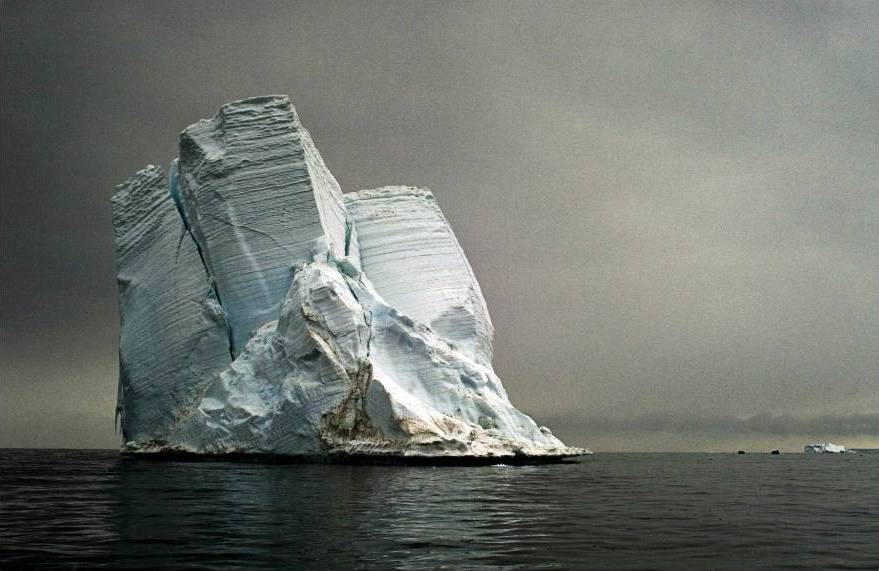
Stranded Iceberg III, Cape Bird Antarctica, December 2006, Camille Seaman
2011 TED fellow Camille Seaman has been photographing Icebergs for 10 years. In her talk below she speaks of her first visceral response to their immensity and their fragility. Her images tell the stories of their births, as they face their environments as distinct individuals, and poignantly of their deaths, as they each move toward their inevitable end. Continue reading
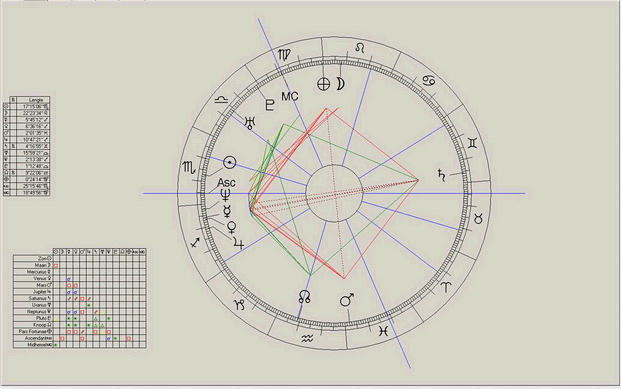
“Horoscope not matching, that lady…”
A few weeks ago I wrote about the importance of the astrologers‘ input in choosing a life mate. Yesterday I asked a member of the family whether the young man had chosen a bride yet. The title of this post was his simple response.
So, back to the drawing board, as the saying goes….
Synchronous Symmetry
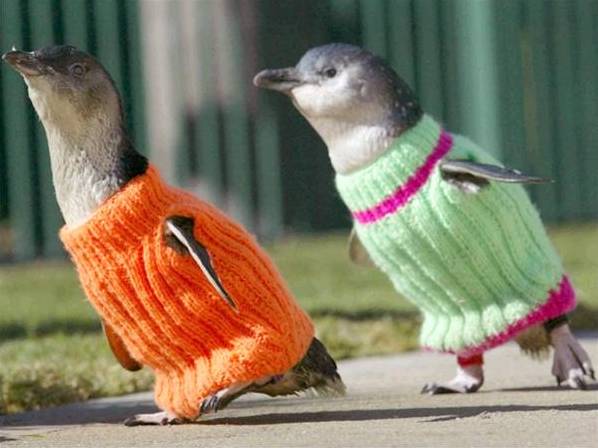
Penguin Cozies
The environmental impacts of ocean oil spills are often incalculable, but for better or for worse the effects on wildlife are well-known. New Zealand’s coastal waters are home or breeding grounds to nearly 85 species of seabirds, and during breeding season the situation becomes increasingly desperate as the birds dive in and out of the water to find food for their chicks. Continue reading
Music of the Spheres
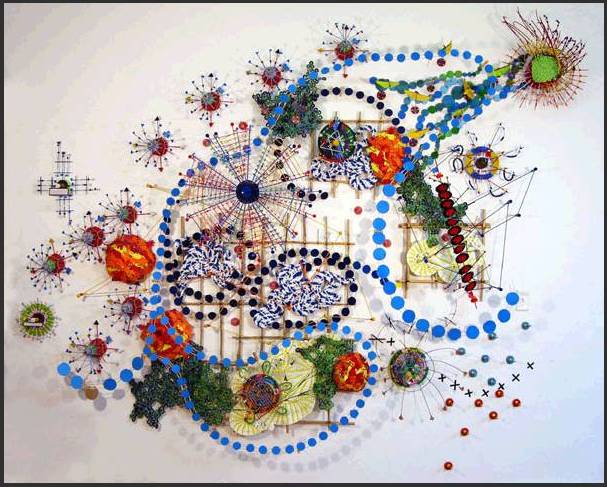
Changing Water – Gulf of Maine, 2011, Nathalie Miebach
Tones sound, and roar and storm about me until I have set them down in notes —Ludwig van Beethoven
Boston artist Nathalie Miebach found the seemingly unlikely intersection between astronomy, meteorology, ecology and basket weaving, essentially translating data into 3 dimensions… then she adds the plane of music. For her work, Miebach was selected as a 2011 TEDGlobal Fellow.
Initially focusing her woven sculptures on data from the stars, her work was rerouted by a call from two weather scientists at Tufts University. Intrigued by her work and it’s possible applications, they asked her to collect weather data on Cape Cod. From that point on, winds, temperature, barometric pressures, and rainfall became part of the raw material for her artistic work. Continue reading
Bismar’s Birds
Our involvement with conservation tourism around the world has taught us the vital importance of guides, whether they be for cultural visits or treks in the forest. Good interpretation is something that cannot be underestimated, in fact, it has been said to us before that “a visit to the rain forest without a guide is like a visit to the library without knowing how to read.” In both cases there are opportunities to take in the atmosphere, but without the interpretive element that atmosphere is missing an infinite amount of context.
A good nature guide must have the obvious strengths of a “good eye”. They must also be able to communicate well with their visitors, even if language barriers are present. (Herein lies part of the beauty of the scientific names for flora and fauna!) It’s an even greater boon if the guide’s “good eye” translates into being a good photographer.
Bismar López is an example of one of these talented guides, and we hope to highlight more from different parts of the world in the future. He’s been guiding at Morgan’s Rock, a nature resort in southern Nicaragua (where Seth Inman spent the summer interning) since 2008. Growing up in a small community near the reserve has helped develop his love of Nature, especially birds. Continue reading
What Wind Can Do
Milo has commented on the next generation of wind harvesting in an earlier post, but the use of technology is only bound by the limits of inventiveness and imagination. Even in resource poor parts of the world opportunities are available to dreamers who see the possibilities in what has been discarded.
How the Wind Rose Turns
A recent trip to Thekkady showed me that the North East Monsoon will soon be upon us. The state’s equatorial tropical climate is dictated by its privileged position between the Arabian Sea and the Western Ghats, with the South West Monsoon providing respite from the summer heat and the North East Monsoon providing displays of lightning worthy of the Diwali season.
As the winds pick up it made me think about our time in Croatia, a country where the winds have mysterious names that don’t appear to coincide with points on the compass. Like eddies, one of those inanimate natural phenomena that seem to take on animated characteristics, the named winds seem to possess characteristics far greater than the mere direction of their source. Continue reading
Waltz of Birds, Bees and Bats
Such Stuff As Dreams Are Made On
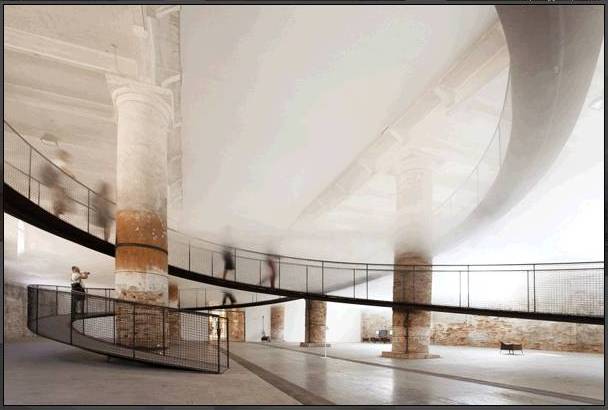
Cloudscapes (2010), Transsolar and Tetsuo Konda Architects
The Venice Architectural Bienale has a long history of showcasing innovative, thought provoking design and the Arsenale is a ideal venue to experience it. Once the largest industrial complex before the Industrial Revolution, in the 16th century the assembly line system was so efficient that it is said they could complete the manufacture of a ship in one day. (I won’t go into the number of trees required to feed this system throughout the centuries…)
The exhibition space of the Corderie, built in 1303 and then rebuilt between 1576 and 1585, covers a 6400 square meter surface that includes nearly 10 meter high ceilings, a magnitude that allows for a range of installations in the 2010 Bienale themed “People Meet in Architecture”.
Cloudscapes is an aerie (and slightly eerie) example of the possibilities. Continue reading
Blazing Trails
When the Estonian city of Tallinn was named the 2011 European Capital of Culture organizers immediately started planning a festival to highlight the fact that the city has much more to offer than the picture postcard views. The LIFT11 Urban Installations Festival is intended to showcase the city’s innovative use of public space from 12 June to 22 October 2011.
The temporary urban installations range from objects of art and architecture, to land art installations set up in and around the city space. The pieces are meant to be interactive, asking visitors to use their senses in how they perceive them, including their sense of humor. Continue reading
Darker Shade Of Green
As people around the world attempt to work their economies out of doldrums (or whatever you call this moment in history), those who can are reconsidering how they distribute their budgets. Some who previously didn’t use cost as the deciding factor in their purchases, whether for food, household products like toilet paper or cleaners, or big ticket items like cars or construction materials, etc. are now beginning to think twice about their choices. This holds true for items carrying labels such as organic, green, eco-friendly, shade grown, etc…the bigger the budget bite, the more likely the convictions that drive these decisions are put to the test. Continue reading
Maize
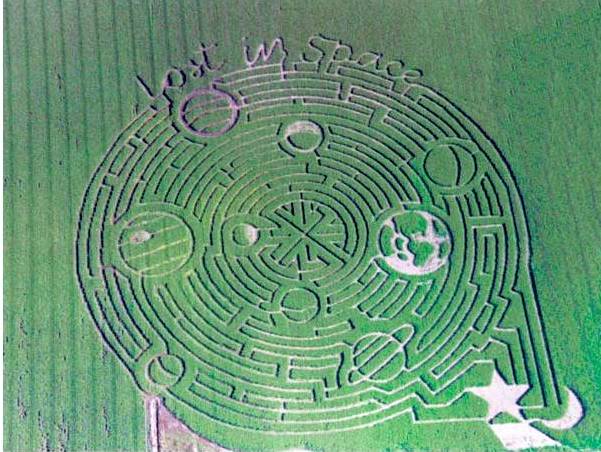
Despite the lush color in the photograph above, most corn mazes designed by Brett Herbst are enjoyed by people this time of year, when the pumpkins are filling their patches and the apples are filling their trees. During this season the mazes coincide well with hay rides and cider pressing, quintessential fall activities.
Mr. Herbst and his team have designed 1,800 mazes in the past 15 years, from custom made “Your Name Here” styles to the image above that almost feels inspired by the Nazca Lines.
Many of the mazes have bridges and signposts with clues to assist visitors to find the correct paths, versus the twists and turns that lead to either dead ends or back where you came from.
Wouldn’t it be great if life was like that?
Good Vibrations
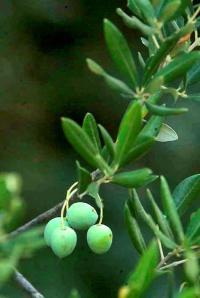
Olives In October
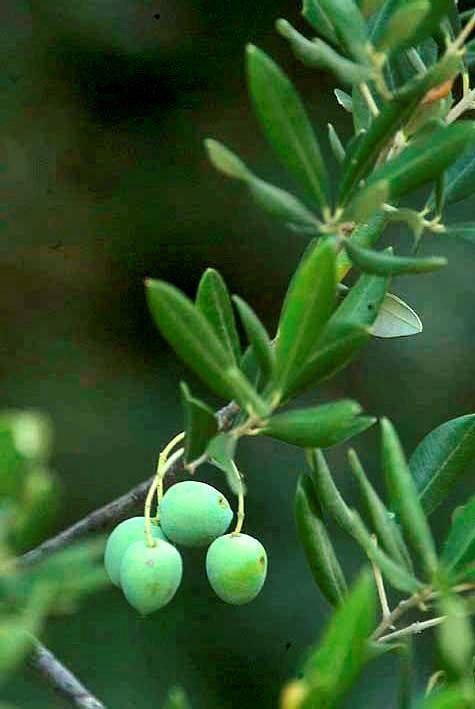
October is the month for harvesting olives in Croatia. I thought about this recently when cooking in my Kerala kitchen as I opened a jar of imported olives, knowing in advance that they would never hold a candle to the quality of artisanal food. When we lived in Paris one could buy olives by the kilo at the marché, with numerous varieties to choose from. But here in southern India I have to settle for rather industrial Spanish imports at the table and memories of unparalleled flavor in my mind.
In reality, there are two harvests—one for olives that will be cured, and one for olives that will be pressed for oil. On smaller islands the frenzy of activity is much more evident for the latter—perhaps because fewer people cure olives anymore. The island people found me to be quite the curiosity. Here I was, a newcomer, trying to do all the traditional things that most young people were attempting to abandon.
There was no commercial production or agriculture on Koločep, one of smaller of the 5 Elafiti Islands, that sit like an extended constellation from the city of Dubrovnik. All gardens and orchards are for personal use, but there are people who certainly had large amounts of land in one sort of production or another. Our very overgrown home garden was a small example—there were figs, pomegranates, mandarinas, plums, carobs and of course, olives—none of which have been pruned for what looked like decades. Continue reading
Saving Rhyme and Reason
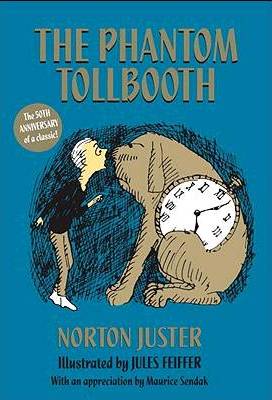
For me, reading has always been a route out of a chaotic world. That doesn’t mean that I read “fluff”. Far from it. (Anyone familiar with The Iliad or Beowulf, knows that neither Sam Peckinpah nor Akira Kurosawa invented the specificity or depiction of violence.) But whether sitting with my children and reading aloud, or better still, sitting with my children while we all read individually, books bring an intangible into our lives by opening doors that remain available to us indefinitely.
Frequently the educational systems in many parts of the world pressure students into making choices that seem almost binary; the “science track” or “business track” for example, setting them on an educational road that is fundamentally an express lane highway, with little chance of turn offs and detours. These systems produce very smart people in their fields, but it doesn’t easily provide opportunities for reaching full potential. Continue reading
Through the Looking Glass
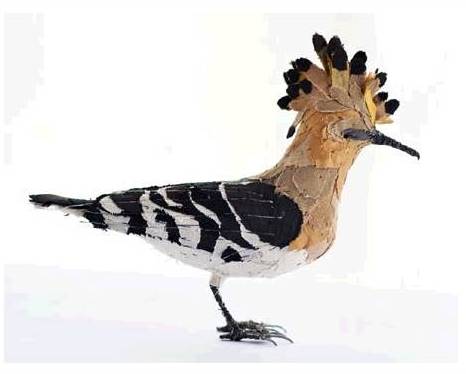
Hoopoo by Textile Artist Abigail Brown
Question: What would a Natural History Museum look like in Wonderland?
Answer: Abigail Brown’s studio.
The Victorians were avid collectors, and there’s something deliciously Victorian about the detail and precision with which textile artist Abigail Brown practices her craft, bringing the winged world to life with bits and pieces of cloth that each carries their own history. Continue reading
Can Your Horoscope Do This?
Living in India has really highlighted the cultural differences of things that I have often taken for granted. How we meet our future spouses is most definitely a case in point.
My culture certainly has its fair share of well meaning friends, relatives and co-workers who have the “perfect person” in mind for someone to spend their lives with. Even if one doesn’t wish to avail themselves of this advice, it is often persistently given. Barring that, people meet frequently at school, parties, conferences, libraries, sporting events, airports…the list is endless, and one has to wonder at the statistics of how frequently those serendipitous meetings lead to long term relationships.
In Kerala (and I believe the rest of India as well) there is still a tradition of family involvement in the choice of life partner. Historically there was always an “auntie” (the catch-all name for an older, married woman) who has just the right match for young men and women of their acquaintance. But times are changing and computers and the internet have taken a role in this process, whether it be “on line dating” in the Western world, or “matrimonial sites” here.
I was recently shown a “print out” from an on line matrimonial site based in Kerala. Continue reading