#3 Of One Dozen Love Letters About Xandari

X3By the time that MLHS had completed the acquisition of Xandari in Costa Rica we were already well under way with the development of what is now Xandari Pearl, on the beach about 40km south of Xandari Harbour. Reflecting today on what I love about Xandari, I again am reminded of some rather heroic decisions made by George M George, and the board of directors who he reported to.

In 2010, when we were in the early months of this relationship between MLHS and La Paz Group, there was already a completed architectural plan for the beach property that MLHS owned at Marari. There were already permits applied for the construction of those plans. So it was with some trepidation that I took a firm position in my recommendation to the board George reported to: those plans would result in a resort that would not fit the strategic road map I was laying out. To start with, it was 80+ rooms; and there were other issues but scale was the one I focused on.

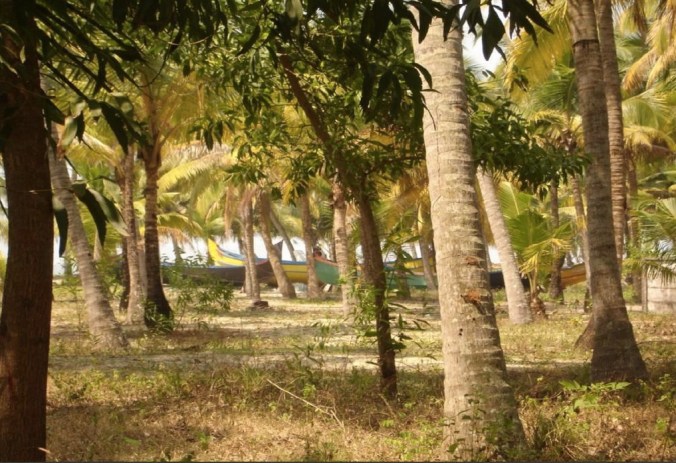
Just now I was looking at the powerpoint presentation I brought into the board room with me to make my case about abandoning the original plans for the resort at Marari. The first image in that presentation was the one above, which was a photo snapped just some days prior to the meeting. I talked about the natural beauty of the beach property, and how our target market would appreciate meandering on paths through as much of that as we could preserve; ideally we would not cut a single tree. We would let the local fishermen continue to keep their boats on property. And other points about that land. Continue reading

Boxing, Bartending, And One Final Fight

Screen Shot 2016-06-20 at 12.09.18 PMClick above to listen to this remarkable tale, and if you do not feel your socks being knocked off, complain in our comments section below. We first learned about Bob Bozic in early 2012, but now that we hear this update to his story we think we may need to visit him in Belgrade. This is the stuff we live for:

At Fanelli’s, a venerable bar in SoHo, Bob Bozic was the kind of bartender who also served as entertainment, telling endless stories about his life: he was the scion of a rich inventor in Serbia, a prizefighter, even a onetime bank robber. Nick Paumgarten, who wrote about Bozic in 2012, discovered that these barroom tales are true. Recently, Bozic was in touch again, with big news: he was quitting the bar and going to Serbia to pursue a restitution claim on his father’s mansion, one of the nicest houses in Belgrade, which was seized by the Communists in 1946.

#2 Of One Dozen Love Letters About Xandari

The October-November, 2014 issue of Conde Nast Traveler’s India edition came with a special supplement. This low resolution image of that feature includes the cover and the page inside that featured our newly opened property (click the image to be taken to a more recent honor from the same magazine; when you get to the December recommendation be sure to scroll down to see our mention last month on that publication’s website).

The timeline may have looked choppy in the first love letter, but that is how it goes with reminiscences, even when the archival material is immaculate. To give an overview of the Xandari story in a manner that conveys my deep debt of gratitude, but also keep it reasonably short (two decades condensed to 12 posts), I am going to jump around starting with the image above.

* blurry text on the right of the image is reprinted at the end below

On the left of that image is the cover of a special edition–India’s Stunning Boutique Hotels–published by Conde Nast Traveller in October 2014; to the right of the cover was the story about the property we had just opened for our client MLHS, led by George M George. This publication arrived at exactly the moment we were opening the hotel, then named Spice Harbour, soon to be rechristened Xandari Harbour. And Raxa Collective, the code name for our assignment with MLHS, would eventually (July 1, 2016, thus these dozen love letters starting yesterday) revert to our company’s proper name, La Paz Group. Continue reading

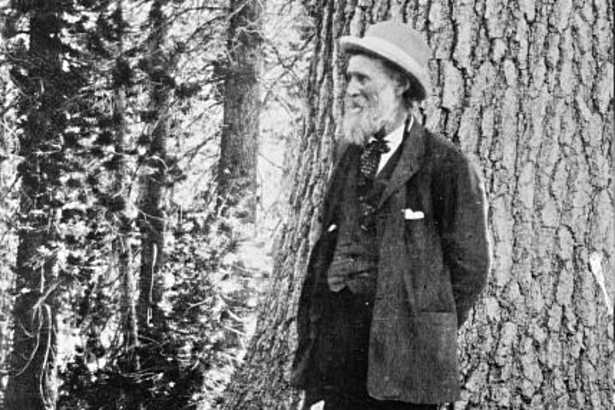
John Muir’s Writings About Yosemite

lead_large (3).jpg

Library of Congress

We posted about John Muir’s writings in the Atlantic four years ago, once we realized they were so accessible in that magazine’s archives. In that post, two years into our foray in India, we simply wanted to share our amazement that Muir had written about India as an example relevant to the case for protecting the forests of North America. We have also posted about Muir indirectly, including a lovely photo-documented post about his visit with Teddy Roosevelt to several wilderness areas that would become iconic national parks.

As we prepare for the expansion of our activities in India, and in advance of our announcement of two exciting new conservation initiatives in Mesoamerica that we will embark upon next month, I have been going back through our archives, enjoying some examples of the historical perspective this platform has allowed us to share.

Today, in the spirit of the centenary of the National Parks Service, and considering this past weekend’s visit to Yosemite by the President of the USA, it makes sense to share another of Muir’s several contributions to The Atlantic, this one specifically about the first national park (which predates the creation of the NPS):

The Yosemite National Park

“All the world lies warm in one heart, yet the Sierra seems to get more light than other mountains.”

JOHN MUIR   AUGUST 1899 ISSUE

Of all the mountain ranges I have climbed, I like the Sierra Nevada the best. Though extremely rugged, with its main features on the grandest scale in height and depth, it is nevertheless easy of access and hospitable; and its marvelous beauty, displayed in striking and alluring forms, wooes the admiring wanderer on and on, higher and higher, charmed and enchanted. Benevolent, solemn, fateful, pervaded with divine light, every landscape glows  Continue reading

#1 Of One Dozen Love Letters About Xandari

xneighbor1

Xandari’s neighborhood includes some of the best estate-quality coffee land in Costa Rica

I keep correspondences for as long as possible. With all of our moving around some of my older paper correspondences have been lost along the way, but since the advent of email, and especially since archiving email has been possible, I have been a diligent archivist.

So, as I reflect on the completion of our engagement with MLHS June 30, that gives me a dozen opportunities for daily reflection on Xandari as we prepare to hand over the keys. Email archives keep it real.

My relationship with George M George, related in an earlier post, started a couple years after I had first met the man who created Xandari in Costa Rica. From the mid- to late-1990s I was focused on destination-level strategy work in Costa Rica and other countries in that region. I met Sherrill Broudy first during those years as part of my effort to understand the hotel investors who came to Costa Rica from other countries. At that point, the main building of Xandari and just a few villas had been built. Continue reading

The Emily Dickinson Museum

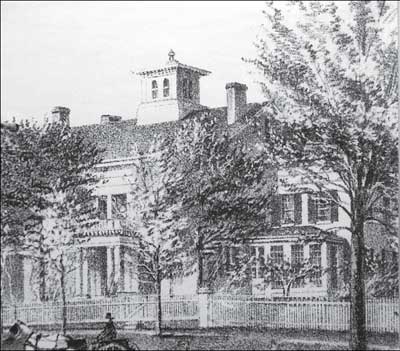
Homestead-1858-lithograph

During a father-son road trip in 2009 to visit prospective colleges, we spent time in Amherst (MA, USA). The most important outcome of that visit was time spent with Michael Muller, who two years later would spend time as an intern with us in India during the summer before his final year at Amherst College.

Michael brought a literary quality to the startup of this communication platform where I continue to write. Which is why I thought of him when my attention was drawn to this museum in Amherst. For me it was valuable to take a moment to read about the relationship between this home’s history and the college where Michael was educated:

THE HOMESTEAD, probably the first brick house in Amherst, was built around 1813 for Samuel Fowler Dickinson and Lucretia Gunn Dickinson, Emily’s grandparents. Fowler Dickinson, a lawyer, was one of the principal founders of Amherst College. In 1830, his eldest son Edward, also a lawyer, and Edward’s wife, Emily Norcross Dickinson, together with their young son Austin, moved into the western half of the Homestead. Later that year, on December 10, Emily Elizabeth Dickinson was born. In 1833, a second daughter, Lavinia, was born. Continue reading

Our Goal Here

We will continue sharing news stories and sharing anecdotes from our daily work lives that reflect Raxa Collective’s orientation to Community, Conservation & Collaboration. Those “3C’s” have been essential ingredients of La Paz Group’s work since the beginning, which is how they became the focal points of Raxa Collective. We have also had Sense & Sensibility as watchwords in our company for the last 16 years or so, and that will not change. Continue reading

Raxa Collective Migration to La Paz Group

As noted over here, tomorrow we will begin publishing in these pages the type of news and reflections that had been the mainstay of Raxa Collective’s site on WordPress. We will be adding more features here than had been present there, and will trim out some features that were there but that seemed not to go anywhere, so to speak.

La Paz Group’s website has been under renovation recently as well, and will have a fresh appearance soon. These migrations and renovations are in anticipation of completing at the end of this month the tasks we started in 2010-2011 with Raxa Collective; and in anticipation of several exciting new activities that La Paz Group is just starting to work on. Exciting stuff. Stay tuned.

Community, Collaboration & Conservation 2011-2016

As pop-ups go, this has been long-lived. We listened to the communities we came to Kerala to serve; we collaborated with them every day of the week, each month, year after year since arrival; and the conservation work will continue. We will be watching and commenting from our new site at lapazgroup.net, which will retain all our material from the past five years.

My personal thanks to all the individuals who are listed in the Contributors section above. It would be unfair to highlight any one or even just a few of them. By definition each one broke through the inertia sometimes described as the collective action problem–leaving it to someone else to do–and did the writing and illustration needed to make our work resonate with a broad audience. And if you look at the number of views, visitors and comments they left behind, our readers seemed to appreciate all that. We had employees, as well as interns, plus friends and family— even our main man on more than one occasion contributing–individually, collectively, collaboratively.

Thanks said, we hope you will continue to follow us after the name change in a couple days.

The Collective Of Raxa

As we wind down this pop-up endeavor, a comment on our collaborators. First and foremost on the George M George of 2010, whose vision was what got this collective going. George had come to my attention ten years earlier in a classroom in France, where I was offering a course called Organizational Behavior in the Masters program Cornell Hotel School had established there. My first, and lasting impression of George was that he valued laughter over all else. Continue reading

Raxa Collective, A Purposeful Pop-Up

When the first post appeared on this site we did not have a specific end date in mind. But now we do. Nearly 7,000 posts, half a million views and 1,825 days later on June 14, 2016 five years of blogging about community, collaboration and conservation around the world under the banner of Raxa Collective will be complete. We will continue these endeavors, and more, under the banner of La Paz Group. We will incorporate enhancement and expansion ideas that our readers, friends, colleagues and contributors have all shared with us.

Raxa Collective has had a very specific objective: the creation of a meaningful brand with community, conservation and collaboration as the core values. Xandari is that brand; it is the legacy of a collaboration between MLHS and La Paz Group. We expect that Xandari’s remarkable sense of community will continue to flourish under MLHS’s own guidance, as La Paz Group moves on to new challenges in the realm of entrepreneurial conservation.

Celebrating Two Decades Of La Paz Group

The exact date of La Paz Group’s founding precedes the date on which the company was formally incorporated; it is fair to say that moving to Costa Rica was the inception. At about this time of year in 1996 our family moved to Costa Rica so that I could begin field work on the initiative I had already accepted responsibility for starting in 1995.

It was an initiative perfectly suited for me, just completing my doctoral dissertation at the same time that Costa Rica’s President, Jose Maria Figueres, was two years into his quest to make Costa Rica a model of sustainable development. My dissertation research provided theoretical foundation for the initiative, and motivation for me to “test it” in the marketplace. I was extremely fortunate to be in the right place at the right time.

Two decades later, the concept of entrepreneurial conservation, which was at the heart of the sustainable development initiative in Costa Rica’s tourism sector starting in the mid-1990s, is thriving. La Paz Group is, as well, as we will begin illustrating on these pages starting today.

Pristine Nature

Chan Chich

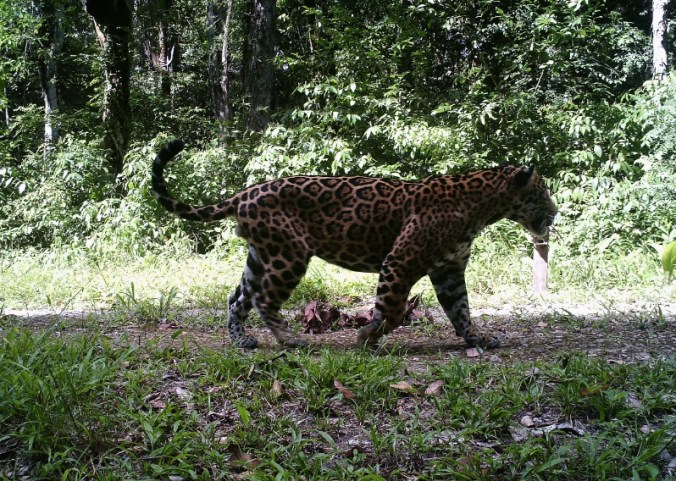
In writing about Belize recently, I had mentioned time spent with a tapir, favored in the diet of jaguar throughout Central America. The photo above was taken on property at the lodge my posts were referring to. Rule of thumb, it seems to me, is that a jaguar population requires relatively pristine nature to be sustainable, and that seems to be the case where this photo was taken. But what do I know, really? I am dedicated to entrepreneurial conservation but I am not a biologist so I depend on experts to inform my thinking, and to discipline it with a heavy dose of realism. In reading this post from earlier today I am better prepared to think about the mission of Chan Chich Lodge (more on which in a subsequent post), and the history of the 30,000 acre wilderness conservation area that it sits on:

Gallon Jug

At one time, the venerable 150 year old Belize Estates Company owned roughly one fifth of the entire country, about one million acres including much of the northwest corner of the country. From the turn of the century until the 1960’s, timber, mainly mahogany, cedar and santa maria, were selectively logged from this area. Gallon Jug, originally a logging camp located where the current GJ offices are, was named after a B.E.C. foreman, Austin Felix, discovered many discarded items from a Spanish camp, including a number of ceramic gallon jugs. Continue reading

Forward To The Past

crist and boys tikal.jpg

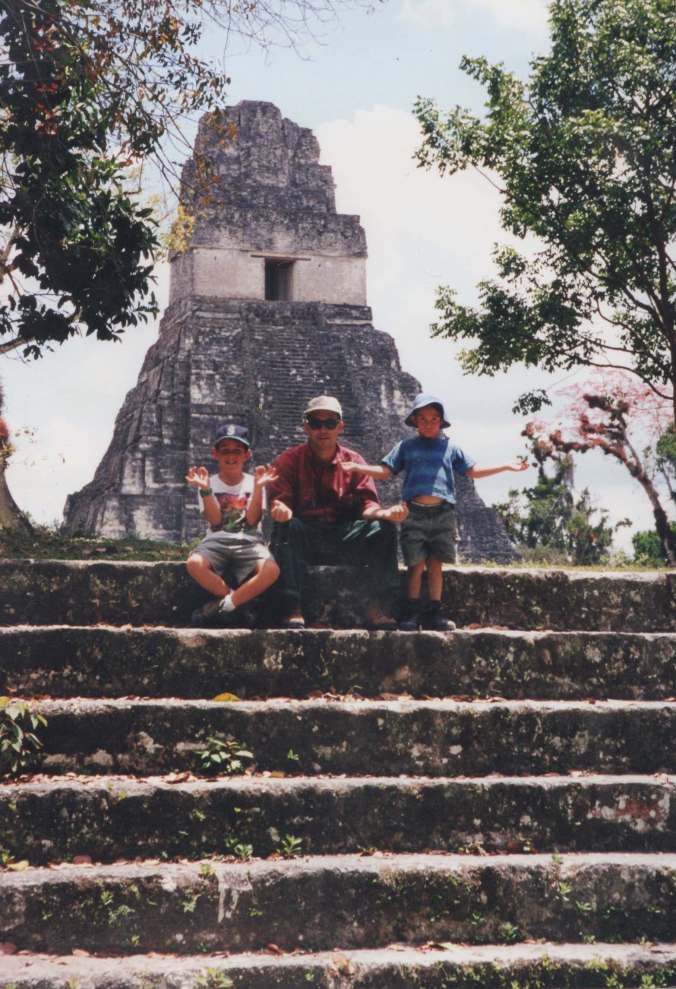
A few days ago I mentioned, in reference to my recent visit to Belize, an earlier visit to Tikal in Guatemala. In the photo above, taken in 1999, three future La Paz Group contributors (Seth Inman, me, and Milo Inman from left to right) were getting our “om” on in preparation to climb the stairs in the background.

Amie Inman, who took that photo, reminds me that she and I had been to Tikal earlier, without our two sons. On both occasions we had the kind of mystical experiences for which this location is known. We had climbed the temple in advance of sunrise, as recommended (no photos from that with us currently, so credit for the photo below goes to a fellow wordpress blogger; click the photo for attribution).

sunrise-in-tikal

What we all remember about our visits to Tikal, and on a separate journey to Copan in Honduras we had the same sense, was how the archeologists and the relevant authorities in these particular national parks had done just the right amount of excavation. Some things were left to the imagination. Seth and Milo, in a conversation we overheard, said that Tikal was much better than Disney World, because it was real – it was like being Indian Jones. Our understanding of “real” was “unspoiled” in the sense that one could see plenty of uncovered evidence of Mayan culture, and also see that these artifacts of that culture eventually were swallowed by the jungle. Continue reading

Lost & Found, Geological Trickery, Conservation

looters_trench02

I had the opportunity to visit a site in Belize that had been on my radar for most of the last two decades. On my radar, but chance had conspired to keep me away, until last week. I will write more about that visit soon, but for now I want to share a thought on the photo above, and the one below (since I neglected to snap photos while standing in exactly the same location as the photographer who took these two, my thanks to him for his website’s provision of these two images).

looters_trench

These are commonly referred to as looter’s trenches, on opposite sides of a Mayan burial site. They are relatively fresh. The family that owns the property on which these trenches were dug, by tomb raiders looking for valuables, decided that the best way to protect the patrimony of this site was to ensure that there were always people nearby to keep looters away. A lodge was built, and it became a pioneering success story in protecting both archeological and natural patrimony. In other words, what we call entrepreneurial conservation. Continue reading

Architecture’s Role In Renewal

aravena-slide-ZVL1-articleLarge

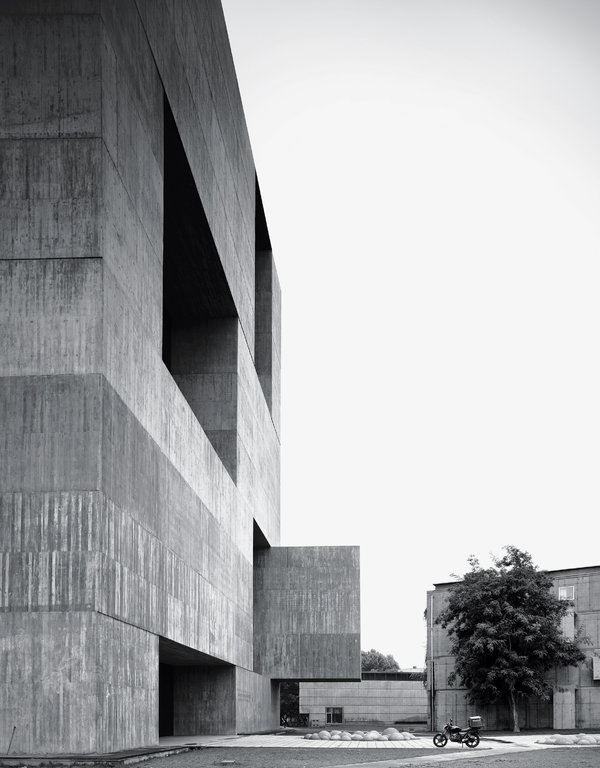
The fortress-like facade of the 17,000-ton Angelini Innovation Center in Santiago, Chile, which Alejandro Aravena designed for the Pontificia Universidad Católica de Chile in 2011. CreditPhotograph by Anthony Cotsifas

There is an excellent story in today’s New York Times about an architect, likely to become a celebrity due to the prize he won this year. I am not a huge fan of concrete (notwithstanding this), but so what? None of my business, plenty of Chilenos would say, and rightly so. However, as noted in my post yesterday, I can sometimes turn on a dime of an image is moving enough. And this image is enough to draw me in to Mr. Aravena’s world. So is this story that the photo illustrates:

Alejandro Aravena, the Architect Rebuilding a Country

Good-looking, charming and a celebrity in his native Chile, the surprise winner of this year’s Pritzker cares more about solving social problems than exercising his artistic chops.

By

THE EARTHQUAKE, one of the biggest ever recorded, hit in the middle of a late February night in 2010. The real damage came 18 minutes later, with the tsunami, crashing from the Pacific up the estuary of the River Maule, where the small, hardscrabble city of Constitución nestles. Continue reading

Intangible Heritage Worthy Of Conservation

9-690

Who gets to decide what is worthy of conservation, and what is not? I am given reason to think about this on a regular basis, given the work that we have been doing for the last two decades. There is no one answer, of course, but I conclude regularly that it comes down to very deep personal experiences–those which lead individuals to alter the path of their lives and thereby have an impact on the conservation of something they have come to care deeply about. John Muir, Teddy Roosevelt and others come to mind on the larger scale of this line of thinking.

Reading one of our other blog posts today, I was taken back in time to pre-India workdays, 2008-2010. Milo, I had forgotten until just now, had a chance to wrestle firsthand with one of Patagonia’s most important conservation issues, and it is fair to say that what he is doing today is influenced by intense experiences he had in Patagonia, followed by a couple of years living with us in India. That would be an example of a smaller scale of this line of thinking. Same goes for the story I just read, and when I look at the photo above, and the one below, I am reminded that sometimes an image alone, or a series of images like these, can lead to this same path-changing epiphany.

4-690

I have family in the vicinity of this story’s subjects, and am thinking just now that I have not made a visit to that family in too long; time to plan a visit? The thought is now lodged deeply in my thinking.
Continue reading

Xandari, Another Saturday Morning

IMG_4527

Today is my final day waking up at Xandari, at least for now. Rising with the sun each day, and heading for the trails, I often catch a view of something that I have not seen before. When it is something simple, elegant and expressive like this twirling twig I tend to keep my eyes open for more of a certain thing. Continue reading

Xandari, Monday Morning

WestPoolSunrise

We are currently in the middle of filming a series of short films at Xandari, here in Costa Rica, to match the series of short films we have made of the various Xandari properties in Kerala, India. The film crew arrives at 4:45 so we can catch the rising sun, which I find best viewed from the west edge of the property. Above you can see some of the coffee planted in the last two years, in the midst of one of Xandari’s highly productive organic vegetable gardens. The film crew is drawn to this space at sunrise and sunset. Soon you will see why, cinematically. For now, some more images from the edge of the forest reserve, following Saturday morning’s outing; this time focused on various introduced species of flora that complement Costa Rica’s most famous introduced species of plant (high grade arabica coffee). Continue reading

Xandari, Early Saturday Morning


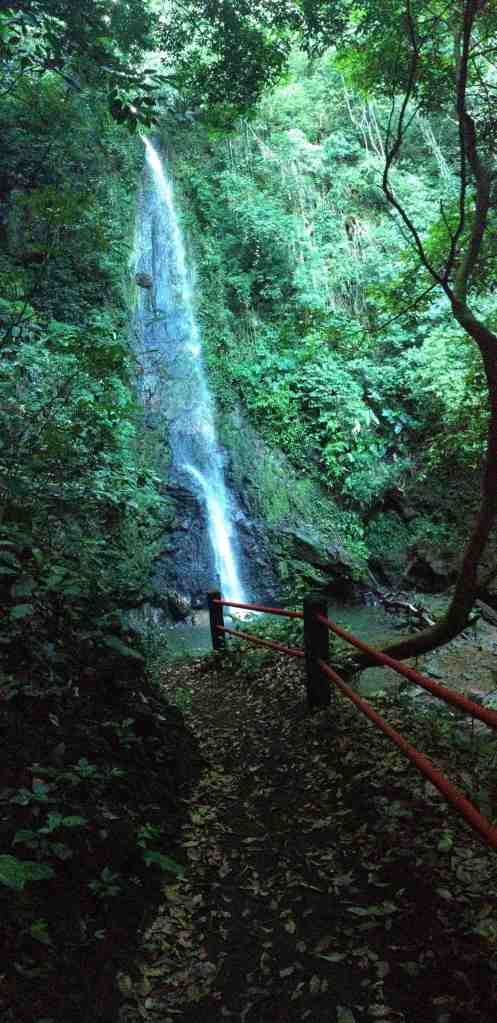
Falls

I have walked these trails hundreds of times during the nearly two decades since I first stepped foot in Xandari’s forest reserve. Somehow I never tire of this particular stretch, which is a testament to the fundamental charisma of water, and the special charisma of water falling from a significant height. Continue reading