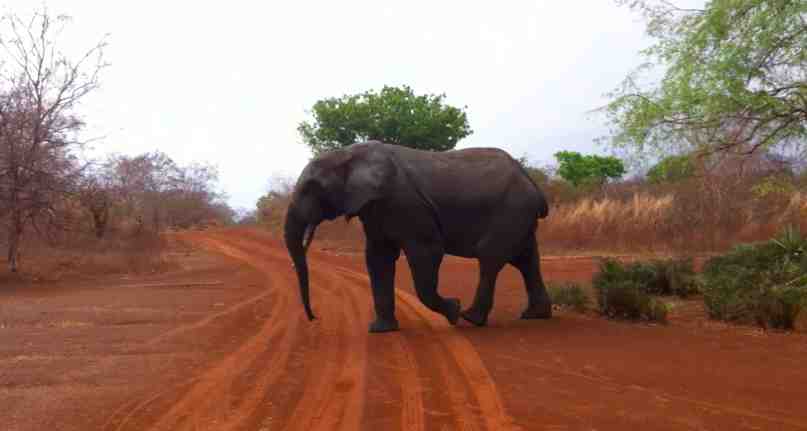
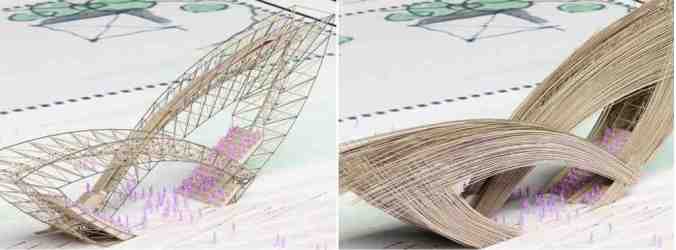
I have been in Ghana for five days, and this image above tells most of the story of the week that I have time to share in this post. Since 1980 when I first met someone from this country, I have been looking forward to this visit. A young man named Kwaku, his first time traveling outside Ghana, had just arrived in a southern Illinois August heatwave and was in the same 10-day soccer training camp as me. During the previous two years I had captained an undefeated high school soccer team, had sat in a stadium watching Pele play his last professional game, and respectfully thought I knew something about the sport. Continue reading
Author: Crist Inman
Old Facts, New Truths, And Remember Those Great Books?
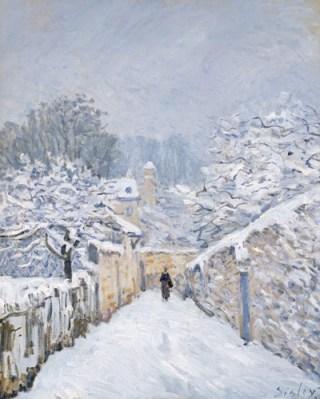
If you ever owned one of these books, you likely grew up in the USA. Which means you also likely thought, because of all those “cowboy and Indian” movies you watched, that horses were native to North America. That may sound like a big logical leap, but there is a point. Today, a review two old posts on this site helped clear up the history of horses in North America and it has to do with the kind of pre-history that captivated any kid who loved those books above.
After this was posted September 30, 2012 one member of our community (me) who grew up reading all the books above, and seeing all those “Western” movies, missed the opportunity to click through and listen to it. However, I had been fascinated to learn from this post and then from the amazing book it highlighted, the “truth” about horses in North America.
Our Gang, Thevara (2013 Edition, 2)
Our Gang, Thevara (2013, Edition 2)
Our Gang, Thevara (2013, Edition 1)
The Gift, A Gift
Recent guests of Raxa Collective, mentioned here, handed Amie and me this book prior to our parting ways. Upon reading this blurb, we expected to find it enriching if and when we could find the time to read the gift, The Gift, which:
“actually deserves the hyperbolic praise that in most blurbs is so empty. It is the sort of book that you remember where you were and even what you were wearing when you first picked it up. The sort that you hector friends about until they read it too. This is not just formulaic blurbspeak; it is the truth. No one who is invested in any kind of art, in questions of what real art does and doesn’t have to do with money, spirituality, ego, love, ugliness, sales, politics, morality, marketing, and whatever you call ‘value,’ can read The Gift and remain unchanged.”—David Foster Wallace
See Sophie, Support Story

Forest ranger Klaus Echle tells us about befriending a wild female fox in Germany’s Black Forest. The fox wasn’t shy, and allowed him to follow her around and take astonishingly close-up photographs.
Love of a good story is the backstory of our site. The backstory to that backstory–from before the time of Seth’s decade-old camping experience in Nicaragua, is one I have started telling here and there and intend to continue telling in the coming weeks of the new year. Reading and listening to accomplished authors on the topic of writing can be inspiring or daunting to the would-be story-teller with more modest telling skills. But tell we will, if only because practice makes perfect, and in the process we will also point out as many good stories as we can find.
Yesterday guests of Raxa Collective in Kerala, visiting from the USA, shared with Amie and me their enthusiasm for a radio show and podcast called The Story. We found it. We loved the first story we listened to, which brought to mind my own recent wild young animal experience. Find The Story, and Sophie’s story, by clicking the image above.
An Essay On The Essay, Disguised As A Book Review
It had not occurred to me that an essay, let alone a collection of essays, on this particular topic was needed. But then, perhaps it helps make the point about the importance of essays, and here we have one of the finest living essayists in the English language at work making the case:
Winter Adam GopnikQuercus, pp.288, £18.99, ISBN: 9781780874449Adam Gopnik’s dazzlingly knowledgeable and beautifully told essays on winter began life as the Massey Lecture Series on Canadian National Radio, the Canadian Reith lectures. But dismiss from your mind any of the rather Continue reading
Come To India, Alan Moore!

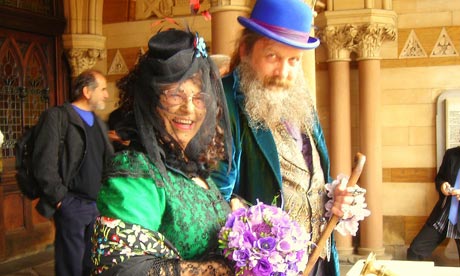
The wedding of Alan Moore and Melinda Gebbie. Photograph: Neil Gaiman/Writer Pictures
Please bring your bride, too. We extend this type of invitation to the too few happy few who clearly work for the pleasure of their craft (or so it seems, observing them), rather than the money. In our own small way, 180+ full time members of Raxa Collective in Kerala–not to mention contributing photographers, interns and other friends to our purpose–are all attempting the same. For whomever might have missed it, this profile is worth the read:
…Moore has a complicated relationship with money. “Pure voodoo,” he says now. “Only there as long as we believe in it.” Challenged, during a television interview this year, about why he would sign away the movie rights to a comic such as Watchmen if he didn’t ever want it to become a movie, Moore said he gave up the rights because he never expected any adaptations to happen; he called it making money for old rope. Continue reading
Our Gang, Thevara (Seeing Is Believing)
In our neighborhood, kids rule. Smiles are contagious. Games are simple. It is worth a visit. You have to see it to believe it.
Food Issues
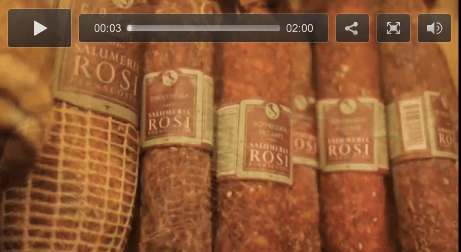
Usually the links to great journalism, or books worth reading, or art exhibitions, etc. on this site are left to to the group as a whole, and under the name Raxa Collective we share things like the video you can click through to on the image above. The text below will introduce you to that particular video.
But in my own voice, I urge you to pick up a real copy or click through to browse virtual portions of this week’s New Yorker magazine. For however many years they have been producing a “food issue,” a theme which (in the world we live in) could be tasteless but in this magazine almost never is, I think this year’s is the best yet. And this little video+writing piece is a good sample (Mimi, you have been much loved in our home and you always will be):
There are very few sausage- and salami-makers left in New York City, and presumably only one with “Swami of Salami” printed on his business cards. Cesare Casella is the executive chef at Salumeria Rosi, on the Upper West Side, where he cooks sausage and conjures up closely guarded formulas for gourmet cured meats. Casella said that cooking sausage brings him back to his childhood in Lucca, Italy, where he raised pigs as pets and then ate them. We sat down with him to see how sausage is made at his restaurant, and find out why so many people are so obsessed with his luscious links. Mimi Sheraton wrote about her obsession with sausage and salami in this week’s magazine.
Building Memories With Pavilions
Since first realizing, back in the 1990s, that our business model is something we might call entrepreneurial conservation I have been obsessed with the idea of non-permanence as the ultimate game-changer. With resorts in particular, if we were to argue that a property’s conservation area was the main purpose of the resort, then the resort itself would best fulfill that purpose if it could credibly disappear on a moment’s notice. A decade+ and a luxury tent camp revolution later (aka glamping) I am still working at variations on this idea.
My conversation with Chi-Chi yesterday was about one non-permanent structure we will build on a waterfront area to serve as the new base for our houseboat operations. The image above was one brainstorming topic of our conversation, the details of which do not matter so much as the ideas that followed and mixed with other lingering ideas. Continue reading
Pavilions & Memory
Thanks to Chi-Chi and a conversation we had twelve hours ago about a new pavilion project we are about to begin in Kerala, I found myself searching “the world’s most visited architecture website.” I came across this video that reminded me that most of my professional life in 2008, 2009 and the first half of 2010 was dedicated to entrepreneurial conservation projects in the southern half of Chile.
Chile’s pavilion at the Venice Biennale was evocative. I do not regret not having gone to Venice to see it, but it evokes some regret that I have not stepped on the soilscapes of Chile recently…
Brand Bubble Bursting
P.T. Barnum (perhaps apocryphally) is often quoted as having said that a sucker is born every minute. Damien Hirst, who has parted many people with their money for things that have his “brand” attached, and now boasts an estimated $350 million personal fortune as a result, could be Exhibit A in Barnum’s argument. This guy has sold some remarkable clothing to quite a few emperors.
Yes, these are highly subjective matters, and if you want to call Hirst an artist you have every right to do so. But he makes his own case for being something other than an artist in any meaningful sense of that word, and he makes it difficult for the average person from “outside the art world” to take the “art world” seriously. Is the market catching up with this slick marketer? Click the image above for the graph and short blurb version, or for the long form journalistic pin prick in the big bubble click here:
For all his celebrity, Hirst’s stock in the art market has experienced a stunning deflation. According to data compiled by the firm Artnet, Hirst works acquired during his commercial peak, between 2005 and 2008, have since resold at an average loss of 30 percent. Continue reading
Crowd-sourced Project Finance 101
Recently, I happened upon the pitch above and was at first thrilled to see yet one more alternative approach to raising awareness and appreciation for nature: good production values and the style is quirky and fun. The Kickstarter pitch came midway through and then my thoughts started wandering. Continue reading
Thanksgiving: For Animals In & Out Of Context
Thanksgiving, as a national holiday, has its pluses and minuses (most holidays innocently suffer from the tendency we have to overdo things). Thanksgiving as a practice, a daily or just occasional reflective practice, can only be good. Today I reflect thankfully on the young animal in the video above (click to spend a minute or so viewing it). At first glance you might think it is a puppy. In the video it is clearly in a dog crate, and its facial expressions and movements could just as well be that of a small husky or shepherd dog, or even a mut.
It is a young bear cub. If you want to know its story, click above. The story in that video coincides with the story below.

This leopard kitten was found recently separated from its mother in a protected forest area in Kerala, and I happened to be in the right location at the right moment to witness what happens in such cases if our modern world is working at its best. I learned something in the process, and that has completely changed my view on zoos (for which, this thanksgiving reflection). The coincidence is that both the bear cub and the leopard kitten enlightened me within days of each other, and within that same set of days I had just been listening to a story on Radio Lab on the topic of zoos; all that, just at the time when my calendar reminds me each year (the last Thursday of November) to reflect on what I am thankful for.
Caleb Crain & Collaborations (Literary, Historical, Cetaceous) That Feed The Mind
Several of us at this site have been fans of the historically-inclined long form journalism of Caleb Crain since reading this book review several years back. It started there with whales (for us), but certainly did not end there (for him). Click the image above to go to the reading of Moby Dick Chapter 4, or here to read more about the concept of this collaborative “program” that he is participating in:
In the spring of 2011, artist Angela Cockayne and writer Philip Hoare convened and curated a unique whale symposium and exhibition at Peninsula Arts, the dedicated contemporary art space at Plymouth University, under the title, Dominion. Inspired by their mutual obsession with Moby-Dick Continue reading
If You Happen To Be In New York
The moderator, in particular, is a favorite food writer of mine so I must suggest this if you are a passionate participant in the food world, professionally or as a consumer:
Join food-world luminaries including Bill Buford, Will Guidara (co-owner of Eleven Madison Park), and Maguy Le Coze (owner of Le Bernardin) at 92YTribeca on Thursday, November 15, for a discussion with author and Financial Times restaurant critic Nicholas Lander in celebration of his new book, The Art of the Restaurateur. The panel, moderated by Buford, will discuss the role of the restaurateur in the age of the celebrity chef. Tickets are $18.
Daniel Decker, Come To Kerala!
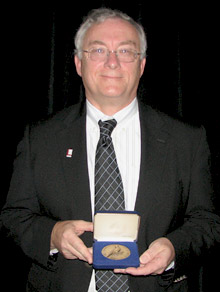
From time to time we extend invitations that reflect our appreciation for individuals making heroic contributions to the arts and sciences. Professor Decker is more than worthy, as you can see in the story about the prize he just received (click the image to the left to go to the full story):
Decker’s research and outreach work has promoted a long-term vision of wildlife management by addressing how human dimensions have impact in such areas as suburban wildlife, adaptive harvest management, community-based management, hunter retention and wildlife habituation in national parks.