Rail-Trail Expansions

Rail-Trail.jpg

Thanks to Lorraine Chow at EcoWatch for this update on the longest rail-trail conversion in the USA, linking St. Louis to Kansas City:

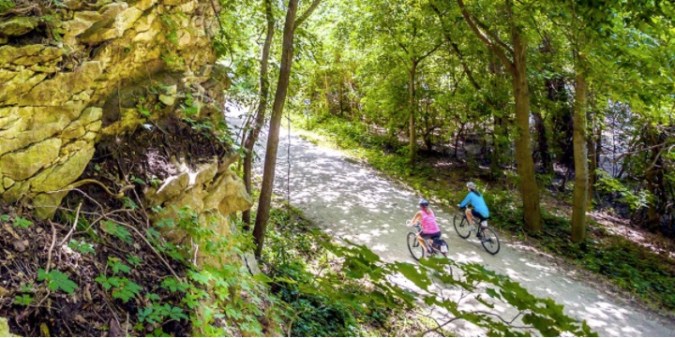
You can now walk or cycle across most of the state of Missouri. Gov. Jay Nixon has opened a 47.5-mile extension to the Katy Trail, effectively creating one continuous hike-and-bike path from the St. Louis area to the outskirts of Kansas City.

rail-trail2“You’ll be able to go 287 miles on an incredible asset,” Nixon told the Kansas City Star at the ribbon-cutting on Dec. 10 in Pleasant Hill, a suburb just south of Kansas City.

According to the governor’s office, the new section of the trail follows the corridor of the old Rock Island Railroad for 47.5 miles from Pleasant Hill to Windsor, where a junction connects to the rest of the Katy Trail State Park. Continue reading
Brew & Conservation

Patrick_McGovern_Analyzing_Midas_sample_at_Microscope.jpg

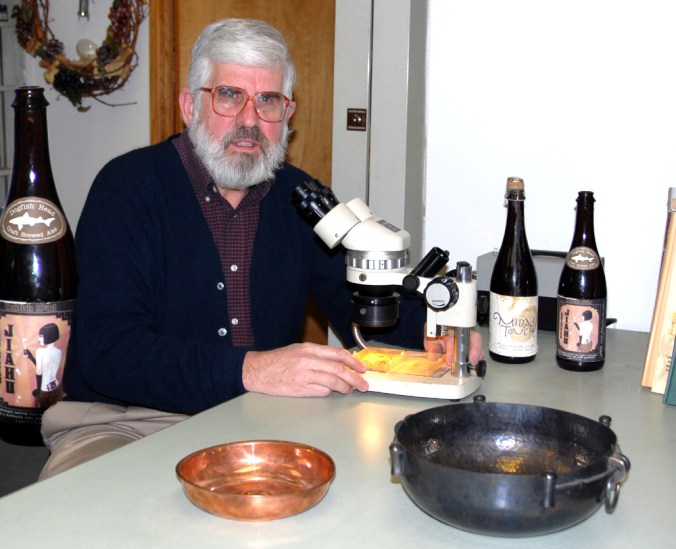
Patrick McGovern, Scientific Director of Biomolecular Archaeology Laboratory at the Penn Museum, examines a sample of the “King Midas” beverage residue under a microscope. Photo © Pam Kosty / Wikimedia through a Creative Commons license

And in other beer-related news, thanks to the Nature Conservancy’s contributors at Cool Green Science, particularly for Matt Miller’s article Dogfish Head’s Sam Calagione on Archaeology, Conservation and Beer:

Albatross, Age & Egg — Keeping The Species Going

4117.jpg

Wisdom tends to her egg. Laysan albatrosses spend the vast majority of their lives in the air. Photograph: US Fish and Wildlife Service/AP

Thanks to the Guardian’s Environment section (and Reuters) for this news:

World’s oldest-known seabird lays an egg at age of 66 in Pacific refuge

Wisdom, a Laysan albatross, is also world’s oldest-known breeding bird in the wild and has had a few dozen chicks Continue reading

Spain, Hops & Craft Beer

hops_wide-d79a830a1be1de6c8b818c90c577a0ca779d620f-s1100-c85

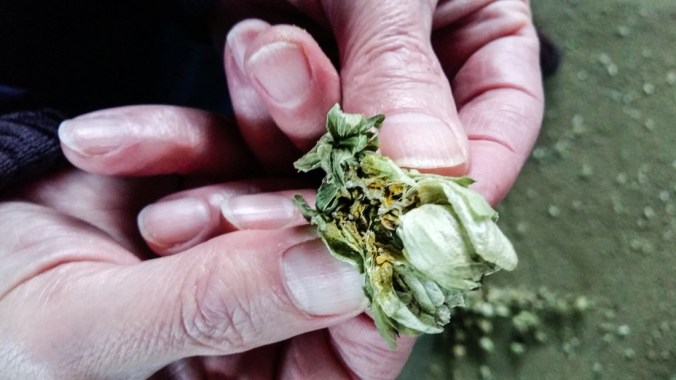
Ignacio Nicolas Campillo, director of a hops production facility in northern Spain, peels apart the flower of the hops plant, to reveal yellow powder inside. The powder is used to make beer. Lauren Frayer/NPR

This story from the salt over at National Public Radio (USA) adds to our hops coverage from time  to time:

Only the oldest residents of Villanueva del Carrizo, a town on the fertile banks of the Órbigo River in northern Spain, remember that day just after World War II, when all the area farmers were called to a meeting in the center of town.

Spain’s tiny beer industry was in a bind: It could no longer import hops – a key ingredient in beer – from war-devastated Germany. But brewers had spotted wild hops along the Órbigo River, and they had a hunch it could grow on farms too. Continue reading

Organic, If Not Natural, Beauty

harvest5

German artist Diane Scherer creates low-relief sculptures made from plant roots. DIANA SCHERER

Thanks to Wired for this bit of intrigue:

Artist Teaches Roots To Grow In Beautiful, Alien Patterns

by MARGARET RHODES

THE HUMAN RACE has a long history of bending nature to its will. The results of this relationship can be devastating—but they can also be strikingly beautiful, as German artist Diane Scherer skillfully proves with her low-relief sculptures made from plant roots.

Harvest2.jpg

Scherer grows these works of art by planting oat and wheat seeds in soil, and then carefully, meticulously, warping the growth pattern. DIANA SCHERER

Scherer grows these works of art by planting oat and wheat seeds in soil, and then carefully, meticulously, warping the growth pattern. She prefers to train her roots into geometric patterns found in nature, like honeycomb structures, or foliate designs reminiscent of Middle Eastern arabesques. Continue reading

Winds Over The Water Serving Those On Shore

00windpower-superjumbo

The Block Island Wind Farm’s turbines off the coast of Rhode Island in August. They began spinning on Monday and will deliver electricity to Block Island, a community nearby. Credit Kayana Szymczak for The New York Times

 Thanks to the Science section of the New York Times:

America’s First Offshore Wind Farm Spins to Life

By

Until this week, all of the wind power generated in the United States was landlocked. Continue reading

Better Nets, Better Fishing

ulotrawlproject_2016_069-55_wide-588bf1471991f6a62169e87318536f0a627efb4f-s1100-c85

Portland’s Gulf of Maine Research Institute has designed a trawl net that aims to target species that can still be profitable while avoiding cod. Courtesy of Gulf of Maine Research Institute

Thanks to the salt folks at National Public Radio (USA):

Fishermen Team Up With Scientists To Make A More Selective Net

FRED BEVER

Some New England fishermen are pinning their hopes on a new kind of trawl net being used in the Gulf of Maine, one that scoops up abundant flatfish such as flounder and sole while avoiding species such as cod, which are in severe decline.

For centuries, cod were plentiful and a prime target for the Gulf of Maine fleet. But in recent years, catch quotas have been drastically reduced as the number of cod of reproductive age have dropped perilously low. Continue reading

Keeping A Family Business Busy, Moving Into The Future While Preserving The Past

09calabria3-master675

Camillo Sirianni, a third-generation family business that began as a mechanized carpentry company in 1909, has overcome the isolation of its hometown to become a leading manufacturer of school furniture. Credit Gianni Cipriano for The New York Times

The EU, like all governance systems and especially relatively young ones, had its shortcomings; but it also had plenty of visionary good that we continue to admire:

Internet Throws Lifeline to Family Businesses in Small Town in Italy’s South

By

SOVERIA MANNELLI, Italy — Mario Caligiuri can still recall the night that may be credited with changing the fortunes of Soveria Mannelli.

It was New Year’s Eve at the turn of the millennium, and as mayor he dashed off an email to the authorities in Rome seeking an audience to explain his initiative to connect his struggling mountaintop town of about 3,000 inhabitants to the internet. Continue reading

Attenborough & Visionary Realism

attenborough

Illustration by Jasu Hu

Another from the last issue of the year and part of a series that the New Yorker offers to help us reflect on the big picture (each in this series is a very short read with disproportionate impact):

DAVID ATTENBOROUGH’S EXPLORATION OF NATURE’S MARVELS AND BRUTALITY

His game-changing shows remind us that ours is an impermanent and fragile world.

By Téa Obreht

No trip to the American Museum of Natural History in New York is complete without a visit to the Milstein Hall of Ocean Life. It’s a blue-tinged room, booming with surf-roar and the cries of gulls and rimmed with marine dioramas: teeming kelp forests and coral reefs, a walrus lost in thought, dolphins and tuna fleeting through twilit seas. Continue reading

Understanding The Solar-Carbon Threshold

sunset

Image: Daniel Parks/Flickr

We are constantly playing catch up with the terminology, let alone the science, of environmental efficiency in all its forms and considerations. Anthropocene delivers the daily goods, in the form of a summary of an environmentally-oriented scientific study, that we constantly find useful:

Solar power will cross a carbon threshold by 2018

Recycling Thermal Erstwhile-Waste

00wit_paris-thermal-master768-v3

Illustration by Tamara Shopsin; Photos by All for You, Mrnok, via shutterstock

We appreciate that the City of Lights keeps brightening our future, as well as their own:

If the Pool Is Warm in Paris, Thank the Washing Machine

By

What do washing the dishes and uploading pictures to Facebook have in common? Continue reading

Bees In Need Get Boost

3000b

Honeybees alone are responsible for boosting the production of fruits, nuts and vegetables. But bee and other pollinator populations in the US have been in decline in recent years. Photograph: Klas Stolpe/AP

Thanks to the Guardian:

Bee’s knees: a new $4m effort aims to stop the death spiral of honeybees

General Mills is co-funding a project with the federal government to restore the habitat of pollinators such as bees and butterflies on North American farms Continue reading

If You Happen To Be In Shoreditch

strutAfter reading this, we had to at least visit the website:

Our journey began with a PASSION FOR HEALTHY EATING instilled by our Eastern Mediterranean heritage. As the family grew, home cooking revolved around grilling and roasting ingredients that are full of goodness, avoiding deep frying or saturated fats.

strut3And on closer look at Strut & Cluck, we are determined to visit the place itself, when we next get the chance:

The mum and family chef, Limor, started experimenting with turkey as a healthy alternative to chicken and a great source of lean protein. She quickly discovered the VERSATILITY AND FLAVOUR OF THIS SUPERFOOD. To achieve its distinctive flavour and fall-off-the-bone tenderness, the meat is marinated for 24 hours, then slow-cooked with our herb & spice blend. Continue reading

Flow Chart

water

This excellent interactive story, Mapping Three Decades of Global Water Change, b

Fabulous Food Chain Phenomenon

09tb-lobsters2-jumbo

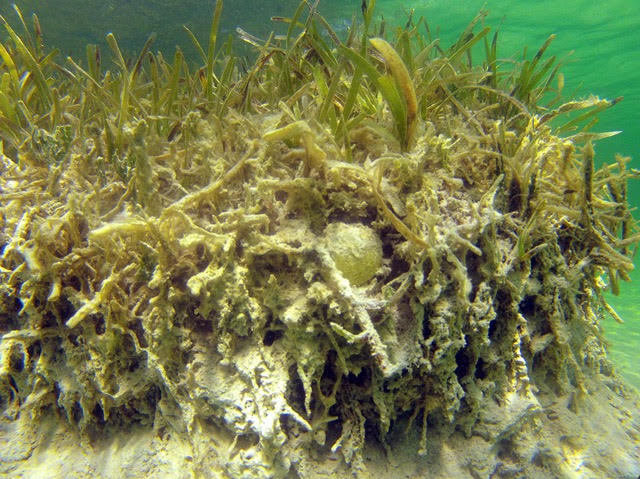
A chemosynthetic clam living in sea grass. Researchers are not sure how lobsters dig them up. Credit Nicholas Higgs

Thanks to the Science section of the New York Times for this article, The Freaky Food Chain Behind Your Lobster Dinner, by Steph Yin:

If you’ve ever ordered a lobster tail from Red Lobster, there’s a good chance some of your meal can be traced back to swamp gas.

Let me explain.

Red Lobster is a major purchaser of Caribbean spiny lobster, a species that lives in coral reefs in the western Atlantic Ocean. In the 1980s, lobster fishers started constructing artificial reefs in sea grass beds throughout the Caribbean to attract these lobsters. Continue reading

How Much Energy Does A Bicycle Produce?

We had been wondering this too, we admit:

An NPR listener (with what may be the best Twitter handle ever — Booky McReaderpants) inquired whether a home can be powered by bicycle-powered generator.

It’s an interesting issue about energy and the modern world. And the short answer comes from just running the numbers.

A typical house in the U.S. uses about 1,000 kilowatt-hours of energy in a month. So — to Booky McReaderpants’ question — could you generate that much power all by yourself on stationary bike?

No.

Nope.

Not even close. Continue reading

Sunstein & Thaler On Kahneman & Tversky

sunstein-thaler-thetwofriendswhochangedhowwethinkabouthowwethink-1200

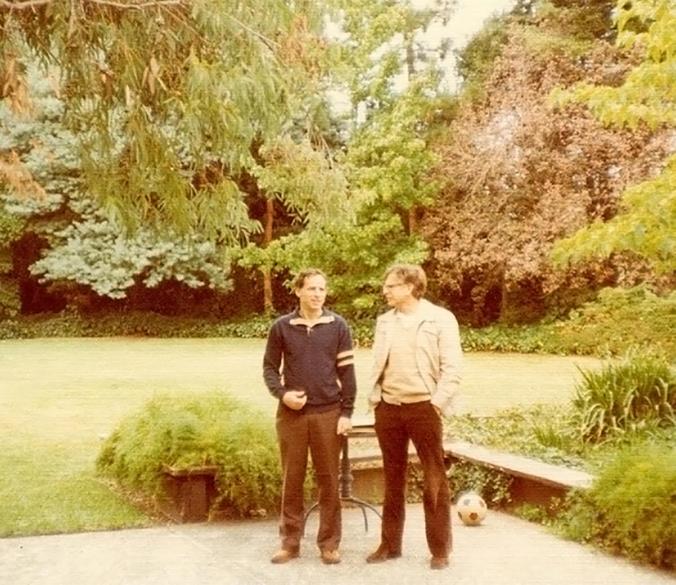
The book “The Undoing Project: A Friendship That Changed Our Minds,” by Michael Lewis, tells the story of the psychologists Amos Tversky, left, and Daniel Kahneman, right. Photograph Courtesy Barbara Tversky

We are more and more intrigued by this book, reviewed by two who knew the subject(s) better than most:

THE TWO FRIENDS WHO CHANGED HOW WE THINK ABOUT HOW WE THINK

By and

In 2003, we reviewed “Moneyball,” Michael Lewis’s book about Billy Beane and the Oakland A’s. The book, we noted, had become a sensation, despite focussing on what would seem to be the least exciting aspect of professional sports: upper management. Beane was a failed Major League Baseball player who went into the personnel side of the business and, by applying superior “metrics,” had remarkable success with a financial underdog. We loved the book—and pointed out that, unbeknownst to the author, it was really about behavioral economics, the combination of economics and psychology in which we shared a common interest, and which we had explored together with respect to public policy and law. Continue reading

Consequences Of The Bright Side

optimistic_custom-7ad05cac1d4ff23df88228576ac5654f040b0309-s1100-c85

Luciano Lozano/Getty Images

We find the title A Brighter Outlook Could Translate To A Longer Life, by Katherine Hobson at National Public Radio (USA), typical of what we hope to find in the various media we scan to share in these pages–namely that for all the misfortune out there, we may be able to nudge outcomes in a better direction:

…Optimism could conceivably lead to improved health outcomes through several mechanisms, says Eric Kim, an author of the study and research fellow at the Harvard T.H. Chan School of Public Health. First, people who are more optimistic also tend to have healthier behaviors when it comes to diet, exercise and tobacco use. But the study shows that the relationship persists even when those behaviors are controlled for, suggesting something else is also going on. Continue reading

App For Food Waste Reduction

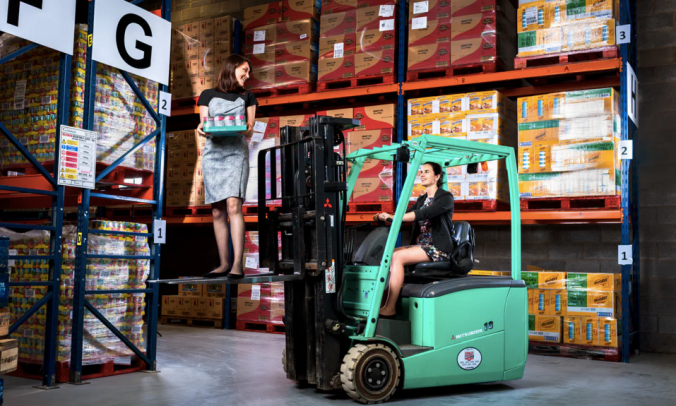
‘A love for food and a distaste for waste’: Iseult Ward (left) and Aoibheann O’Brien in the FoodCloud warehouse in Dublin. Photograph: Mark Nixon for the Observer

‘A love for food and a distaste for waste’: Iseult Ward (left) and Aoibheann O’Brien in the FoodCloud warehouse in Dublin.
Photograph: Mark Nixon for the Observer

Thanks to the Guardian for their coverage of stories about reducing food waste:

FoodCloud: new app proves a nourishing idea for wasted food

The distribution of surplus food in Ireland is being transformed by FoodCloud. Killian Fox meets the duo behind the venture

Killian Fox

Within one community, there can be a business that’s throwing away perfectly good food and just around the corner there’s a charity that’s struggling to feed people in need,” says Iseult Ward of FoodCloud, a remarkable social enterprise which she co-founded with Aoibheann O’Brien in 2012. “We wanted to connect the two.” Continue reading

Surfing, Farming, Learning

surf1

We have on occasion linked to video shorts offered over at the Atlantic website; this one is worth the seven minutes:

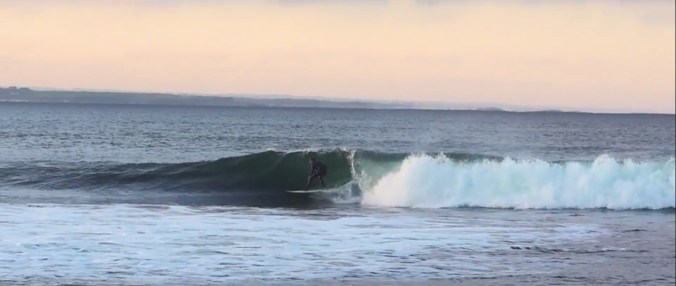
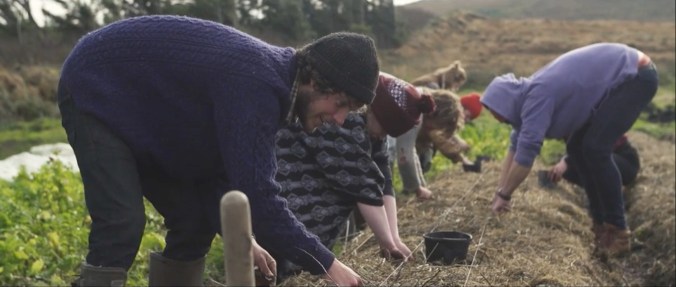
When Pro Surfers Learn to Farm

Video by The Perennial Plate

What happens when a group of professional surfers get tired of the global surfing circuit?

Surf2.jpg

This charming short documentary tells the story of how three friends abandoned their sports careers for the whimsical calling of growing organic vegetables on Ireland’s Wild Atlantic Way. Continue reading