Redemption, Dammed Rivers Edition

kim-newlifealongwashingtonstateselwhariver-1200

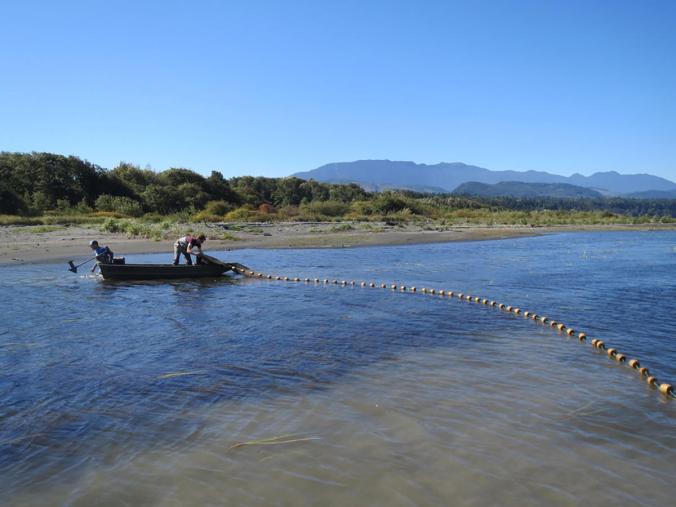
It’s been only two years since the removal of the last of the dams that obstructed the Elwha River, in Washington State, but already species are returning. Photograph Courtesy E. Tammy Kim

Among our favorite story types, the story of ecological recovery, which is to say of redemption, the following is a welcome addition to the files of 2016:

NEW LIFE ALONG WASHINGTON STATE’S ELWHA RIVER

By E. Tammy Kim

…Shaffer and her colleagues have sampled the Elwha’s nearshore region, where the river meets the ocean, once or twice a month since 2006. August, of course, is an ideal time; when you go in January, McBride said, “your fingers freeze, so you just put ’em under your armpits.” The work of the C.W.I. now seems particularly vital, because, for the first time in several generations, the forty-five-mile-long Elwha is a living river, end to end. Between 2011 and 2014, two large, century-old hydroelectric dams were demolished as part of a federal recovery effort. Continue reading

Food’s Future Seen In Urgent Present Perspective

06tp-foodwaste-inyt-6-blog427

Cristiana Couceiro

When this particular chef develops a thought into action, we are at least curious. When he shares a short essay on how the future of food might work, such as A Blueprint for the Future of Food, we take note. The following is from Turning Points, exploring how key moments from this year might signal something important coming in the year ahead.

Turning Point: France becomes the first country to outlaw food waste.

Not long ago, just before boarding a trans-Atlantic flight, I overheard a woman tell her friend that she had packed her own water bottle because she disliked wasting all the plastic bottles given out on planes. A few minutes later she was on the phone with another friend, explaining that she was on her way to Europe for the weekend to shop and relax. Continue reading

Greening Museums

garden_drawing

Illustration by Emily Woodworth

There have been moments in recent months when continued attention to the little details we see, and link to concerning incremental improvements in environmental sensitivity, social responsibility, or any other sustainability metric seems akin to “rearranging the deck chairs on the Titanic.” Political turmoil, and specifically political commitment to dismantle environmental protection in various influential countries, might make incremental change seem even less significant to some. These deck chairs are different. Every instance of care and action is a data point worthy of attention, and we will continue to connect the dots. Today, from the Field Museum of Chicago and their awesome Green Team:

THE FIELD MUSEUM’S GREEN TEAM

A Greener Field (the Museum’s “green team”) began as a grassroots recycling effort in 1989, and now has over 40 members representing every area of the Museum.  Staff members who share the Museum’s commitment to improving sustainability attend monthly meetings which provide an outlet for them to share successes and challenges in terms of greening their departments, as well as a vehicle to initiate and help implement institution-wide programs.  From bike sharing programs to recycling and composting Continue reading

The Gift Of The Camera Trap

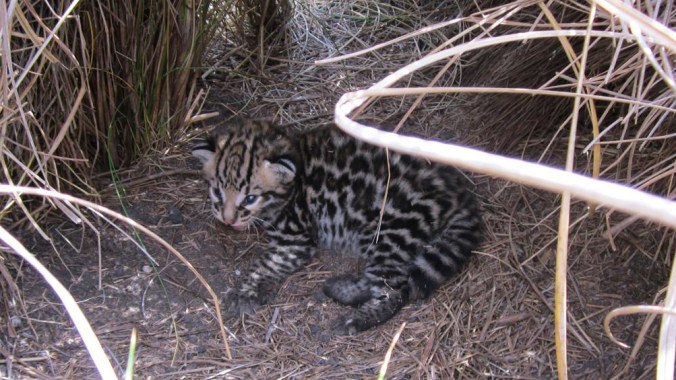
3-week-old-male-kitten-at-den-site-Laguna-Atscosa-NWR.jpg

Three week old male ocelot kitten. Photo courtesy of US Fish and Wildlife Service

Thanks to Matt Miller and TNC’s Cool Green Science:

Camera Trap Captures Images of Texas Ocelot Kittens

Great news for ocelots: This year, several females with kittens were documented in South Texas using remote cameras.

The U.S. Fish and Wildlife Service (USFWS) issued a public service announcement brimming with good news, including the first ocelot den documented in 20 years on Laguna Atascosa National Wildlife Refuge, and ocelots with kittens on the Yturria Ranch, a private ranch protected by conservation easements held by The Nature Conservancy and USFWS. Continue reading

Health & Hydroponics

ask-hydroponic-tmagarticle

Jason Henry for The New York Times

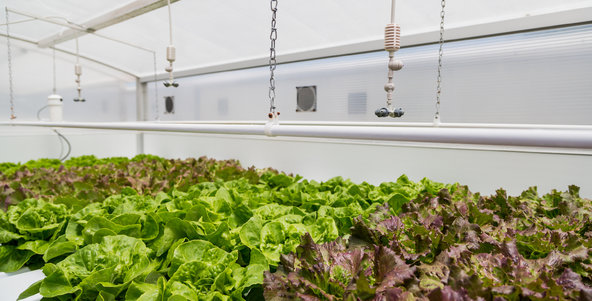
We have been paying more attention to hydroponics since mid-2011 when first introduced to the topic by Milo, who was our in-house agriculturalist for a stretch; we also appreciated at that moment getting to know more about the open source concept. Last year we were happy to see agriculture and open source covered by a thought leader we have been following since his visit to Kerala a few years earlier.  Today the question and the answer provided here by Sophie Egan is worth a moment of your time:

Are vegetables grown hydroponically as nutritious as those grown in soil?

The bottom line is it depends on the nutrient solution the vegetables are grown in, but hydroponically grown vegetables can be just as nutritious as those grown in soil.

“Much as I think that soil is just great for growing plants, hydroponics has come a long way,” said Marion Nestle, a professor of nutrition, food studies and public health at New York University. “I’ve seen hydroponic producers who have tested their leafy greens for key nutrients, and the amounts fall well within normal limits for their crop and are sometimes even higher.” Continue reading

The Little Things

lead_large

Tastemade

Thanks to Jessica Leigh Hester for her article in the upcoming issue of the Atlantic–Big in Japan: Tiny Food, The joy of cooking in miniature–which helps us put 2016 into some kind of perspective (we cannot articulate the perspective, just that this is as good as any other story to help us make sense of it):

The broth sizzles in a tiny pot hung over a flame on a miniature irori, or “hearth.” A knife the size of a pinkie finger nudges minuscule cubes of tofu from a palm-size cutting board. Flakes of seaweed tumble off a spoon pinched between a thumb and finger. A couple of minutes later, a tiny ladle dishes the finished miso soup into bowls no bigger than a thumbnail.  Continue reading

Thank You, Guardian & John Vidal

1993

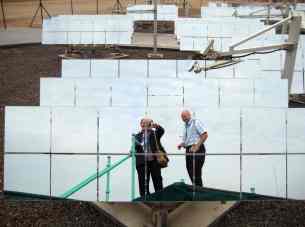
Vidal visiting the experimental solar thermal power plant on the outskirts of Masdar, UAE, in 2011.

When the photograph to the left was taken we were just starting to gather stories here.  John Vidal was the veteran among major news-gathering organizations and the Guardian had shown leadership with an Environment section. Not always pleasant, but fair to say that Mr. Vidal has balanced the good, the bad and the ugly better than most. Thanks to him for that.

In 27 years as environment editor at the Guardian, I have seen both devastation and progress. Now I’m retiring – but I still have hope for the future of the planet

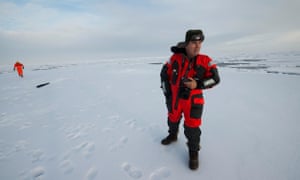
John Vidal on an Arctic ice floe in 2012.

John Vidal on an Arctic ice floe in 2012. Photograph: Daniel Beltrá/Greenpeace

In September 1989, Guardian editor Peter Preston took me to one side. “Environment? Your idea. You do it,” he said. I was on the arts desk and had quite forgotten that, two years earlier, I had proposed that we cover this fast-emerging issue in more depth and with new pages. Continue reading

Vatican’s Small Steps Toward Gender Equality

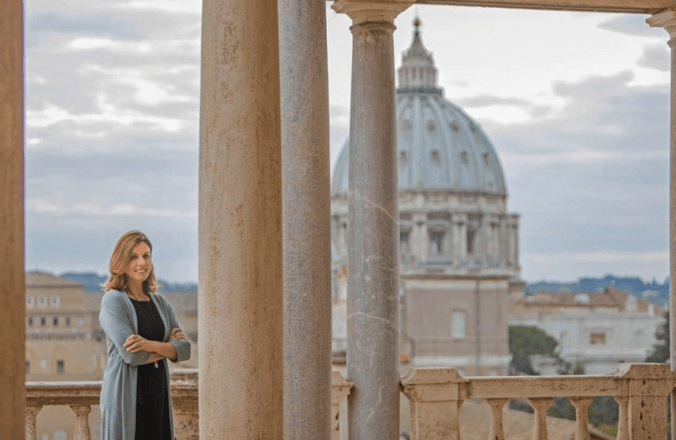
Barbara Jatta will oversee an institution that is one of the Holy See’s major sources of funds with about $311 million in gross revenues a year. PHOTO: VATICAN MUSEUMS

Barbara Jatta will oversee an institution that is one of the Holy See’s major sources of funds with about $311 million in gross revenues a year. PHOTO: VATICAN MUSEUMS

Without religious affiliation, we’ve applauded the current pope’s embrace of environmental protection and other progressive leaning policies. In a current political atmosphere where gender often overrides qualification, we appreciate this appointment all the more.

Pope Francis Names New Female Director of Vatican Museums

ROME—The Vatican Museums, one of the world’s pre-eminent art collections, announced Tuesday that Barbara Jatta, an Italian art historian and longtime Vatican official, will become its new director, making her the first woman to hold one of the most prestigious jobs in the art world.

The appointment by Pope Francis, which is effective Jan. 1, will also make Ms. Jatta the most prominent female administrator at the Vatican. The pope has spoken about expanding the roles of women in the Catholic Church, but most high Vatican offices are reserved for cardinals and bishops, who must be men. (Margaret Archer, a British sociologist, was named president of the Pontifical Academy of Social Sciences, an advisory body to the pope, in 2014.)

The Museums, which include priceless masterpieces including the Sistine Chapel frescoes by Michelangelo, regularly appear among the world’s top 10 museum complexes by attendance, with over six million visitors in 2015. The collections include 70,000 objects, dating back from antiquity through the 20th century. Continue reading

Solar Road In Normandy Breaks New Ground

3906

A test phase will evaluate whether the solar panel road can provide enough energy to power street lighting. Photograph: Christophe Petit Tesson/EPA

When we think of Normandy, apples and oysters come to mind. Calvados, too. We are happy those traditions endure but even happier to see the roads there as a hotbed of environmental innovation:

World’s first solar panel road opens in Normandy village

Route in Tourouvre-au-Perche cost €5m to construct and will be used by about 2,000 motorists a day during two-year test period Continue reading

Rolling Back Environmental Laws, A Rolling Plague

5150

The proposals threaten indigenous territory in Brazil, opponents say. Photograph: Alamy Stock Photo

We hear it is coming to the USA after inauguration next month, and has been a tendency in tough times in many places–relaxing environmental protections to encourage economic growth. Bad ideas have a way of spreading and our thanks to the Guardian for their observations in Brazil:

Brazil’s plan to roll back environment laws draws fire: ‘The danger is real’

Environmental and indigenous activists condemn plan they say would threaten indigenous territories and make compliance with Paris deal impossible Continue reading

Top Shelf Infographics For 128 Years

phpthumb_generated_thumbnailjpg

Thanks to the fancy-fine publisher, Taschen, for collecting this particularly powerful informative art form into one book:

A History of Knowledge

The best infographics from the National Geographic archives

Back in the days when the information age was a distant dream and the world a more mysterious place, National Geographic began its mission to reveal the wonders of history, popular science, and culture to eager audiences around the globe. Since that 1888 launch, the world has changed; empires have risen and crumbled and a galaxy of information is today only a click away. But National Geographic endures; its calm, authoritative voice is as respected as ever amid the surfeit of data in our daily lives. Continue reading

Walking on the Wildside

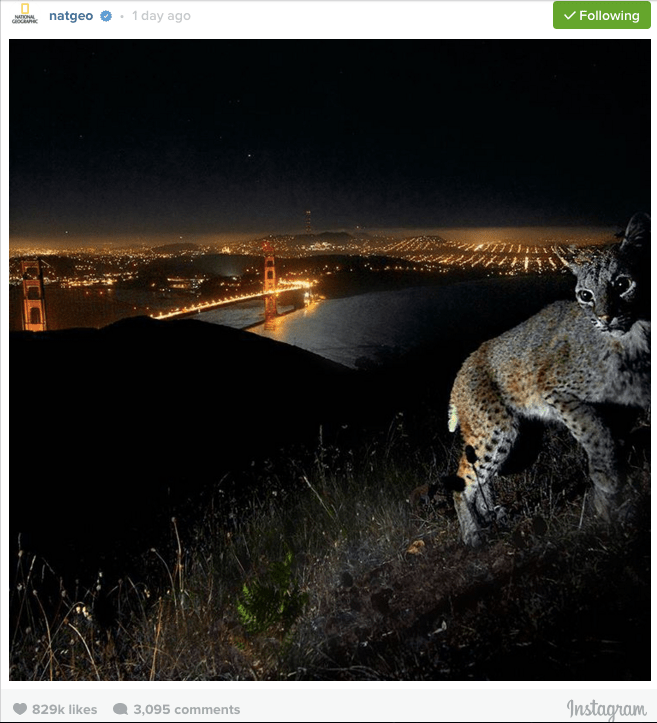
Camera Trap photo: Natgeo Instagram

Camera Trap photo: Natgeo Instagram

The photo above is a reminder that amazing camera trap captures of wildlife needn’t be limited to remote areas, or even exotic locations.

Bobcat takes a ‘selfie’ above Golden Gate Bridge

Seldom seen, bobcats rarely will stand still for a photo.

But every once in a while the shy, nocturnal feline will take a selfie — although not intentionally, of course.

This one triggered a remote camera hidden on a ridge in the Marin Headlands overlooking San Francisco and the Golden Gate Bridge. The camera was set up by National Geographic photographer Steve Winter.

The photo was posted today on the National Geographic’s Instagram account, but it’s apparently several years old. Continue reading

The Upside of the Downside

05FIRESUB-popup.jpg

Yuko Shimizu

We made a commitment in 2011 at the time we started this platform to search for and share as much positive news as we could find on entrepreneurial conservation, scientific and social innovations that improve life in developing countries, and such. We do not avoid “bad news” with pollyanna blinders on, but share more enlightening news that does not get enough attention.  We occasionally share doomsday analysis; it is difficult to avoid some of the trends pressing down on us all. Thanks to the New York Times for digging this one out of the archives, which will relieve us a bit when we come across and process doom and gloom:

The Power of Negative Thinking 

By

Editors’ note: We’re resurfacing this story from the archives because who wouldn’t want to master their emotions?

LAST month, in San Jose, Calif., 21 people were treated for burns after walking barefoot over hot coals as part of an event called Unleash the Power Within, starring the motivational speaker Tony Robbins. If you’re anything like me, a cynical retort might suggest itself: What, exactly, did they expect would happen? In fact, there’s a simple secret to “firewalking”: coal is a poor conductor of heat to surrounding surfaces, including human flesh, so with quick, light steps, you’ll usually be fine. Continue reading

Atlantic Canyon Withdrawal, Another Obama Legacy

ap_16281732045464_wide-253ae041d7cf2035c25a21f614330c82b0673230-s400-c15

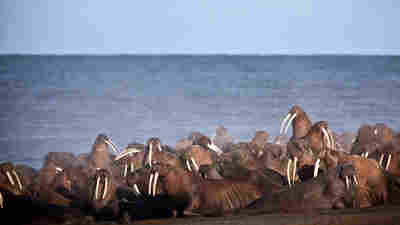
Walruses rest on the shores of the Chukchi Sea, the vast majority of which was designated off-limits to drilling on Tuesday. Ryan Kingsbery/AP

It is impossible to predict what will happen 2017 onward to these final environmental initiatives of the outgoing President of the USA. Nonetheless, we will cheer his efforts on behalf of conservation right to the very end of his term.  Thanks to National Public Radio (USA) for this news:

Obama Designates Atlantic, Arctic Areas Off-Limits To Offshore Drilling

“These actions, and Canada’s parallel actions, protect a sensitive and unique ecosystem that is unlike any other region on earth,” the White House said in a statement. Continue reading

Bright Spot To Close Out 2016

solar2016

Thanks to Bloomberg for a surprising bit of good news about the prospects for solar energy going forward:

World Energy Hits a Turning Point: Solar That’s Cheaper Than Wind

Emerging markets are leapfrogging the developed world thanks to cheap panels.

by Tom Randall

A transformation is happening in global energy markets that’s worth noting as 2016 comes to an end: Solar power, for the first time, is becoming the cheapest form of new electricity.  Continue reading

Cabo Pulmo & Octavio Aburto’s Masterful Storytelling

David and Goliath

The more we look around, the more we find that Mr. Aburto is telling the Cabo Pulmo story as well as anyone:

The People (Past and Present)

What make Cabo Pulmo a success story is its people: when faced with the dilemma to either continue fishing or to turn towards conservative goals, the community decided they needed to change. Continue reading

Christmas Bird Count, 2016

Seth’s work at the Cornell Lab of Ornithology, with the Celebrate Urban Birds initiative helped us all get a close look at citizen science in action. Past Christmas counts since then have been an annual tradition in these pages. Thanks to Lisa Feldcamp for a note on this topic with her post Give Kids the Gift of Birding on The Nature Conservancy’s website Cool Green Science:

The annual Christmas Bird Count is one of birding’s most cherished traditions. This year, consider introducing the count to a child. There’s no better time to get a youngster started in birding.

“When I was a kid in a large family of eight kids in Upstate New York, my parents told us we could do anything that cost less than $5; baseball, boy scouts, or birding,” says Tom Rusert of Sonoma Birding. “I joined Junior Audubon with my brothers, not realizing it would be a life sport to enjoy forever. It really is no different than any other sport.” Continue reading

Cabo Pulmo, Community & Conservation

Octavio Aburto keeps coming to our attention, as we read more about Cabo Pulmo, and today we discovered that he has provided several excellent short videos on Vimeo:

A thriving undersea wildlife park tucked away near the southern tip of Mexico’s Baja peninsula has proven to be the world’s most robust marine reserve in the world, according to a new study led by researchers at Scripps Institution of Oceanography at UC San Diego. Results of a 10-year analysis of Cabo Pulmo National Park (CPNP), published in the Public Library of Science (PLoS) ONE journal, revealed that the total amount of fish in the reserve ecosystem (the “biomass”) boomed more than 460 percent from 1999 to 2009. Citizens living around Cabo Pulmo, previously depleted by fishing, established the park in 1995 and have strictly enforced its “no take” restrictions.

Better Food, Faster

little-quinoaisthenewbigmac-1200It’s time to change fast food for the better, forever.

Fresh and nutritious food doesn’t have to cost a fortune or take forever to prepare. At eatsa, we’ve upped the taste factor alongside affordability and speed, with bold flavors, seasonal ingredients, and hearty portions. Our commitment to you is simple: faster, nutritious, more affordable and tastier food. Continue reading

Foraging Fellowship In New York City

dezon_wired_02

Reishi mushrooms (left) and Trametes versicolor collected in a folded map. ZACK DEZON

Thanks to Wired author Charley Locke for his story MEET THE OBSESSIVE MUSHROOM HUNTERS OF NEW YORK CITY:

ON A PARTICULARLY gorgeous Sunday in October, 30 explorers with the New York Mycological Society met at a cemetery in Brooklyn to hunt for mushrooms.

dezon_wired_01

Reishi mushrooms on a stump. ZACK DEZON

They rummaged through leaves, carefully inspected the headstones, and gingerly reached into tree trunks, hoping to find something amazing. A turkey tail, perhaps, or hen-of-the-wood. “It was like a scavenger hunt,” says Zack DeZon, a photographer who joined them on the search. “It struck me as the analog equivalent of Pokemon Go.”

DeZon is not particularly enamored with fungus, but a mushroom-obsessed friend’s Instagram feed piqued his interest. The fellow pointed him toward the Mycological Society which has since 1962 catered to those with an interest in mycology and mycophagy. The society, created by the composer John Cage, has 430 members and meets throughout the year to find mushrooms, eat mushrooms, and discuss mushrooms.

Continue reading