Camera Trap, Australia Edition

Thanks to the Nature Conservancy’s blog for this addition to our growing file of stories about non-intrusive filming of wild animals in remote places:

Camera Trapping in the Australian Desert

BY JUSTINE E. HAUSHEER

When trying to drink out of a tiny waterhole, camels hit approximately a 9.5 on a scale from 1 to Exceptionally Awkward. Continue reading
Carbon Capture In India

3264-1

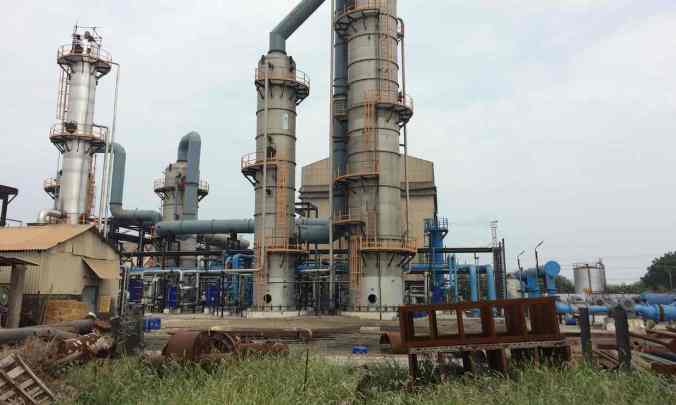
Tuticorin thermal power station near the port of Thoothukudi on the Bay of Bengal, southern India. The plant is said to be the first industrial-scale example of carbon capture and utilisation (CCU). Photograph: Roger Harrabin

Thanks to the Guardian’s Environment section for this news:

Indian firm makes carbon capture breakthrough

Carbonclean is turning planet-heating emissions into profit by converting CO2 into baking powder – and could lock up 60,000 tonnes of CO2 a year Continue reading

Keeping The Science Moving Forward, Rather Than Sideways or Backwards

00syngenta1-jumbo

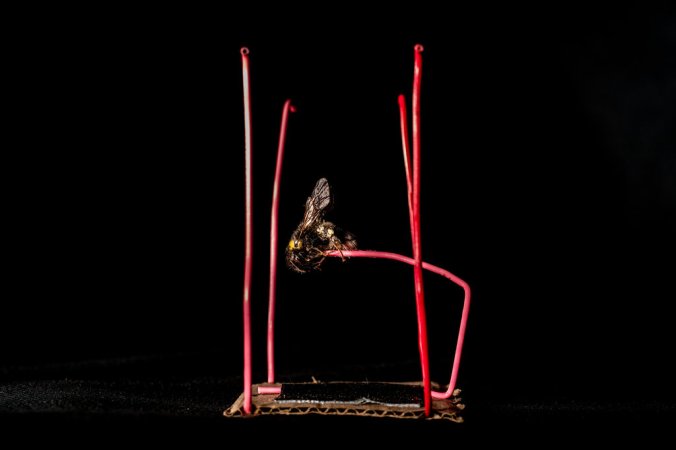
James Cresswell, a professor at the University of Exeter in England, has turned to less controversial areas of research on bees. Here, a bee is mounted on a wire in a wind tunnel, for research designed to estimate normal bee density. CreditAndrew Testa for The New York Times

It is a bit of a mystery story, worthy of the time if you care about bees (a minor character here) and especially if you care about the moral character of scientists while under pressure:

Scientists Loved and Loathed by an Agrochemical Giant

With corporate funding of research, “There’s no scientist who comes out of this unscathed.”

By

EXETER, England — The bee findings were not what Syngenta expected to hear. Continue reading

Mayan City, Deep Jungle Discovery

NYerMaya.jpg

Mr. Preston shares an experience that is not familiar to many people, and perhaps only considered enviable by a select few. The team at Chan Chich Lodge meets visitors every day of the year who are looking for a distant cousin of this experience described below, and those guests come away invariably awed by the opportunity to have a safe, comfortable adventure deep in nature, exploring well protected remains of a Mayan civilization buried by time and jungle. For them, this is worth a read:

AN ANCIENT CITY EMERGES IN A REMOTE RAIN FOREST

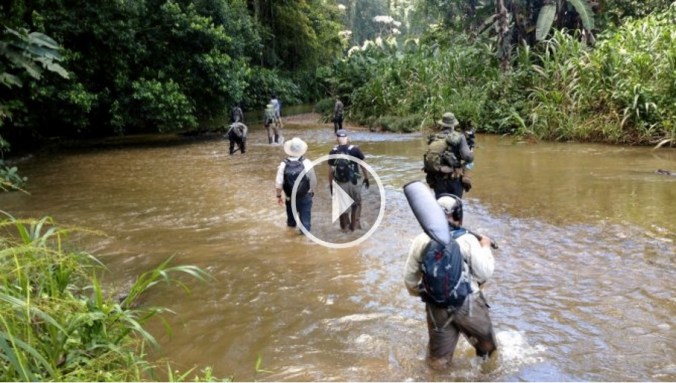
…The revelation of an ancient city in a valley in the Mosquitia mountains, of Honduras, one of the last scientifically unexplored regions on Earth, was a different story. This was the first time a large archaeological site had been discovered in a purely speculative search using a technology called lidar, or “light detection and ranging,” which can map terrain through the thickest jungle foliage, an event I chronicled in a story for the magazine in 2013. As a result, this discovery revealed something vanishingly rare: a city in an absolutely intact, undisturbed, pristine state, buried in a rain forest so remote and untouched that the animals there appeared never to have seen people before. Continue reading

The Vertical Farm, Explained In Long Form

170109_r29265

Vertical farming can allow former cropland to go back to nature and reverse the plundering of the earth.Illustration by Bruce McCall

For all the reasons we have to enjoy reading this — the Ithaca, New York setting we care deeply about, including Cornell University not least, plus a main character straight out of entrepreneurial conservation central casting — most importantly we have been posting on vertical farming for years and this exposes some of what we have been missing up to now. We have taken information as it arrives on our doorstep, in small bundles. Now, a more in-depth look at the past, present and future of:

THE VERTICAL FARM

Growing crops in the city, without soil or natural light.

By Ian Frazier

No. 212 Rome Street, in Newark, New Jersey, used to be the address of Grammer, Dempsey & Hudson, a steel-supply company. It was like a lumberyard for steel, which it bought in bulk from distant mills and distributed in smaller amounts, mostly to customers within a hundred-mile radius of Newark. It sold off its assets in 2008 and later shut down. In 2015, a new indoor-agriculture company called AeroFarms leased the property. It had the rusting corrugated-steel exterior torn down and a new building erected on the old frame. Then it filled nearly seventy thousand square feet of floor space with what is called a vertical farm. The building’s ceiling allowed for grow tables to be stacked twelve layers tall, to a height of thirty-six feet, in rows eighty feet long. The vertical farm grows kale, bok choi, watercress, arugula, red-leaf lettuce, mizuna, and other baby salad greens. Continue reading

Origins Of Modern Yoga

9780195395341One of the excellent benefits of living in south India is meeting people who know alot about south India. Sounds circular, but occasionally the people are specialists on topics we have come to care deeply about. We met a group of Sanskrit scholars yesterday quite by chance, one of whom is a leading authority on the texts that are the earliest documentation of what we now call yoga.

When we mentioned our interest in yoga from the lay perspective, because we offer yoga experiences in various properties we manage in Asia and Latin America, it led to a simple question: where can we learn the most, most accessibly, about the real origins of yoga? The answer was this book and this author (incidentally a friend and colleague of the one to whom we were asking the question. So over at Oxford University Press this is what we found.

With a bit more searching we found this excellent BBC Radio 4 segment from just a few months ago that features the same scholar, Mark Singleton, and is worth a listen if you are interested in the origins of modern yoga.  Continue reading

Old World Trade In Spices, Lessons for 21st Century Leadership Thinking

01ghosh-2-superJumbo.jpg

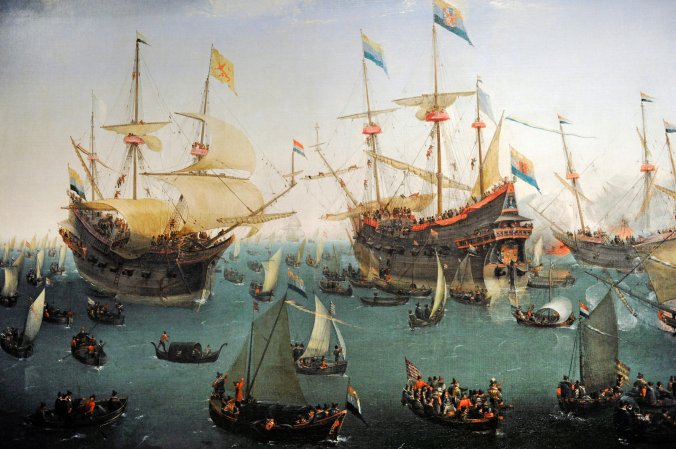
“The Return to Amsterdam of the Second Expedition to the East Indies,” painted by Hendrik Cornelisz Vroom, 1599. CreditPhas/UIG, via Getty Images

Amitav Ghosh, who we think of primarily as a writer of fiction, is also an important non-fiction thinker/author, and most recently published “The Great Derangement: Climate Change and the Unthinkable.” This op-ed in the New York Times puts future trade discussions into perspective in the most remarkable setting we can think of at the moment– the spice trade of centuries past. From our perch on the Malabar coast of India this is a welcome bit of history with which to welcome the new year and the challenges ahead:

GOA, India — For many years the word “globalization” was used as shorthand for a promised utopia of free trade powered by the world’s great centers of technological and financial innovation. But the celebratory note has worn thin. The word is now increasingly invoked to explain a widespread recoiling from a cosmopolitan earth. People in many countries are looking nostalgically backward, toward less connected, supposedly more secure times.

But did such an era ever exist? Was there ever an unglobalized world? Continue reading

One Type Of Farm Of The Future

img_4002-58_custom-e07c5a73d9c530cfd3b5ce3232509e17950feb69-s1100-c85

Dan Charles/NPR

The last story of 2016 offered by the salt, at National Public Radio (USA) seems a fitting story for us to link to as we jump in to 2017, which will be a year for stretching our farming and food activities beyond simple farm-to-table, onward to a bigger reach (more on which to come). It is useful, and heartening, to hear this family’s story:

By Returning To Farming’s Roots, He Found His American Dream

by Dan Charles

Eighteen years ago, on New Year’s Eve, David Fisher visited an old farm in western Massachusetts, near the small town of Conway. No one was farming there at the time, and that’s what had drawn Fisher to the place. He was scouting for farmland. Continue reading

Support Sea Shepherd

2016-12-15-lightbox-donation-appeal-01

Of all the posts we could possibly share on the last day of the year, the jolly roger gets our nod this year more than most. Heavy weather ahead, and these folks know how to sail through and get done what no one else is willing or able to do when it comes to protecting marine ecosystems.

logo-jolly-roger-white-on-black-thick-140x

We have shared as many news stories as we could follow since starting this platform, and always hope to see more. Their story is not as well known as it should be, nor do they have as much financial support as they need to continue to carry out their mission, so we urge support:

WE ARE SEA SHEPHERD

Sea Shepherd Conservation Society (SSCS) is an international non-profit, marine wildlife conservation organization.

Established in 1977, our mission is to end the destruction of habitat and slaughter of wildlife in the world’s oceans in order to conserve and protect ecosystems and species. We use innovative direct-action tactics to investigate, document, and take action when necessary to expose and confront illegal activities on the high seas. By safeguarding the biodiversity of our delicately balanced ocean ecosystems, Sea Shepherd works to ensure their survival for future generations.

A Beverage Commentary We Can Relate To

01mag-01drink-t_CA0-superJumbo.jpg

Blackberry Cooler, Orchid Thief and Mumbai Mule.Credit Gentl and Hyers for The New York Times. Food stylist: Maggie Ruggiero. Prop stylist: Rebecca Bartoshesky.

We have never before seen an article by this author that would be considered relevant to the themes we write about, link to, and find worthy of promotion; normally she writes about “drinks,” drinking culture, bar stuff. But here she touches on a theme we have spoken of often among ourselves in our day to day work (but would not likely have ever written about here): that ridiculous word “mocktail” — the word police should come and take it away, lock it up and throw away the key.

On the other hand, we have been watching and tasting in amazement as our beverage teams in India, Costa Rica, Belize and Baja all come up with ever-more inventive ways to enjoy liquids that do not intoxicate. Our biggest challenge, after they do the heavy lifting on the chemistry side of the equation is finding words worthy of a name, and worthy of a category that means non-alcoholic. So, hats off to Rosie on this one:

Don’t Call Them ‘Mocktails’

By

I’m always thrilled when a certain former drinking buddy comes to see me at the bar. He stopped drinking alcohol years ago, but he’s as fun to be around as he was when we sat side by side at a corner bar in TriBeCa many nights in the ’90s — probably more so. Continue reading

China Closes Out 2016 With Another Important Conservation Statement

jp-ivory-master768

A Chinese police officer watched over ivory products being prepared for destruction during a ceremony in Beijing in 2015. China’s ban announced on Friday would shut down the world’s largest domestic ivory market. Credit Ng Han Guan/Associated Press

Yesterday’s news, combined with today’s, could be called a conservation bifecta:

China Bans Its Ivory Trade, Moving Against Elephant Poaching

By

China announced on Friday that it was banning all commerce in ivory by the end of 2017, a move that would shut down the world’s largest ivory market and could deal a critical blow to the practice of elephant poaching in Africa. Continue reading

Thank You, China, For Pandolin Protection

gettyimages-630598630_wide-7e4e677e0cd500d7c0e39f09b54a995411618f81-s1100-c85

An undated photo, released Wednesday, shows Shanghai customs officers checking pangolin scales at a port in Shanghai. Chinese customs seized over three tonnes of pangolin scales, state media said, in the country’s biggest-ever smuggling case involving the animal parts. STR/AFP/Getty Images

Thanks to National Public Radio (USA) for reporting the news related to this remarkable animal:

China Announces Its Largest-Ever Seizure Of Trafficked Pangolin Scales

Camila Domonoske

Chinese officials have seized 3.1 tonnes (more than 3.4 tons) of illegally trafficked pangolin scales from a port in Shanghai, according to state media. Continue reading

Droning Over Wetlands

Thanks to The Nature Conservancy’s Cool Green Science team for helping us realize we almost missed this story:

Flight Over the Bas-Ogooué: Using Drones to Map Gabon’s Wetlands

BY JUSTINE E. HAUSHEER

How do you map a nearly inaccessible 9,000-square-kilometer African wetland that is home to hippos, forest elephants, crocodiles, and the notorious Gaboon viper?

Enter the drones.

Nature Conservancy scientists are using unmanned aerial vehicles to create the first-ever detailed wetlands habitat map of coastal Gabon, in collaboration with scientists from NASA, and other conservation groups working in Gabon. Continue reading

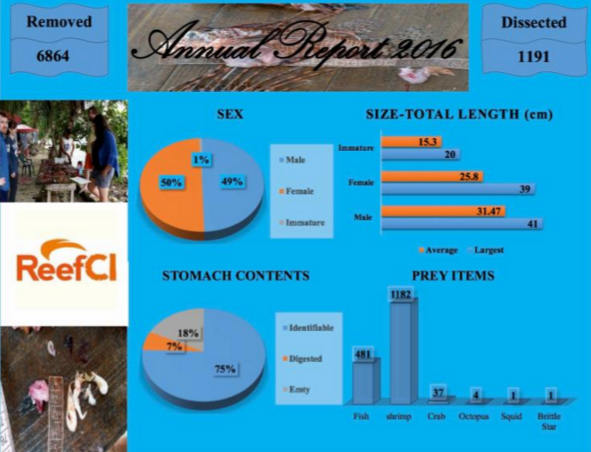
ReefCl Annual Report 2016

The citizen science activities we’ve discussed during this past year go beyond bird counts and uploading data. In the case of the invasive lionfish, participants have to really get their feet wet, so to speak.

In addition to creating a viable income in local fishing communities affected by the lionfish invasion by the developing the market for the meat and the spines, numerous organizations invite volunteers to assist in the eradication process itself. Continue reading

Visit Katinka Matson


katinkamatson

Ranunculus 2009

We encountered Katinka Matson while reminding ourselves of the annual question presented at the start of 2016 over at Edge. So we went looking for more about her. We agree with all the sentiments expressed on this artist’s own website:

“Her floral pictures are so intense that looking at them, you almost get the feeling that you are able to peer around the flowers themselves.” — The New York Times Magazine Continue reading

The State Of Great

29brown-hp-master768

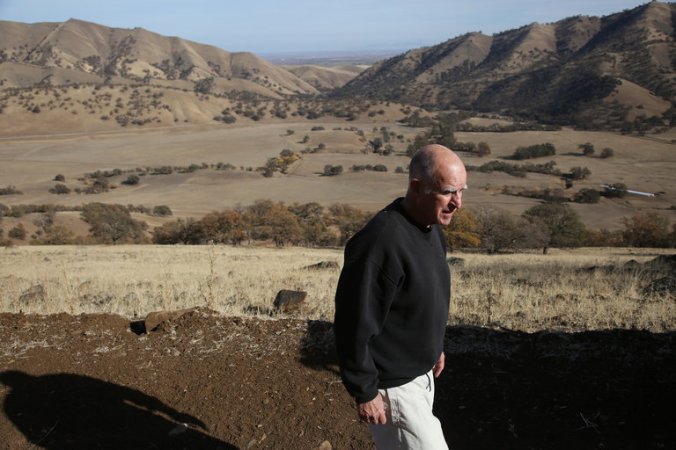
Gov. Jerry Brown at his 2,514-acre family ranch in Colusa County, Calif. “I wouldn’t underestimate California’s resolve if everything moves in this extreme climate denial direction,” he said. “Yes, we will take action.” Credit Jim Wilson/The New York Times

This article, by Adam Nagourney and science writer Henry Fountain, gives climate-concerned citizens everywhere hope that recent tectonic shifts on the political landscape in the USA will not result in complete abandonment of reason within all the states of that union:

LOS ANGELES — Foreign governments concerned about climate change may soon be spending more time dealing with Sacramento than Washington.” Continue reading

For the Birds: a Message to North American Policymakers


The State of North America’s Birds 2016

The State of North America’s Birds 2016

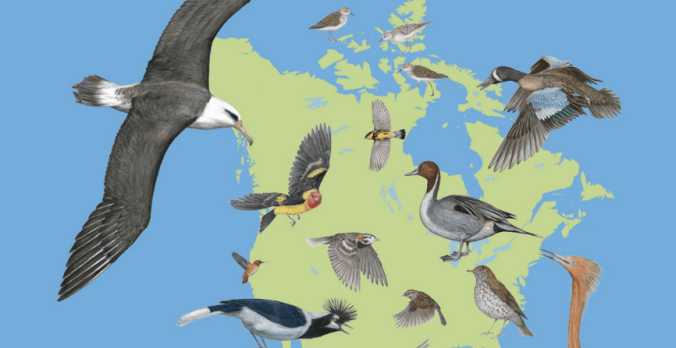
We continue to laud the importance of eBird on this site, gaining special importance as it becomes more and more clear that wildlife doesn’t acknowledge political borders. The data gleaned from tens of thousands of Canadian, Mexican and U.S. citizen scientists who contribute to eBird indicate that more than 350 species in North America migrate up and down Canada, the U.S.A, and Mexico over the course of a calendar year.

And according to the recently released State of North America’s Birds 2016 report, those three countries—their governments, and their societies—need to step up and do more to preserve our continent’s spectacular and shared natural heritage of birdlife. This report is the first-ever scientific conservation assessment of all 1,154 bird species in North America, and it was only possible because of the tremendous scale and big-data capabilities of citizen-science….

Among the many takeaways from eBird maps and models includes one of relevance to our property, Chan Chich Lodge, located on 30,000 acres of Belizean forest in the Yucatan peninsula.

The Yucatan Peninsula is one of North America’s most vital bird habitat regions

The Yucatan Peninsula is one of North America’s most vital bird habitat regions

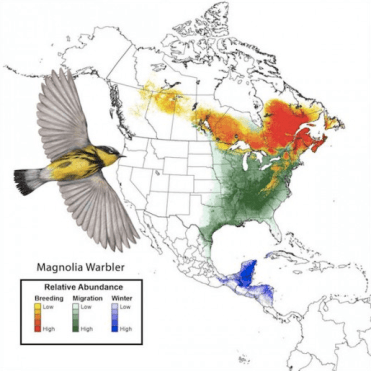
Not only is the Yucatan rich with endemic birdlife, it’s a critical wintering area for more than 120 birds species that migrate from Canada and the U.S.A. In winter, the entire population of Magnolia Warblers relies on an area of tropical forest in Mexico only 1/10 the size of its boreal forest breeding range, with the Yucatan as the bull’s-eye of their wintering range.

Continue reading

Fast Cats’ Feast

The cheetah is the fastest animal on land—a fact that is often repeated, but seldom truly appreciated. When documentary-makers film cheetas, they typically go for low-angle close-ups that capture the creature’s majesty, but that underplay its speed. The BBC’s The Hunt bucked the trend last year with aerial shots that reveal just how fast the cheetah is.

Ed Yong, writing on the Atlantic’s website, refers to the video clip above with his opening paragraph of Cheetahs Never Prosper. The cat lays the table for its feast, in full speed, and then Mr. Yong shares some plain truths: Continue reading

Redeeming Schemes Punctuated With Question Marks

5687

An impression of the town square at the Babcock Ranch development in Florida. Photograph: Babcock Ranch

For every redemption story there seems to be at least one more redemption puzzle. Conundrums. This is one of those. We want to love the scheme for some of its nobler aspects, but then realize it is impossible to do so unconditionally. And finally, simply, impossible:

The solar-powered town: a dream for the environment – or a wildlife nightmare?

Babcock Ranch, the brainchild of ex-NFL player Syd Kitson, aims to be a model of sustainability but campaigners fear it will be tragic for endangered panther

Edward Helmore in New York

Florida real estate has a bad habit of reflecting the boom-and-bust cycles of the US economy but Babcock Ranch, a new development opening early next year and designed to be the world’s first solar-powered town, is hoping it can provide the Sunshine state with a model for sustainable living. Continue reading