Can You Top This?

160404_r27911-690

Kamilla Seidler, center, who has worked in some of Europe’s top restaurants, leads the kitchen at Gustu, which is both a restaurant and an experiment in social uplift. PHOTOGRAPH BY BENJAMIN LOWY / GETTY IMAGES REPORTAGE FOR THE NEW YORKER

What were we thinking? Yesterday we chose a favorite without considering all the evidence.  We stand corrected. Here we have a story of a restaurant at the top of the world, and at the pinnacle of how the game is played today, it sounds like. The content of this story is as superb as it is well written, and the theme is much closer to our hearts with regard to our organization’s core values and social enterprise roots:

Letter from La Paz APRIL 4, 2016 ISSUE

The Tasting-Menu Initiative

Can a restaurant for the rich benefit the poor?

BY CAROLYN KORMANN

Look out the windows of Gustu, the most ambitious restaurant in La Paz, Bolivia, and you’ll see the city climbing up toward the looming peaks of the Andes in a lumpy, shimmering mosaic. Continue reading

Fair’s Fare, More Than Fair

160404_r27910-690

The Salon de l’Agriculture, held every year in Paris, is also a political crucible. PHOTOGRAPH BY IMMO KLINK FOR THE NEW YORKER

It is our favorite annual edition of our favorite source of longform journalism, and this looks like it could be our favorite article from this year’s edition:

Come to the Fair

The food-and-booze fest that is France’s national agricultural exhibition.

BY LAUREN COLLINS

It would be a mistake to think of microtourism, the latest invented word to capture the imagination of the travel sector, as mere staycationing. The practice, as defined by a pair of design students in Denmark who recently completed a project on the theme, is a prerogative of a future in which “gas prices are so high that we must develop a new form of adventure that does not require travelling great distances.” Microtourism is not glamping (no yurt) or bleisure (no work) or minimooning (no wedding). Nor is it Netflix and putter. If a staycation means pajamas and the garden shed, microtourism means sneakers and the subway. Continue reading

From A Friend In San Francisco

The magazine Bay Nature is new to us, brought to our attention thanks to a friend from that part of the world. It comes via this particular article, which touches on several topics–fungi, birds, conservation and Bay Area awesomeness–commonly seen in our own pages in the last five years. Have a read below and if you like it go read the remainder on their website:

Identifying With Lichen

How the surprising union between a fungus and an alga raises questions about the nature of identity

by Elizabeth Lopatto

In July, Governor Jerry Brown signed into law a bill declaring the lace lichen—found along the Pacific coast and throughout the coast ranges—the state lichen. As of January 1, 2016, California will be the first state ever to designate a lichen as a state symbol.

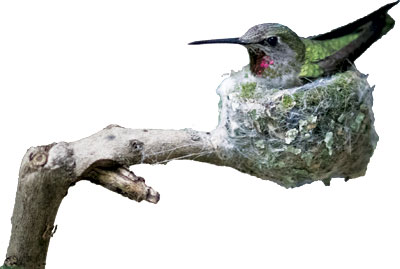
Lace lichen, Ramalina menziesii, is easily recognized. It is pale green and dangles in strips from trees. It’s sometimes confused with Old Man’s Beard (Usnea sp.), which is also pale green and dangly. Lace lichen’s range stretches from Alaska to Baja California. It’s an important food for deer; it also serves as material for birds’ nests. I see it once, in researching this story, when naturalist Morgan Evans, a former student naturalist aide at Tilden Nature Area in the East Bay hills, removes it from her backpack and spreads it out. Evans is a pleasant and patient woman, whose true love is fungi. Her interest in lichens is an extension of that, she says. Anyway, she found some lace lichen growing in Morgan Territory Regional Park. She figured I’d want to see it and there isn’t much growing in Tilden that she knows of. She hands me the lichen, which feels strangely plasticine. It’s pale green—she wetted it so it wouldn’t crumble when she transported it—and dangles impressively, at least six inches long. Lace lichen can grow as long as a meter, and it has a netted structure that looks, to me at least, more like fishnet stockings than lace. Perhaps fishnet-stocking lichen would be a little too racy a nickname. Continue reading

News We Can Cheer

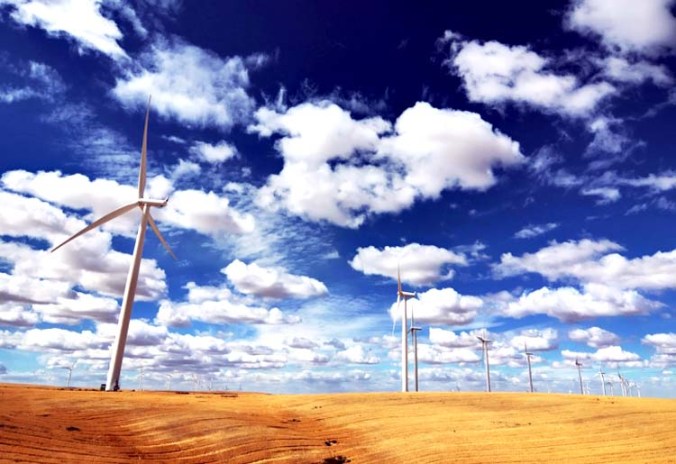
windwins750.jpg

A wind farm in Washington state. Photo credit: Daniel Parks / flickr

Thanks to EcoWatch for this unexpected news:

Renewable Energy Investments Set New Record, Twice That of Coal and Gas

Renewable energy investment totaled a record $286 billion, with China, India, Brazil and other developing countries accounting for $156 billion in 2015. China’s investment alone rose 17 percent from the year prior, representing 36 percent of the global total. Experts expect this surge to continue, while coal remains in decline; China also announced this week that they will be suspending construction of new coal mines in 15 provinces. Continue reading

Urban Heroic Recycling

29RECYCLE1-master675

Workers inspecting a bale of refuse at the Recology recycling plant in San Francisco. Foreign officials and others often visit the facility for ideas on how to handle their own mushrooming piles of garbage. Josh Haner/The New York Times

From the New York Times:

San Francisco, ‘the Silicon Valley of Recycling’

By

Robert Reed, who is enjoying a surprising career turn as a busy tour guide at the latest hot spot here, stood smiling one recent sunny morning before 10 foreign dignitaries and journalists. They included the mayor of Genoa, Italy, and the general consuls from Italy, Canada and Switzerland.

Each visitor wore a sport coat and tie, and a yellow safety vest to ensure they wouldn’t be run down by garbage trucks. Continue reading

Winds Across the Plains

High winds have played a significant role in the history of Texas, Oklahoma and the Great Plains. At worst they accentuated the destructive “dust bowl” period, at best they’ve helped to power small homestead farms for several centuries.

As the struggle to step back from carbon based energy continues, it’s happy news that the measures are meeting with more success and fewer obstacles:

The decision also signals that the Obama administration remains committed to encouraging the spread of renewable energy, seen as a major component of reaching national goals on stemming climate change.Multiple companies are hoping to build high-voltage transmission lines to transport renewable energy produced by wind farms and hydroelectric plants to more populous regions of the country. Continue reading

Good Spirited

Although we don’t particularly endorse consumption of alcohol or hold loyalty to any single brand or type of liquor, we’re always on the lookout for positive environmental news in any corporate setting, and we’ve recently learned that Bacardi Limited, perhaps the best-known makers of rum in the world (and owners of other alcohol brands Martini, Grey Goose, Bombay Sapphire, and Dewar’s Scotch), has been attempting to do better for the environment.

Called “Good Spirited,” (who doesn’t like a nice pun), Bacardi’s campaign involves recycling, waste reduction, energy efficiency, and other mechanisms to reduce the company’s environmental impact in the world and become more sustainable. For example, they’ve removed plastic straws and stirrers from their North American headquarter events in Florida and their Bombay Sapphire distillery in the UK, which they estimate will save more than 12,000 of the small plastic tubes from landfills annually.

In their original distillery in Puerto Rico, the company reuses water from rinsing Continue reading

Good News in Plastics

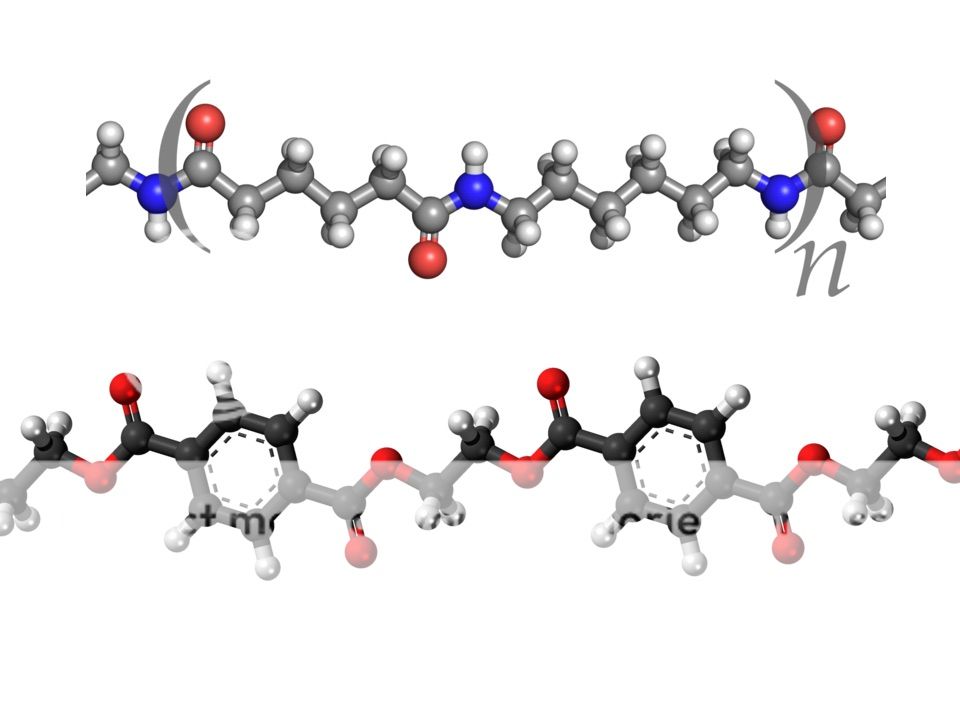
Compiled illustrations of a nylon chain above and PET chain below, both thermoplastic polymers, or simply put, types of plastic. Via WikiMedia, created by users YassineMrabet and Jynto, respectively.

There’s some cause to celebrate from a couple findings published recently in two journals, Nature and Animal Conservation, related to plastics, though of very different sorts. The first paper deals with a new method of plastic production using carbon dioxide and agricultural waste rather than petroleum as the raw input for PET plastic, and the second article studies the feasibility of introducing biodegradable fishing nets to replace nylon ones.

Continue reading

Worldwide Vegetarian Lifestyle Calculated to Reduce Global Food Emissions by 44%

Probably fewer than half the contributors and readers of this blog are vegetarian, with a tiny percentage perhaps being vegan. A new study from Oxford University published in the Proceedings of the National Academy of Sciences of the United States might set some of us thinking about changing that, however.

With food in general creating over 25% of all global greenhouse gas emissions (including the need for transportation and all the rest), to think that about 80% of those emissions are linked to livestock makes one realize (once again, if we didn’t already know) the massive impact of eating red meat. Sarah DeWeerdt reports for Conservation magazine’s online section:

If every person on Earth adopted a vegan diet – without milk, meat, honey, or any other animal-sourced foods – the greenhouse gas emissions associated with the food system in 2050 would fall by more than half compared to 2005/2007 levels. That’s one of several striking findings from an analysis of food and climate published yesterday in the Proceedings of the National Academy of Sciences.

Continue reading

Finding The Silver Lining

winegrapes_custom-24abb0a710e60f262997757c40bf35da573ab4f9-s1400-c85.jpg

A worker cuts a cluster of grapes in the Burgundy region of France during the harvest period. Global warming has made conditions historically associated with great wines more frequent in Bordeaux and Burgundy, a study finds. But things look less bright for California vineyards. Jeff Pachoud/AFP/Getty Images

We admit that we stretch, as frequently as we can, to find alternatives to doom and gloom environmental news.  We submit the following as Exhibit A if a case is to made to prove the point that there is always a silver lining to be found (thanks to National Public Radio, USA):

An Upside To Climate Change? Better French Wine

While climate change threatens coastal cities and generates extreme weather, the effects of global warming could bring good news to some of France’s most esteemed vineyards. Continue reading

Trees Are More Remarkable Than We Thought

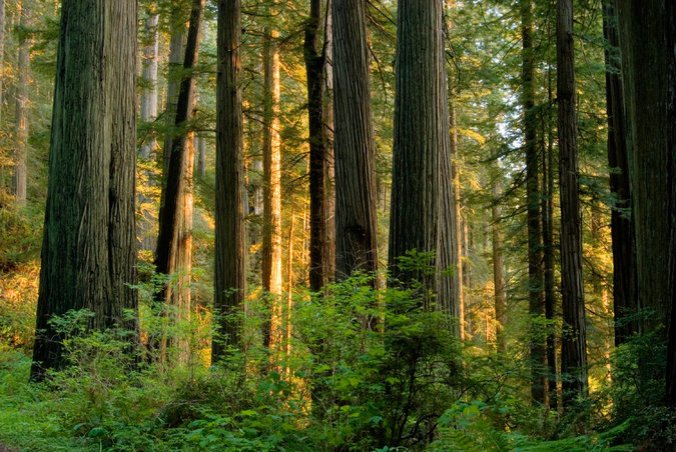
17TB-PLANTS-master675

Trees in temperate forests, like these redwoods in Northern California, may adapt to climate change by releasing less carbon dioxide than previously predicted by scientists. Getty Images

And in other “kind of good news”:

Trees Deal With Climate Change Better Than Expected

The bend-don’t-break adaptability of trees extends to handling climate change, according to a new study that says forests may be able to deal with hotter temperatures and contribute less carbon dioxide to the atmosphere than scientists previously thought. Continue reading

Spiral Jetty: Art that Informs

Photo by George Steinmetz, September 2002

In 1970, artist Robert Smithson built a massive sculpture as a piece of land art, or an “earthwork,” that is normally found just below the surface of the water of Great Salt Lake at Rozel Point. In drought conditions, the art piece, titled Spiral Jetty, becomes visible, often with salt encrustations that decorate the basalt spiral formation. Great Salt Lake, in addition to being salty, is also home to microorganisms that live or even thrive in extremely salty conditions and produce pigments that give them a red to orange color, which becomes visible in the water at times. Chau Tu reports for this week’s Science Friday written piece:

Great Salt Lake is known as a terminal basin, meaning its water has no outlet. “Water escapes through evaporation, and everything else stays there,” says Jaimi Butler, coordinator of the Great Salt Lake Institute. At the time the sculpture was built, the water level of the lake was particularly low. But by 1972, the water rose again to near-average levels, submerging the artwork.

“Smithson anticipated that the lake would rise and fall, the residue of salt crystals causing the black rocks to glisten white whenever the water level dropped,” the New York Times Magazine wrote in 2002. And indeed, that very year, regional droughts caused the jetty to reappear “for the first prolonged period in its history,” according to the Dia Foundation, which now owns the sculpture. (The Great Salt Lake Institute partners with the Dia Foundation and the Utah Museum of Fine Arts to oversee the Spiral Jetty.)

Continue reading

Is It This Simple?

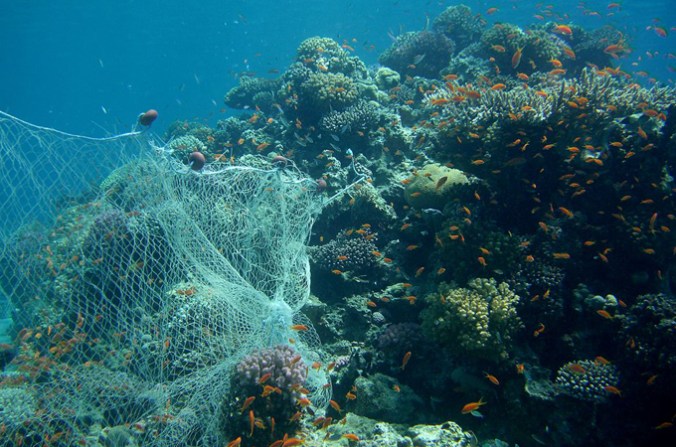
ghost-fishing

A serious problem with a relatively simple solution (thanks to Conservation magazine’s website):

BIODEGRADABLE GILLNETS COULD HELP RID THE OCEAN OF GHOST FISHING

Researchers have found that biodegradable gillnets catch fish as well as conventional nylon nets—and more quickly lose their ability to entangle animals when discarded at sea. Even more, the degradable nets tend to trap fewer young fish and bycatch. Continue reading

How to Prevent Extinction

Illustration by Jon Han for the New York Times

In last Sunday’s edition of the New York Times, the eminent ecologist E. O. Wilson–who we’ve posted about several times in the past for his inspiring and erudite thoughts on nature and biophilia–wrote an opinion editorial on “The Global Solution to Extinction,” in which he partly reminisced about his studies in biology, and also offered his suggestion on how to prevent further extinctions: increase the area of nature refuges, or in other words, boost habitat conservation. Here’s an excerpt of the first half of his piece:

DURING the summer of 1940, I was an 11-year-old living with my family in a low-income apartment in Washington, D.C. We were within easy walking distance of the National Zoo and an adjacent strip of woodland in Rock Creek Park. I lived most of my days there, visiting exotic animals and collecting butterflies and other insects with a net that I had fashioned from a broom handle, coat hanger and cheesecloth. I read nature books, field guides and past volumes of National Geographic. I had already conceived then of a world of life awaiting me, bottomless in variety.

Seventy-six years later, I have kept that dream. As a teacher and scientist I have tried to share it. The metaphor I offer for biological diversity is the magic well: The more you draw, the more there is to draw.

Continue reading

Putting All That Gee Whiz Technology And Creative Knowhow To Much Better Use

dotlonelyvr2-blog480

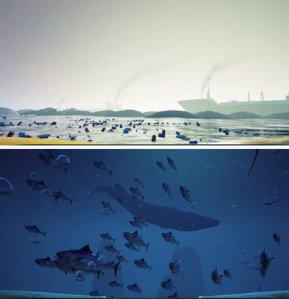
Two scenes from a virtual-reality “ride” that takes viewers into the realm of whales, fish and sonic and plastic pollution. Credit Dell

One of our favorite sources of “green news” in the early days of this blog five years ago, Mr. Revkin reappears every now and then with something really cool:

To Cut Ocean Trash, Adrian Grenier and Dell Enlist Filmmakers and Virtual Reality

Continue reading

Disruptive Urban Energy-Generation

brooklynmicrogrid

Brooklyn Microgrid wants to increase the amount of renewable energy generated in the community by members of the community. Photo credit: Brooklyn Microgrid

Thanks to Ecowatch for this story:

Many U.S. cities have taken the lead on sustainability efforts, particularly when it comes to adopting renewable energy. Already, at least 13 U.S. cities—including San DiegoSan FranciscoBurlington, Vermont; and Aspen, Colorado—have committed to 100 percent clean energy.

Other American cities, though not generating all their electricity from renewables, have innovative projects that could soon become widely adopted and transform our energy system.

Here are three cities leading the way: Continue reading

This Earth Hour Could Be Epic

Screen Shot 2016-03-18 at 4.01.10 PM

This Earth Hour, join the biggest solar revolution ever – go solar!

This Earth Hour, switch off your lights and switch on the power of the sun. Find out how you can join the biggest solar revolution ever, right here in India, and be a part of the global climate action!

We clicked on the India option first (since so many of our own initiatives are there), which led us to India’s activities related to Earth Hour. Next, Costa Rica. If you visit the website WWF set up to explain and promote Earth Hour, you will get the simple explanation:

As the world stands at a climate crossroads, it is powerful yet humbling to think that our actions today will decide what tomorrow will look like for generations to come. This Earth Hour, ​switch on your social power​ to shine a light on climate action. This is our time to #ChangeClimateChange…our future starts today.

Earth Hour is on Saturday, 19 March 2016 8:30 p.m. local time. Continue reading

Warming Climate & Shrinking Bison

12938647293_8441c5bf5f_k-1260x708

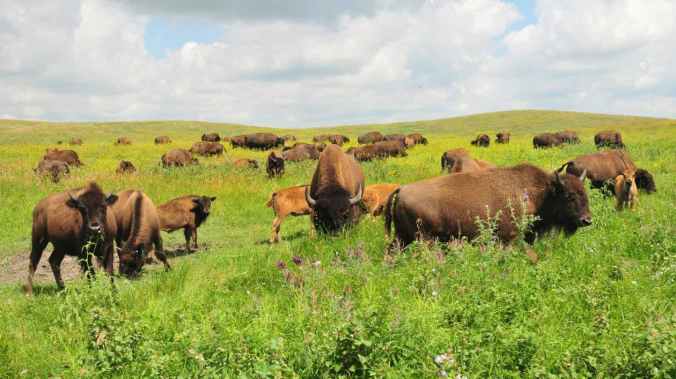
Bison graze on Ordway Prairie, owned and managed by the Nature Conservancy. The site has a USFWS grassland easement protecting it in perpetuity. Photo © USFWS Mountain-Prairie/Flickr

Thanks to science writer Matt Miller, and the Cool Green Science website, we get these stories daily that increase our understanding of the lesser known details of our environment. Are they important? It is a matter of perspective:

Here’s a climate change impact you probably never considered: bison diets.

As the climate warms, bison in North America are likely to shrink, as documented in research published by Joseph Craine and colleagues.

The reason they shrink is because as grasslands warm, grasses and other plants accumulate less protein. Bison are then forced to eat plants that are less nutritious.

This raises a related question: what plants do bison actually eat?

The answer to this question could help conservationists manage for plant species that are higher in protein and preferred by bison – ensuring healthy herds on warming grasslands. Continue reading

Conservation, Technology & Ethics

13duaneWEB-jumbo

Adam Ferriss

We have had the good fortune, and could not agree more with the questions raised and the puzzles presented in this opinion editorial published two days ago in the New York Times:

The Unnatural Kingdom

If technology helps us save the wilderness,
will the wilderness still be wild?

By

IF you ever have the good fortune to see a Sierra Nevada bighorn sheep, the experience might go like this: On a sunny morning in Yosemite National Park, you walk through alpine meadows and then up a ridge to the summit of Mount Gibbs at 12,764 feet above sea level. You unwrap a chocolate bar amid breathtaking views of mountain and desert and then you notice movement below. Continue reading

Urban Forest


Urban forests play an important role. Not only continuing to act as the Earth’s lungs, but they perform other valuable services – least of all providing the sense of peace and refuge for both humans and wildlife.

Our urban trees in the James River Park System and City of Richmond perform valuable services for us. They anchor the soil on hills and along river and stream edges, which reduces runoff into the river. They provide habitat and food for animals, and moderate the temperatures and rainfall with their canopies. Continue reading