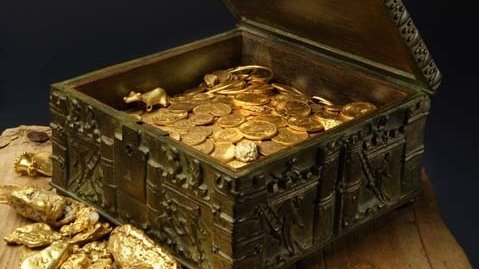
We have plenty of readers on these pages who have the time, the energy and smarts to crack the code on this, so must pass this along to them:
Seeking Adventure And Gold? Crack This Poem And Head Outdoors
We have plenty of readers on these pages who have the time, the energy and smarts to crack the code on this, so must pass this along to them:
Seeking Adventure And Gold? Crack This Poem And Head Outdoors


Both a transcendental and an irrational number, Pi (π) is the ratio of a circle’s circumference to its diameter. And both in definition and actuality it epitomizes coolness, inspiring musical homages, from rap to fugue. Albert Einstein, master of the time-space continuum, was born on this day. Makes sense, right?
But what about visual inspiration?
Artist Ellie Balk collaborates with students from The Green School in East Williamsburg, Brooklyn to combine mathematics and art to VISUALIZE Pi as murals in their community.
Starting in 2011 the artist/student/educator teams graphed Pi in colorful, creative and innovative ways: a histogram of emotions; a weather mural, a reflective line graph that resembles a sound wave and the relationship between the golden ratio and Pi.
For example:
In 2012, students constructed an image of the golden spiral based on the Fibonacci Sequence and began to explore the relationship between the golden ratio and Pi. The number Pi was represented in a color-coded graph within the golden spiral. In this, the numbers are seen as color blocks that vary in size proportionately within the shrinking space of the spiral, allowing us to visualize the shape of Pi and its negative space to look for “patterns”. The students soon realized that the irrational number of Pi created no patterns at all, resulting in a space that resembles “noise”.
In response to that, in 2013 students worked to visualize the number Pi as a reflective line graph that resembles a sound wave. The colors of the mural change at each prime number in Pi so that the viewer can visualize a pattern of prime numbers within Pi. Located on a busy corner in East Williamsburg, Brooklyn, the sounds of the bustling traffic and rhythmic commuter passing creates the perfect backdrop for our visualization. Continue reading

When the exhibition space re-opens, under new management, this is one of the empty spaces that will be filled, and this post on the New Yorker website makes us think it would have been interesting to see the spaces empty, before:
On Friday, March 18th, the Metropolitan Museum of Art invites the public into the Met Breuer, better known for the past fifty years as the Whitney. (The Met is leasing the building for eight years, while its modern and contemporary wing undergoes a radical transformation.) Fun fact: the Whitney might not have existed at all if the Met had accepted Gertrude Vanderbilt Whitney’s offer, Continue reading
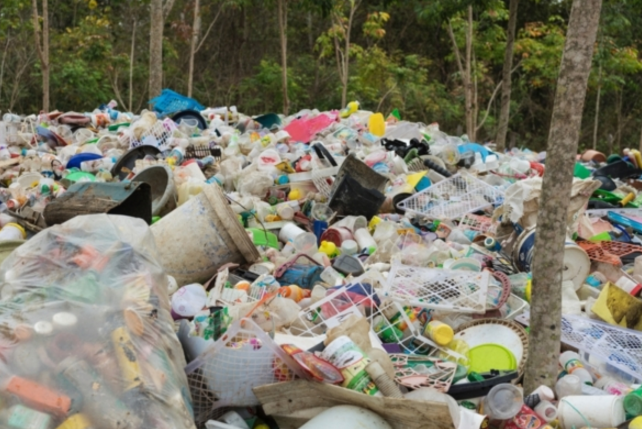
It sounds like the stuff of science fiction – but imagine the impact of a plastic eating bacterium! Thanks to Scientific American for posting this story.
A tiny microbe one day could devour the millions of metric tons of polyethylene terephthalate, or PET, that pile up in landfills each year. Researchers in Japan have discovered the world’s first PET-eating bacterium, a critter that uses PET as its major carbon and energy source.
Each year, plastic manufacturers pump out more than 45 million metric tons of PET to make water bottles, salad domes, peanut butter jars, and other products—all of which sport a stamp with the number one inside a recycle symbol.
PET is the most recycled plastic in the U.S., according to PETRA, the PET Resin Association. Continue reading

Photograph by Robert Dash
Regular visitors to this site already know we love hearing what Robert Krulwich has to say: always fascinating, informative and funny.
Kudos to NatGeo for giving Curiously Krulwich a platform!
We have 3.1 trillion trees on our planet—that’s 422 trees per person. If we count all the leaves on all those trees and take a look at what they do collectively to the air around us, the effect—and I do not exaggerate—is stunning. I’ve got a video from NASA. When you see it, I think your jaw is going to drop—just a little. Continue reading
A wonderful aspect of both young people and entrepreneurs is their ability to find creative solutions to apparently insoluble problems. The two overlap beautifully within the Global Forum on Agricultural Research (GFAR) and the Youth Agripreneurs Project (YAP), where the goal is to pilot innovation to help rural communities world wide.
Kulisha, which is the verb ‘to feed’ in Swahili, the national language of Kenya, is a proposed project that addresses both the problem of creating a sustainable food source in Kenya and the extractive fishing methods of coastal trawlers. Aquaculture is an important food industry in East Africa, but the method of using fish meal from wild caught anchovies is destructive on all levels. Kulisha’s goal is to produce sustainable fish feed in Kenya made from black soldier fly larva.
Our idea, Kulisha, will provide a low-cost, high-quality sustainable fish feed made from black soldier fly larvae. We will sell dried insects to these rural fish farmers to replace the anchovies they are using to mix their own. In addition, we’ll produce a nutrient-rich fertilizer as a by-product from raising the insects which will be sold at a low cost to local crop farmers. It is our long term goal to formulate and sell our own feed. Continue reading

No one contributing to these pages has (yet) taken protest quite this far. We are not surprised to see the man in the blue jacket getting arrested, on principle, but the others listed below–none with as famous a name but all living in a famously protest-inclined part of New York State–make us wonder whether we have what it takes:
Bill McKibben Arrested at Civil Disobedience Action Against Gas Storage at Seneca Lake
Famed author and climate activist joins 56 people from 20 NYS counties to form human blockade at the gates of Crestwood Midstream, demands halt to climate-damaging fracked gas infrastructure, as total number of arrests in sustained campaign hits 537
Watkins Glen, NY – The fight over the fate of the Finger Lakes became national today when best-selling author, environmentalist, and founder of the international climate campaign, 350.org, Bill McKibben joined the opposition. McKibben, 55, was arrested this morning with 56 area residents as part of an ongoing civil disobedience campaign against proposed gas storage in Seneca Lake’s abandoned salt caverns. Continue reading

The rediscovered plants, Impatiens concinna, Impatiens sasidharanii, Impatiens sasidharanii var hirsute and Impatiens neo-modesta, are found to have great medicinal value.
Even without the medicinal value component of this discovery, we would consider this good news:
Four ‘extinct’ plant species rediscovered
Four species of Impatiens (Kasi Thumba) plants believed to have gone extinct were rediscovered from the Western Ghats recently. Continue reading
The Guardian story below captures vividly the meaning of the law of unintended consequences that sometimes governs in cases of conservation:
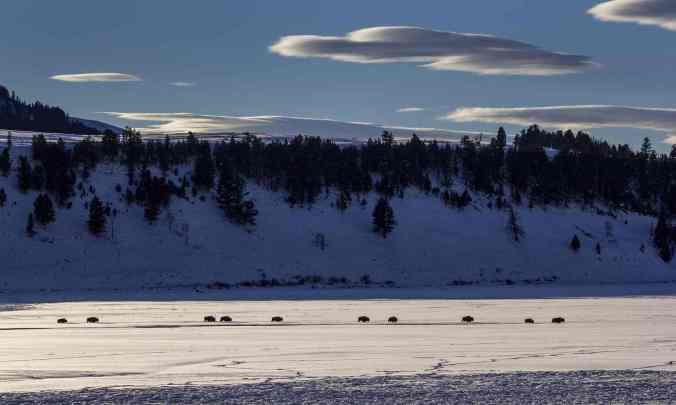
The American bison once faced extinction – now they’re being culled. Native American photographer Joe Whittle attends a hunt held by tribal members
by Joe Whittle at Yellowstone National Park
Every winter the small town of Gardiner, Montana, welcomes Native American tribal members from around the Inland Northwest. Hospitality businesses are happy to see them arrive during the off-season, but they’re not the only ones – ranchers are thrilled.
The tribal members are there to hunt American bison (or buffalo) that wander out of Yellowstone national park to find forage during winter. Bison are naturally migrating animals, and as the frozen snows of winter make finding sustenance difficult and competitive, herds start to head to lower elevations to seek sufficient feed.
The north entrance of Yellowstone is at the edge of Gardiner, and the wild roaming bison that leave the park often walk right into town or on to private property. That’s when the interests of the bison and private landowners begin to conflict. Continue reading

PHOTOGRAPH BY DINA LITOVSKY FOR THE NEW YORKER
We took a respite from thinking about Ethiopian food for some months, following our brief exploration of Ethiopia but this item in the current issue of the New Yorker reminds us of why that all held our attention so firmly. It gets us thinking about a return trip to Ethiopia. It has us wondering where have the last 363 days gone? Whet the appetite here:
Abyssinia
For lovers of Ethiopian food, recent years were marked by two seismic events in Harlem. First, Tsion Café and Bakery opened on Sugar Hill, serving steaming piles of stew atop injera.

Collaborative relationships are beautiful things. Most of human endeavors lend themselves to collaboration, and art is no exception. The stereotype of solo artist in studio is an old one, but in truth inspiration rarely occurs in isolation, and art doesn’t develop in a vacuum. Collaboration and community between artists, artists and patrons, or artists and those who appreciate art has existed in some form ever since the first charcoal marks on cave walls. Continue reading

“Sandcastle No. 3,” drawn on a single grain of sand, part of a Vik Muniz series from 2013.CreditVik Muniz, via Sikkema, Jenkins & Co.
We like it, for what should be obvious reasons:
At M.I.T., Science Embraces a New Chaos Theory: Art
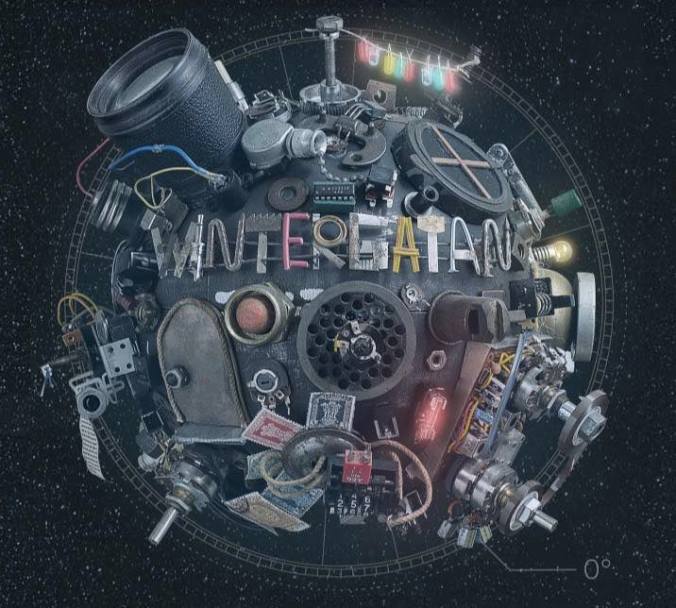
When we recently posted on this newfangled musical contraption we could not find any further information about it. Lo and behold, after a drought sometimes when it rains it pours. Today, National Public Radio (USA) has this:
The “Marble Machine” is a musical instrument by way of a Rube Goldberg contraption, the love child of a barrel organ, a kick drum, a vibraphone and a bass — all powered by hand-cranked gears and 2,000 steel marbles.
The machine was built by Swedish musician Martin Molin, who fronts the Swedish band Wintergartan… Continue reading

The Mad Hatterpillar, Uraba lugens, larval stage of an Australian moth. Image © Nuytsia@Tas via WIRED Magazine.
The image above may seem a little gruesome if you hear that the pictured caterpillar has a collection of old skulls attached to the top of its own its spiky, irritating-to-the-touch hairs. But the larval insect isn’t a true headhunter, since the eery tower above the caterpillar’s crown is in fact made of its own exoskeleton pieces from previous moltings of its skin. Ed Yong reports on new research regarding a caterpillar that has been known for many decades but is still being studied for explanations on the strange cranium-collecting behavior:
Some caterpillars defend themselves from predators using toxic chemicals, repugnant smells, or stinging hairs. Some camouflage themselves. Some mimic snakes. Some recruit ant bodyguards. Some create protective fortresses, or make warning clicks, or vomit up their guts.
And then there’s Uraba lugens, an Australian moth colloquially known as the gum-leaf skeletoniser, and even more colloquially known as the Mad Hatterpillar. Like all caterpillars, it grows by shedding its hard outer shell before expanding the soft body beneath.
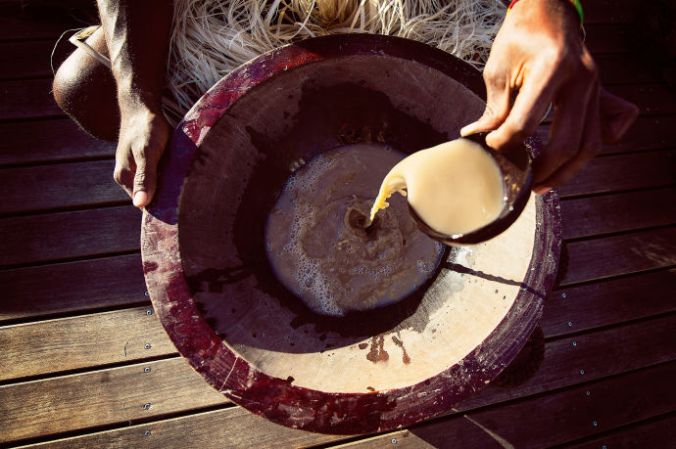
In an increasingly health-conscious New York, some would-be boozehounds are turning to kava, made from a South Pacific-originated plant, as a substitute for alcohol. PHOTOGRAPH BY KIRSTIN SCHOLTZ / WSL VIA GETTY
Never heard of it before, but now it is on our agenda:
“ALCOHOL IS SO 2014. TRY KAVA,” suggests a sandwich board on Tenth Street between First Avenue and Avenue A, in the East Village. Whether by design or not, this block has become a retro-futurist downtown cornucopia of health, wellness, and New Agey philosophy. It is home to, among other establishments, a lush and gaudy store that peddles healing crystals; the beloved Russian and Turkish baths; a store called the Molecule Project, which sells artisanal tap water squeezed of any impurity; and a place named Body Evolution, which boasts the “largest and most fully equipped GYROTONIC® studio in Manhattan.” And then there is Kavasutra, the block’s newest addition, specializing in drinks made from the root of a South Pacific-originated plant called kava. Designed like a real bar but booze-free, Kavasutra is a New York City experiment that asks its patrons to imagine the possibility of a cosmopolitan social life without alcohol. Continue reading
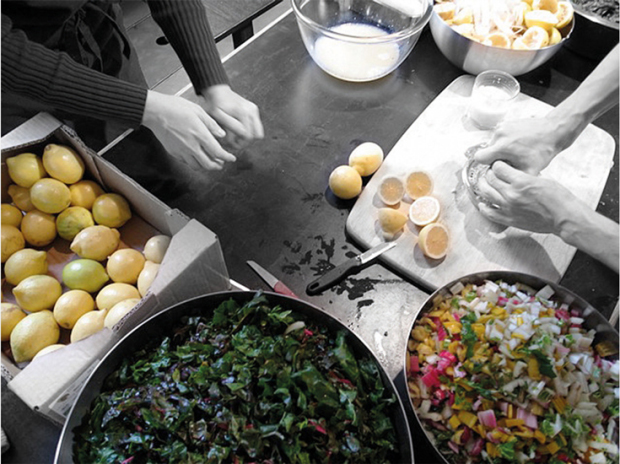
From Studio Olafur Eliasson: The Kitchen
From Phaidon, a new series that has our attention:
…This spring sees Phaidon will publish its first vegetarian-only cookbook for 10 years. Indeed, we are bringing out three vegetarian titles: The Middle Eastern Vegetarian Cookbook by the Lebanese writer and cook Salma Hage; artist Olafur Eliasson’s Studio Olafur Eliasson: The Kitchen, a collection of recipes the artist and his co-workers enjoy sharing together for lunch; and Icelandic chef and restaurateur Solla Eiríksdóttir’s Raw: Recipes for a Modern Vegetarian Lifestyle. Continue reading
It looks old fashioned, but is definitely newfangled. We do not have anything particular to say about this. Just enjoy the odd mix of ingenuity, musicality and spectacle.

At peak production, Intel’s new solar carport can carry half of the campus’ electricity demand. Photo by Intel via GreenBiz
Businesses are finally seeing the sense of clean energy, which we try to share about as much as possible when it comes to savings and renewables or alternative sources. Heather Clancy at GreenBiz reports on the use and investment of clean energy by several big US businesses, like GM with landfill gas, Intel with solar panels, and Google with renewable energy contracts:
Despite uncertainty surrounding the future of the Clean Power Plan and contractual nuances that make even the smallest project feel unnecessarily complex, big businesses seem more committed to renewable energy than ever.
“This time it’s not about fashion, it’s about real economics, about real business opportunity,” said economist Mark Kenber, CEO of the Climate Group, during a keynote interview at last week’s GreenBiz 16 conference in Scottsdale, Arizona.
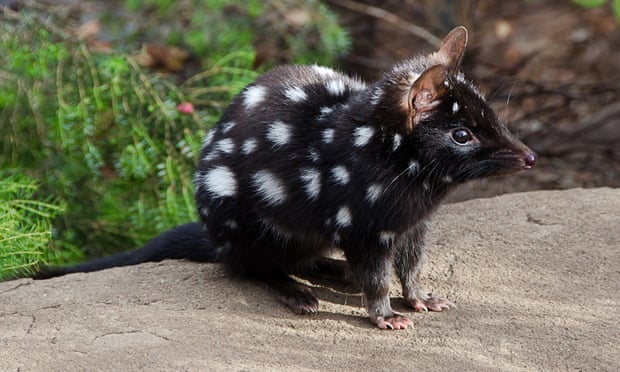
An eastern quoll. Professor Adrian Manning said it was the first ‘translocation’ of wild eastern quolls ‘into a free-ranging situation’ on the Australian mainland. Photograph: Marc Faucher, via The Guardian
We’re always happy to hear about the reintroduction of a previously extirpated species to its original habitat, even if we’re wary of some of the more ambitious projects from prior extinctions. Even though we weren’t aware of the existence of this cute marsupial named the Eastern Quoll, we’re glad to know that it is returning to its homeland. Elle Hunt reports for the Guardian:
The eastern quoll is making a comeback to mainland Australia, from where it disappeared more than 50 years ago, with a new generation introduced to the Australian Capital Territory from Tasmania.
A team of researchers from the Australian National University has reintroduced a group of wild eastern quolls from Tasmania into the Mulligan’s Flat Woodland Sanctuary in Canberra.
The small, carnivorous marsupial has not been seen there for almost 80 years.
Prof Adrian Manning, who led the team from the ANU’s Fenner School of Environment and Society, said it was the first “translocation” of wild eastern quolls “into a free-ranging situation” on the Australian mainland.
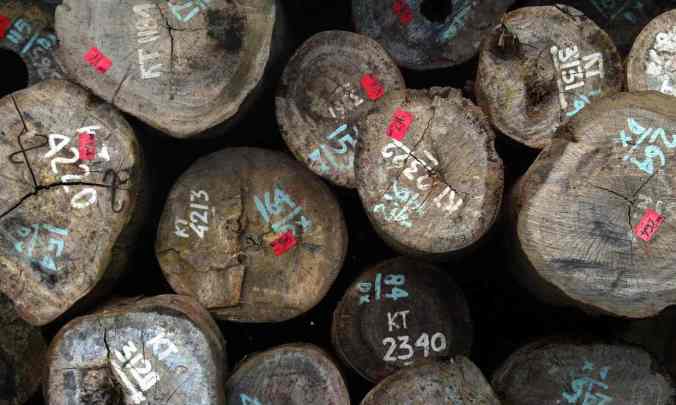
Global Land Analysis and Discovery alerts, analysing satellite images will be initially be available for Peru, the Republic of Congo and Indonesia. Photograph: Natalie Behring-Chisholm/AP
When there is news on the improved ability to reduce illegal logging, we are always interested. Thanks to the Guardian’s Environment section for their assistance on this front:
New satellite mapping a ‘game changer’ against illegal logging
System that provides hard evidence of logging crimes in almost real time gives new hope of combating tropical deforestation
Taken from outer space, the satellite images show illegal loggers cutting a road into a protected area in Peru, part of a criminal enterprise attempting to steal millions of dollars worth of ecological resources Continue reading
 Organikos