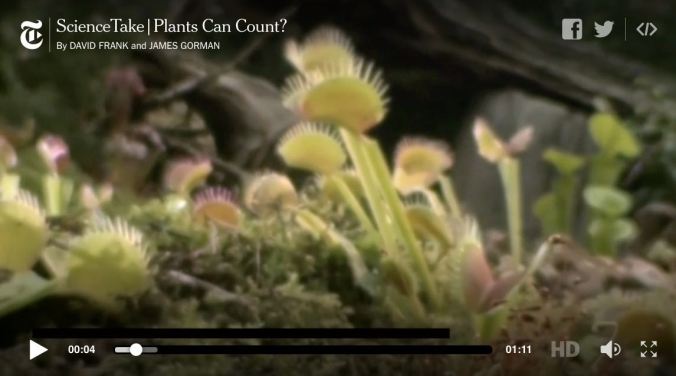
Mathematically Inclined Plant Life

Screen Shot 2016-02-03 at 7.38.22 AM.jpg

We pore the Science section of the New York Times each Tuesday, looking for stories that seem intriguing, and therefore (however much a stretch related to the “fascination with nature”) relevant to our conservation message. We rely on many publications with online outlets for such stories, but always stop at a certain point with stories that simply get us to ick, or which lead to implications not inherently appropriate to a company that operates lodging establishments around the world.

Nonetheless, we read even those stories that make us wince–in the spirit of eat your vegetables, in the interest of learning–but there are some phenomena we promise never to subject our readers to. Not that we do not see the value in understanding such things, but we can only stand so much ick in a day.

Versatile Bamboo and Cast Aluminum Structures for the DR and Elsewhere

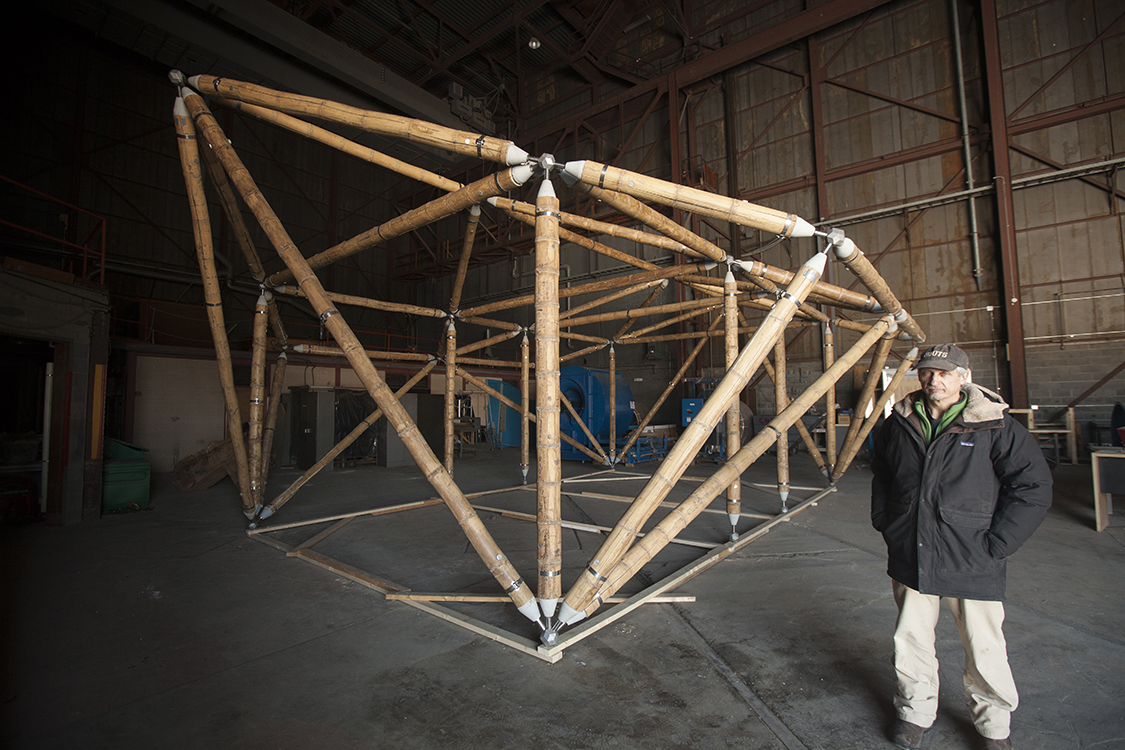
Jack Elliot and students completed a test build in Cornell’s High Voltage Laboratory before erecting the structure in the Dominican Republic. Photo © Robert Barker / University Photography

Bamboo comes up frequently on this blog, since it is such a fast-growing plant that can be used in various ways for construction and design. Recently, we learned of a collaborative project at Cornell University where bamboo-based structures intended to resist the violence of earthquakes and hurricanes in the Caribbean (and tested on the island of the Dominican Republic) use an aluminum joint system invented by a Cornell professor. Roger Segelken reports for the Cornell Chronicle:

The first field test of Design and Environmental Analysis (DEA) associate professor Jack Elliott’s “Triakonta” structural system stands in the Punta Cana coastal region of the Dominican Republic, as an outdoor classroom for the Puntacana Ecological Foundation.

“The structure itself is elegant and has sparked dialogue about sustainable architecture amongst visiting guests, students and even architects,” said Jake Kheel, M.S. ’02, environmental director of Grupo Puntacana, which operates a resort adjoining the eco-preserve where Cornellians and locals built the bamboo structure in mid-2015.

Continue reading

Glass Art by Kiva Ford

Glass-blowing is an amazing art and science that has continually impressed us in the past. Thanks to the art/design blog ThisIsColossal, we’ve been exposed to the creations of Kiva Ford, who applies the skills he learned for blowing scientific instruments to his personal art, which you can see examples of in the video below:

Continue reading

Rising Anxiety

bangladesh

Bangladesh is one of the countries most vulnerable to the effects of climate change with millions expected to be displaced in the next 40 years. PHOTO: Probal Rashid

Developing countries are the most hit by climate change. Its effects—higher temperatures, changes in precipitation patterns, rising sea levels, and more frequent weather-related disasters—pose risks for agriculture, food, and water supplies. At stake are recent gains in the fight against poverty, hunger and disease, and the lives and livelihoods of billions of people in these countries. Bangladesh is one of them, with a rapidly increasing number of ‘climate refugees’.

Continue reading

Venice’s First and Only Gondoliera

Venice

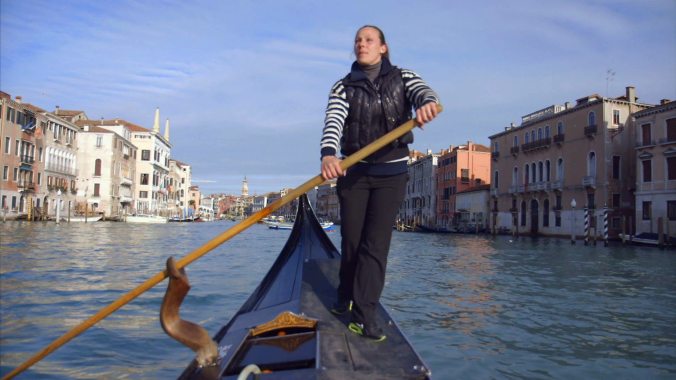
In 2009, 23-year-old Giorgia Boscolo overcame one of Italy’s last all-male bastions (for 900 years) to become a certified gondolier. PHOTO: BBC

Travel empowers. Not just the map-toting, lens-faced tourists but also the people who make travel possible. Often, mere faces. Rarely remembered by their names for their service. Giorgia Boscolo is an exception. She’s a rare breed, in a league of her own on Venice’s canals. Should your travel plans point towards this city, do catch a glimpse of this spirit who sails right through 900 years of taboo.

As a little girl in Venice, Giorgia Boscolo was forever bugging her father to let her ride with him in his gondola. While her three sisters played with their dolls, she would beg him for a turn with the remo, or oar. Dante Boscolo, an indulgent Italian father, humored his pint-sized shadow — to a point.

“My father only let me row when it was bad weather,” Giorgia recalled with a laugh.

His retort was swift: “That’s how you learn.”

Continue reading

Hydropower by Design

Itaipu Dam, a binational hydroelectric dam on the Paraná River located on the border between Brazil and Paraguay. The dam is the largest operating hydroelectric facility in terms of annual energy generation. Photo/caption © Erika Nortemann/The Nature Conservancy

Dams, although greener in some senses than coal factories in terms of their electric output, almost always have other serious environmental repercussions in the form of habitat destruction and river flow interruptions that adversely affect fish species. Hydropower from giant dams on rivers has been described as a brute force technology, and the construction of new dams can create public outcry as well as political issues in water distribution. The publication of new research, in part by The Nature Conservancy, shows how hydroelectric projects, often so destructive, can be less harmful if planned thoroughly beforehand to take the whole river basin and water system into account, rather than just a small tract of river. Jeff Opperman reports for TNC in a blog article that describes the elements of concentration, confrontation, and collaboration involved in pairing new hydropower with river conservation:

Concentration.

That’s what makes rivers so valuable — both for fish and for energy.

A river is the concentrated water of a whole region as rain and snow across an entire basin becomes runoff, is funneled into cataracts, creeks and canyons, and collected into the narrow ribbon of a river channel (narrow in a relative sense — even a river channel several kilometers wide is incredibly narrow compared to its basin which may be hundreds of thousands of square kilometers in area).

Continue reading

Passive Homes in Washington, DC

Photo © Passivhaus Institute, Germany

Energy-efficient and eco-friendly homes have been the subject of posts here in the past. Virginia Carabelli shared her first-hand experience with straw bale construction, and we’ve seen stories about earthships made from recycled material and houses covered in solar panels. Now we’re learning about a whole category of houses that can be certified as “passive” to a standard popularized in Germany. These buildings are like a thermos: extremely well insulated so that heating and cooling costs can be minimized to the point where the house is projected to use up to 90% less energy than the average house. Habitat for Humanity, in collaboration with other organizations for funding and discounts on domestic electronics, is building several houses in the DC area for a low-income neighborhood: Wendy Koch reports for National Geographic:

Built partly by volunteers, these low-budget Habitat for Humanity homes—now nearing completion—don’t look like anything special. They have basic brick facades like others in their gentrifying Ivy City neighborhood.

They stand out in other ways: 12-inch-thick exterior walls and triple-pane, imported-from-Ireland windows offer more than double the insulation required of new homes. In lieu of a furnace, tiny, wall-mounted Mitsubishi units provide heating and cooling. (See related blog post: “Laying the Foundation for Sustainable Housing in D.C.“)

Continue reading

Clap Hands for Kerala Birders!

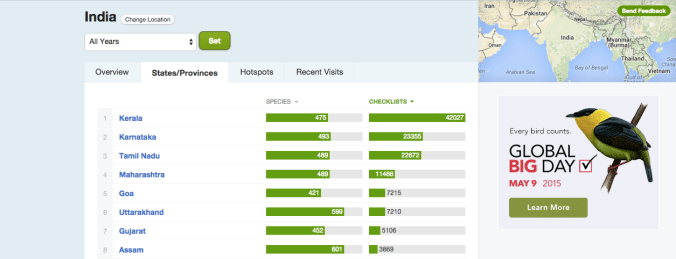
Between the on-going Bird of the Day series and many ornithologically focused posts, our interest in birds can’t be breaking news to any La Paz Group reader. We’re constantly hearing more about the importance of citizen science in all sorts of ecosystems, but with both birding and Kerala so close to our hearts we’re thrilled to applaud the enthusiasm of the Bird Count India community. Continue reading

The Mountain Spirit

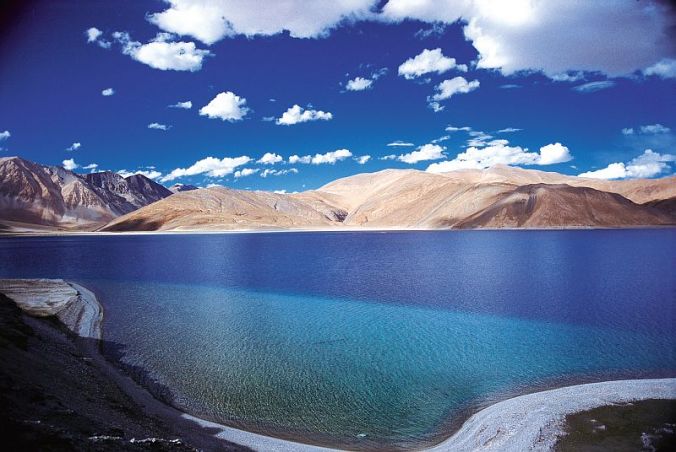
ladakh

The Ladakhi Women’s Travel Company, the first to be completely owned and operated by women in the area, is all about empowering women and promotes ecotourism. PHOTO: Thrillophilia 

A trip to India is incomplete without visiting the hallowed Taj Mahal and the many palaces up north. And the world-famous backwaters of Kerala and the hill stations across Southern India. What should figure on travel itineraries without a doubt: Leh-Ladakh. A  favorite getaway among domestic travelers, this mountainous region – with its bounty of snow-kissed peaks and crystal blue waters – is every color dream come true. Here’s visual proof. And if you do make it there, look up the Ladakhi Women’s Travel Company.

How many women does it take to start an all-women travel company, set up a women’s welfare network for women in distress, write tirelessly on social and environmental issues, win a bronze at the National Ice Hockey Championship, and keep training an ever-growing number of women to be professional trekking guides in the harsh terrain of Ladakh? Just one, if that woman happens to be Thinlas Chorol. 

Continue reading

The History of Organic Design

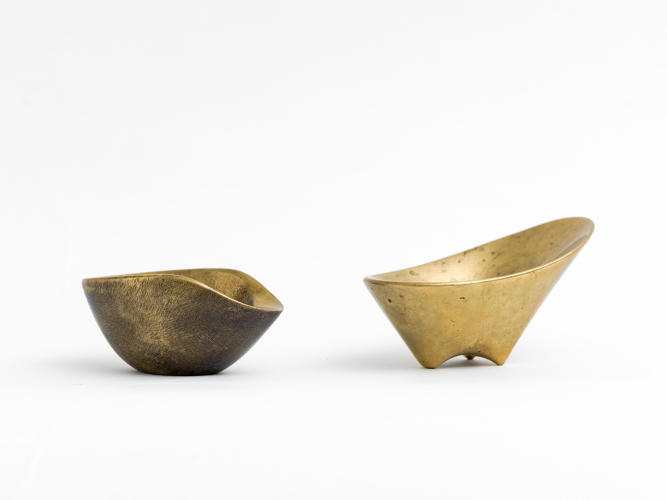
organic design

Carl Aubock II [Austrian, 1900-1957] Ashtray, Model No. 3597, 1948. Ashtray Model No. 4736, 1947. PHOTO: CoExist 

What about the world of design is organic? Literally, yes it involves environmental concerns, also the premise of using Nature as the basis for design. Design that grows – inside out – as the elements of Nature. CoExist delves into the history of organic design:

In the 1930s, the central belief of the organic movement was that furniture and architecture should reflect a harmony between people and nature. In furniture design, this meant natural materials like wood, and smooth, rounded forms. The bent plywood furniture of legendary French designer Jean Prouve came out of this period, as did Marcel Breuer and his laminated birch plywood armchair with a calfskin cushion. These designers prided themselves on being dedicated to their craft, and their pieces were painstakingly made and not easily reproduced. “They saw it as a unique work that refers to nature,” says Olshin. “These pieces tend to be unique one-of-a-kind studio work that’s not easily produced in mass quantities.”

Continue reading

Who Dreamed This City into Being?

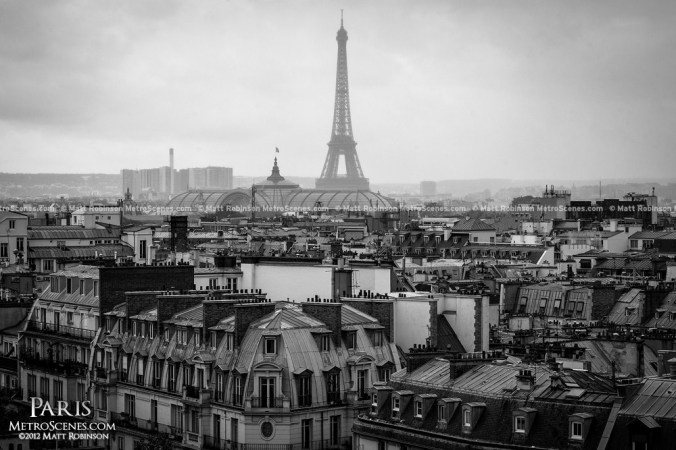
paris

In the 19th century, George-Eugene Haussmann completely redesigned and rebuilt the French capital. PHOTO: Matt Robinson

“Paris was a universe whole and entire unto herself, hollowed and fashioned by history; so she seemed in this age of Napoleon III with her towering buildings, her massive cathedrals, her grand boulevards and ancient winding medieval streets–as vast and indestructible as nature itself. All was embraced by her, by her volatile and enchanted populace thronging the galleries, the theaters, the cafes, giving birth over and over to genius and sanctity, philosophy and war, frivolity and the finest art; so it seemed that if all the world outside her were to sink into darkness, what was fine, what was beautiful, what was essential might there still come to its finest flower. Even the majestic trees that graced and sheltered her streets were attuned to her–and the waters of the Seine, contained and beautiful as they wound through her heart; so that the earth on that spot, so shaped by blood and consciousness, had ceased to be the earth and had become Paris.”
Anne Rice, Interview with the Vampire

Literature, history, art, everyday news, talk at a neighborhood cafe – the exquisite and the commonplace are rife with paeans to this city. But how did she come into being?

Continue reading

The Alphabets of Assimilation

The Salt

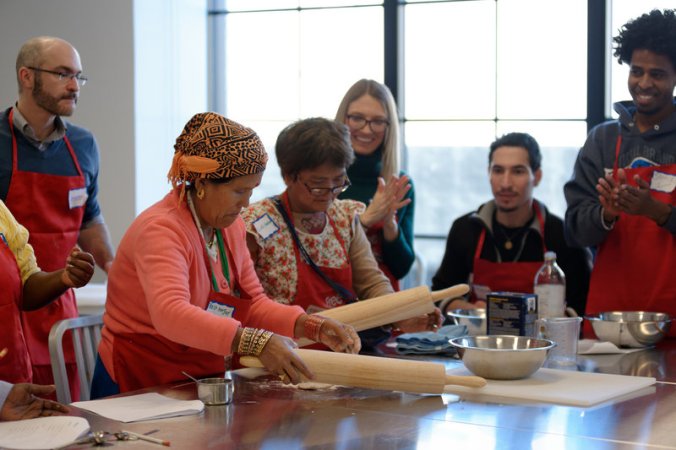
Teela Magar and Cing Neam prepare roti dough as part of Edible Alphabet, a program in Philadelphia that folds English lessons for immigrants to the U.S into a cooking class. PHOTO: Bastiaan Slabbers, The Salt

Roti is a staple in Indian homes. This unleavened flat bread made of stoneground wholemeal flour links tables in Asia and Africa. With its humble origins, simple spirit, and its versatility in being an economical yet nutritious accompaniment, the roti is a mainstay of an English-as-a-Second-Language class in Philapdelphia. So, how does breaking bread help immigrants pick up basics of English – a skill vital to their rehabilitation, assimilation, and survival in a foreign land? The Salt tells us:

“Food is warmth, it’s comfort, it breaks down those barriers.” Galeb Salman left his native Iraq 25 years ago and most recently lived in Thailand. He says he savors the choices and freedom he feels since arriving here in September with his wife and five kids. “When I think I want to learn, I want to study, I can. When I want to work, I can,” he says. “I feel we have good life now. …This is my new life.”

Continue reading

Understanding Coal

20160123_STP501_3.jpg

From the current issue of Economist, a bit of readable geological science to help make sense of the splashier headlines:

The origin of coal

The rock that rocked the world

More than any other substance, coal created modern society. But what created coal?

FOR 60m years of Earth’s history, a period known to geologists as the Carboniferous, dead plants seemed unwilling to rot. When trees expired and fell to the ground, much of which was swampy in those days, instead of being consumed by agents of decay they remained more or less intact. In due course, more trees fell on them. And more, and yet more. The buried wood, pressed by layers of overburden and heated from below by the Earth’s interior, gradually lost its volatile components and was transformed into a substance closer and closer to pure carbon. Continue reading

Fish Fraud Falling

fish-marketThanks to Conservation Magazine for pointing us to this bit of scientific evidence that, while fisheries are on the whole in a dismal state, steps are being taken in Europe to address one of the symptoms:

Over the past few years, dozens of studies have documented a global fish fraud epidemic, in which fish are mislabeled as species they are not. It’s a problem with detrimental environmental, economic, and even potential health effects. Continue reading

Constant Signs In Favor Of Vegetarianism

22cow-web-popup

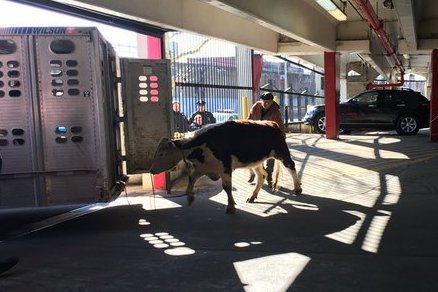
Officers corralled a cow that had escaped a slaughterhouse in Jamaica, Queens, on Thursday. Credit, New York Police Department 103rd Precinct

We are not clear on the meaning of the name given to this cow, but we are sure the story is a sign from the forces of vegetarianism. Anyway, go Freddie, go! As if you needed more reasons, we propose a quick read to get you thinking about giving up meat, from an unexpected angle:

A cow that was captured by the police after escaping a New York City slaughterhouse has been taken in by an animal sanctuary and named for the rock legend Freddie Mercury. Continue reading

The Power of Parks

yosemite

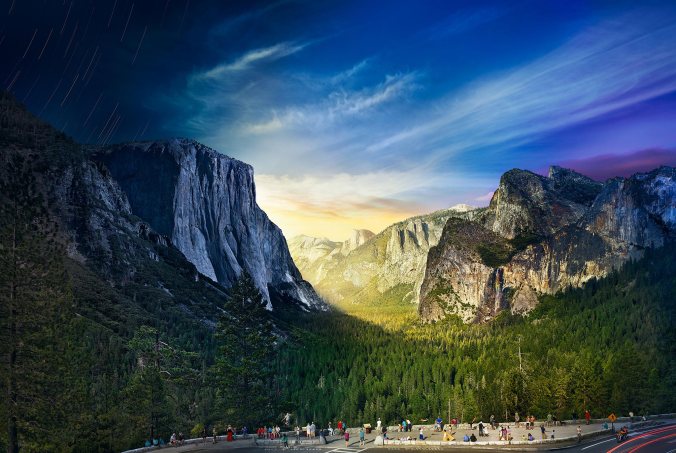
Photographs of Yosemite National Parks composed by Stephen Wilkes. Courtesy: National Geographic

Which side are you on – the one that believes national parks are the past or to the side that sees the future in these stretches? As long as national parks figure on your maps and feature in your scheme of things, you must know that the National Park Service is celebrating its centennial this year.  In commemoration, National Geographic looks at how to preserve these wild spaces:

“In March 1868 a 29-year-old John Muir stopped a passerby in San Francisco to ask for directions out of town. “Where do you wish to go?” the startled man inquired. “Anywhere that is wild,” said Muir. His journey took him to the Yosemite Valley in California’s Sierra Nevada, which became the spiritual home of Muir’s conservation movement and, under his guidance, the country’s third national park. “John the Baptist,” he wrote, “was not more eager to get all his fellow sinners into the Jordan than I to baptize all of mine in the beauty of God’s mountains.” Today around four million people a year follow their own thirst for the wild to Yosemite.”

Continue reading

Inside the Eye

eyes_zpstq8hccww

Photo credit: David Liittschwager for National Geographic

Congratulations to science writer Ed Yong, who we know from his blogging in National Geographic‘s “Phenomena” Science Salon (which we’ve been sharing for a while now), for his first full feature story in the magazine he writes for on the web! It’s a fascinating piece on the eye, “nature’s most exquisite creation,” as his subtitle affirms. And indeed, we learned a lot about vision in the animal world thanks to Yong’s story:

Some see only in black and white; others perceive the full rainbow and beyond, to forms of light invisible to our eyes. Some can’t even gauge the direction of incoming light; others can spot running prey miles away. The smallest animal eyes, adorning the heads of fairy wasps, are barely bigger than an amoeba; the biggest are the size of dinner plates, and belong to gigantic squid species. The squid’s eye, like ours, works as a camera does, with a single lens focusing light onto a single retina, full of photoreceptors—cells that absorb photons and convert their energy into an electrical signal. By contrast, a fly’s compound eye divides incoming light among thousands of separate units, each with its own lens and photoreceptors. Human, fly, and squid eyes are mounted in pairs on their owners’ heads. But scallops have rows of eyes along their mantles, sea stars have eyes on the tips of their arms, and the purple sea urchin’s entire body acts as one big eye. There are eyes with bifocal lenses, eyes with mirrors, and eyes that look up, down, and sideways all at the same time.

Continue reading

Sorry, Bolivia!

bolivia

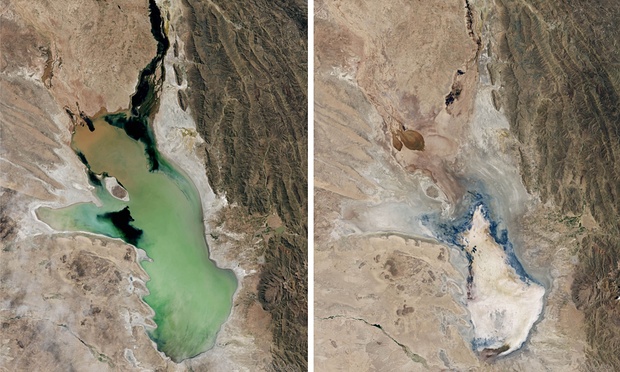
NASA satellite images show Bolivia’s Lake Poopo filled with water in April 2013 (left), and almost dry in January 2016. PHOTO: NASA/AP

Drying rivers, lakes, and reservoirs. Fancy a list? Here and here, you go. The world’s waters are rapidly running dry, threatening wild habitats and human civilization, exacerbating climate change. In turn, livelihoods, ecosystems, energy generation are all affected. Like in Bolivia, which just lost its second largest lake.

Continue reading

An American Soldier, World War, and India

photo

28 years ago, a Chicago-based couple found a shoebox of photographs of the Indian countryside and they traveled halfway across the world to find their origin. PHOTO: Scroll

Here’s the plot: In 1988, a couple visited an estate sale of a deceased friend and stumbled upon a shoebox of old photographs tucked under a couch. It contained more than a hundred envelopes filled with negatives and contact sheets for photographs depicting India in 1945. The identity of the photographer: unknown.

But only until they set out to discover the man behind the lens. The answer (and the photographs) hang at Delhi’s Indira Gandhi National Centre for the Arts till January 31.

Continue reading