Wild Tomatoes Reduce Need for Pesticides

Cherry tomatoes growing at Xandari Resort © J.L. Zainaldin

We’re always on the lookout for non-chemical ways to deter pests from agricultural areas, and researchers in the UK are finding yet another method that doesn’t involve spraying plants with poisons that can adversely affect local wildlife (i.e., bees) or the people eating them. It may seem like a no-brainer, but here it is: breed commercial tomatoes with wild ones to increase pest resistance! Sindya Bhanoo summarizes the research for the New York Times:

Whiteflies are the scourge of many farms, damaging tomatoes, peppers, eggplants and other crops. Now, researchers in Britain report that a species of wild tomato is more resistant to the pest than its commercial counterparts.

The wild type, the currant tomato, is closely related to domestic varieties, “so we could crossbreed to introduce the resistance,” said Thomas McDaniel, a biologist and doctoral student at Newcastle University in England and a co-author of the study, published in the journal Agronomy for Sustainable Development. “Another method would be genetic engineering, if we identified the genes.”

The researchers studied Trialeurodes vaporariorum, a species of whitefly that often attacks tomatoes grown in greenhouses. Whiteflies damage tomato plants by extracting the plant’s sap, which contains vital nutrients; by leaving a sticky substance on the plant’s surface that attracts mold; and by transmitting viruses through their saliva.

Continue reading

The Earliest Artists

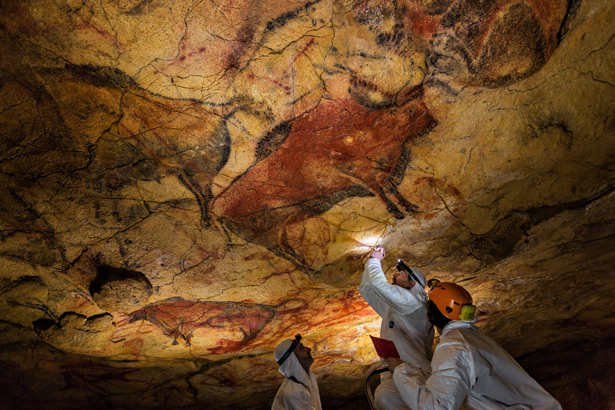
Located in southern France, the Cave of Pont d’Arc holds the earliest-known and best-preserved figurative drawings, dating back to the Aurignacian period (30,000–32,000 BP). PHOTO: Nat Geo

Located in southern France, the Cave of Pont d’Arc holds the earliest-known and best-preserved figurative drawings, dating back to the Aurignacian period (30,000–32,000 BP). PHOTO: Nat Geo

The Cave of Chauvet-Pont-d’Arc has been ferociously protected by the French Ministry of Culture. An exceptional testimony of prehistoric art, the cave was closed off by a rock fall and remained sealed until its discovery in 1994. The images demonstrate techniques of shading, combinations of paint and engraving, three-dimensionality and movement.

Around 36,000 years ago, someone living in a time incomprehensibly different from ours began to draw on its bare walls: profiles of cave lions, herds of rhinos and mammoths, a magnificent bison off to the right, and a chimeric creature—part bison, part woman—conjured from an enormous cone of overhanging rock. Other chambers harbor horses, ibex, and aurochs; an owl shaped out of mud by a single finger on a rock wall; an immense bison formed from ocher-soaked handprints; and cave bears walking casually, as if in search of a spot for a long winter’s nap. The works are often drawn with nothing more than a single and perfect continuous line. In all, the artists depicted 442 animals over perhaps thousands of years, using nearly 400,000 square feet of cave surface as their canvas.

Continue reading

Palau Power!

21mag-21palau-t_CA4-jumbo

The Sheng Chi Huei 12, a Taiwanese fishing vessel. BENJAMIN LOWY/REPORTAGE, FOR THE NEW YORK TIMES

Where are the heroes on the high waters? Sea Shepherd, one of our favorites, is out there and Paul Watson continues to lead the charge; but not only them. Little places also do big things. Thanks to Palau for the inspiration, and the reporter/publication for the investigation:

Palau vs. the Poachers

The island nation has mounted an aggressive response to illegal fishing in their waters. How they protect themselves may help the rest of the world save all of the oceans.

Late on a January 2015 evening in Shepherdstown, W.Va., a data analyst named Bjorn Bergman, surrounded by whiteboards scribbled with computer code, was orchestrating a high-stakes marine police chase halfway around the world. Staring at his laptop in a cramped ground-floor office, he drank from his sixth cup of coffee and typed another in a long series of emails: ‘‘Try and cut them off rather than making for the last known position.’’ Nearly 9,000 miles away, the Remeliik, a police patrol ship from the tiny island nation Palau, was pursuing a 10-man Taiwanese pirate ship, the Shin Jyi Chyuu 33, through Palauan waters. Bergman, working for a nonprofit research organization called SkyTruth, had mastered the use of satellite data to chart a ship’s most likely course. Instead of pointing the police to where the pirate ship was, he would tell them where it was about to be. He took another sip of coffee, studied his screen, then typed again: ‘‘It may be advisable for the Remeliik to turn southeast.’’ Continue reading

Unintentional Conservation

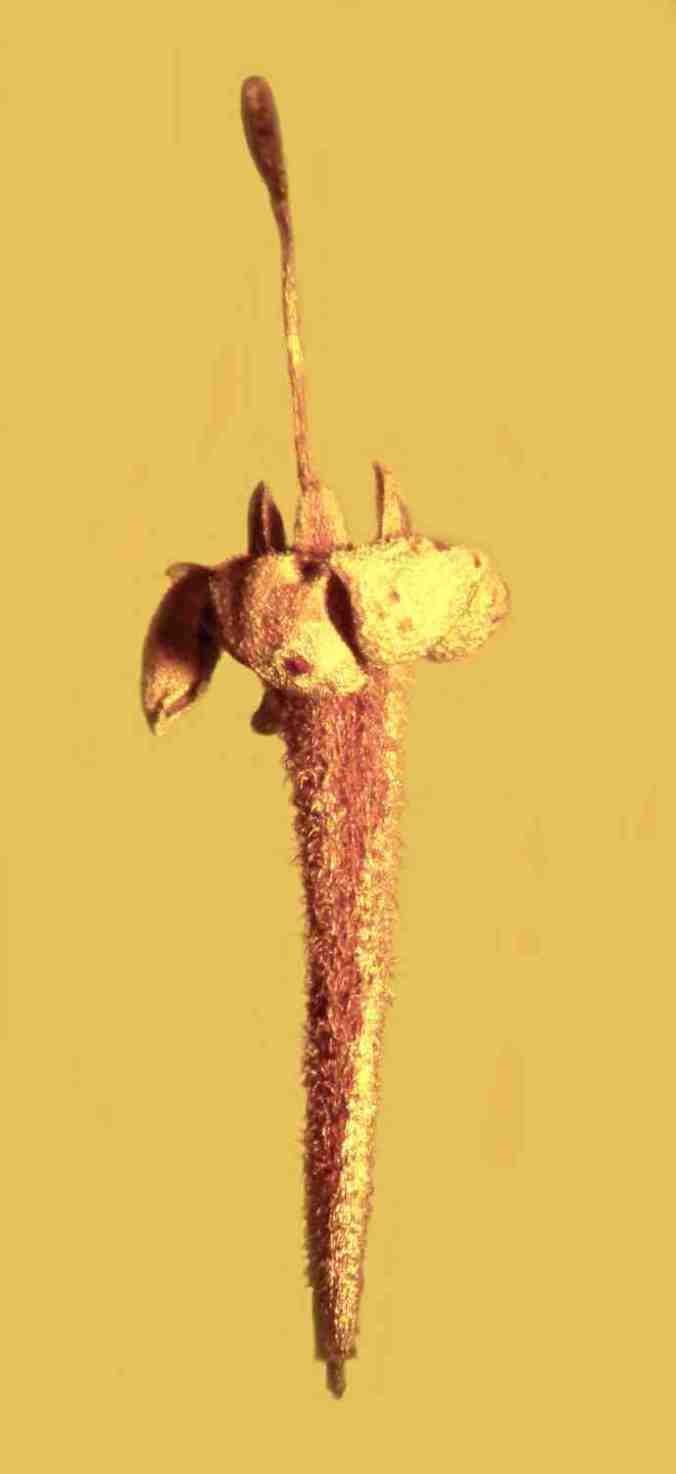
Twilley-Ancient-Flower-Amber3-690

S. electri. COURTESY GEORGE POINAR / OREGON STATE UNIVERSITY

Amber is awesome. In so many ways, it is the definition of a natural wonder. One of those definitions might be its role as unintentional conservator of ancient natural history. This collection of images, from an amber-trapped flower to an prehistoric stingless bee, make the case for this definition:

The flowers of Strychnos electri are slim and small and trumpet-shaped. Their petals flare out at the tip to form a star, out of which a single spindly pollen tube protrudes. They look as if they might have fallen from the stalk yesterday, but they are ancient. At least fifteen million years ago, and possibly as many as forty-five million, they landed in the sticky sap of a tree that is now extinct, in a kind of forest that no longer exists on Earth. The sap hardened into amber, the tree died, and eventually geology took over. The fossilized flowers were submerged in water, buried under layers of gravel and limestone, and finally thrust upward into the foggy hills of the modern-day Dominican Republic. There, in 1986, an American entomologist named George Poinar, Jr., unearthed them. Continue reading

Bringing Nature-Oriented Science To An Urban Audience

Screen Shot 2016-02-16 at 10.04.40 AM

Wild monkeys can learn from a demonstration video set up in the forest. Video by David Frank and James Gorman on September 29, 2014

Several of the videos in this series have been featured on our pages over the last few years, but not all of them (for an example of one we neglected to link to previously, check out this one above). Today the series is crossing round number landmark, so we join in their celebration in hope that the series continues:

Fire Ants, Goshawks and Dog Tongues, Oh My: The Best of Science Take

Continue reading

Bringing Nature To An Urban Audience

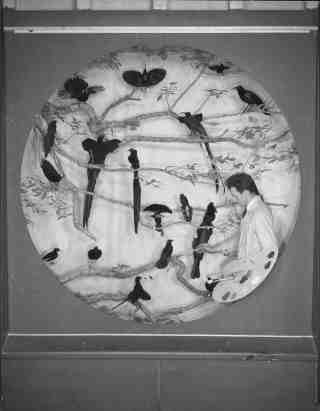
AMNH-03-320

Installing the Birds of Paradise group, 1945. COURTESY AMERICAN MUSEUM OF NATURAL HISTORY

Our interest in the display of natural history makes this is a must-read:

The dioramas at New York City’s American Museum of Natural History—those vivid and lifelike re-creations of the natural world, in which the taxidermied specimens almost seem to breathe and the painted horizons seem to stretch for miles—are very much products of the late-nineteenth and early-twentieth-century milieu in which many of them were created. Temporally and aesthetically sandwiched between the cabinet of curiosities and “Planet Earth,” the dioramas grew out of the intersection between a nascent conservation movement and an age of swashbuckling adventurism…

Of course, we prefer natural history in natural places, preferably intact and living and resplendent as hinted at in this video which we have featured previously. But museums have their place, and the mural at the Cornell Lab of Ornithology is just the most recent of a long line of efforts to get the inanimate to animate our interest. But for those of us who grew up making dioramas, this feature brings to mind the power of three dimensions, even when inanimate, to animate.

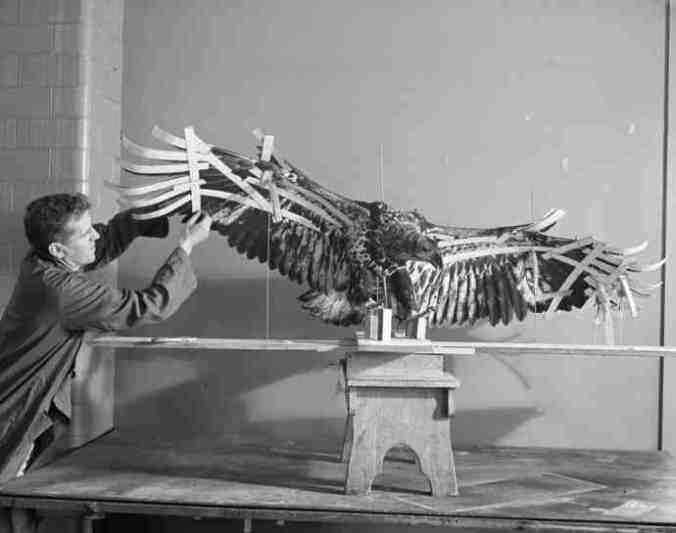
AMNH-07-690

An eagle for the bird-group exhibit, 1961. COURTESY AMERICAN MUSEUM OF NATURAL HISTORY

…The word “diorama,” which comes from the Greek for “to see through,” Continue reading

Roses, Places, Faces

ap_400695452747_custom-284970db782859cf8d2ca4b402b12d5fe5210747-s1400-c85

On Feb. 1, Phanice Cherop works at the AAA Growers’ farm in Nyahururu, four hours’ drive north of the capital Nairobi, in Kenya. Last year Kenya exported more than 6.8 million cut flowers to the United States. Ilya Gridneff/AP

We have less than zero interest in Valentine’s Day, but in the stretch journalists make to find a story that we want to read, there is reason at least to review the photos in this story brought to you by National Public Radio (USA):

…Unless you made a point of finding American flowers, odds are any bouquets you bought or received today traveled far indeed. Continue reading

If You Happen To Be in Berlin…

The Berlin International Film Festival 2016 is underway and the submission of the documentary film Olympic Pride, American Prejudice dovetails beautifully with the tradition of Black History Month in the United States.

Olympic Pride, American Prejudice is a feature length documentary exploring the trials and triumphs of 18 African American Olympians in 1936. Set against the strained and turbulent atmosphere of a racially divided America, which was torn between boycotting Hitler’s Olympics or participating in the Third Reich’s grandest affair, the film follows 16 men and two women before, during and after their heroic turn at the Summer Olympic Games in Berlin. Continue reading

For Whom the Bell Tolls

Tony Furnivall beside one of the dozen bells in Trinity Church's clocktower. (Photo: Ella Morton)

Tony Furnivall beside one of the dozen bells in Trinity Church’s clocktower. (Photo: Ella Morton)

If you’ve still not knocked off “do the new” on the year’s bucket-list, we have a suggestion. Join the Wednesday Night rites of New York’s church bell ringers.

Bell ringing, also known as change ringing, is what Furnivall calls “an ultra-niche interest.” Originating in medieval England, it is practiced by an estimated 40,000 people around the world today, mostly in the United Kingdom and among countries of the former British Empire. In the U.S., there is a small but enthusiastic bell-ringing scene, spread across 42 towers. The North American Guild of Change Ringers, established in the 1970s, calls ringing “a team sport, a highly coordinated musical performance, an antique art, and a demanding exercise.” “We ring bells to celebrate,” Furnivall says, and if you’re spry enough to clamber up a clock tower, you can grab a rope and join in the fun.

Continue reading

To Dam or Not to Dam

In southern Laos, near where the Don Sahong dam will soon rise, a fisherman’s son snoozes above his father’s weir, waiting for fish migrating upstream to tire and wash back into the trap. PHOTO: David Guttenfelder

In southern Laos, near where the Don Sahong dam will soon rise, a fisherman’s son snoozes above his father’s weir, waiting for fish migrating upstream to tire and wash back into the trap. PHOTO: David Guttenfelder

Dams are barriers built across rivers and streams to confine and regulate water flow for irrigation and hydroelectricity. However, in recent years, the social, economic, and environmental impacts of these constructions have become a pressing concern. While dams are integral to agricultural irrigation, and can help control floods, the construction causes mass displacement, increases risks of earthquakes and landslides. Along the Mekong in China, the people need clean electricity but also the fish and rice that and undammed river provides.

Ban Pak Ing may be a vision of the future for many Mekong villages. Five more dams are under construction in China. Downstream, in Laos and Cambodia, 11 major dams—the first on the main stem of the lower Mekong—are either proposed or already being built. By disrupting fish migration and spawning, the new dams are expected to threaten the food supply of an estimated 60 million people—most of whom live in villages much like Ban Pak Ing. The electric power generated by the lower Mekong dams is destined largely for booming urban centers in Thailand and Vietnam. Kraisak Choonhavan, a Thai activist and former senator, calls the lower Mekong dams “a disaster of epic proportions.”

Continue reading

The Master of Filipino Tattoo Art


A dying Filipino tattoo tradition is being revived – and forever changed – by the international travellers seeking to get inked by its last tribal artist, 97-year old Apo Whang-Od. (Credit: Travel Trilogy)

A dying Filipino tattoo tradition is being revived – and forever changed – by the international travellers seeking to get inked by its last tribal artist, 97-year old Apo Whang-Od. (Credit: Travel Trilogy)

Winging it on a cliche, we’ll say tattoos are forever. And in the far flung, rustic town of Kalinga,  Apo Whang-Od prays it continues to be so. As the last tattoo artist in the Kalinga region, she carries forth the 1,000-year tradition of batok. And the pressure to see to it that she bequeaths the legacy to a worthy successor.

Every Kalinga village used to have a mambabatok (a master tattooist) to honour and usher in life’s milestones. When women would become eligible for marriage, they would adorn their bodies with tattoos to attract suitors. When headhunters prepared for battle, an inked centipede would be their talisman, or when they returned with a kill, an eagle would commemorate their victory. “Tattoos are one of our greatest treasures,” Whang-Od said. “Unlike material things, no one can take them away from us when we die.”

Continue reading

Models Show Garbage Clean-up More Effective on Shoreline Than in Gyres

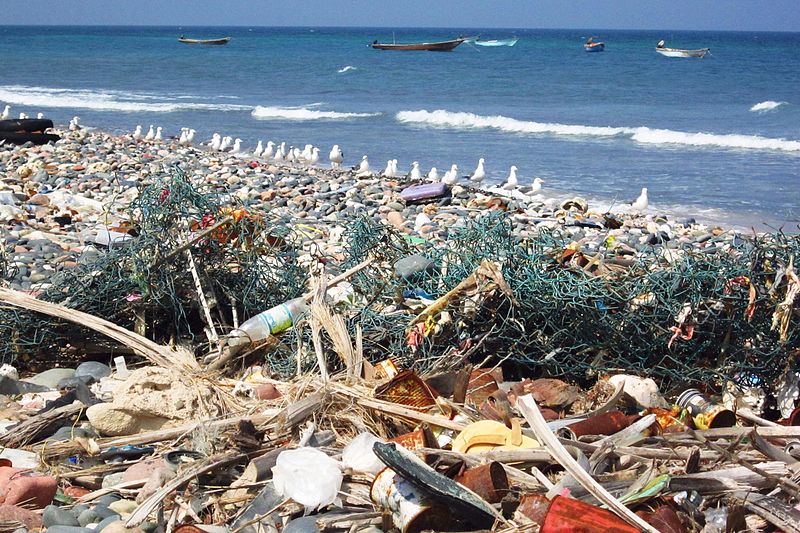
Image of trash on a beach by Flickr user Gerry & Bonni

The health of oceans in the face of massive pollution has been a topic of this blog on multiple occasions, and we’re always interested in learning more about the efforts to clean up the incredible amounts of waste, especially plastic, in one of the most–if not the most–important global ecosystems. New models by researchers at Imperial College London are hypothesizing that, rather than targeting sites like the great Pacific garbage patch, trash pick-up by floating microplastic collectors should be more effective near the coasts, where the rubbish originates. Sarah DeWeerdt reports for Conservation Magazine:

Cleanup efforts for ocean plastics should be concentrated close to shore, at the source of the problem, rather than in areas of open ocean where plastic tends to accumulate, according to a study recently published in the journal Environmental Research Letters. Ideally, if plastic collectors were placed offshore near coastal population centers, they could remove nearly one-third of plastic in the ocean over the next 10 years.

In the study, oceanographer Erik van Sebille and undergraduate physics student Peter Sherman, both at Imperial College London, used data on ocean currents and waste management practices in different countries to simulate the entry and circulation of plastic in the oceans from 2015 to 2025.

Continue reading

The Grey Parrots Go Missing


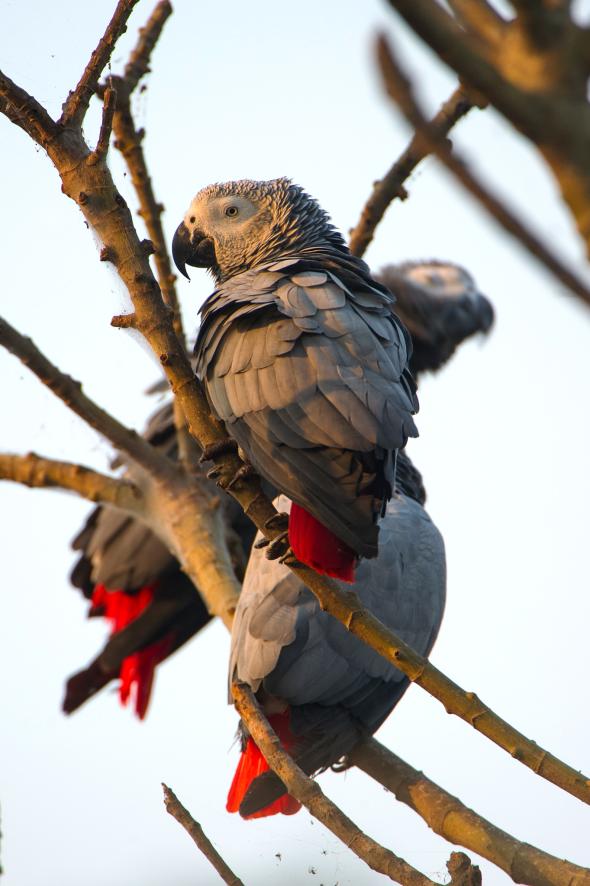
These African Grey parrots were rescued from smugglers and released on Ngamba Island in Lake Victoria. The African Grey parrot is the single most heavily traded wild bird. PHOTO: CHARLES BERGMAN

These African Grey parrots were rescued from smugglers and released on Ngamba Island in Lake Victoria. The African Grey parrot is the single most heavily traded wild bird. PHOTO: CHARLES BERGMAN

In all that we write about conservation, a related tag – unfortunately – happens to be extinction. Brought about by forest loss, miscalculated development plans, social and political apathy towards ecosystems, lack of awareness – the reasons we’ve all heard of. Now, National Geographic reports on the disappearance of the ‘talking bird’:

Flocks of chattering African Grey parrots, more than a thousand flashes of red and white on grey at a time, were a common site in the deep forests of Ghana in the 1990s. But a 2016 study published in the journal Ibis reveals that these birds, in high demand around the world as pets, and once abundant in forests all over West and central Africa, have almost disappeared from Ghana. Uncannily good at mimicking human speech, the African Grey (and the similar but lesser-known Timneh parrot) is a prized companion in homes around the world. Research has shown that greys are as smart as a two-five year-old human childcapable of developing a limited vocabulary and even forming simple sentences.

Continue reading

Undiscovered Species in Natural History Museums

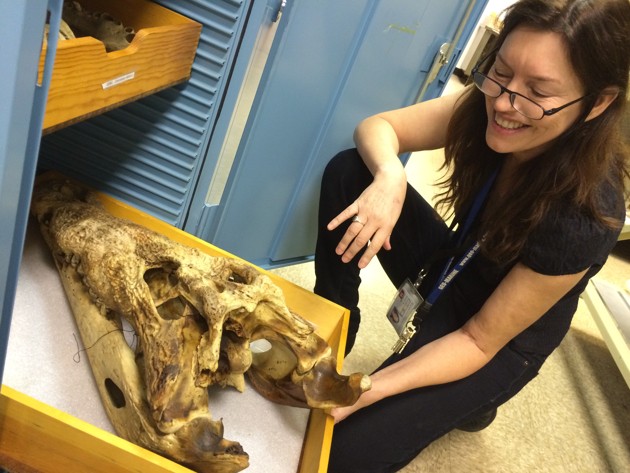
Evon Hekkala and a crocodile skull at the AMNH. Photo by Ed Yong.

We’re big fans of museums, especially those of natural history with specimens of life in the world that are invaluable to science. Now, in a piece for the Atlantic, Ed Yong (previously here) writes about the dozens of new species being identified many years–or in the case of some Egyptian mummified crocodiles, millennia–after their collection. These specimens, Yong reports, can inform us further on the evolution of animal body types, on cycles of diversity, and on the origins of epidemics, among other things:

In the darkness of the Akeley Hall of Mammals, swarms of kids gawk at beautifully staged dioramas of Africa’s wildlife. The stuffed safari, nestled in the American Museum of Natural History (AMNH) in New York, includes taxidermied leopards stalking a bush pig, preserved ostriches strutting in front of warthogs, and long-dead baboons cautiously considering a viper. In one corner, in a display marked “Upper Nile Region,” a lone hippo grazes next to a herd of lechwe, roan antelope, and a comically stern shoebill stork.

“This is my favorite one,” says Evon Hekkala, pointing to the display. “There’s a taxidermied crocodile tucked away down there.”

Continue reading

A Lone Couple, a Desert Island, and Turtles

Despite living in utter isolation on a desert island for 40 years, one inspirational couple has overcome disability and blindness to make a difference. PHOTO: BBC

Despite living in utter isolation on an island for 40 years, one couple has overcome disability and blindness to make a difference. PHOTO: BBC

Isn’t there a line about finding heroes in the most unlikely places? This is the setting of Daeng Abu’s and his wife Daeng Maida’s inspirational story: a desert island off the coast of Sulawesi in Indonesia, disabilities in Abu being blind and facing leprosy, their days spent raising sea turtles and speaking against the cyanide and dynamite fishing that is devastating Indonesia’s reef.

Neither knows how old they were when they entered their arranged marriage on nearby Pulau Pala (Nutmeg Island) – they currently believe they’re in their 80s – but Abu thinks he was older than 20 and Maida remembers it was the dry season. Her uncle fired three shots in the air; she walked over to his family’s home; Abu built a shack from bamboo and palm leaf; and married life began. Little did they know at the time – the couple was bound to become a rather unlikely pair of environmental activists.

Continue reading

To Our Sisters In Bali, Thank You

Ted Bali Sisters

A few months ago, with 11 minutes on stage in London at a regional TED event, these two poised and articulate, compelling Balinese sisters made a bold challenge. We commend their decisiveness and commitment, and will do our best to support them both in Bali and on our various home turfs:

Melati and Isabel Wijsen:

Our campaign to ban plastic bags in Bali

Plastic bags are essentially indestructible, yet they’re used and thrown away with reckless abandon.  Continue reading

Wonky Produce!

2385

Asda’s wonky vegetable box contains items that are either oddly shaped, have growth cracks or are smaller or larger than average. Photo: Asda

In our vigilance on the waste reduction front, especially with regard to food, we are tracking efforts globally that we believe we, and our readers, will find interesting and useful.

We have long ago come to understand that the standard definition of beauty as it relates to fruits and vegetables–uniformity prized over flavor and nutrition–has done a huge disservice to the environment, not to mention to the consumers who suffer gastronomically as a result.

Thanks to the Guardian‘s Environment section for this news:

Asda puts UK’s first supermarket wonky veg box on sale

Box of imperfect in-season vegetables will feed a family of four for a week and costs £3.50 – 30% less than standard lines

The UK’s first supermarket ‘wonky vegetable’ box goes on sale on Friday, containing enough ugly potatoes and knobbly carrots to feed a family of four for an entire week for just £3.50. Continue reading

Hatching the ‘Third Eye’

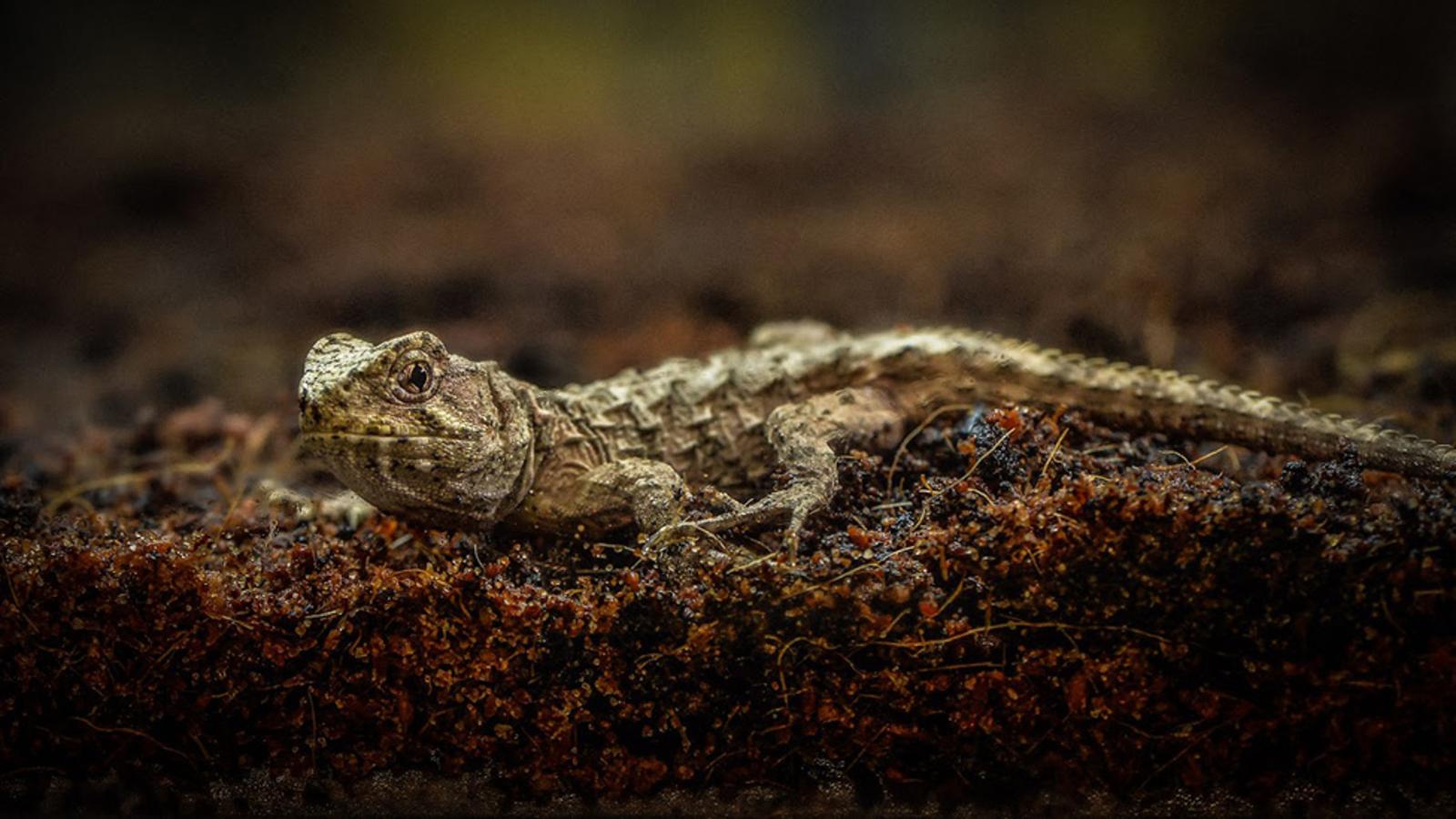
The first tuatara hatchling has been born outside of its native New Zealand. photo: Chester Zoo

The first tuatara hatchling has been born outside of its native New Zealand. PHOTO: Chester Zoo

Discoveries excite us, an event that defies all odds even more so. Like the hatching of this tuatara outside its native of New Zealand.

After decades of work by a dedicated team at Chester Zoo in England, the first tuatara hatchling has been born outside of its native New Zealand.

“Breeding tuatara is an incredible achievement,” says Isolde McGeorge, the zoo’s tuatara keeper since 1977. “They are notoriously difficult to breed and it’s probably fair to say that I know that better than most as it has taken me 38 years to get here.”

Continue reading

How Much Does an Elephant Eat?

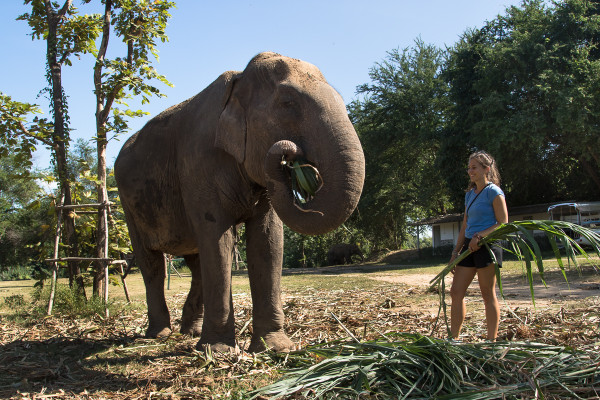
An elephant takes in a meal at Elephant’s World, Thailand. PHOTO: Jay Simpson

An elephant takes in a meal at Elephant’s World, Thailand. PHOTO: Jay Simpson

Our love for pachyderms has found multiple expressions on this blog. With us now journeying with Asian Oasis in Thailand and Kerala as home, this love links our efforts in both these lands, serving as common ground for all that we hope to do in tandem with nature. For all that we’ve penned on elephants, we’ve not stopped to think what or rather how much food keeps their giant souls (and stomachs) happy.

Both captive and wild elephants eat a lot, but what else would you expect from one of the largest land animals on the planet? Wild Asian elephants (Elephas maximus) can spend an average of 16-18 hours of every day eating. In the wild they forage for food, constantly searching for roots, small trees, bamboo, grasses, and any other edible plants.

Continue reading

El Jefe, Sole Wild USA Jaguar

lead_large (1)

One may be the loneliest number, but it is not a hopeless number, we hope. Thanks to the Atlantic for this story:

There are about 15,000 jaguars living in the wild today. They are solitary creatures, preferring to live and hunt alone. But the one living and hunting in the United States takes the word “loner” to another level: The jaguar, nicknamed “El Jefe,” is the only known wild jaguar in the country.

El Jefe, which means “the boss” in Spanish, made his public debut Wednesday in video footage released by the Seattle-based Conservation CATalyst and the Tucson, Arizona-based Center for Biological Diversity. The brief clip shows the big cat roaming the grassy forest floor of the Santa Rita Mountains, outside Tucson, navigating rocky creeks, and just doing jaguar-y things: Continue reading