Love For, Of the Planet

claude-and-norma

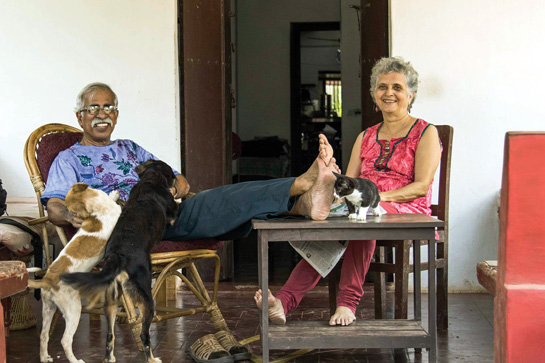
Claude and Norma Alvares are the pillars of conservation in India’s extreme tourist city of Goa. PHOTO: Rahul Alvares, Scroll

There’s a small but wonderful tribe of people who keep the dignity of life on the planet. Call them eco warriors, guardians of tomorrow, nature’s advocates. No tag can do justice to their lives spent preserving, restoring, and protecting life. Goa, the tourist mecca of India, has sundowners, music, beaches and a welcoming culture going for it. It is also the base of Claude and Norma Alvares’ environmental movement of over 40 years.

Continue reading

Oceans Of Plastic

Feature-NPEC

You may have seen headlines in recent days with predictions about plastic overtaking fish as the primary mass of our planet’s oceans. Go straight to the source to get the facts (below is the press release from the foundation that funded the research; see the chart after the page break below to really get a punch of reality from the scale of this problem):

Applying circular economy principles to global plastic packaging flows could transform the plastics economy and drastically reduce negative externalities such as leakage into oceans, according to the latest report by the World Economic Forum and Ellen MacArthur Foundation, with analytical support from McKinsey & Company.

The New Plastics Economy: Rethinking the future of plastics provides for the first time a vision of a global economy in which plastics never become waste, and outlines concrete steps towards achieving the systemic shift needed. The report, financially supported by the MAVA Foundation, was produced as part of Project MainStream, a global, multi-industry initiative that aims to accelerate business-driven innovations to help scale the circular economy. Continue reading

The Lost Frog Of India

_87821587_92b1068a-e193-4352-b00f-ddafaf388815

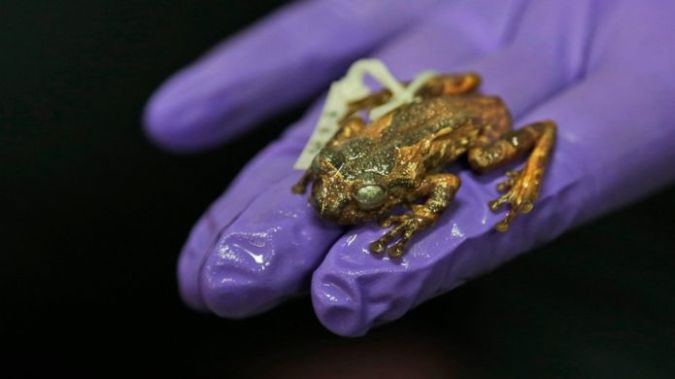
AP Image. Unusually, the frogs feed mostly on vegetation, rather than insects or larvae

Thanks to the BBC’s website for this note of encouragement:

An extraordinary tree frog thought to have died out more than a century ago has been rediscovered in India

The discovery was made by renowned Indian biologist Sathyabhama Das Biju and a team of scientists, in the jungles of north-eastern India.

It is hoped the frogs might now be found across a wide area, from China to Thailand.

Studies of the frog have also led scientists to reclassify it as an entirely new genus. Continue reading

Hiking for E-mail

mahabir pun

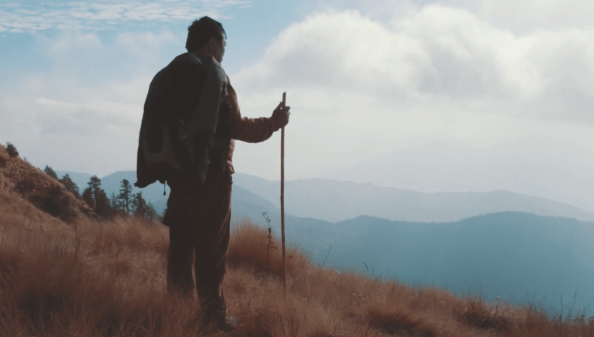
For six years, Mahabir Pun trekked long distances to check emails in Nepal. Until he brought the Internet home to his remote village. PHOTO: Hiking for Emails, Vimeo

In India, there exists this dwindling practice of writing letters to the Editor. Of publications. Most people write on current affairs, some write to highlight issues that range from a lack of streetlights to dissent. Some write in to commend actions, public campaigns. A handpicked bunch of these are published in a column titled Letters to the Editor. Mahabir Pun of a remote village in the mountainous country of Nepal wrote to BBC, asking for help to bring the Internet home.

Continue reading

If You Happen To Be Outside Early Morning

19PLANET-superJumbo-v2

All five planets will arrange on an arc across the sky. Mercury will appear the closest to the horizon, followed by Venus, Saturn, Mars and Jupiter. The stars Antares and Spica will make cameos as well, twinkling between Saturn and Mars, and Mars and Jupiter, respectively. Credit Sky & Telescope

For the next six weeks, the sky is calling:

Prepare for a Celestial Spectacle as Five Planets Align

Five planets will parade across the dawn sky early Wednesday in a rare celestial spectacle set to repeat every morning until late next month. Continue reading

More Reasons For A Plant-Dominated Diet

4368

Global fish catches rose from the 1950s to 1996 as fishing fleets expanded and discovered new fish stocks to exploit. Photograph: Eyal Warshavsky/Corbis

We serve fish. We love fish. We love fish too much, all of us. Every day we get more evidence of the logic for shifting more of our diet to be plant-based, and this article in today’s Guardian adds one more powerful data point:

Overfishing causing global catches to fall three times faster than estimated

Landmark new study that includes small-scale, subsistence and illegal fishing shows a strong decline in catches as more fisheries are exhausted

Global fish catches are falling three times faster than official UN figures suggest, according to a landmark new study, with overfishing to blame. Continue reading

TNC: Prairie Restoration with Wild Seeds

closeup_of_baldwin27s_ironweed2c_a_common_tallgrass_prairie_plant_seen_on_the_konza_prairie2c_12c000_acres_of_virgin-_-_nara_-_557190

Closeup of Baldwin’s Ironweed, a common tallgrass prairie plant, by Patricia D. Duncan via WikiMedia Commons. 1974.

The word “restoration” might bring to mind an artistic connotation of preservation and repair, as in a World Heritage Site, but lately where we’ve seen it the most is in an ecological sense: whether it’s wildlife in a forest, algae control in wetlands, or coral health in the oceans. Whole landscapes can be restored to an extent, as in the case of Tianjin, China, where forests and wetlands are being rebuilt while also studying the effectivity of different strategies.

That’s part of what The Nature Conservancy has been doing in the prairies of Minnesota, rebuilding the diverse grasses that used to exist in a landscape that was fragmented and degraded by huge farms during the last century. Justin Meissen and Meredith Cornett, two of the co-authors on a paper recently published in Restoration Ecology, report for the TNC blog:

Glacial Ridge is truly huge — at ~36,700 acres it’s one of the few places on Earth where you can look to all horizons and experience what early American pioneers once called the “sea of grass.”

But it wasn’t always like this. Only a few years ago Glacial Ridge was a patchwork of mostly farm land and a few prairie remnants. So what was the Nature Conservancy’s prescription for bringing this massive landscape back to life? Seeds — lots of seeds.

Continue reading

When Wheels Move the Soul

skating

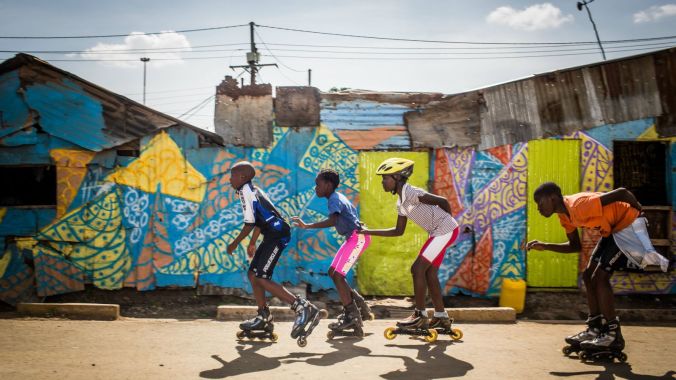
Korogocho skaters are taking advantage of some of the best streets in one of Nairobi’s poorest slums. PHOTO: Will Swanson 

Can a paved road and a pair of used skates aid development? An emphatic yes. This is the story of a failed slum upgrading project that saw the light of day when kids took to the streets. Over scavenging in the dump for things they could resell, the children took to the streets this time to skate. To keep out of trouble. To compete. For a chance at life.

Continue reading

Flying Between Pages

birdsong

“There is no such thing as a stooped or a graceless bird”, writes Krishnan. PHOTO: Scroll


“Chugging out of New Delhi Railway Station on an early morning train, I’ve often amused myself by looking out for the “telefauna,” or birds perched on telegraph wires.” Bird lovers on here, there’s a new word for you right there. Of Birds and Birdsong, penned by Indian writer Krishna, is all at once a journal and a tribute. To him, it’s a record of winged creatures sighted around, while to his reader the names of these beauties bring to heart a familiar nostalgia.

Continue reading

Footstep by Footstep

soccer

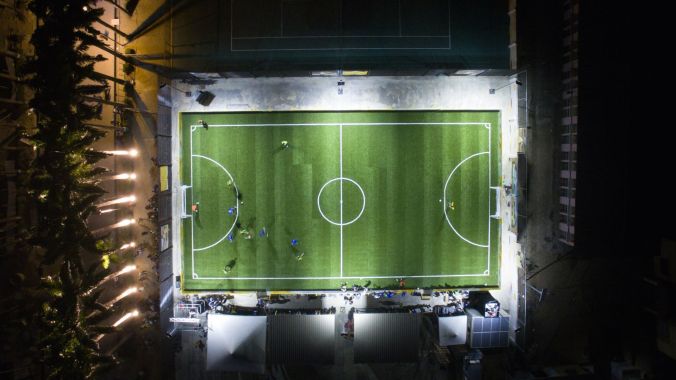
This solar-powered football pitch in Lagos also uses kinetic energy generated by footballers playing. PHOTO: Edelman PR

There’s a host of ingenious solar projects impacting the developing world. Energy’s role in political, social, and economic development is being highlighted more than before and being energy-smart is the blueprint to a sustainable future. Clean energy is the way forward. And Lagos has an example. In the name of soccer.

Continue reading

Sifting Through Food Memories

Dabbawala,the lifeline of Mumbai.

The Indian city of Mumbai is home to the ‘dabbawala’ service wherein boxes of hot lunch make their way from homes to customers’ offices.   PHOTO: Satyaki Ghosh

Food memories. Absolutely universal, absolutely distinctive. Across cultures, across borders. United by the emotions they evoke – nostalgia, love, warmth, hope. While travel memories are notched up by the miles, they are bound to feature a food memory or two. Of cultures, smells, people, faces, history.  Jacques Pepin, noted French chef, writes of his in The New York Times:

There is something evanescent, temporary and fragile about food. You make it, it goes, and what remains are memories. But these memories of food are very powerful. My earliest memories of food go back to the time of the Second World War. My mother took me to a farm for the summer school vacation when I was 6 years old with the knowledge that I would be lodged and fed there. I cried after she left and felt sad, but the fermière took me to the barn to milk the cow. That warm, foamy glass of milk is my first true memory of food and shaped the rest of my life.

Continue reading

India’s First Organic State

sikkim

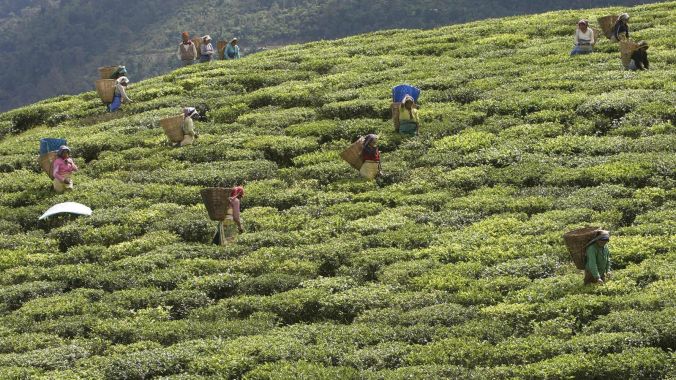
Tea plantations on the hillside. PHOTO: Reuters/ Rupak De Chowdhuri

The buzzword is organic. From grocery store shelves to textile designers to travel. At the center of this phenomenon is respect to the land, cognizance of the immense potential of living organisms, acknowledgement of a way of life that has restorative powers. Today, India hears that message loud and clear in the North-eastern hill state of Sikkim.

Continue reading

What The Age Of Humans Looks Like

Screen Shot 2016-01-14 at 6.25.23 PM

Soybeans harvested at a farm in Tangara da Serra, in western Brazil. CreditPaulo Whitaker/Reuters

The Science section this week in the New York Times takes a very big picture look at human impact on the earth, putting in terms of geological time:

Welcome to the “Anthropocene” — a new epoch in our planet’s 4.5 billion year history. Thanks to the colossal changes humans have made since the mid-20th century, Earth has now entered a distinct age from the Holocene epoch, which started 11,700 years ago as the ice age thawed. That’s according to an argument made by a team of scientistsfrom the Anthropocene Working Group. Scientists say an epoch ends following an event – like the asteroid that demolished the dinosaurs and ended the late Cretaceous Epoch 66 million years ago – that altered the underlying rock and sedimentary layers so significantly that its remnants can be observed across the globe. In a paper published Thursday in Science, the researchers presented evidence for why they think mankind’s marks over the past 65 years ushered in a new geological time period. Here are a few examples: Continue reading

Architecture With A Purpose

13PRITZKER-articleLarge

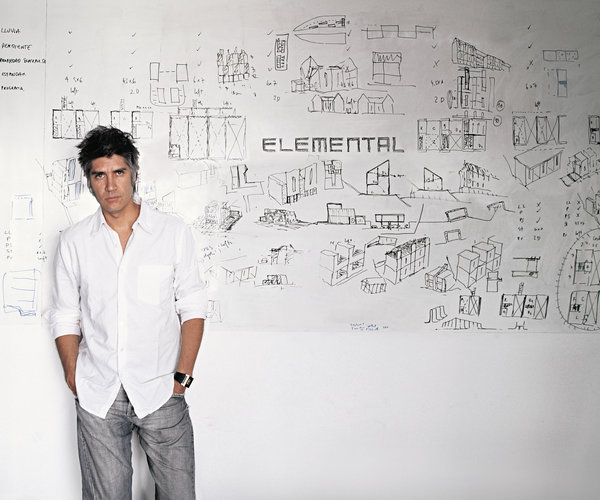
Alejandro Aravena Credit ELEMENTAL

Breaking news on an architect of the people receiving the most coveted prize in his profession:

Pritzker Prize for Architecture Is Awarded to Alejandro Aravena of Chile

A Chilean architect who has focused his career on building low-cost social housing and reconstructing cities after natural disasters has been named the winner of architecture’s highest prize, the Pritzker. Continue reading

Rain Scents

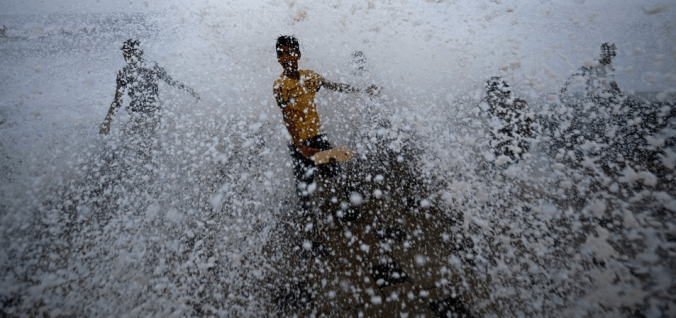
Vivek Prakash/Reuters

Vivek Prakash/Reuters

Smell is one of the most evocative of the five senses, allowing us to relive memories that span our entire lives. Scents from the kitchen make our mouths water. Scents from nature make us long to be outdoors. Considering that on average our bodies consist of 60% water, it isn’t surprising that we’re so attuned to the range of smells associated with H2O.

Many of the RAXA Collective team long for the refreshing monsoon rains in Kerala, never imagining that exhilaration could be captured in a bottle.

Once again we thank The Guardian for this intoxicating story.

Every storm blows in on a scent, or leaves one behind. The metallic zing that can fill the air before a summer thunderstorm is from ozone, a molecule formed from the interaction of electrical discharges—in this case from lightning—with oxygen molecules. Likewise, the familiar, musty odor that rises from streets and storm ponds during a deluge comes from a compound called geosmin. A byproduct of bacteria, geosmin is what gives beets their earthy flavor. Rain also picks up odors from the molecules it meets. So its essence can come off as differently as all the flowers on all the continents—rose-obvious, barely there like a carnation, fleeting as a whiff of orange blossom as your car speeds past the grove. It depends on the type of storm, the part of the world where it falls, and the subjective memory of the nose behind the sniff… Continue reading

Reasons For Rethinking Thoreau

151019_r27147-320

A series of blog posts since we debuted here in 2011 shows that we are Thoreauvians–quite likely referencing that 19th Century American writer more than any other writer. Our conservation ethos would explain that devotion. And yet, always at the ready to reconsider, in the spirit of small-l liberalism, we are open to the possibility that we had it wrong on this front all along. For example, at least one contributor to this blog, at 17 years old, took a can of spray paint and committed a crime in the form of grafitti, with a quotation from Thoreau spread across nearly 30 feet of a wall that had gone up in a place where the 17-year old was sure that wall did not belong. How could that have been right? And if wrong, while Thoreau was certainly not to blame, was it evidence that sometimes Thoreau has been improperly invoked?

The opening six paragraphs of this article– revisionism at its small-l liberal best–will likely hook you to read it to the end, if the paragraph above rings any bells:

On the evening of October 6, 1849, the hundred and twenty people aboard the brig St. John threw a party. The St. John was a so-called famine ship: Boston-bound from Galway, it was filled with passengers fleeing the mass starvation then devastating Ireland. They had been at sea for a month; now, with less than a day’s sail remaining, they celebrated the imminent end of their journey and, they hoped, the beginning of a better life in America. Early the next morning, the ship was caught in a northeaster, driven toward shore, and dashed upon the rocks just outside Cohasset Harbor. Those on deck were swept overboard. Those below deck drowned when the hull smashed open. Within an hour, the ship had broken up entirely. All but nine crew members and roughly a dozen passengers perished. Continue reading

Wisdom Keeper

tiaphoto_1_slide-1e92fdb66f0517235d0ad0f31e1bdda2a4b1033e-s1400-c85.jpg

Tia Tsosie Begay is a fourth-grade teacher at a small public school on the outskirts of Tucson, Arizona. Elissa Nadworny/NPR

Thanks to National Public Radio (USA) for this look into the mission-driven work of Tia, who has caught our attention:

In the Navajo culture, teachers are revered as “wisdom keepers,” entrusted with the young to help them grow and learn. This is how Tia Tsosie Begay approaches her work as a fourth-grade teacher at a small public school on the outskirts of Tucson, Ariz.

For Navajos, says Begay, your identity is not just a name; it ties you to your ancestors, which in turn defines you as a person.

“My maternal clan is ‘water’s edge’; my paternal clan is ‘water flows together,’ ” she explains. “Our healing power is through humor and laughter, and I try to bring that to my classroom.” Continue reading

Diversity’s Rainbow

07ZIMMER_COMBO-master675

The long tail of diversity’s many intrigues, as Mr Zimmer seems uniquely capable of summoning up with such clarity:

Narwhals and newts, eagles and eagle rays — the diversity of animal forms never ceases to amaze. At the root of this spectacular diversity is the fact that all animals are made up of many cells — in our case, about 37 trillion of them. As an animal develops from a fertilized egg, its cells may diversify into a seemingly limitless range of types and tissues, from tusks to feathers to brains. Continue reading

Get Your Garden Going

Screen Shot 2016-01-12 at 9.56.32 AMEcowatch, every day, provides something we can use in our extended La Paz Group operations, and in our daily lives. This one, for our homes:

…The idea of growing an indoor farm, full of healthy food you can spoil yourself with over summer may sound too good to be true. But with a little love and care, whether you live in a house or a flat, you can grow a variety of fresh vegetables, fruit and even edible flowers ready for your next dinner party—guaranteed to impress… Continue reading

Beautiful LEGO: Wild!

doyle_01

LEGO creation by Mike Doyle, image via ThisIsColossal

We all love LEGO, whether it is being used for beautiful creations or as useful inventions, and were happy to learn last year of the company’s goal to move toward sustainable materials and away from petrochemicals. An artist who works his sculptures only in LEGOs, Mike Doyle, has recently published a third book titled Beautiful LEGO, this time subtitled “Wild!” (the first had no subtitle and the second was subtitled “Dark“). Kate Sierzputowski covers Doyle’s new book showcasing works of natural LEGO marvels (by other artists as well as himself) on ThisIsColossal:

One of Doyle’s own pieces that appears in the book is a new piece titled Appalachian Mountaintop Removal (2015), a work composed of more than 10,000 pieces that directly references the act outlined in its title.

Continue reading