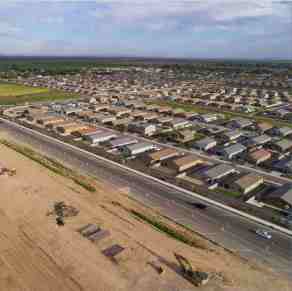
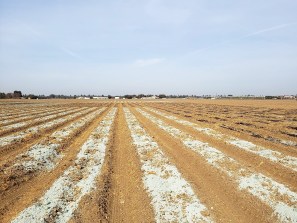
Northwest Passage Expedition & Arctic Secrets Revealed

Soren Walljasper, NGM Staff. Sources: Douglas Stenton, University of Waterloo; Jonathan Moore, Parks Canada; Matthew Betts, HMS Terror; Mark Synnott; Tom Gross

We rarely link to expeditions-gone-awry stories, but here is an exception, with thanks to National Geographic:

Seeking to solve the Arctic’s biggest mystery, they ended up trapped in ice at the top of the world

In 1847, Sir John Franklin and a crew of 128 men disappeared while searching for the fabled Northwest Passage. A National Geographic team sought to find evidence of their fate—but the Arctic doesn’t give up its secrets easily.

Jacob Keanik scanned his binoculars over the field of ice surrounding our sailboat. Continue reading

Carbon Capture, Scaled To Texas

A direct air capture system at the Carbon Engineering pilot facility in Squamish, British Columbia, Canada. Photograph: Bloomberg/Getty Images

Carbon capture technology has its skeptics, but it has steadily improved and is closer to proof of concept. Next step, scaling to Texas:

The world’s biggest carbon capture facility is being built in Texas. Will it work?

The plant will inject 500,000 tons of carbon dioxide into the ground each year – but is it just greenwashing from big oil?

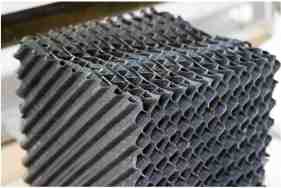
Plastic membrane used in the direct air capture system. Photograph: Bloomberg/Getty Images

Rising out of the arid scrubland of western Texas is the world’s largest project yet to remove excess carbon dioxide (CO2) from the atmosphere, a quest that has been lauded as essential to help avert climate catastrophe. The project has now been awarded funding from the Biden administration, even as critics attack it as a fossil fuel industry-backed distraction. Continue reading

Heat Pumps Questioned

image: michael haddad

The technology of heat pumps was made understandable in an earlier article. While remarkable, questions have arisen. Read the following in full at The Economist to hear about it in more detail:

Heat pumps show how hard decarbonisation will be

The row over them portends more backlashes against greenery

They hang from the walls of utility rooms, nestle inside kitchen cupboards and hunker down in cellars. Continue reading

Basketry, Craft & Art

A coiled basket by Louisa Keyser (Dat So La Lee) of the Washoe people of Nevada, titled “Our Ancestors Were Great Hunters” (1905), with an oval degikup form, was made for the curio market. Her work comes to the Independent 20th Century fair this week. Donald Ellis Gallery

When craftwork is treated as artwork, valorization is the word that comes to mind. Not all craft is art, nor need it be; but we applaud the impetus of the Independent 20th Century fair. If this is your interest, and you are in New York City, the fair is open:

A couple recognized the Washoe weaver Louisa Keyser’s prodigious talent and spun myths to promote it. But her fortitude shines in work that today can be seen in museums and at the Independent 20th Century fair.

A portrait of Louisa Keyser, the most famous Washoe basket maker, who helped transform a utilitarian craft to fine art and was promoted at the time as a “princess” by a couple who sold her work. Donald Ellis Gallery

The Native American baskets sold in the early 1900s out of Abe Cohn’s Emporium, a men’s clothing store in Carson City, Nev., were exceptional. They were woven by Dat So La Lee, said to be a “princess” from the nearby Washoe people whose royal status permitted her alone to utilize a special weaving style.

The truth was less exciting. Dat So La Lee preferred her English name, Louisa Keyser. She was a Washoe woman, but the tales Cohn and his wife, Amy, spun about her — her esteemed heritage, her meeting with the Civil War general John C. Frémont — were myths. Continue reading

Not Just Not A Good Look

By identifying the malpractice of a group of businesses, this report highlights the concept of perverse incentives. It looks bad, and it seems fair to say that it is bad:

PRIVATE EQUITY PROFITS FROM DISASTER at the Expense of Workers, Communities, and Climate

Executive Summary

As climate change accelerates and impacts more communities around the world, the need for skilled labor in the disaster restoration industry grows. Increasingly, private equity firms seeking high returns for themselves have come to dominate the disaster recovery sector, reducing workplace standards, overcharging communities and exploiting disasters to extract fees and profits without regard to the workers and communities harmed by their practices. Continue reading

Fungi & Fireproofing

Mycologist Zach Hedstrom sprays a spore-infused liquid to inoculate debris from forest thinning.

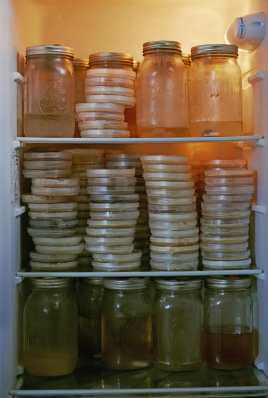
Inside Boulder Mushroom’s laboratory, a refrigerator houses an array of agar plates containing diverse mycelium cultures.

We have paid attention to mycological wonders for long enough that surprises are rare; but they happen. Stephen Robert Miller’s reporting, with photography by Jimena Peck were published in the Washington Post and came to our attention by way of the Food & Environment Reporting Network, which is where you can read the entire article:

How mushrooms can prevent megafires

Thinning forests to prevent fires produces a lot of sticks and other debris, which also pose a fire risk. In Colorado and elsewhere, scientists are using fungi to turn those trimmings into soil.

Overgrown stands of lodgepole pine are a risk for megafires. Thinning the stands simulates the effects of a natural fire but also generates a large amount of biomass, called “slash,” which can also fuel forest fires.

If you’ve gone walking in the woods out West lately, you might have encountered a pile of sticks. Or perhaps hundreds of them, heaped as high as your head and strewn about the forest like Viking funeral pyres awaiting a flame.

These slash piles are an increasingly common sight in the American West, as land managers work to thin out unnaturally dense sections of forests — the result of a commitment to fire suppression that has inadvertently increased the risk of devastating megafires. Continue reading

ChatGPT & Whale Chat

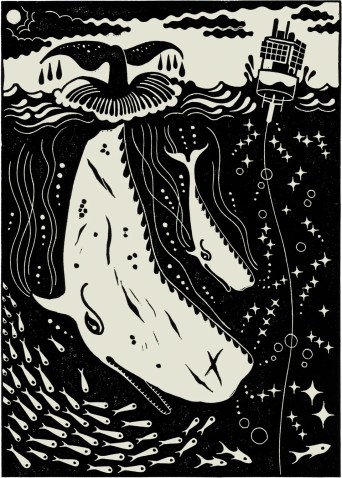
Sperm whales communicate via clicks, which they also use to locate prey in the dark. Illustration by Sophy Hollington

Thanks to Elizabeth Kolbert for this:

Can We Talk to Whales?

Researchers believe that artificial intelligence may allow us to speak to other species.

Ah, the world! Oh, the world!

—“Moby-Dick.”

David Gruber began his almost impossibly varied career studying bluestriped grunt fish off the coast of Belize. He was an undergraduate, and his job was to track the fish at night. He navigated by the stars and slept in a tent on the beach. “It was a dream,” he recalled recently. “I didn’t know what I was doing, but I was performing what I thought a marine biologist would do.” Continue reading

Turmeric, Biopiracy & Fighting For What’s Right

Agung Parameswara/Getty Images

During our seven years living in India, plenty of posts on this platform referred to turmeric due to its culinary value. Its value to our wellbeing is a more recent focus of attention, and we appreciate the fight to keep it accessible to all:

How one man fought a patent war over turmeric

Back in the 1990s, Dr. Raghunath Mashelkar was in his office in New Delhi when he came across a puzzling story in the newspaper. Some university scientists in the U.S. had apparently filed a patent for using turmeric to help heal wounds. Continue reading

Museum Loot Going Home

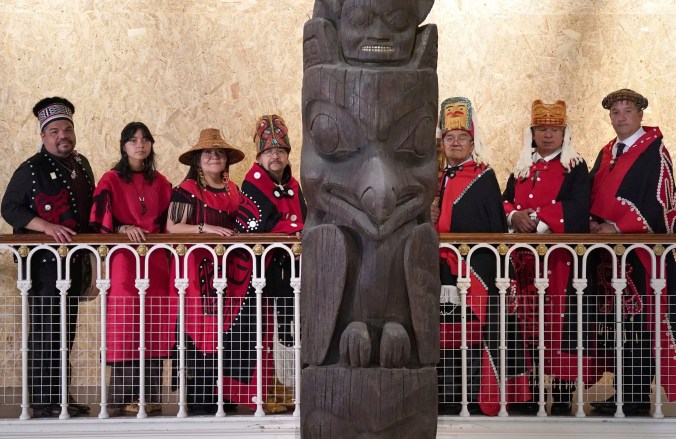
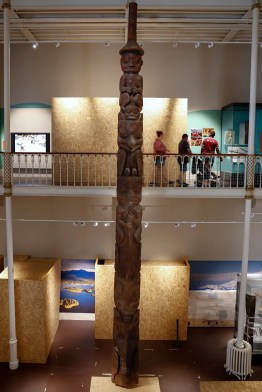
Earl Stephens, who goes by the Nisga’a cultural name Chief Ni’is Joohl, center left, and members of a delegation from the Nisga’a nation pose beside a 36-foot tall memorial pole during a visit to the National Museum of Scotland on Monday. Andrew Milligan/Press Association, via Associated Press

The legitimacy of museums possessing artifacts from other cultures is not inherently dubious, but as the Parthenon marbles example has demonstrated, there are plenty of reasonable questions. This story about a museum’s move to the better side of history is worth a read:

The pole is soon to be moved to British Columbia on the west coast of Canada. Jeff J Mitchell/Getty Images

Totem Pole Taken 94 Years Ago Begins 4,000-Mile Journey Home

The 36-foot tall memorial pole has spent almost a century in a Scottish museum. Now it will be returned to the Nisga’a Nation in Canada.

Almost 100 years ago, a hand-carved totem pole was cut down in the Nass Valley in the northwest of Canada’s British Columbia.

The 36-foot tall pole had been carved from red cedar in the 1860s to honor Ts’wawit, a warrior from the Indigenous Nisga’a Nation, who was next in line to become chief before he was killed in conflict. Continue reading

Credibility & Carbon Credits

Sapo National Park in Liberia. Under a deal now being negotiated, Blue Carbon would sell carbon credits from the park. EVAN BOWEN-JONES / ALAMY STOCK PHOTO

For the decade during which the market for carbon credits has been on our radar, concerns about credibility have been lurking. Now this:

In New Scramble for Africa, an Arab Sheikh Is Taking the Lead

A company established by a Dubai sheikh is finalizing agreements with African nations to manage vast tracts of their forests and sell the carbon credits. Critics are concerned the deals will not benefit Africans and will just help foreign governments perpetuate high emissions.

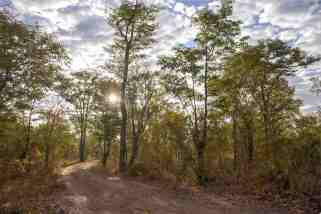
A forest in Mbire, Zimbabwe that is generating carbon credits. Blue Carbon has signed a memorandum of understanding with Zimbabwe to sell carbon credits from its woodlands. CYNTHIA R. MATONHODZE / BLOOMBERG VIA GETTY IMAGES

A prominent sheikh in the oil-rich Gulf state hosting this year’s UN climate negotiations, COP28, is heading a new rush to capture and sell carbon credits by managing tens of millions of acres of forests across Africa. Sheikh Ahmed Dalmook Al Maktoum, a member of the royal family of Dubai, which is part of the United Arab Emirates (UAE), wants to sell those credits to rich governments in the Gulf and elsewhere, so they can offset their carbon emissions to help them meet their carbon pledges under the 2015 Paris Agreement. Continue reading
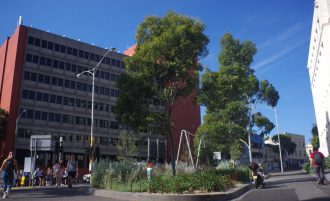
The Price Is Not Right For Groundwater

Not all natural resource utilization problems are simply a matter of pricing the resource correctly. But clearly it matters. Water hogging is apparently more widespread than we thought, and the price is clearly not right on this resource. This first in a series on the causes and consequences of disappearing water, by Mira Rojanasakul, Christopher Flavelle, Blacki Migliozzi and Eli Murray, has excellent interactive features to help understand these challenges:

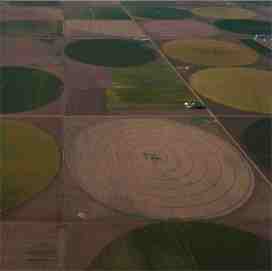
Center-pivot irrigation. Farming is a major groundwater user. Loren Elliott for The New York Times

America Is Using Up Its Groundwater Like There’s No Tomorrow

Overuse is draining and damaging aquifers nationwide, a New York Times data investigation revealed.

GLOBAL WARMING HAS FOCUSED concern on land and sky as soaring temperatures intensify hurricanes, droughts and wildfires. But another climate crisis is unfolding, underfoot and out of view.

Most American communities also rely on wells for tap water. Rebecca Noble for The New York Times

Many of the aquifers that supply 90 percent of the nation’s water systems, and which have transformed vast stretches of America into some of the world’s most bountiful farmland, are being severely depleted. These declines are threatening irreversible harm to the American economy and society as a whole.

The New York Times conducted a months-long examination of groundwater depletion, interviewing more than 100 experts, traveling the country and creating a comprehensive database using millions of readings from monitoring sites. Continue reading

Water Hogs & Fire

A huge field of pineapples in Maui, Hawaii. The extensive use of pesticides on Maui’s pineapple fields poisoned nearby water wells. Photograph: David Olsen/Alamy

In addition to helping understand how fire came to ravage a Hawaiian island, this article’s highlighting of water hogs makes the case obvious that water is an underpriced, therefore undervalued natural resource, so it gets wasted:

A sugar mill in Hawaii. Photograph: University of Southern California and California Historical Society

Land privatization and water depletion set the stage for the Lahaina fire 150 years ago. Now, land companies may benefit even more

In the late 18th century, when the Hawaiian Kingdom became a sovereign state, Lahaina carried such an abundance of water that early explorers reportedly anointed it “Venice of the Pacific”. A glut of natural wetlands nourished breadfruit trees, extensive taro terraces and fishponds that sustained wildlife and generations of Native Hawaiian families. Continue reading

Superbattery Explainer

The Economist’s explanation (subscription required) is clear:

Superbatteries will transform the performance of EVs

Provided manufacturers can find enough raw materials to make them

Asked what they most want from an electric car, many motorists would list three things: a long driving range, a short charging time and a price competitive with a similarly equipped vehicle that has an internal-combustion engine. Continue reading

Insect Oases

A small patch of native plants in Melbourne, Australia, draws native insects. MATA, ET AL.

Thanks to Yale e360 for this short story on small wonders:

Even a Small Patch of Native Greenery Can Give a Big Boost to Local Insects

In cities, a little native greenery can go a long way. Australian scientists found that, after adding native shrubs to a planting in Melbourne, the number of insect species at the site increased sevenfold. Continue reading
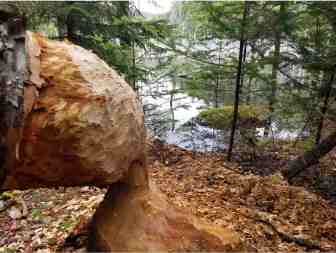
Proposed Chumash Sanctuary One Step Closer

Thanks to National Public Radio (USA) for bringing this to our attention:

Members of the Chumash tribe have pushed for a decade to create a new marine sanctuary. If created, it would be the first to be designated with tribal involvement from the outset. Robert Schwemmer/NOAA

Biden proposes vast new marine sanctuary in partnership with California tribe

The Biden administration is one step away from designating the first national marine sanctuary nominated by a tribe. The Chumash Heritage National Marine Sanctuary would protect 5,600 square miles of ocean off the central California coast, an area known for its kelp forests, sea otters and migratory whales. Tribal members of the Chumash, who have lobbied for its creation for more than a decade, would be involved in managing it…

The First Tribally Nominated Sanctuary

Preserving marine and cultural resources along 156 miles of Central California Coastline

Estimated to generate $23 million in economic activity and create 600 new jobs

Will safeguard the Central Coast from offshore oil expansion and other threats


Beechnut & Beaver Hope

Nearing the end of the northern summer, one for too many of the wrong kind of record books, some notion of hope is more than welcome. This edition of his newsletter offers some:

Beavering Away

With Your Help. (An annual update!)

In the guise of my annual report on our nifty online community I’m going to show you my vacation pictures! Lucky you!

It’s possible I’m just feeling guilty because I took a couple of days off in this Summer To End All Summers. But Sunday and Monday, while Hillary was introducing southern Californians below the age of 85 to the concept of ‘tropical storm,’ I went on a wander with an old friend through the middle of the Wilcox Lake Wild Forest in New York’s Adirondack Mountains, a splendidly remote chunk of land that I’ve lived on the edge of, off and on, for much of my life, and which I never tire of exploring. Continue reading

Honey Bee Dangers & Mythology

Gorazd Trusnovec inspects a beehive at the B&B Hotel Ljubljana Park in Ljubljana, Slovenia.

Thanks to this article by David Segal, with photographs and video by Ciril Jazbec, we realize now that even after our dozens of links to articles about bees, one key point was never on our radar. Our beekeeping/honey-making friends in Costa Rica inform us that the opposite is an issue here–in the entire country there are only 800 beekeepers and most of them are small scale hobbyists, and that a national authority (SENASA) controls the density of hives per area:

Mr. Trusnovec at home. “I would say that the best thing you could do for honey bees right now is not take up beekeeping,” he says.

In Slovenia and around the world, conservationists try — and mostly fail — to combat the widespread belief that honey bees are in danger.

When the B&B Hotel in Ljubljana, Slovenia, decided to reinvent itself as an eco-friendly destination in 2015, it had to meet more than 150 criteria to earn a coveted Travelife certificate of sustainability. But then it went step further: It hired a beekeeper to install four honey bee hives on the roof. Continue reading

August Reading, Science For Nonscientists

Clea Simon, correspondent for the Harvard Gazette, has these book recommendations from professors around campus:

Climate change, global hunger: What to do?

Black holes, warming seas, new treatments for disease: No matter how you approach it, the news is full of science-based stories. For those of us who aren’t scientists, however, understanding the context — not to mention the technical jargon — can be a challenge. With that in mind, we asked Harvard science faculty in various fields to recommend their favorite science book for nonscientists. Ideally these accessible reads will give the rest of us a leg up on understanding our changing world. Continue reading
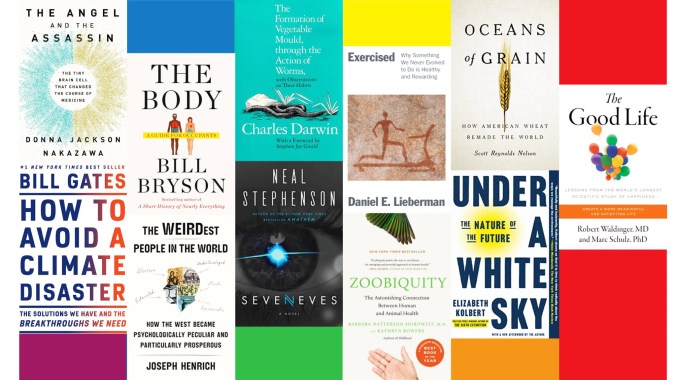
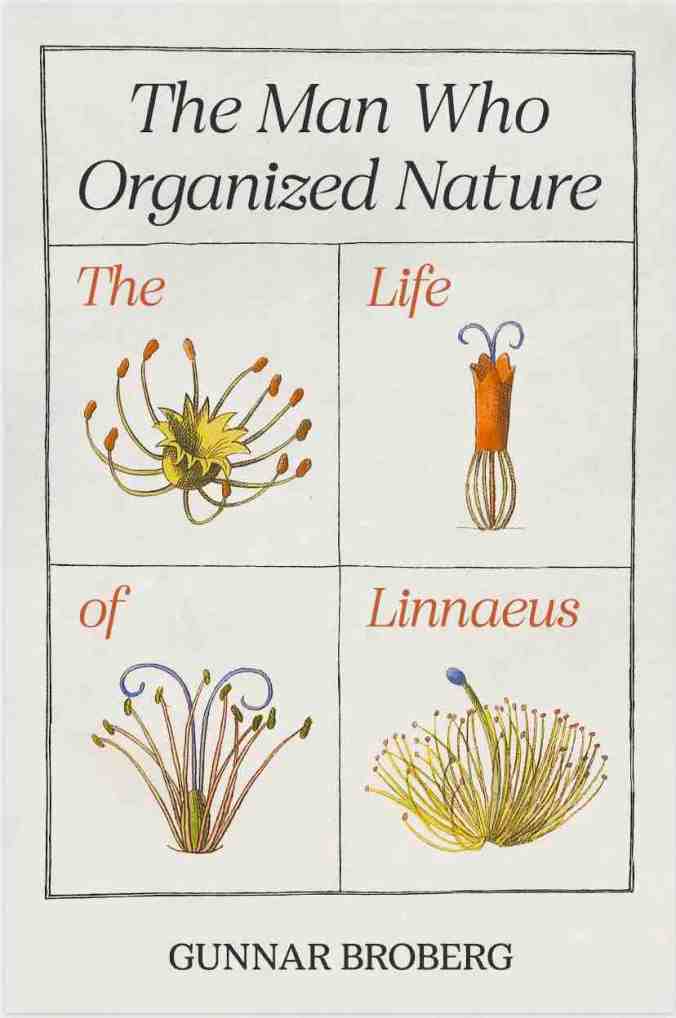
Carl Linnaeus, The Man Who Organized Nature

Thanks to Kathryn Schulz for this review:

The sexual system Linnaeus favored for classifying plants brought a whiff of scandal, which helped spread his name. Illustration by Karlotta Freier

How Carl Linnaeus Set Out to Label All of Life

He sorted and systematized and coined names for more than twelve thousand species. What do you call someone like that?

For the Tyrannosaurus rex, as for Elvis and Jesus, being extremely dead has proved no obstacle to ongoing fame. Last seen some sixty-six million years ago, before an asteroid wiped out three-quarters of the life-forms on earth, it is nonetheless flourishing these days, thanks in large part to Michael Crichton, Steven Spielberg, and elementary-school children all over the world. Continue reading
We Are Stardust, Spreading Rock Dust

Rock dust applied to farmland in California. IRIS HOLZER

It is a concept we have heard about a couple of times previously and the science is catching up. Our thanks to Yale e360 for sharing news of it:

Spreading Rock Dust on Farmland Has Potential to Draw Down Huge Sums of Carbon Dioxide

Adding volcanic rock dust to cropland could help the world reach a key carbon removal goal, a new study finds. Continue reading