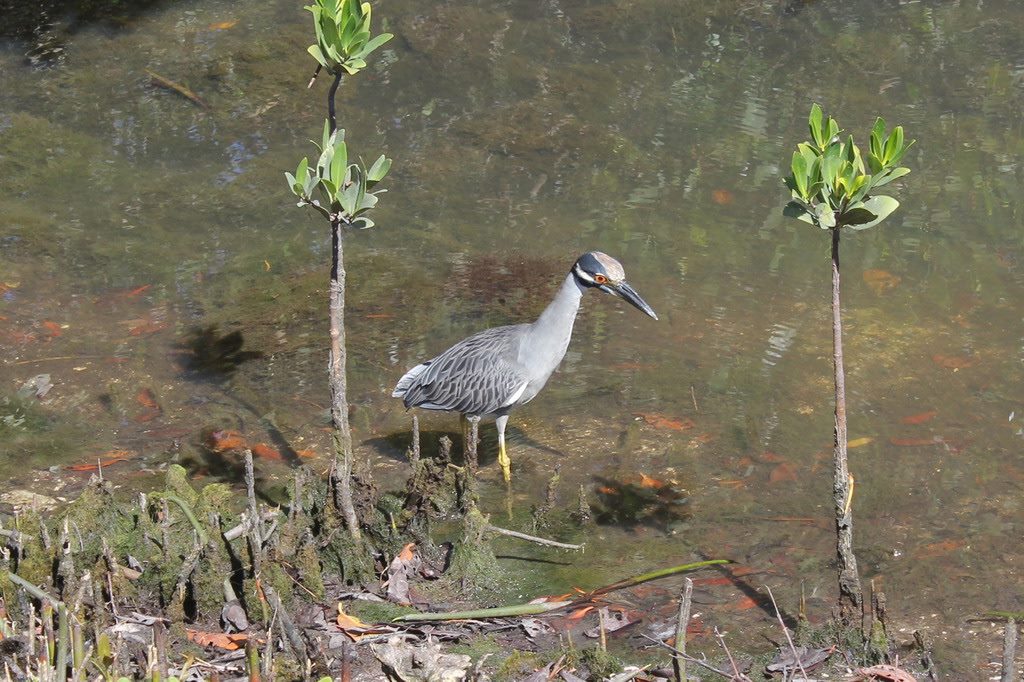
Photo credit: Stephen Crafts
adult – Ding Darling National Wildlife Refuge, Sanibel Island, Florida
Photo credit: Stephen Crafts
adult – Ding Darling National Wildlife Refuge, Sanibel Island, Florida

With a new chain called Loco’l, the chef Roy Choi is hoping to create competitively priced, sustainable fast food, primarily by minimizing waste.
CREDIT PHOTOGRAPH BY MARIO ANZUONI / REUTERS VIA LANDOV
Food Trucks are the ultimate “pop up” upstarts, with their expansive ranges between classic and trendy. Roy Choi, who New Yorker writer Lauren Markem calls “the godfather of the foodtruck movement” wants to do more than serve great, locally sourced food at his new venture Loco’l’s. His “fast food” restaurant concept located in San Francisco’s Tenderloin District, will be inspired by the goal of working toward a waste free kitchen. In order to keep the costs down in what is a notoriously wasteful segment of the restaurant market, Choi is going lean using a software that helps create a more sustainable kitchen.
In tapping into waste, Choi and Patterson hope to marry fiscal prudence with environmental idealism. According to a report published in 2012 by the Natural Resources Defense Council, the amount of wasted food in the U.S. has increased by fifty per cent since the nineteen-seventies, to the point where more than forty per cent of all food grown or raised in the United States now goes to waste somewhere along the supply chain. This in turn means that vast amounts of fossil fuels, water, and other resources are being wasted in the production of unused food. Continue reading
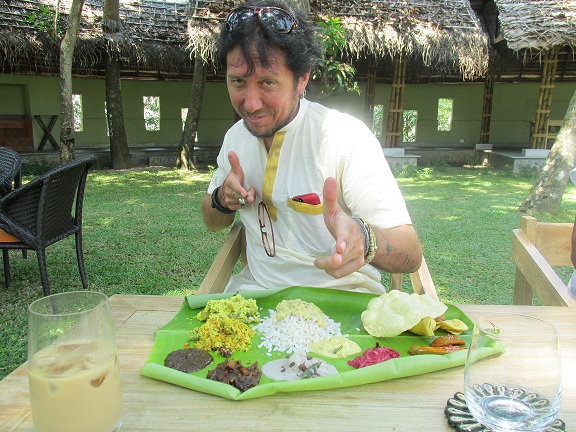
Musician Sami Yaffa hits the right note at the table
![IMG_3037[1]](https://organikos.net/wp-content/uploads/2015/05/img_30371.jpg)
Mina Soliman appears sadya-ready!
Their stay with us by the Mararikulam beach went beyond the comforts of their villas. There was definitely a stop by the kitchen because don’t we all travel the world plate by plate? Only that the plates and cutlery were on a little holiday of their own this time. A plantain (banana) leaf met the couple at the table and, well, they had to put their best hands forward. It was the call of the Sadya.
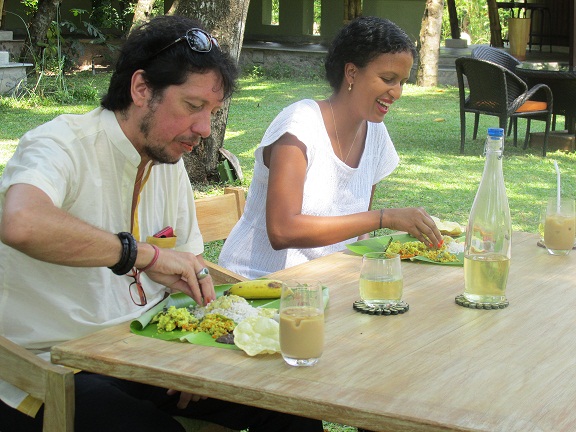
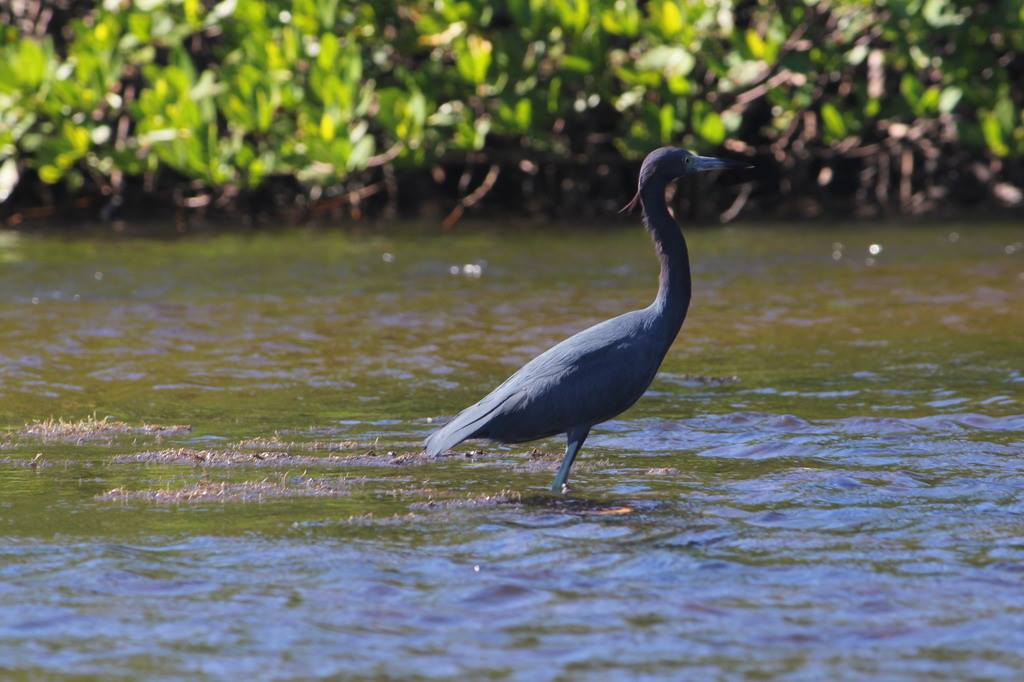
photo credit: Stephen Crafts
Ding Darling National Wildlife Refuge, Sanibel Island, Florida
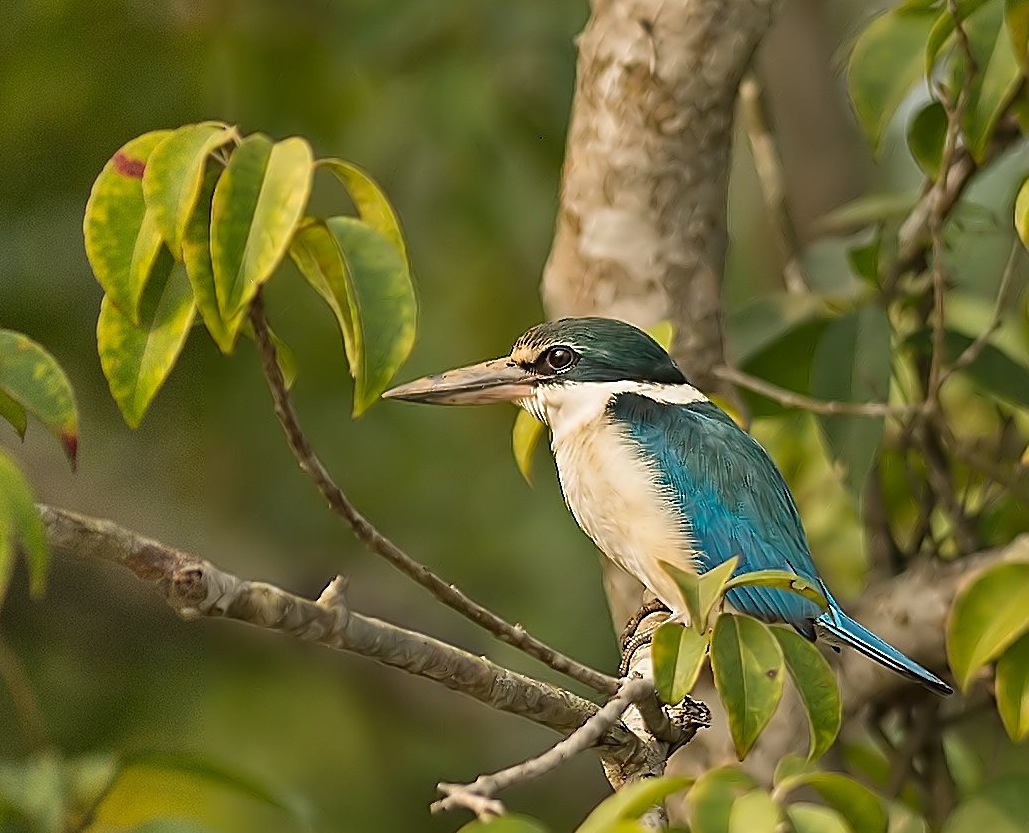
photo credit: Pallavi Kaiwar
Bhitarkanika National Park, Orissa
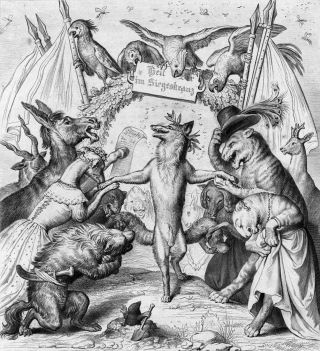
“Reynard” is a defining document of a vast tradition in Western art: the trickster story. ART & PICTURE COLLECTION, THE NEW YORK PUBLIC LIBRARY
Thanks to Joan Acocella for illumination of a narrative form we are quite fond of:
…Animal narratives have allowed writers with lessons on their mind to make art rather than just lessons.
Such tales are no doubt as old as animal paintings on cave walls. The earliest evidence we have of them is the beast fable, a form that is said to have come down to us by way of Aesop, a Greek storyteller who was born a slave in the sixth century B.C. Actually, no solid evidence exists that there ever was an Aesop, any more than there was a Homer. As with the Iliad and the Odyssey, we are talking about manuscripts that date from a period much later than the supposed author’s, and were probably assembled from a number of different fragments. In any case, a beast fable is a very short story (the Penguin Classics edition of Aesop renders “The Tortoise and the Hare,” perhaps the most famous of the fables, in five sentences) in which, typically, a couple of animals with the gift of speech learn a lesson from their dealings with one another. This moral is then stated at the end of the fable, and it is usually of a cautionary variety: don’t eat too much, don’t brag, watch out for this or that. As early as the third century B.C., these stories were being gathered together in various editions, usually for children, to teach them Latin (most were in Latin until the late Middle Ages) and some basic rules about life. Continue reading

A view from the north rim of Grand Canyon National Park via Flickr/NPS
This is our favorite kind of report:
NATIONAL PARK VISITORS INJECT BILLIONS INTO THE US ECONOMY
In 2014, more than the National Park Service hosted more than 292 million visitors. The system, which covers more than 84 million acres divided among 401 sites, includes some of the United States’ most iconic tourist destinations: the Grand Canyon, Mount Rushmore, Yellowstone, Yosemite, the Everglades. And when people visit those sites, they spend money. For the past 25 years, the National Park Service has been measuring and reporting the economic effects of park tourism. (The first data collection effort on visitor attendance itself was conducted in 1904, when six national parks reported 120,690 visitors.)
The latest report, covering the year 2014, has just been released by NPS and US Geological Survey researchers, along with a companion website that includes a variety of data visualizations. Continue reading

Drought solution? A invention from MIT and Jain Irrigation Systems can turn salt water into clean drinking water using solar energy. Photo credit: Shutterstock
Thanks to EcoWatch for this good news:
MIT’s Solar-Powered Desalination Machine Could Help Drought-Stricken Communities
Lorraine Chow
Thanks once again to the Atlantic for helping us put big picture ideas and concepts into human sized perspective.
We appreciate the sentiment from Mark Twain’s 1897 lesser known but ever interesting Following the Equator and feel obliged to show some India quotes that we can relate to, or at least smile at, as a recommendation for your reading pleasure while joining Raxa Collective in India sometime this year:
…So far as I am able to judge, nothing has been left undone, either by man or Nature, to make India the most extraordinary country that the sun visits on his round…
…This is indeed India! the land of dreams and romance, of fabulous wealth and fabulous poverty, of splendor and rags, of palaces and hovels, of famine and pestilence, of genii and giants and Aladdin lamps, of tigers and elephants, the cobra and the jungle, the country of a hundred nations and a hundred tongues, of a thousand religions and two million gods, cradle of the human race, birthplace of human speech, Continue reading
We have a strong reaction of affinity with the theme of this op-ed essay in the New York Times from an author, an avid birder, we think highly of:
Matthew The Horse
Anyone over the age of 40 who went to school in Britain will know what a nature table is. Almost anyone younger than that will not because the nature table — the classroom altar or grotto made of child-gathered natural treasure — is no more. From the age of 7 to 11, I was a major contributor to the one in my suburban junior school. I mostly brought old nests like various leafy crowns, but also a squirrel’s drey, a wren’s foot and a goldfinch’s wing. My classmates came with furry catkins in jam jars, Continue reading

photo credit: Stephen Crafts
Sanibel Island, Florida

Illustration by Javier Jaén
Thanks to one of the great writers on food-related ethical issues for getting us to think about a core definition for our everyday vocabulary, including taken-for-granted words like this one:
Why ‘Natural’ Doesn’t Mean Anything Anymore
By
It isn’t every day that the definition of a common English word that is ubiquitous in common parlance is challenged in federal court, but that is precisely what has happened with the word “natural.” During the past few years, some 200 class-action suits have been filed against food manufacturers, charging them with misuse of the adjective in marketing such edible oxymorons as “natural” Cheetos Puffs, “all-natural” Sun Chips, “all-natural” Naked Juice, “100 percent all-natural” Tyson chicken nuggets and so forth. The plaintiffs argue that many of these products contain ingredients — high-fructose corn syrup, artificial flavors and colorings, chemical preservatives and genetically modified organisms — that the typical consumer wouldn’t think of as “natural.” Continue reading
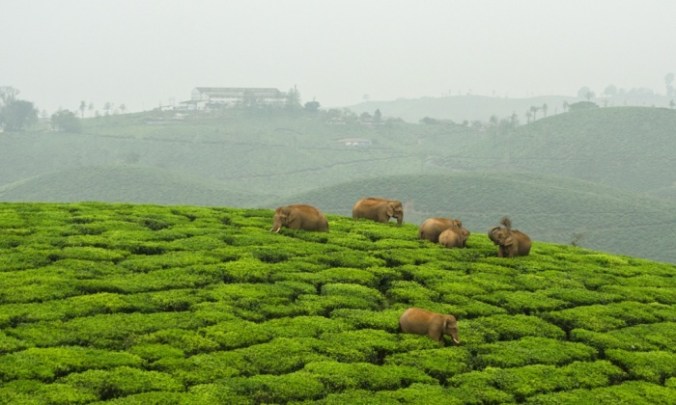
Elephants have to negotiate a vast expanse of tea estates to reach distant rainforest fragments in the Western Ghats of India. Photograph: Ganesh Raghunathan/Whitley award
Whatever can be done, should be done, to improve the safety of humans living in the area where elephants consider home, by reducing the likelihood of encounters. This will in turn ensure the safety of elephants as well as the humans. Thanks to the Guardian for this news:
Dr Ananda Kumar wins one of seven ‘Green Oscars’ for his system of reducing human-elephant conflict by tracking and texting elephants’ locations to people
Karl Mathiesen
On the Valparai plateau in southern India people live in fear of unexpected encounters with giants in the dark.
As dusk settles, tea and coffee pickers collect rations from the townships run by the corporations that own the plantations and drift back towards their colonies. Buses drop workers on the roads and they make the precarious walk through the dark to their homes.
“They are scared. If I am there I am really scared,” said conservationist Dr Ananda Kumar, who created an SMS warning system to help workers live safely among elephants. On Wednesday at a ceremony in London, his work won a £35,000 Whitley Award, dubbed a ‘Green Oscar’. Continue reading

Word bird map artwork by Team Redhead member Luke Seitz, a Bartels Science Illustration Intern at the Cornell Lab.
Team Sapsucker, the Cornell Lab of Ornithology’s competitive birding team, has participated in the World Series of Birding for quite some time. We’ve even had a couple of the Lab’s student participants, Team Redhead, as contributors to the blog. Over the last several years, Team Sapsucker has been breaking or coming very close to the US record for a Big Day — the most bird species seen or heard in 24 hours — but this year, ten days from now in fact, the team will be in Panama instead of staying in the southwestern US! Here’s what Chris Wood, captain of Team Sapsucker and eBird’s project leader, has to say:
The time of year has come when migratory birds cross continents and even hemispheres to return home to their nesting grounds. Because long-distance migrants face many hazards during their journeys, Team Sapsucker, the Cornell Lab of Ornithology’s top birding team, has chosen to spend 24 hours of non-stop birding in Panama, a region critical to the travels of migratory birds in the Western Hemisphere.

An endangered Sumatran orangutan in the forest of Bukit Lawang, in Indonesia’s Sumatra island, one of the key sites identified as at risk. Photograph: Romeo Gacad/AFP/Getty Images

© WWF
The photograph above illustrates a story in today’s Guardian in the Environment section, and addresses the readership of that publication in a manner that expects action. We had provided the executive summary of the study here that is the maritime version of a major call to action, and that was still quite a read; here, thanks to the Guardian, is a briefer read on the topic of a terrestrial call to action by WWF, one we hope that apes of all varieties can appreciate:
Hundreds of millions of acres of forest could be lost in the next two decades in less than a dozen global hotspots for deforestation, conservationists have warned.
Research by wildlife charity WWF has identified 11 “deforestation fronts” where 80% of projected global forest losses by 2030 could occur.
Up to 170m hectares (420m acres) could be lost between 2010 and 2030 in these areas if current trends continued – equivalent to the disappearance of a forest stretching across Germany, France, Spain and Portugal.
The areas are the Amazon, the Atlantic Forest and Gran Chaco, and the Cerrado in South America, the Choco-Darien in Central America, the Congo Basin, East Africa, eastern Australia, the Greater Mekong in South East Asia, Borneo, New Guinea and Sumatra. Continue reading

The Salton Sea is a vital, threatened link between the Colorado River and coastal cities. PHOTOGRAPH BY CLAIRE MARTIN / INSTITUTE
Sometimes reading, like taking vitamins or swallowing that medicine, must be done without a spoonful of sugar. Sometimes we would rather read fairy tales and happily ever after while other times we must read the news, with the detailed pictures and some thoughtful analysis, to know what our future might look like, to get us thinking about what we might do about it if we do not like what we see. This is a must read that fits into the latter category:
…The air smelled sweet and vaguely spoiled, like a dog that has got into something on a hot day. When the wind blew, it veiled the mountains in dust and sent puckered waves to meet the frothy white flow from the pipe. The sea, which is called the Salton Sea, is fifteen times bigger than the island of Manhattan and no deeper in most places than a swimming pool. Since 1924, it has been designated as an agricultural sump. In spite of being hyper-saline, and growing saltier all the time, the sea provides habitat to some four hundred and thirty species of birds, some of them endangered, and is one of the last significant wetlands remaining on the migratory path between Alaska and Central America. Continue reading
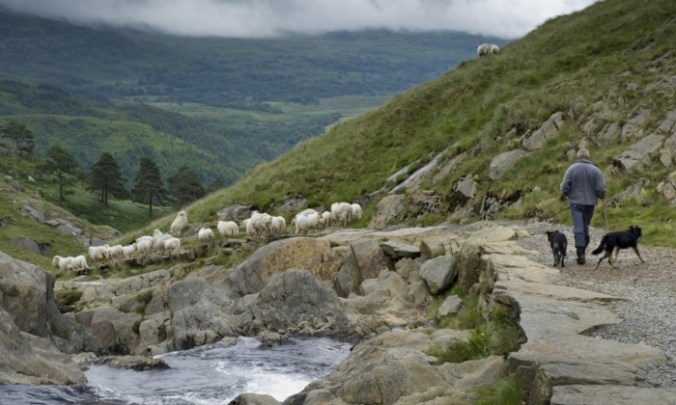
The National Trust is looking for a second shepherd to look after 1,600 mountain sheep in the hills and valleys around Hafod-y-Llan farm. Photograph: Joe Cornish
Thanks to Steven Morris and the Guardian for the public service of pointing out this job posting, on behalf of the UK’s excellent National Trust, which we have posted about on more than one occasion:
Wanted: patient, rain-loving shepherd for Snowdon conservation project
National Trust advertises for second shepherd to walk north Wales foothills to keep sheep away from vegetation such as bog asphodel and fruiting bilberries
Steven Morris
The successful candidate will need to love walking, fresh air, have appropriately trained dogs – and an awful lot of patience.
Applications are open for a man or woman prepared to work evenings and weekends in all elements as a shepherd on an innovative conservation project in the foothills of Snowdon in north Wales.
The idea of the project is to help restore sensitive mountain habitats such as upland heaths and flushes – damp areas – by gently coaxing and nudging sheep away from such areas.
Biophilia, the word, came to our attention several years ago, but the concept has been part of our personal ethos for decades. We’re particularly invigorated by the multi-faceted (pun not actually intended) way the word can be applied to so many concentrations, from the scientific, to the literary, to the artistic, to the spiritual.
The work of American artist Christopher Marley attracts on numerous levels. His new book inspires on the design front. For more images and information to pique the interest read McKenna Stayner’s piece in the New Yorker here.

About the book
Christopher Marley’s art expresses his passionate engagement with the beautiful forms of nature. Beginning with insects and moving on to aquatic life, reptiles, birds, plants, and minerals, Marley has used his skills as a designer, conservator, taxidermist, and environmentally responsible collector to make images and mosaics that produce strong, positive emotional responses in viewers. Marley has a brilliant eye for color and pattern in different natural objects, and he expertly captures the deep relationships among them. Biophilia (literally, “love of living things”) is a must-have for nature lovers, designers, artists, craftspeople, and anyone looking for visual inspiration in the arts.

Acuña de Chaupe has become the target of harassment and violence because she refuses to cede her land to Newmont. Photo credit: Latin American Mining Monitoring Programme
Thanks to EcoWatch for this story, which we had not previously posted about but which highlights a cause worthy of supporting in Peru:
…Newmont is majority owner of the massive Peruvian gold mine Yanacocha, the second largest gold mine in the world, and its planned Conga gold and copper mine nearby would be even larger, requiring a farming community to move and the four lakes they rely on for irrigation to be drained.
But the community has so far refused to relinquish its treasured land and lakes, and in response activists say the company has reacted with intimidation and harassment.
One person particularly in the company’s cross-hairs is Máxima Acuña de Chaupe, says activist Mirtha Vásquez, a Peruvian lawyer at Wednesday’s meeting. Continue reading

 Organikos