Let’s talk food

Lettuce

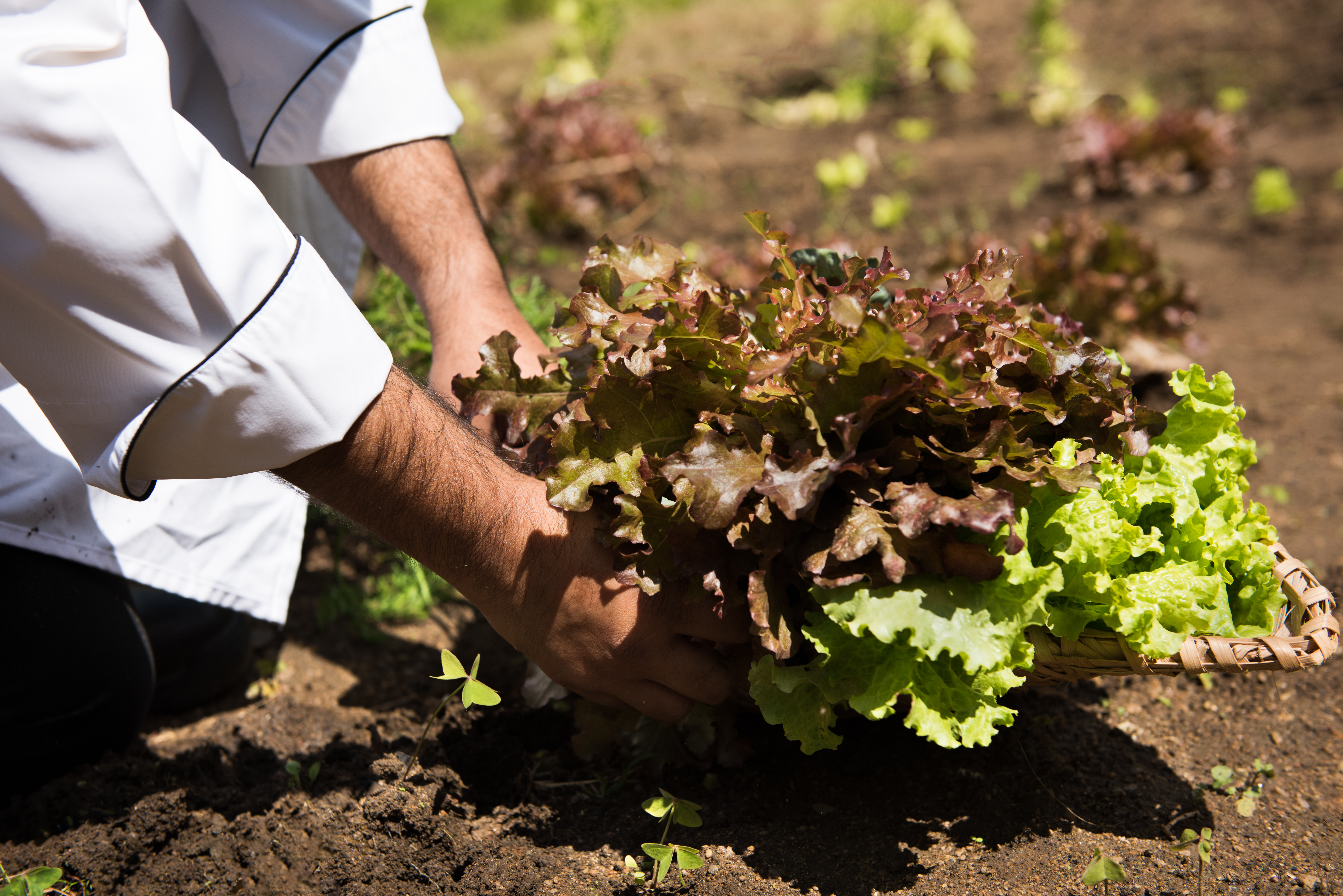
At Cardamom County in Thekkady, we take food seriously. From composting leftovers to growing our own food, we do it all. PHOTO: Deepshika Jain

There’s no denying duality when it comes to any life phenomenon. Let’s take growth and decay, abundance and poverty, negligence and responsibility. Bring food into this equation and you cannot have a greater marker of different standards of living across the globe. So while we were taking stock of produce harvested from our “edible” gardens at Cardamom County and Xandari Pearl, the conversation happened to linger on food security. And then someone mentioned France recently banning all supermarkets from spoiling or throwing away unsold food.

The measures are part of wider drive to halve the amount of food waste in France by 2025. According to official estimates, the average French person throws out 20kg-30kg of food a year – 7kg of which is still in its wrapping. The combined national cost of this is up to €20bn. Of the 7.1m tonnes of food wasted in France each year, 67% is binned by consumers, 15% by restaurants and 11% by shops. Each year 1.3bn tonnes of food are wasted worldwide.

Continue reading

Art in the House

Straddling the colorful neighborhoods of Mattanchery and Fort Kochi, Xandari Harbour (XH) is in good art company. With galleries hugging the street at every corner and local cafes dedicating their walls to the cause of promoting artists of the land, you are never too far from colors. The second edition of the Kochi Muziris Biennale too played its role in resuscitating street art and bringing art vocabulary into everyday conversations. The canvas so full of action and art being our foremost form of decor in rooms and at the restaurant, 51, it was an obvious choice when it came to bringing life to the bland walls of our staff cafeteria. Continue reading

A feast for your eyes

98 2.5 cm cubes of raw food make this stunning isosymmetric photograph. COURTESY: Lernert & Sander

98 2.5 cm cubes of raw food make this stunning isosymmetric photograph. COURTESY: Lernert & Sander

When it comes to food, they say you eat with your eyes first. And you cannot help but do just that when it comes to Lernert & Sander’s new work, Cubes. May be that’s after you’ve tried identifying as many of the 98 cubes of raw food (we couldn’t help ourselves, too!). Commissioned by Dutch newspaper De Volkskrant last year for a feature on the nation’s eating habits, the duo started with what they could find in their neighborhood grocery store. Each type of food was then cut into cubes of 2.5 cm with a custom-designed tool, placed equidistant from the camera, each row photographed separately, and the entire image put together using digital compositing. No, absolutely no use of Photoshop. The equal distances and the one single size put all the vegetables, fruits and meats on equal footing. The digital editing turned the physically impossible feat into visual reality.  Continue reading

How do you Say “Butterfly” in Malayalam?

Photo by James Zainaldin

We have a history of sharing butterfly photos here, primarily from Kerala (ചിതശലഭം, by the way, is Malayalam script for “citaśalabhaṁ,” or butterfly) and Costa Rica (“mariposa” being the Spanish name for the insects) but also in miscellaneous nature posts by our contributors. We also have a bit of a connection to the Smithsonian Institution, and are always happy to hear about friendly, creative polyglots, in this case from the New York Times:

Amid Butterflies, a Bit of a Lingua Franca at the Natural History Museum

 20, 2015

On a recent Sunday, Holly Tooker stood by the transparent wall inside the Butterfly Conservatory, at the American Museum of Natural History. It was, as always, 81 degrees with 78 percent humidity, and it had been a busy morning. Nearby, a giant Danainae butterfly perched on a

Continue reading

A 750-year-old Legacy

This be the destination that Dante Alighieri envisioned then: A love that moves the sun and other stars. ILLUSTRATION: Gustave Dore

This be the destination that Dante Alighieri envisioned then: A love that moves the sun and other stars. ILLUSTRATION: Gustave Dore

A prophet of hope, herald of the possibility of redemption, liberation and the profound transformation of every man and woman, of all humanity

– Pope Francis on Dante

An epic poem running into 14,233 lines, an allegorical exploration of hell and purgatory to reach paradise and a quest to understand the authentic self and the transcendental meaning of existence – Dante Alighieri has given much to the world. With Italy and literary circles celebrating his 750th birth anniversary this month, all awe and criticism once again turn the Divine Comedy’s way. Wondering about a 700-year-old text’s relevance in this century? Well, we are talking Dante and to say his masterpiece is a timeless revolution wouldn’t be way off the mark. Over his oft-didactic narrative and theological inferences, Dante leaves readers with gruesome yet alluring imagery, the knack to examine status-quo and a careful look at the duality in life. Continue reading

One for the Bird

Poaching and destruction of grasslands has brought down the bustard's population to 150 in the world. PHOTO: Kiran Poonacha

Poaching and destruction of grasslands has brought down the bustard’s population to 150 in the world. PHOTO: Kiran Poonacha

If there’s one certain takeaway from this blog, it’s the enduring and growing love for the feathered friends. In India, the conservation debate often touches on the Great Indian Bustard (GIB), which has an ostrich-like appearance and is labelled as “critically endangered.” In fact, the world population of the GIB is pegged at 150, with India, particularly Rajasthan, being home to 70 per cent of this number. Loss of the Bustard’s dry grasslands and scrub habitat, increased hunting and changes in land use have been blamed but Dr Pramod Patil refused to let things settle at that. Precisely why his pioneering work in protecting the Bustard population in Thar desert of Rajasthan won him the Whitley Award this year. Popularly known as the ‘Green Oscar’ and also won by compatriot Dr Ananda Kumar for his system to reduce man-elephant conflicts in India, the award carries a grant of £35,000. More importantly, it puts the focus back on the Great bird.

Continue reading

Check This Out

anarc71

We watch the comments and forwarding links on each of our posts, and there have been many fellow travelers over the years coming and going from our community. Here is one fellow we would like to point your attention to, first to thank him for his shoutout of our site; second because we like the name Milo, which got us to click his link; third we find his message kindred to our own; and last but not least because of the graphic above, which is worth more than a thousand words.

#PeopleVsShell

Photo credits: Greenpeace.org

Environmental Activism has never taken a back seat in Seattle and we continue to root for the individuals, organizations and public officials who are working to draw global attention to a possible environmental disaster. Certainly not the moment to “Keep Calm & Carry On”…

Hundreds of kayakers in Seattle were preparing to go and “shake their paddles” in protest at a newly arrived 400ft long, 355ft tall Royal Dutch Shell oil rig on Saturday, with hundreds – perhaps thousands – more scheduled to attend on dry land.

“We here in Seattle do not want Shell in our port. We want them to get out and change their business before they change our planet and destroy the life of future generations,” said Annette Klapstein, a 62-year-old retired attorney and member of activist group the Raging Grannies.

On Monday, the Obama administration effectively gave Shell the green light to restart its Arctic drilling and exploration operations with an approval issued by the Bureau of Ocean Energy Management, a governmental regulatory agency.

Shell was forced to halt its Arctic exploration in 2012 amid a series of severe security mishaps.

Environmental groups and scientists reacted to Monday’s news badly, warning that letting Shell back into the Arctic for exploration and drilling was very likely to cause an ecological disaster and contribute to climate change. Continue reading

Bees, Plans, Action

honeybee_custom-80bb7e068307e617ad8b91b388850f0445d6b9e0-s1300-c85

The federal government hopes to reverse America’s declining honeybee and monarch butterfly populations. Andy Duback/AP

The bee crisis is not new, but it remains a red hot issue of great importance to all of us (thanks National Public Radio, USA):

Plan Bee: White House Unveils Strategy To Protect Pollinators

BRIAN NAYLOR

There is a buzz in the air in Washington, and it’s about honeybees. Concerned about an alarming decline in honeybee colonies, the Obama administration has released a National Strategy to Promote the Health of Honey Bees and Other Pollinators.

NPR’s Dan Charles says the strategy, despite its rather bureaucratic title, is pretty straightforward: “The government will provide money for more bee habitat and more research into ways to protect bees from disease and pesticides.The Environmental Protection Agency also will re-evaluate a class of insecticides called neonicotinoids … which are commonly used on some of the most widely planted crops in the country.”

As NPR’s Allison Aubrey has reported:

Continue reading

Peddle-Powered Phone Juice

bikecharger3

Thanks to EcoWatch for this article that, in a place like India where bicycles are a mode of common transport, and mobile phones are ubiquitous, is pointing us to a practical green innovation:

Charge Your Battery While You Bike to Juice Up Your Phone

Lorraine Chow

Who needs a power outlet when you have a bike? The Ride-A-Long charges your electronics as you pedal, providing a portable renewable energy source for bike-enthusiasts.

Biking is already pretty environmentally friendly, but this takes it to the next level.

Created by Siva Cycle, the product can juice up any USB-powered device such as smartphones and cameras whenever and wherever you’re biking. Simply mount the Ride-Along to any standard bicycle’s back wheel, and as you ride, the wheel delivers juice to the integrated generator and charges its 1650 mAh battery, kind of like a hand-cranked radio. Continue reading

Thank You, Oxford!

thThanks to the Guardian for its ongoing coverage of environmental news, including great attention to Oxford University’s environmental stewardship; also, especially to George Monbiot for his role at the paper as a shaker-upper:

Damian Carrington

But UK’s second biggest university by endowment says it will not bow to campaigners’ demands for full divestment from fossil fuels

The University of Oxford has ruled out future investments in coal and tar sands from its multi-billion pound endowment, but said it would not divest from all fossil fuels as demanded by thousands of students, academics and alumni.

Campaigners welcomed the move as a victory for the fast-growing fossil fuel divestment campaign, as it was the first time the university had made clear its position on the issue.

“Many world leaders have studied under Oxford University’s spires,” said Andrew Taylor, at campaign group People & Planet. “They should be taking notes today. The lesson is: it’s time to phase out coal and axe tar sands.” Continue reading

Leopards And Humans Peacefully Cohabitating In India

An elderly priest descending to Perwa village from a temple devoted to Lord Shiva on Perwa Hill where he lives, one of the many holy slopes in the region that is also home to leopards. Credit Richard Mosse

An elderly priest descending to Perwa village from a temple devoted to Lord Shiva on Perwa Hill where he lives, one of the many holy slopes in the region that is also home to leopards. Credit Richard Mosse

If you are coming to visit one of Raxa Collective’s properties in south India, and want a recommendation for a visit to another part of India, this may be on our to do list (we need to go check it out first, and will let you know):

Life Among the Leopards

Continue reading

If You Happen To Be In Harlem…

harlemeatup

Those of us based in Kerala, India won’t be able to celebrate at this event, but we surely hope some of our readers can. It came to our attention via some inexplicable psychic Soul Food connection and boy do we wish we could be there!

As the banner states, the festival honors the food, culture and spirit of a part of New York with a storied history of Renaissance and decline. The celebration itself is evidence of Harlem’s Neo-Renaissance. Cultural talks, Food strolls, Dinners, and Cooking demonstrations are incorporated into the festival program. Continue reading

If You Happen To Be In Georgia…

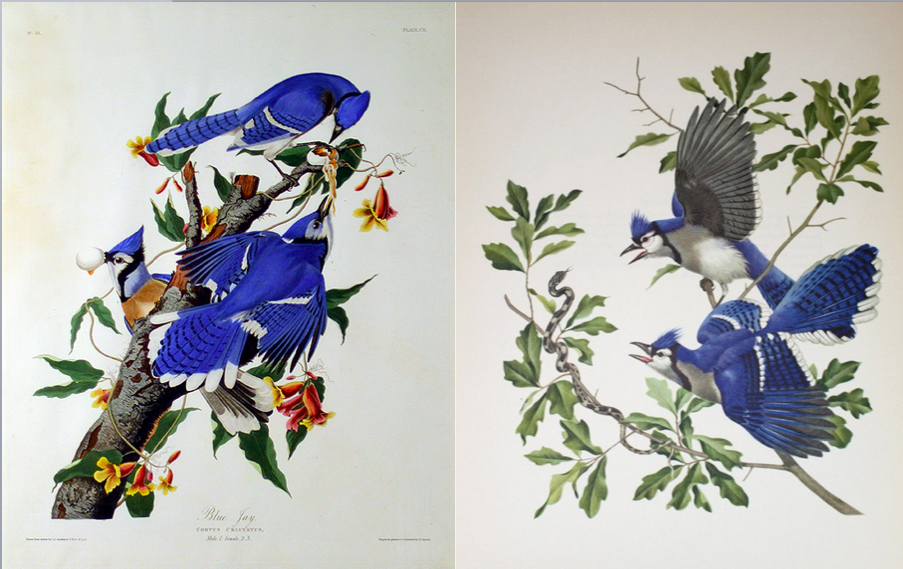
Blue Jays. Left: John James Audubon; Right: Athos Menaboni

Blue Jays. Left: John James Audubon; Right: Athos Menaboni

It should come as no surprise to visitors to this site that a significant amount of our attention is taken up by birds. Their importance is manifold, not just environmentally, but artistically. We’re also fans of the Liberal Arts, so we’re particularly excited to see these interests come together this month at two Liberal Arts colleges in Georgia.

One does not have to be a birder or an art aficionado to have heard of John James Audubon. Much of the world knows the name due to the Audubon Society, but fewer have heard of Athos Menaboni, who Times Magazine once called “Audubon’s heir”, despite the fact that the two men never met. Continue reading

SolaRoad’s First Seven Months

More than 150,000 bicyclists have used the road in the last six months in the Netherlands, where many people commute by bike. Photo credit: SolaRoad

More than 150,000 bicyclists have used the road in the last six months in the Netherlands, where many people commute by bike. Photo credit: SolaRoad

When we first linked out to this story some months ago, it did not get the number of clicks and reads as we expected. So now that we read a bit more about the results since November, all we can do is recommend that you pay attention:

SolaRoad, the world’s first “solar road,” has only been in operation since November, but it’s already generating more power than expected. SolaRoad is a bike path in Krommenie, a village northwest of Amsterdam in the Netherlands, that also functions as a massive solar array. The project was developed by TNO, the Province of Noord-Holland, Ooms Civiel and Imtech. Continue reading

We Love Salamanders, But Their Invasion Must Be Stopped

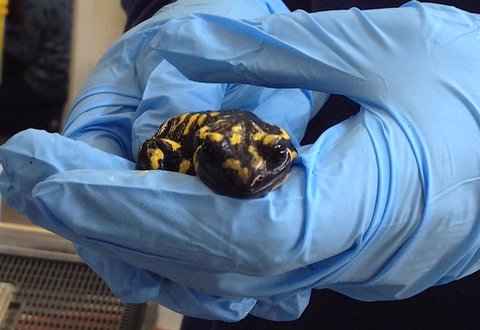
A healthy fire salamander from a captive-bred collection at a British zoo. Other specimens were infected with a fungus that has already devastated salamanders in continental Europe and could spread to North America.Credit Pria N. Ghosh

A healthy fire salamander from a captive-bred collection at a British zoo. Other specimens were infected with a fungus that has already devastated salamanders in continental Europe and could spread to North America.Credit Pria N. Ghosh

Our attention to stories reported in various media outlets about invasive species takes many forms, but invariably they are alarming, this one being no exception:

Pressure Builds for Swift U.S. Action Against Spreading Salamander Threat

There are signs of hope for American salamanders in the face of a potential biological catastrophe — a fungus that could be carried here through the global trade in exotic pets. Federal wildlife officials have signaled a crackdown may be coming on imports of amphibians.

Here’s the sequence of events.

Last year, biologists identified a virulent imported fungusBatrachochytrium salamandrivorans, as the cause of a steep drop in salamander populations in continental Europe. Herpetologists quickly began pressing United States agencies and officials (Dot Earth, Op-Ed article) to clamp down on the global exotic pet trade to cut the chances of the disease reaching the United States — which has the most diverse salamander population in the world.

In March, experts renewed their calls for action, frustrated with the lack of acknowledgement by federal wildlife agencies that this was an urgent issue. Continue reading

Nell Zink, Come To Kerala!

Bricklaying “was more valuable for my intellectual life than my entire college career.” PHOTOGRAPH BY GARETH MCCONNELL

Bricklaying “was more valuable for my intellectual life than my entire college career.” PHOTOGRAPH BY GARETH MCCONNELL

No doubt, Nell will be a good fit among La Paz Group’s global community of artistically and/or conservation-oriented invitees, many of whom you have not likely heard of, some of whom are more famous, but all with unusual talents and interests. Thanks to Kathryn Schulz for another invitation-worthy story: Nell Zink turned her back on the publishing world. It found her anyway.

The kookaburra in the Berlin Zoo is ten thousand miles from home, squat, top-heavy, large of beak, attractive of plumage, and making what is, ounce for ounce, the loudest, strangest sound I have ever heard emerge from a living creature. It begins with a classic evil laugh, bwaaahahahaha, à la Vincent Price in “Thriller,” then the bird throws back its head and lets out a series of hoots, like a plump British woman with an unbecoming but infectious laugh or a parrot that grew up in a frat house, dissolves into giggles, transitions to a chortle, appears to become an entire dinner party going to pieces, then starts to pull it together, O.K., O.K., the guests wiping their eyes and settling down, until out comes a little chuckle and hahahahoik!ha, the bird is cracking up again. Continue reading

Creative Solutions To Seemingly Impossible Challenges

A protester opposes allowing Royal Dutch Shell drilling rigs to dock in Seattle on their way to Alaska. Credit David Ryder for The New York Times

A protester opposes allowing Royal Dutch Shell drilling rigs to dock in Seattle on their way to Alaska. Credit David Ryder for The New York Times

After a shockingly depressing, disappointing decision by the President of the USA to approve Shell’s drilling plan in the Arctic (this company is clearly not ready for the responsibility–what happened to your better, judicious self, Mr. President?!?), it is heartening to see citizens’ creative counter-tactics (even if this particular David does not beat this particular Goliath, thank you anyway, thinking people of Seattle, for trying):

Continue reading

Big Picture Rewilding

George Mobiot doesn’t just think about otters and eagles – he thinks BIG, back to the megafauna that once inhabited the temperate climates of the globe.

Rewilding offers us this fantastic opportunity to start restoring systems, or allowing them to restore themselves. I see it as reintroducing missing plants and animals, then stepping back and letting nature get on with it.

Extreme Recycling

Filtering membranes in an Orange County, Calif., water purification facility. The plant opened in 2008 during the state's last drought. Credit Stuart Palley for The New York Times

Filtering membranes in an Orange County, Calif., water purification facility. The plant opened in 2008 during the state’s last drought. Credit Stuart Palley for The New York Times

As the California drought continues public and private sector organizations look to solutions to comply with the State’s mandatory water reduction measures. In addition to desalination plants coming back on line and rainwater harvesting, communities are looking at ways to overcome the “yuck factor” of water recycling.

Less “extreme” versions have been in place for some time, as household wastewater goes through layers of treatment processes that break it down to its prime components of “H, 2 and O”. The results have been used for irrigation for years, but it’s possible to purify the water to sparklingly clear levels.

Used already in craft beer brewing, extreme purified water is one of the array of ideas being implemented to manage California’s ever-growing problems. Dealing with consumers is essentially a marketing problem, more so in this case than the norm.

Water recycling is common for uses like irrigation; purple pipes in many California towns deliver water to golf courses, zoos and farms. The West Basin Municipal Water District, which serves 17 cities in southwestern Los Angeles County, produces five types of “designer” water for such uses as irrigation and in cooling towers and boilers. At a more grass-roots level, activists encourage Californians to save “gray water” from bathroom sinks, showers, tubs and washing machines to water their plants and gardens. Continue reading