
photo credit: Stephen Crafts
J.N. Ding Darling National Wildlife Refuge, Sanibel Island, Florida
photo credit: Stephen Crafts
J.N. Ding Darling National Wildlife Refuge, Sanibel Island, Florida

Michael Tsegaye for The New York Times. The Arthur Rimbaud Cultural Center in Harar.
For those involved in Raxa Collective’s recent scouting expedition in Ethiopia, since Harar was not on the itinerary we must consider Rimbaud’s endorsement during the next expedition:

Haunted by her father’s death, Helen Macdonald kept company with a bird of prey. CREDIT PHOTOGRAPH BY CHRISTINA MCLEISH / COURTESY GROVE ATLANTIC
Birds represent something important in our work, and it is not always clear exactly how and why, so every day we try to elaborate it for ourselves as much as for anyone.
If you did not take the moment to watch the video posted yesterday, or read the post from our boys in the Blue Mountains of Jamaica, no matter. Today those are complemented by a book review, of all things, that captures the essence of why we find birds so compelling, and helps us understand why their world has come to play such a vital role in this blog:
…Among those who know their birds of prey, the reputation of the goshawk is half Hamlet, half Lady Macbeth: mad, murderous, unpredictable, the kind of creature whose partners and intimates should brace themselves for trouble. “Spooky, pale-eyed psychopaths,”
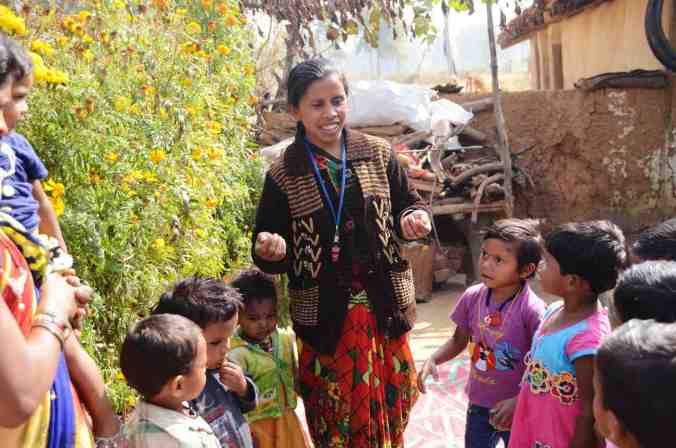
Nursery worker Shivkumari Pate leads children in a learning song. Pate works with the nonprofit Jan Swasthya Sahyog, which developed the first network of community nurseries. Ankita Rao for NPR
It would be remarkably easy to fill these pages with stories from India, from various places in Africa and Latin America where we also have projects, that give a strong sense that no matter how quickly solutions get hacked, there are more problems than can possibly be resolved; we spare you those most of the time. Instead, we point to stories like this one (thanks National Public Radio, USA):
…For decades, aid organizations tried to improve the health of moms and babies in Chhattisgarh. Little made a dent. But then a garden of flowers rose up in the state. Continue reading
 There are natural wonders that help answer important questions, such as those about what climate change has wrought in the distant past; and there are wonders of man’s creation that raise important questions, such as whether man can do anything to reduce his impact on climate change if he, collectively, puts his mind and energy into it.
And then there are those who study natural wonders for reasons that appear more prosaic than climate change and yet punch above their weight class in terms of getting the rest of us motivated to participate in solutions; ornithology and its amateur cousin bird watching are two of Raxa Collective’s favorite choices of what to pay attention to, just because:
ScienceTake | Hawk Cam Captures the Hunt
BY Poh Si Teng and James Gorman
Thanks to a helmet camera, researchers discovered that a goshawk mixes its methods of chasing its prey.
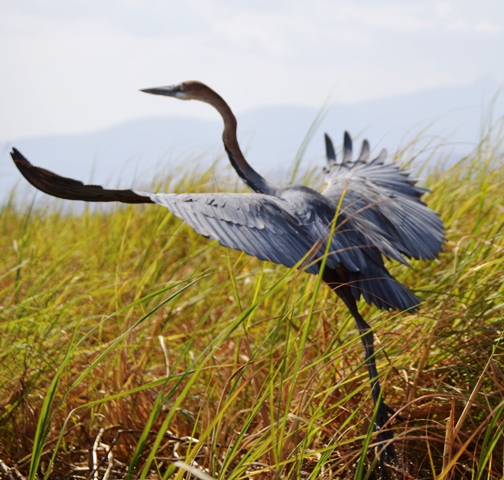
photo credit: Andrew Murphy
Nech Sar National Park, Ethiopia

Always downtown in spirit, the Whitney relocates from Madison Avenue to the base of the High Line.
CREDIT ILLUSTRATION BY MICHAEL KIRKHAM
If you have not read Justin’s post yet, stop here and go there. It is much more important. But this is important to our archiving the ever-evolving and improving institutions related to the arts:
On May 1, the Whitney Museum opens in its new location, on Gansevoort Street. The eight-story building, designed by the Italian architect Renzo Piano, has sweeping views of the Hudson River, but they won’t pull focus from the inaugural show, an in-depth look at the permanent collection, which is anchored deep in the American modern and contemporary canon, from Marsden Hartley to Rachel Harrison. Continue reading

A Dutch scientist has created a process for turning sugar beet leaves into protein. Photo credit: Shutterstock
Thanks to Ecowatch, we can consider the long lost love of our better, healthier selves, found:
Sugar Beet Leaves Create Vegan Protein Alternative
Katie Levans
The jury is no longer out on how climate change has been influenced by man, since the dawn of the Industrial Revolution and especially in the last 70 years. But the jury has not even convened yet on many phenomena in the natural world, including some geological oddities. Thanks to National Geographic‘s news service for this story from the far reaches of Siberia:
New Theory Behind Dozens of Craters Found in Siberia
Scientists narrow down the cause and think it is related to warming.
When a massive and mysterious hole was discovered in Siberia last July (see pictures), social media users pointed to everything from a meteorite to a stray missile to aliens to the Bermuda Triangle as possible causes. But the most plausible explanation seemed to be the explosive release of melting methane hydrate—an ice-like material frozen in the Arctic ground—thanks to global warming.

A Russian scientist prepares to descend into a mystery crater in Siberia in November. More holes have since been found. PHOTOGRAPH BY VLADIMIR PUSHKAREV, THE SIBERIAN TIMES
A joint expedition made up of two Zaina Lodge and two of our team members just concluded two weeks in Ethiopia sampling the best national parks, scouting for new locations in which to collaborate, and tasting foodways evolved over millennia. The Zaina duo at this moment are headed back to Ghana, and we can imagine they will appreciate this:
A Spicy Spinach Stew From Ghana
By FRANCIS LAM
Ghanaians living within bunting distance of Yankee Stadium in the Bronx can have a taste of home with this dish.
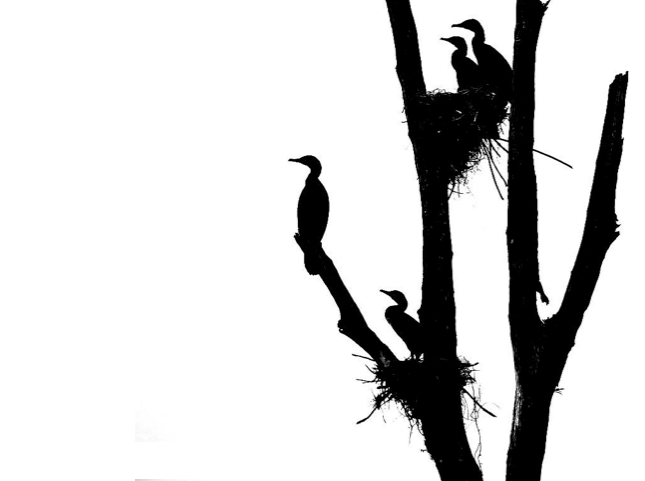
photo credit: Sanjayan Kumar
Periyar Tiger Reserve, Kerala

©Peter Chadwick/DK Images
We’ve written about the invasive species water hyacinth on these pages before, discussing its environmental impact as well as its material value for eco-development projects. But we haven’t seen stories such as this one from Conservation Magazine where there’s a positive side to what many people call the “weed from hell.”
The scene at Florida’s Crystal River National Wildlife Refuge in Kings Bay last October would have been familiar to anyone who has ever engaged in the battle to control the spread of invasive plants. Eager volunteers scurried about the shoreline of this manatee wintering ground, carting large plastic bins stuffed with water hyacinth, a notorious aquatic weed that’s caused headaches on five continents. Closer inspection, however, would have revealed the activity to be anything but business as usual: instead of hauling water hyacinth out of the bay, the conservationists were putting it back in—almost 4,300 gallons’ worth by day’s end.
Those volunteers were taking part in a bold pilot project that is the latest chapter in a half-century-long ecological story that reads like a fable. It starts with a well-intentioned campaign to rid Kings Bay of the water hyacinth, an aggressive nonnative species. Next come decades of additional control measures and a tragic downward spiral that transformed these crystal-clear waters into an unpleasant soup of slimy green algae. Then the story takes an unexpected turn, back to its original antagonist. Only this time, Bob Knight, the wetlands restoration ecologist leading this pioneering project, has recast water hyacinth as the unlikely hero. He believes this South American native, if controlled, could help solve the algae problem and return the bay’s ecosystem to a more desirable state. The irony in this approach is not lost on anyone involved. Continue reading
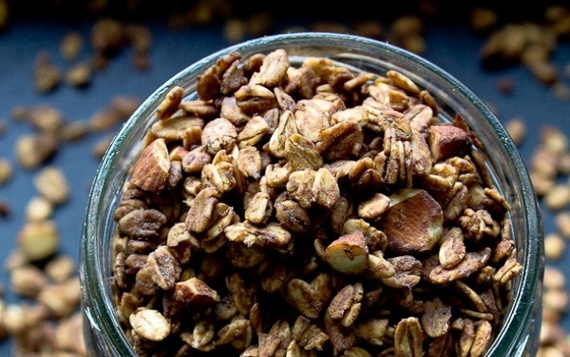
Migle/Flickr
Several of us scouting in Ethiopia recently have been treated to roasted barley as a snack. It has us thinking about super foods, diet, wellness, taste of place, and lots more to ponder in future blog posts; for now, this catches our eye:
The Skinny Carb
A recent study shows that people who simply ate more fiber lost about as much weight as those who went on a complicated diet. Olga Khazan

Photo by Janne Morem/Flickr. Could global warming be overcome by releasing light-reflecting chemicals into the atmosphere? With safety and efficacy at the forefront of debate, David Keith discusses the moral and political quandaries surrounding the science of geoengineering.
We have mentioned geothermal engineering on and related topics on than one occasion, but there is a more radical branch of engineering the thermal options at our disposal, with special regard to the climate change “solutions” debate. Thanks to Harvard Gazette for this informative interview on the topic:
Climate engineering: In from the cold
Keith says new reports will likely boost deeper look at geoengineering concepts
When the National Academy of Sciences (NAS) released a pair of reports this month on geoengineering, which involves deliberately intervening in the climate system to counter global warming, discussion of the controversial topic moved into the mainstream science community. The reports concluded that geoengineering is no silver bullet, and that further research is needed. Continue reading
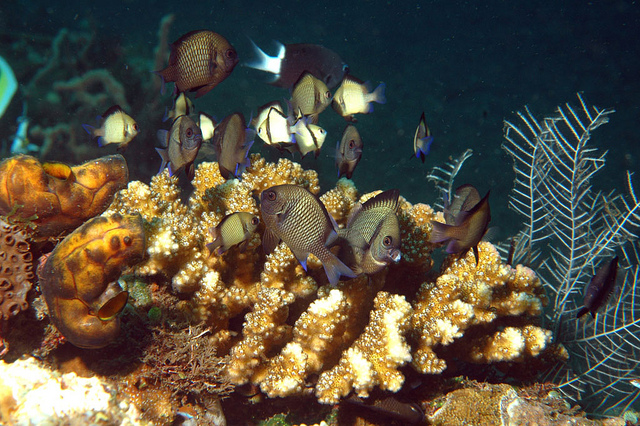
Coral garden in Indonesia. Credit: Global Environment Facility via Flickr (Creative Commons License)
We’re keeping an eye on the health of coral reefs in the Caribbean with the help of RAXA contributor Phil Karp, who has been writing specifically about the impact of invasive lionfish on the marine ecosystem. In this piece for Conservation Magazine, Sarah DeWeerdt discusses the option of taking a more active role in improving the health of corals through acclimatization:
The past several decades have been tough on the world’s coral reefs. Warming waters, ocean acidification, invasive predators, and toxic runoff have hammered these iconic hotspots of underwater biodiversity.
In response, conservationists have developed coral ‘gardens’ where young corals are reared to help rebuild damaged reefs. But some scientists worry that existing restoration strategies won’t match the pace and magnitude of the threats these animals face.
In a paper published February 2 in the Proceedings of the National Academy of Sciences, biologists from the Australian Institute of Marine Science and the Hawaii Institute of Marine biology propose a more radical approach, which they call assisted evolution.

Photo by Sophie Orzechowski

Photo credit: Davebloggs007/Flickr
Many of the RAXA Collective contributors could could easily get behind the motto: “Book Lovers Unite!”; many could be found with their noses in a book from early childhood to the present day. So when we read about these “pop up libraries” in various parts of the country the only response possible was excitement.
Books are an essential part of culture and the LFL concept of sharing creates an even greater community bond worth conserving.
Three years ago, The Los Angeles Times published a feel-good story on the Little Free Library movement. The idea is simple: A book lover puts a box or shelf or crate of books in their front yard. Neighbors browse, take one, and return later with a replacement. A 76-year-old in Sherman Oaks, California, felt that his little library, roughly the size of a dollhouse, “turned strangers into friends and a sometimes-impersonal neighborhood into a community,” the reporter observed. The man knew he was onto something “when a 9-year-old boy knocked on his door one morning to say how much he liked the little library.” He went on to explain, “I met more neighbors in the first three weeks than in the previous 30 years.” Continue reading
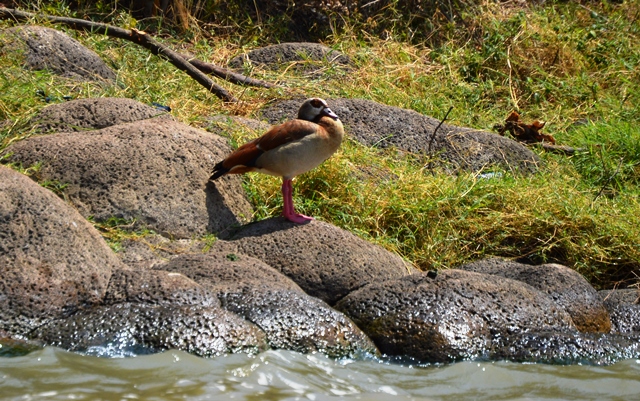
photo credit: Andrew Murphy

Petrified wood. Las Cruces, New Mexico. PHOTOGRAPH BY SHANE LAVALETTE
Contributors to our blog come and go. We wonder from time to time how the talents we saw in India, or Costa Rica, or elsewhere are being deployed today and will be deployed tomorrow. That is how it is with interns, and volunteers, as much as with other types of team members. Above, this, and a few of the other photographs in this post remind us of Milo’s first year with a camera, and his sense of spontaneity combined with visual acuity; someone who is a natural with that tool, the camera, and is ever on the lookout to tell a story with a snapshot:
Last week, the photographer Shane Lavalette set out on a road trip from Austin, Texas, to Joshua Tree, California. Each day, he posted austere, poetic photographs of the region’s landscapes and people to the New Yorker photo department’s Instagram feed, using the photo-editing app VSCO Cam. Continue reading
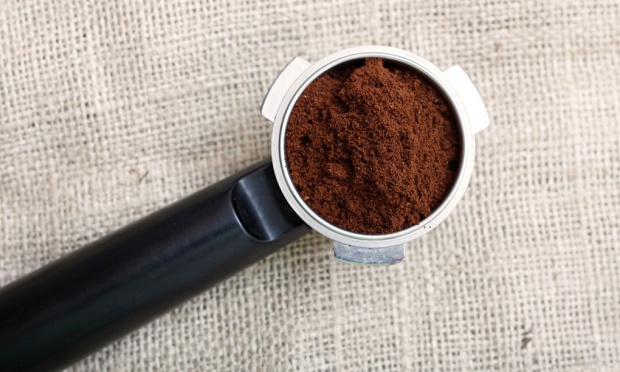
Scientists at the City University of Hong Kong can turn coffee grounds and stale bakery goods into a sugary solution that can be applied to manufacture plastic. Photograph: Alamy
We frequently talk about the recycling on these pages, with an eye toward the developing awareness that the concept is no longer limited to inorganic, static materials. This recent article in the Guardian indicates that plant cellulose based plastic is just the tip of the iceberg in the possible ways to convert the mountains of food waste in many parts of the world into materials with environmental benifits.
Scientists at the City University of Hong Kong have found that they can turn coffee grounds and stale bakery goods – collected from a local Starbucks – into a sugary solution that can be used to manufacture plastic. The food waste was mixed with bacteria and fermented to produce succinic acid, a substance usually made from petrochemicals, that can be found in a range of fibres, fabrics and plastics. Continue reading
 Organikos