Our Daily Bread, Please

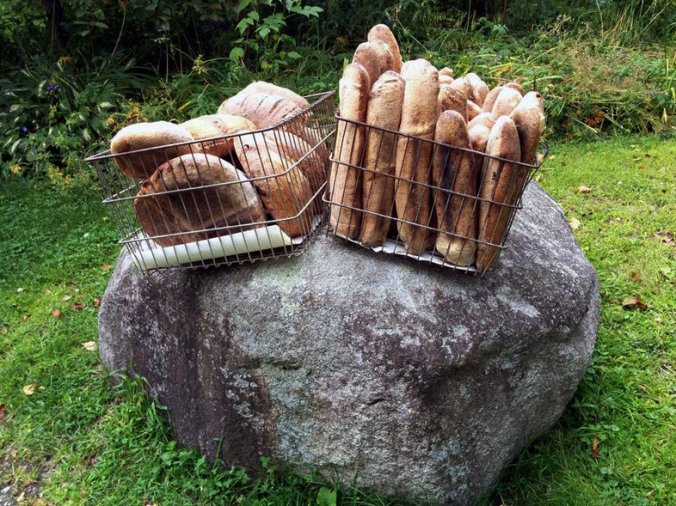
Rabin bread on a rock at the farmers market in Plainfield prior to setting up the table. Jon Kalish for NPR

Rabin bread on a rock at the farmers market in Plainfield prior to setting up the table. Jon Kalish for NPR

Where can we find the stones, here in Kerala, to build the oven to bake the bread to allow the reincarnation of this labor of love when the oven man and his wife of great heart from Vermont stop baking? We will find out. We will surely let you know. Meanwhile listen to and/or read this story, thanks to National Public Radio (USA):

When Jules Rabin lost his job teaching anthropology in 1977, he and his wife, Helen, turned to baking to keep their family afloat. For 37 years they’ve baked sourdough bread that people in central Vermont can’t seem to live without.

The year before Jules left Goddard College, he and Helen built a replica of a 19th century peasant oven, hauling 70 tons of fieldstone from nearby fields. The stones covered an igloo-shaped brick baking chamber 5 1/2 feet in diameter. Continue reading

Souvenirs Of A Travel Junkie Architect

Photo by Greg Vore

Photo by Greg Vore

When we first heard of him two years ago, he caught our attention with the choice he made at a young age:

Architect Mark Leininger credits his parents for choosing travel to China, Antigua, Colombia and other foreign destinations over material things throughout his childhood, instilling a love that has endured. Case in point: He remembers asking his mother for a pool table in third grade.

“Do you want a pool table or a trip to Jamaica?” she replied. He wisely opted for the travel, collecting the airline timetables that used to pile up at airport ticket counters in the pre-Internet era. Continue reading

Seeds, Activism, Hope

140825_r25365_sq-320

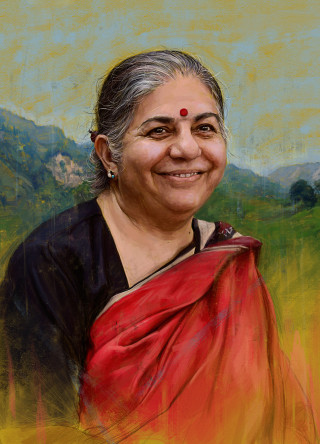
Vandana Shiva is leading the opposition to genetically modified crops. Are they a scourge or a solution to hunger

We had never heard of her before, but seeds have been on our mind lately so we immediately want to know more. So thanks to Michael Specter for his profile Against the Grain–An activist’s controversial crusade against genetically modified crops:

Early this spring, the Indian environmentalist Vandana Shiva led an unusual pilgrimage across southern Europe. Beginning in Greece, with the international Pan-Hellenic Exchange of Local Seed Varieties Festival, which celebrated the virtues of traditional agriculture, Shiva and an entourage of followers crossed the Adriatic and travelled by bus up the boot of Italy, to Florence, where she spoke at the Seed, Food and Earth Democracy Festival. After a short planning meeting in Genoa, the caravan rolled on to the South of France, ending in Le Mas d’Azil, just in time to celebrate International Days of the Seed.

Continue reading

Breakthroughs In Nutrition Via Entrepreneurial Conservation

Exo's peanut butter-and-jelly bar contains about 40 ground-up crickets and has a familiar nutty, sweet flavor. Meredith Rizzo/NPR

Exo’s peanut butter-and-jelly bar contains about 40 ground-up crickets and has a familiar nutty, sweet flavor. Meredith Rizzo/NPR

Thanks to National Public Radio (USA)’s food-focused program, The Salt, for another story on unexpected breakthroughs in nutrition:

…”Insects are probably the most sustainable form of protein we have on Earth,” Bitty Foods founder Megan Miller, who spoke passionately about eating bugs at a TEDx Manhattan event earlier this year, tells The Salt. “The only real barrier to Americans eating insects is a cultural taboo.” Continue reading

Bring On The Night

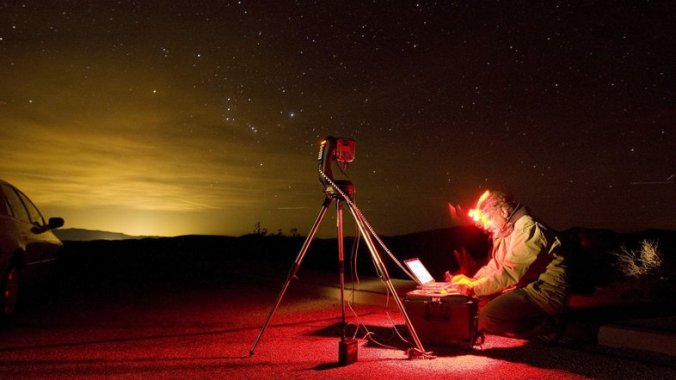
Dan Duriscoe works at a special computer-controlled camera used to photograph the night sky at Dantes View in Death Valley National Park in California. John Locher/AP

Dan Duriscoe works at a special computer-controlled camera used to photograph the night sky at Dantes View in Death Valley National Park in California. John Locher/AP

Supporting an activity that depends on the mitigation, if not reduction, of light pollution? We are all for it:

When was the last time you looked at the Milky Way? Or saw the shape of Cassiopeia? If you live in a city, you might not even remember. In the world’s most populated areas, air and light pollution obscure the sight of thousands of stars once visible to the naked eye. Continue reading

Say It Ain’t So, Ferran!

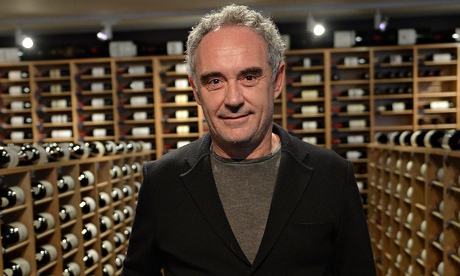
Ferran Adrià, of the award-winning restaurant elBulli. Photograph: Emmanuel Dunand/AFP/Getty Images

Ferran Adrià, of the award-winning restaurant elBulli. Photograph: Emmanuel Dunand/AFP/Getty Images

The quote from a group supporting the development of a museum on a protected coastal ecosystem–“We understand that it’s very easy to raise the populist flag in defence of the environment and that this always manages to attract a good number of supporters,”–says all you need to know to understand how important this issue is. In fact, it is not so easy. It is not easy at all to protect the last remaining unspoiled beaches in the world. We are sure that with a bit of publicity, the right outcome will prevail in this case:

When Ferran Adrià shut the doors of his elBulli restaurant in 2011, he quickly reassured gastronomes that it was not closing for good, just for a revamp. ElBulli would become a cultural foundation , complete with museum and visitor centre called elBulli 1846, all to reopen on an expanded plot in 2015.

Foodies may have been reassured, but not so environmentalists, who are furious that the expanded elBulli will eat up more space on the Cala Montjoi, one of Spain‘s few protected Mediterranean beaches. Continue reading

Bioluminescent Wonders

Stefan Siebert

Stefan Siebert. A young colony of Pyrosoma atlanticum.

Sure, science can explain alot of things. And yes, we definitely want to understand. But the wonder can remain a wonder even after we read about the technical details. Bioluminescence is one of those wonders. Better in person, of course, to see and experience the wonder. But for now, written explanation of this photographed wonder will have to do. We will likely never tire of the sightings, in the Times Science section or wherever, no matter how many times, of these creatures:

Continue reading

Sacred Music, Desert Edition

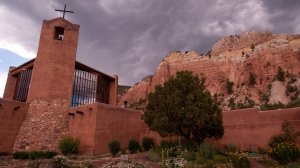
The Monastery of Christ in the Desert in northern New Mexico inspired Robert Kyr to compose the music on his new album of choral works. Karen Kuehn for NPR

The Monastery of Christ in the Desert in northern New Mexico inspired Robert Kyr to compose the music on his new album of choral works. Karen Kuehn for NPR

We all need to escape the madding crowd from time to time. Where and how? Plenty of choices. Desert. Sacred, devotional acts. Music. As you choose. Or all of the above. Thanks to National Public Radio (USA) for the reminder of such places and activities:

Inspiration can come from unlikely places. For composer Robert Kyr, the silence of a desert monastery is key to the radiant music on his new disc of recent choral works performed by the vocal ensemble Conspirare and its director Craig Hella Johnson. Continue reading

A Former Best Half Hour Of The Day Melted Further, For Reflective Fun

We recently noted two days in a row that it might be good to take half an hour or so each day to reflect; hinting that there is general tendency to not allot enough daily time for reading, for important ideas, etc.. Of course, sometimes when one reads such a thought, in hindsight it can sound heavy and dull and self-important and, well, probably boring.

Cheer up. The cartoon editor of the New Yorker insists on it, and he is good at getting his way:

I just finished a fascinating blog post by Joshua Rothman called “What College Can’t Do.” There are so many insightful points in the essay that it wouldn’t make sense for me to cite just a quote or two. Continue reading

Listen, Learn, Elephants

Thermal imaging on an elephant in the Dzanga clearing. Photo by Peter Wrege

Thermal imaging on an elephant in the Dzanga clearing. Photo by Peter Wrege

Way back when, we first shared what we had read and visually devoured about this project, and the last line of our post at that time asked if “one of our Lab-based contributors will help us with an introduction to their office mates in the Elephant Listening Project?”. Not until now were we nudged to think again and do something about it. Stay tuned…

Meanwhile, thanks to the folks at Science Friday and the donor-listeners and producers of the amazingly diverse public radio networks in the USA, tune in to learn more:

Elephants have different rumbles and roars for how they greet each other, warn about danger, and even to show that they’re annoyed. Peter Wrege, director of The Elephant Listening Project, recorded an event called “mating pandemonium,” where a group of elephants roar after a pair of elephants mate. Wrege discusses the possible reasons for this pachyderm party.

Continue reading

Hambledooners, Conservation Entrepreneurs

Hambledon Hill, Dorset, UK, in late afternoon sunlight. Photograph: Mark Bauer/Alamy

Hambledon Hill, Dorset, UK, in late afternoon sunlight. Photograph: Mark Bauer/Alamy

National Trust is a private UK-based conservation organization whose nearly 4,000,000 members and more than 60,000 volunteers make great things happen. That leads to about 50,000,000 visitors to sites like this recently created protected area:

National Trust buys Hambledon Hill in Dorset

Pristine chalky outcrop is a treasure trove of plant species and a butterfly haven untouched by modern farming since Iron age

Continue reading

If You Care About Books But Have Not Followed This Story, Start Here

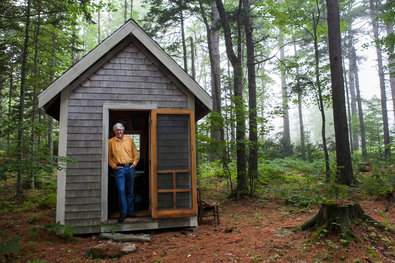
Craig Dilger for The New York Times. Douglas Preston, a best-selling author with Hachette Publishing, at his writing shack in Maine.

Craig Dilger for The New York Times. Douglas Preston, a best-selling author with Hachette Publishing, at his writing shack in Maine.

We started paying attention to this issue here. It relates to our longstanding belief that reading and books are essential goods. So who we trust with books matters:

Plot Thickens as 900 Writers Battle Amazon

Creative Writing, Antidote To Entomophobia?

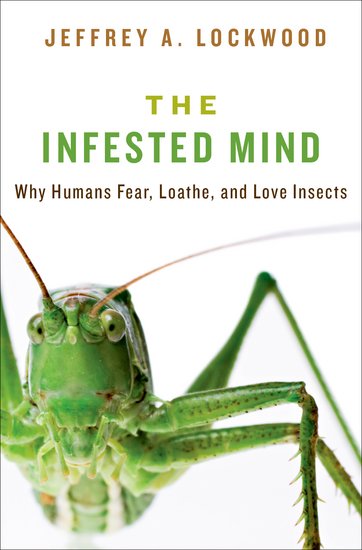
Jeffrey Lockwood, the director of the creative writing program at the University of Wyoming, has received the Pushcart Prize and a John Burroughs Award for his essays. His most recent book, to the right, was brought to our attention while reading his recent essay in one of our favorite online publications. The description of his book, provided by Oxford University Press:

The human reaction to insects is neither purely biological nor simply cultural. And no one reacts to insects with indifference. Insects frighten, disgust and fascinate us. Jeff Lockwood explores this phenomenon through evolutionary science, human history, and contemporary psychology, as well as  Continue reading

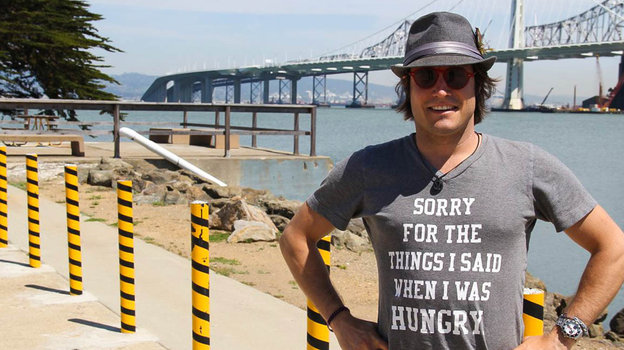
Taste Of Karma

Although food entrepreneur Tim West's family legacy is in Doritos chips, he wants to shake up the food system — with sustainable, healthful food. Vignesh Ramachandran/Ozy

Although food entrepreneur Tim West’s family legacy is in Doritos chips, he wants to shake up the food system — with sustainable, healthful food. Vignesh Ramachandran/Ozy

Thank you, National Public Radio (USA), for carrying The Salt and its occasionally deliciously ironic stories:

Tim West’s grandfather invented Doritos chips and was an executive at the global snack food giant Frito-Lay.

The younger West ate plenty of junk food growing up. But lately, he’s been much more interested in kale, quinoa and tree-ripened fruit.

And the 30-year-old Bay Area food entrepreneur now wants to completely reinvent what we eat and how it’s produced. Continue reading

Yesterday’s Best Half Hour Melted Into Today’s

Rothman-College-690x469-1407173630

A pair of Harvard alumni on campus for commencement, in 1977. CREDIT PHOTOGRAPH BY CONSTANTINE MANOS/MAGNUM.

Just after this post had been published yesterday, starting with the acknowledgement of busy-ness and concluding that education plays a key, if mysterious role in character-building and communication capabilities, a kind of echo reverberated through the reading of this post by Joshua Rothman:

There’s a special joy in giving someone advice that’s sure not to be followed—“Wake up at the same time every morning”; “Don’t check your e-mail while on vacation”—and William Deresiewicz must have felt it when writing his recent cover story for The New Republic, “Don’t Send Your Kid to the Ivy League.” Hypercompetitive colleges, Deresiewicz wrote,  Continue reading

Southern Birdwing Butterfly

Photo credits : Josekallukaran

Photo credits: Jose Kallukaran

The Southern Birdwing butterfly  is the largest butterfly in India, and is endemic to the Western Ghats. Males are more frequently seen than females, mainly feeding on flowers of the Pagoda plant, west Indian jasmine, mimosa, and other ornamental bushes. Unlike many butterfly species that prefer full sun, the southern birdwing tends to be more active during the evening. Continue reading

Shakespeare, Crown Toady?

Shakespeare

In honor of the departure of James from Xandari, we send him off with a blast of relative modernity. Shakespeare is certainly classic, but tres nouveau in terms of a classicist.

Little did any of the liberal arts majors among Raxa Collective contributors know that the image we have of a witty, well-versed but ultimately populist entertainer is confounded by a consistent streak of conservatism. But we are thankful for the enlightenment, that far from being an equal opportunity observer and critic of all forms of foible, the Bard was so unwilling to bite the hand that fed:

Ira Glass recently admitted that he is not all that into Shakespeare, explaining that Shakespeare’s plays are “not relatable [and are] unemotional.” This caused a certain amount of incredulity and horror—but The Washington Post’s Alyssa Rosenberg took the opportunity to point out that Shakespeare reverence can be deadening. “It does greater honor to Shakespeare to recognize that he was a man rather than a god. We keep him [Shakespeare] alive best by debating his work and the work that others do with it rather than by locking him away to dusty, honored and ultimately doomed posterity,” she argued. Continue reading

The Best Half Hour Of The Day

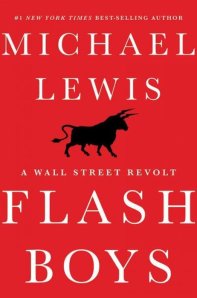
9780393244663_custom-da8d85d278c41cd52ad546688f20e67f743942dd-s3-c85Busy, busy. Not always enough time to read books even by authors we know to be gifted explainers of complicated, important phenomena. Back around the date this book was published, its author gave an interview. In just over half an hour he managed to explain one of the most complicated human activities imaginable, in terms most of us could understand:

“The stock market is rigged,” Michael Lewis tells Fresh Air‘s Terry Gross. “It’s rigged for the benefit for really a handful of insiders. It’s rigged to … maximize the take of Wall Street, of banks, the exchanges and the high-frequency traders at the expense of ordinary investors.”

Continue reading

Al Fresco Meals Across Time and Space

This slideshow requires JavaScript.

Long after humans made living indoors commonplace we still carry the strong desire to commune with nature in one way or another. Whether through gardening or exploration, we crave being outdoors, and that often has meant bringing our meals with us.

The origin of the word “picnic” is unclear. It first appeared in an English dictionary in 1748, and it probably derived from the French pique-nique.

A 17th-century French pique-nique may have been what we now think of as a potluck. In the 18th century, its American counterpart may have been more like a salon gathering. By the 19th century, though, it had become common for Americans to hold these events outside. Continue reading