Floating Fences

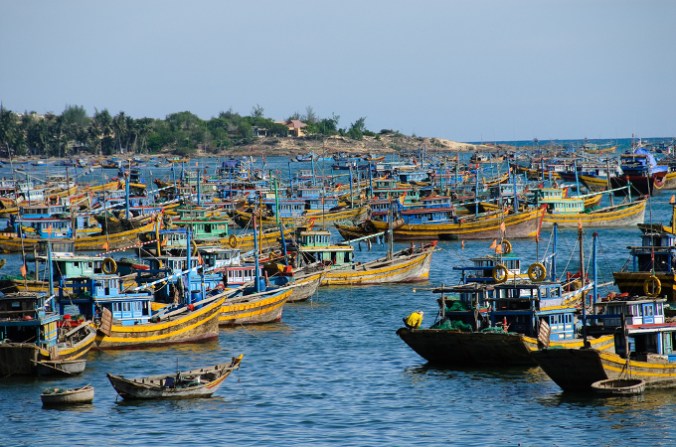
At Spice Harbour boats aren’t the only colorful item floating past the property on a daily basis. While the water hyacinth is lovely, it can also clog the water ways and make boating difficult to manage when it piles up along the edges and eddies of the harbour front.

We hired local fisherman to create a floating bamboo fence Continue reading

Birds Are Barometers, Among Other Things

12348-v1-490x

A recent study projects that the summer range of the Allen’s hummingbird will shrink by 90 percent by 2080. Photo by Loi Nguyen/Audubon Photography Awards

One more story related to the centenary mentioned here, this time with a podcast interview with  to accompany our previous post linking to his editorial in the New York Times:

It’s been 100 years since the last passenger pigeon died. Would we have been able to save the bird today? What is the state of bird conservation in North America? Gary Langham of the National Audubon Society and Ken Rosenberg from the Cornell Lab of Ornithology discuss which species are under threat and how climate change might affect birds in the future.

Giants Known And Unknown

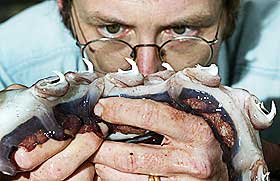
me 2 - CopyWe have posted a few times about awesome oceanic creatures, and their literary impacts, and lots of times about the heroes working to save whales in particular, so when this decade-old but still-fresh article on the giant squid we had missed came to our attention just now, we had to share it:

…Though oceans cover three-quarters of the Earth—the Pacific alone is bigger than all the continents put together—the underwater realm has remained largely invisible to human beings. For centuries, there was no way for scientists to peer into the depths, no telescope that could gaze into the abyss. (A pearl diver can venture down no more than a hundred feet.) Until the nineteenth century, most scientists assumed that the deepest parts of the ocean—where the temperature was frigid, the pressure intense, and the light minimal—contained no life. Continue reading

Marine Reserves And Their Discontents

mpafisheries

Thanks to Conservation magazine for this:

MARINE RESERVES BENEFIT ONLY BADLY MANAGED FISHERIES  September 9, 2014

When you’re close to hitting bottom, there’s a whole lot more room for success. This appears true with regard to a long-held belief about the benefits of marine reserves, protected areas where fishing of many species is illegal: the commonly cited idea that the reserves provide spillover benefit to neighboring fisheries may only be true when that fishery is poorly managed. Continue reading

Early Audubon

Box 8. L'avocette de Buffon. Near Nantes, France, [1805 or 1806]. 1 drawing : pastel, graphite, and ink on paper ; 47 x 31 cm. Depicts the Avocet (Recurvirostra avosetta) standing on the ground with no background details. Unsigned. Audubon no. 117.

Box 8. L’avocette de Buffon. Near Nantes, France, [1805 or 1806]. 1 drawing : pastel, graphite, and ink on paper ; 47 x 31 cm. Depicts the Avocet (Recurvirostra avosetta) standing on the ground with no background details. Unsigned. Audubon no. 117.

Thanks to correspondent Kate Kondayen for this item, possibly of interest to our Cornell Lab of Ornithology friends, in the Harvard Gazette this week:

Growing up in the late 18th century, John James Audubon regularly skipped school and headed to the fields, spending his early years developing the techniques that led to his career as a famed naturalist who made pioneering contributions to art and science. Continue reading

Art, Mission-Driven & Philanthropy-Facilitated

withcap21


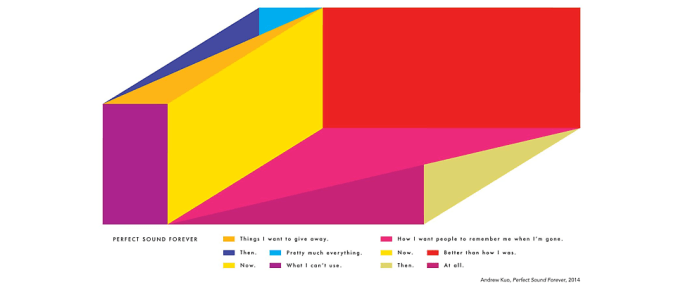
There is enough here to think we may be looking at a first cousin of entrepreneurial conservation. But with philanthropic channeling of initiatives and required resources, rather than straight business doing the channeling. We like it. The mission is to activate through art:

Project Perpetual harnesses the creative energy of the world’s leading contemporary artists and global influencers to raise funds and facilitate advocacy for children who are identified as high-risk by the United Nations Foundation.

Each project personally engages influencers in government, business, entertainment, and culture to part with an object of particular significance. Prominent artists then use these as inspiration to create unique works, transforming meaningful gestures into everlasting statements.

Continue reading

Food Rebels

From guerilla gardeners, to food foraging, to our own movement toward preserving food biodiversity and farm to table sustainability, we love to write about the food we eat and how it reaches our plate.

Luckily for all of us we’re not alone in either our interest or speaking out about it. Generations since Rachel Carson‘s seminal book there have been people writing about, and more importantly, acting upon the need to re-embrace the old methods of food production while sometimes using technology to our more healthy advantage.

Food Forward opens the door into a new world of possibility, where pioneers and visionaries are creating viable alternatives to the pressing social and environmental impacts of our industrial food system. Continue reading

Golden Swallows, Jamaica Expedition

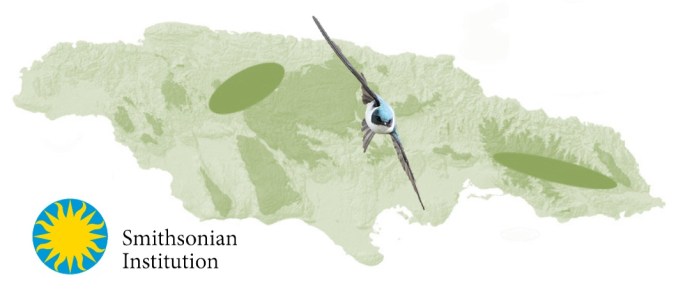
Article BannerIt was in 1844 that English naturalist Philip Henry Gosse arrived in Jamaica for his first time. Gosse would ultimately spend 18 months on the island, where he became fascinated in studying the local birdlife he found there. After returning back to London, he went on to publish a book entitled, “The Birds of Jamaica,” in which can be found the first formal descriptions of many birds still cruising about the Caribbean landscape today. The encounters he had with one bird in particular inspired Gosse to write the following:

This exceedingly lovely little Swallow, whose plumage reflects the radiance of the Hummingbirds, is found, as I am informed by Mr. Hill, in the higher mountains formed by the limestone range of the very centre of the island, as in Manchester, and St. Ann’s. It is not until we ascend this central chain, that we meet with this sweet bird, occasionally in the more open dells, but principally confined to the singular little glens called cockpits.

In this passage Gosse speaks of the Golden Swallow, a small passerine that has only been historically known from two islands, Hispaniola and Jamaica.  And while populations of this species continue to persist in several mountain ranges of Haiti and the Dominican Republic, the beautiful bird that Gosse describes in his Jamaican travels has not been seen on that island for more than 25 years.

Continue reading

Bring On The Pawpaw!

Pawpaw


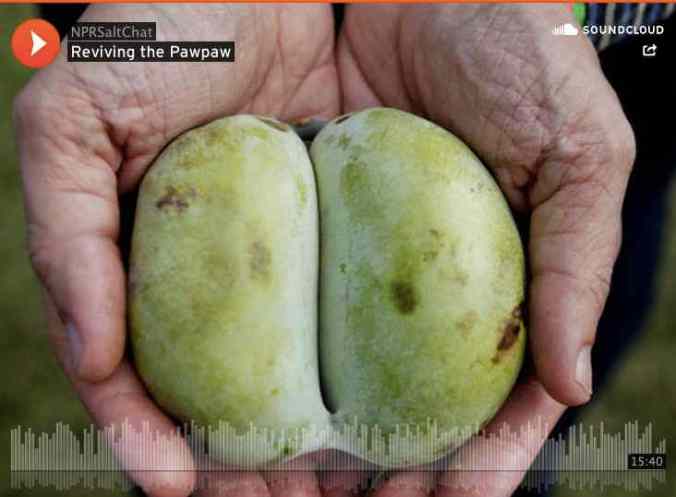
We are always interested in innovative methods for resuscitating the value of heritage, whatever form it may take, the fruity included so listen to this short podcast about the nearly lost pawpaw (thanks to National Public Radio, USA):

food for thought

A Coming-Out Party For The Humble Pawpaw, Native Fruit Darling

September 05, 2014 3:59 PM ET

If you’ve never tasted a pawpaw, now is the moment.

Continue reading

Ambling, Thinking, Progress

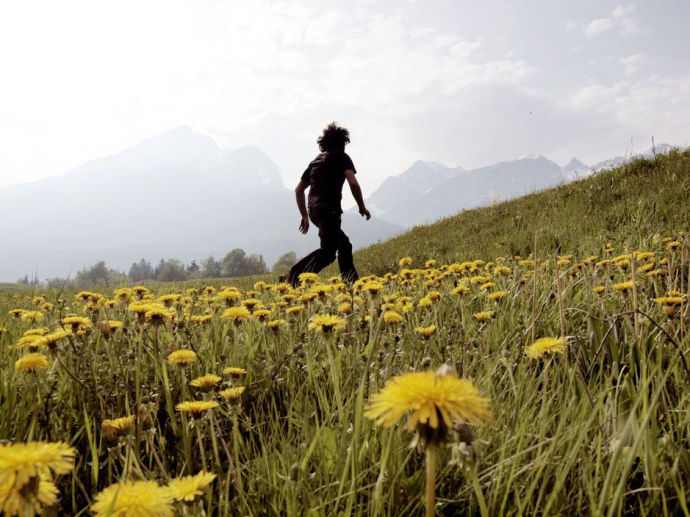
PHOTOGRAPH BY ALEX MAJOLI/MAGNUM

PHOTOGRAPH BY ALEX MAJOLI/MAGNUM

We are all for it.  We post here about walking frequently for a reason. When travelers join us, whether in Africa, Latin America or Asia there is a common thread in conversations about their journeys, with walking be essential to the value of the experience of new places. Otherwise, it is just site-seeing. This New Yorker post expands on the theme well, linking walking to thinking, which we stretch to imply (for our own work) the source of progress:

In Vogues 1969 Christmas issue, Vladimir Nabokov offered some advice for teaching James Joyce’s “Ulysses”: “Instead of perpetuating the pretentious nonsense of Homeric, chromatic, and visceral chapter headings, instructors should prepare maps of Dublin with Bloom’s and Stephen’s intertwining itineraries clearly traced.” He drew a charming one himself. Several decades later, a Boston College English professor named Joseph Nugent and his colleagues put together an annotated Google map that shadows Stephen Dedalus and Leopold Bloom step by step. The Virginia Woolf Society of Great Britain, as well as students at the Georgia Institute of Technology, have similarly reconstructed the paths of the London amblers in “Mrs. Dalloway.” Continue reading

Robo-bees

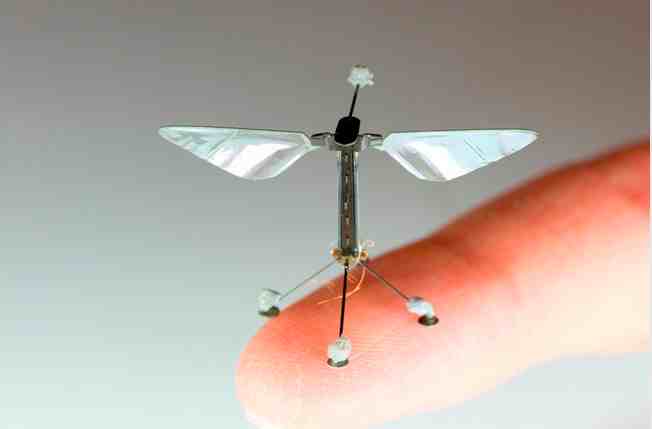
PHOTO COURTESY OF KEVIN MA AND PAKPONG CHIRARATTANANON

PHOTO COURTESY OF KEVIN MA AND PAKPONG CHIRARATTANANON

At RAXA Collective we’re often writing about the birds and the bees within the context of ornothological and entomological biodiversity, as well as the agricultural health of the planet. The impact of CCD, or colony collapse disorder, is significant enough that the Obama administration has challenged scientists with the same force of urgency as Kennedy’s 1962 appeal for a moon landing before the decade was over.

Food attorney and National Geographic contributor Mary Beth Albright writes:

To stay optimistic on this planet I have to believe that most agree that saving honeybees is vastly preferable to replacing them but an interesting alternative is coming out of Harvard. On its website a research team led by engineering professor and National Geographic Emerging Explorer Robert Wood states “we do not see robotic pollination as a wise or viable long-term solution to Colony Collapse Disorder. If robots were used for pollination—and we are at least 20 years away from that possibility—it would only be as a stop-gap measure….”

Continue reading

Andrew Forsthoefel, Come To Kerala!

AndrewSlider

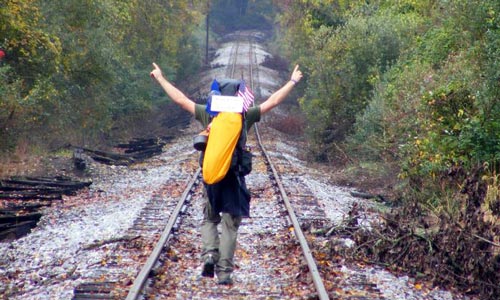
Andrew Forsthoefel. Photo by Therese Jornlin, Andrew’s mom. Chadds Ford, PA.

The interns we have had the honor of hosting since setting up shop in Kerala a few years ago have all shared in the responsibility to communicate their experiences in writing on this blog. We are committed to the written word, but not Ludditically opposed to other forms of communication. We have barely put a toe in the water with video, and not even thought about radio as an option, even though we consider Jay Allison an epic hero of good, important communication.

Because of him, we know alot of worthy things that otherwise would have escaped our attention; most recently we learned of and from Andrew Forsthoefel, whose radio story is worth an hour of your time. After which, if you are like us, you will want to know where he is now, and what he is doing. We hope Andrew will see our shout out here and consider our welcome mat in Kerala. Here is his introduction to the podcast when it originally aired nearly 17 months ago: Continue reading

Banksy, Entrepreneurial Conservationist?

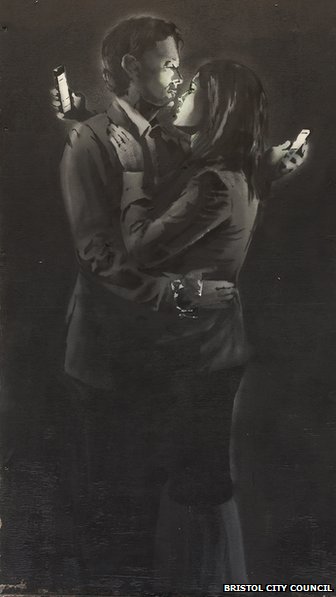
_77174539_mobile_lovers_by_banksy

Banksy’s Mobile Lovers appeared in a doorway in April

Street art is not everyone’s cup of tea, but you kind of have no choice but to love this story:

Banksy’s Mobile Lovers sale to ‘keep Broad Plain boys’ club open’

A Banksy artwork has been sold to a private collector for enough money to keep the seller – a cash-strapped boys’ club – open for “a few years”.

The sale price of Mobile Lovers, which has been on display at Bristol Museum and Art Gallery, will be revealed on Wednesday when it is handed over.

The piece of street art appeared in a Bristol doorway in April, but a row broke out over who owned it.

Banksy then wrote to hard-up Broad Plain Boys’ Club saying it was theirs.

Broad Plain will be sharing a portion of the proceeds with a number of other voluntary sector youth clubs across the city. Continue reading

Ospreys At Cornell

Volunteer birders capture fledging of young ospreys on campus

Volunteer birders capture fledging of young ospreys on campus

Click the image above to watch three minutes of video from the Cornell Lab of Ornithology:

Cornell employees and volunteer “birders-on-the-ground” Cindy and Karel Sedlacek and Suzanne and William Horning capture the fledging of two young ospreys from their nest on a light pole above the soccer field on Game Farm Road, August 8, 2014.

Ospreys build nests on high outcropings and forks in trees. Utility Poles and platforms are a frequent substitute, often built especially for this purpose.

Competitive Upright Bipedalism

We are in awe about how many things we find out, on a daily basis, we did not know.  And for the things that we realize we want to know more about, thank goodness for longform writers of the quality that the New Yorker staff has consistently fielded since its founding. One of the great essayists of our time reviews recent writings on a history we had not the slightest clue about:

Why people walk is a hard question that looks easy. Upright bipedalism seems such an obvious advantage from the viewpoint of those already upright that we rarely see its difficulty. In the famous diagram, Darwinian man unfolds himself from frightened crouch to strong surveyor of the ages, and it looks like a natural ascension: you start out bending over, knuckles dragging, timidly scouring the ground for grubs, then you slowly straighten up until there you are, staring at the skies and counting the stars and thinking up gods to rule them. But the advantages of walking have actually been tricky to calculate. One guess among the evolutionary biologists has been that a significant advantage may simply be that walking on two legs frees up your hands to throw rocks at what might become your food—or to throw rocks at other bipedal creatures who are throwing rocks at what might become their food. Although walking upright seems to have preceded throwing rocks, the rock throwing, the biologists point out, is rarer than the bipedalism alone, which we share with all the birds, including awkward penguins and ostriches, and with angry bears. Meanwhile, the certainty of human back pain, like the inevitability of labor pains, is evidence of the jury-rigged, best-solution-at-hand nature of evolution. Continue reading

Past, Present & Future Food

grid_2048

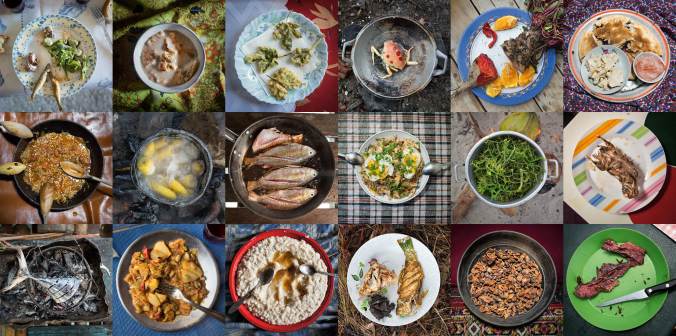
Top row: escargots, sardines, and fava beans (Crete); naan in salty yak-milk tea (Afghanistan); fried geranium leaves (Crete); boiled crab (Malaysia); raw beetroot and oranges (Crete); chapati, yak butter, and rock salt (Pakistan). Middle row: dried-apricot soup (Pakistan); boiled plantains (Bolivia); fried coral reef fish (Malaysia); bulgur, boiled eggs, and parsley (Tajikistan); stewed-seaweed salad (Malaysia); boiled ptarmigan (Greenland). Bottom row: grilled tuna (Malaysia); cooked potatoes, tomatoes, and fava beans in olive oil (Crete); rice with melted yak butter (Afghanistan); fried fish with tamarind (Malaysia); dried apricots (Pakistan); grilled impala (Tanzania; photographer’s utensils shown).

Thanks to National Geographic for this article:

The Evolution of Diet

Some experts say modern humans should eat from a Stone Age menu. What’s on it may surprise you.

It’s suppertime in the Amazon of lowland Bolivia, and Ana Cuata Maito is stirring a porridge of plantains and sweet manioc over a fire smoldering on the dirt floor of her thatched hut, listening for the voice of her husband as he returns from the forest with his scrawny hunting dog. Continue reading

Technology Aids Access Of Classicists To Classics

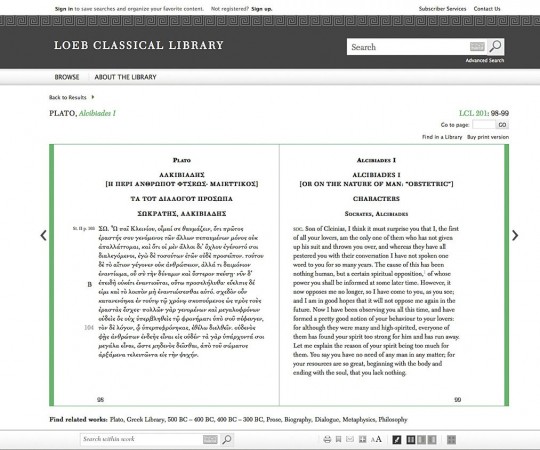
The Loeb classics, newly available online

The Loeb classics, newly available online

We do not know whether James has made his way to the library yet, but we imagine there are classical treasures in the vaults at Harvard University that can only be appreciated in person. But a scholar’s best friend will likely, increasingly be technology like this:

WHEN JAMES LOEB designed his soon-to-be-launched series of Greek and Roman texts at the turn of the twentieth century, he envisioned the production of volumes that could easily fit in readers’ coat pockets. A century later, that compact format is still one of the collection’s hallmarks. Beginning in September, however, the iconic books will be far handier than Loeb had hoped: users of the Loeb Classical Library (LCL) will have the entire collection at their fingertips. After five years of dedicated work on the part of the library’s trustees and Harvard University Press (HUP), which has overseen LCL since its creator’s death in 1933, the more than 520 volumes of literature that make up the series will be accessible online. Besides allowing users to browse the digitized volumes, which retain the unique side-by-side view of the original text and its English translation, the Digital Loeb Classical Library will enable readers to search for words and phrases across the entire corpus, to annotate content, to share notes and reading lists with others, and to create their own libraries using personal workspaces.  Continue reading

Tourism, Conservation, Whale Sharks

shark-shutterstock_127906316-680x450

shutterstock.com

Thanks to Conservation for this item about entrepreneurial conservation of the ecosystems where one of the greatest of sea creatures dwell:

HOW CAN WHALE SHARK TOURISM BE KEPT SUSTAINABLE?

August 22, 2014

When the revenue generated by wildlife-related tourism is higher than that generated by the consumption of that wildlife, then the animals in question are worth more alive than dead. This seems intuitive, but the economics of wildlife tourism aren’t always easy to work out.

Over the last couple decades, one form of wildlife-based tourism that has quickly become popular is diving alongside free-swimming whale sharks. While they’re the largest fishes in the sea, whale sharks are actually quite docile and have highly predictable seasonal movement patterns. That makes them particularly attractive to dive operators. While whale shark tourism has operated in Western Australia’s Ningaloo Reef since the late 1980s or early 1990s, most whale shark tourism outfits have sprung up more recently, in the eastern Gulf of Mexico, Honduras, Belize, the Philippines, Mozambique, Seychelles, and the Maldives. While some attempts have been made to quantify the economic impacts of whale shark tourism in Ningaloo, Belize, and the Seychelles, nobody has done so for the Maldives. Measuring the economic value of the industry is especially important because it is difficult for local governments, with limited powers especially when it comes to environmental protection, to prioritize conservation without that information. Continue reading

Ocean Conservation, Of Vital Interest Among Islanders Everywhere, Gets Its Due From The Relatively Tiny Barbuda

A map of protected marine zones that are being established around the Caribbean island of Barbuda. Credit Waitt Institute

A map of protected marine zones that are being established around the Caribbean island of Barbuda. Credit Waitt Institute

We had not expected to see Dot Earth again, but all of a sudden, thanks again for the surprise Mr. Revkin:

A Small Island Takes a Big Step on Ocean Conservation

Marine life in the Caribbean has been badly hurt in recent decades by everything from an introduced pathogen that killed off reef-grooming sea urchins to more familiar insults like overfishing and impacts of tourism and coastal development.

Some small island states are now trying to restore once-rich ecosystems while sustaining their economies. A case in point is Barbuda, population 1,600 or so, where the governing council on Aug. 12 passed a suite of regulations restricting activities on a third of the island’s waters. The regulations and reef “zoning,” in essence, came about after months of discussions involving fishing communities, marine biologists and other interested parties, facilitated by the Waitt Institute, a nonprofit conservation organization. Continue reading