Just for fun, a continuation of the series.
Just for fun, a continuation of the series.
 From the New York Times, a short video on something we might take into account at Cardamom County, where the monkeys do their monkey business without any concern for who’s who or what’s what:
ScienceTake | Marmoset See, Marmoset Do
Wild monkeys can learn from a demonstration video set up in the forest.
PHOTOGRAPH BY ERIC FEFERBERG/AFP/GETTY
Thanks to Alex Carp over at the New Yorker‘s website, and specifically the increasingly awesome Elements section, for keeping us up to date on the acquisitions at one of our favorite museums:
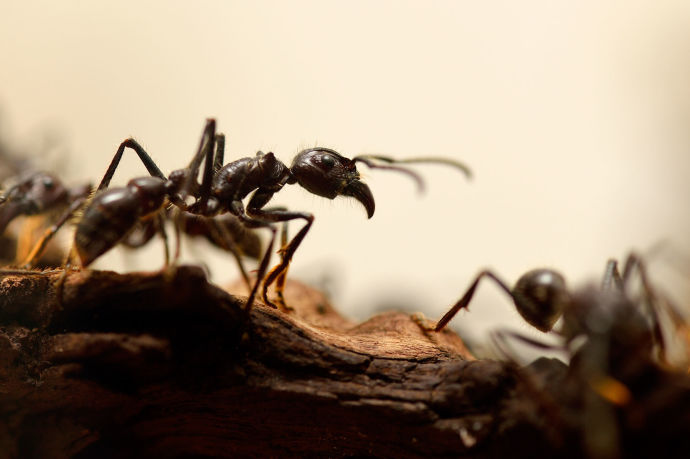
The insect collection at the American Museum of Natural History holds approximately sixteen million specimens, collected from some of the most remote corners of the world. But until earlier this year, the museum lacked a single ant from a place that scientists have traditionally neglected to look: the sidewalks and street medians of Manhattan. Almost by definition, natural science tends to begin its examination of wildlife only after travelling as far away from people as possible. Continue reading

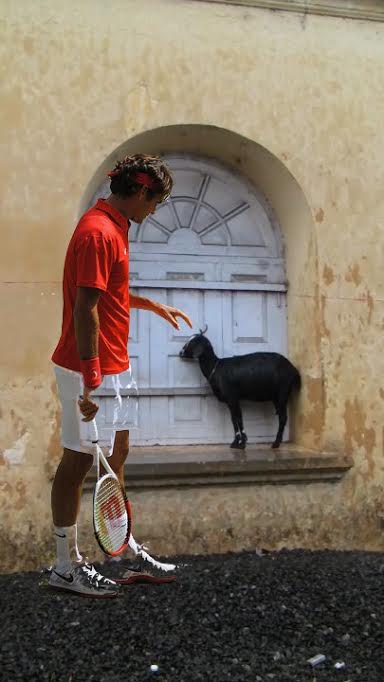
When Seth and Milo Inman heard that Roger would be in India, and that he wanted suggestions on what he would be missing given his short time available, they thought he might be interested in visiting some of Raxa Collective’s stomping grounds in the south of the country. He would be able to get back to nature, and in an authentic way.
Seth has worked in Kerala, and Milo lived and worked here for two years. During that time, Milo took the photo above, not realizing until today that he had captured an image of Roger moonlighting as a mahoot. We hope Roger will return to show us his best moves.

Big Sur fallen redwood auction: Proceeds benefit the Henry Miller Memorial Libarary
Although we’d never wish damage to a tree of this age and history we’re happy to hear that the rare and beautiful wood will help a cause near and dear to our hearts.
Profits generated from the redwood auction will be used for the following purposes:
Upgrading the Library to meet State and Federal regulatory requirements. This includes a water-treatment system, ADA compliant bathrooms, upgraded septic system, and more. Bringing the Library into compliance will ensure the Library can remain operational while also providing exceptional programming, including our acclaimed short film screening series,workshops, audio series, etc. This will require paying for building and maintaining a water system as well as paying related legal and administrative fees. Continue reading
Several La Paz Group contributors have heritage in Greece, in particular to one of the great folk music conservationists. Two La Paz Group scouts were in Greece this month investigating opportunities to collaborate, and this story captures more than one among many reasons why we expect to be operational in Greece in 2015:
Hunting for the Source of the World’s Most Beguiling Folk Music

Mark Peterson and Greta Pratt for The New York Times. The Tamatea Nui Lana’i Polynesian dance group. All of Lanai’s owners have sought, in one way or another, to refashion the island into a paradise on earth. Larry Ellison hopes to transform it into the “first economically viable, 100 percent green community.”
This Times Sunday Magazine article attempts to help us understand the challenges inherent in one of the more unusual sustainable development stories we have heard of in recent years:
Henry Jolicoeur is a retired French Canadian hypnotherapist and a glass-products importer who enjoys making very low-budget documentary films. In the summer of 2012, Jolicoeur read that Larry Ellison, a founder of the Silicon Valley giant Oracle and the fifth-richest man in the world, had bought 97 percent of the Hawaiian island of Lanai — not a 97 percent stake in some kind of company, but 97 percent of the physical place. Jolicoeur was curious, so he booked a flight and packed his camera. Continue reading
Thanks to Alexandra Lange and the Culture Desk at the New Yorker’s website for this explanation of the latest, greatest in green building:
Two recent dispatches from the frontiers of office design: a drone video of the vast circular excavations for Apple’s new Cupertino headquarters, and the news that Weyerhaeuser, the tree- and forest-products company, was selling its own earthwork-like 1971 building to move to Pioneer Square, in downtown Seattle. These projects have more in common—for better and for worse—than you might think. Weyerhaeuser (shrinking) is giving up the suburbs of Federal Way, Washington, for the dream of urban connection, even as growing companies drape themselves in vines to make their out-of-town locations seem like the earth-friendly choice. Continue reading

Thanks to the BBC we learn that Roger Federer will be in India soon. He has not made reservations at any Raxa Collective properties yet, but we await his arrival and the opportunity to learn his moves:
Swiss tennis ace Roger Federer has run into a problem familiar to most people who travel on business – he’s going to India later this year but won’t have time to see the sights. So he has asked fans to help him. Continue reading
The seasonal migrations that occur in the animal kingdom annually vary in scale on many levels and cover nearly all classifications and all ecosystems of land, sea and air. Climactic conditions and other environmental changes impact these movements on a regular basis. In the case of the monarch butterfly migrations from North America to Mexico, the fragile balance is especially evident as populations are noticably dropping due to habitat loss, insecticide/herbicide use and extreme weather. (An interesting note in this case is that the migration itself was initially caused by human impacted landscape changes when the great North American forests began to be cleared for agriculture in the 1600s.)
Milkweed is the sole food plant for the monarch caterpillers. Continue reading
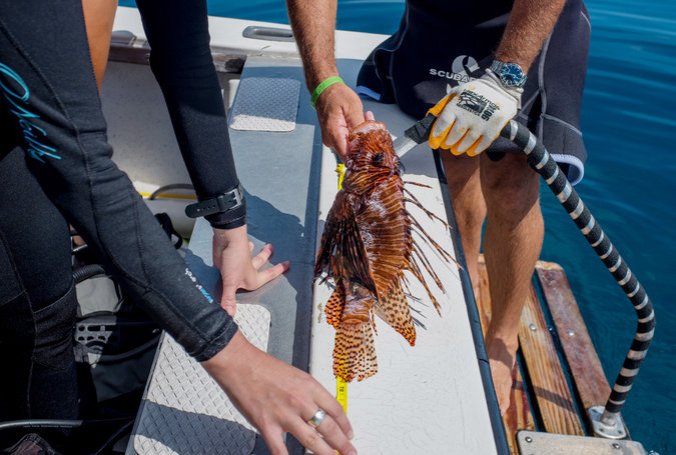
A lionfish caught near Homestead, Fla., by researchers for the Reef Environmental Education Foundation, which is trying to curb the species’ proliferation. Credit Angel Valentin for The New York Times
We have hosted a series of posts from Raxa contributor Phil Karp, with citizen science and entrepreneurial conservation angles to the story; and now the New York Times considers the story fit to print in a well-detailed reportage:
A Call to Action Against a Predator Fish With an Import Ban, an App and Even Rodeos

The Public Radio can be programmed to one station and one station only. Courtesy of Zach Dunham
National Public Radio (USA) can be forgiven what seems like a potential conflict of interest, giving media attention to a product that shares key brand attributes. There are enough distractions in the world that we can but pick and choose those to pass on here, and this one passes the test due to its innovative simplicity relative to its capacity to induce a smile:
Mason jars have been riding a huge wave of popularity thanks to hipsters who embrace them for pickling projects, cake containers and all sorts of craft creations. Now, two engineers from Brooklyn are turning Mason jars into simple sound machines, to play your favorite FM radio station. Continue reading
We do not expect this to mean we will board such a plane anytime soon, but anyway thanks to the New York Times for this news about advances in in our ability to harness the sun in ever-better ways:
Swiss Pilots to Fly Solar Plane Around World
By DIANE CARDWELL
The trip, which will begin and end in Abu Dhabi, will involve about 25 days of flying over four to five months, with stops in Asia, the United States and Southern Europe or North Africa.
 As a former Beatle urges, let’s consider a simple mechanism for doing something other than taking to the streets or publishing an op-ed item–both of which we also encourage if your location and clout allow–in advance of the Climate Change conference. Why this particular mechanism? Well, to start with it is easy. Also, the impact could add up if enough of us participated. You probably already know about meat’s carbon footprint, but here is a message from Meat Free Monday to refresh your memory:
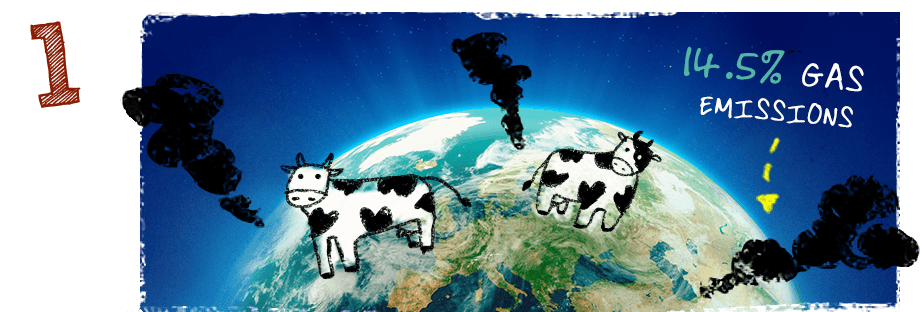
Meat production is responsible for 14.5 per cent of global greenhouse gas emissions, according to the United Nations Food and Agricultural Organization1, with some scientists saying the percentage is higher. Continue reading
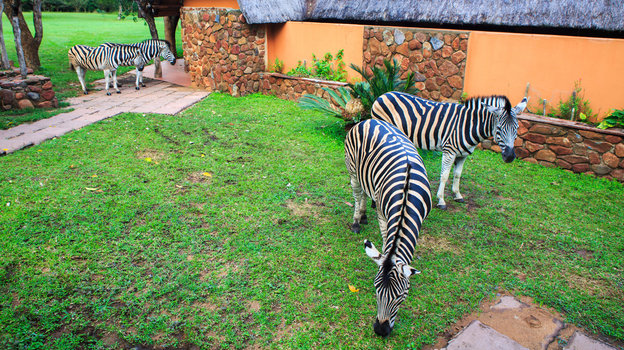
Sure, they’re cute. And owning them is legal in more places than you might think. That doesn’t mean buying a zebra is a good idea. Ozy.com
National Public Radio (USA) shares a story about animals in places where they do not belong:
It’s a hot, dry day in Kerrville, Texas, and more than a hundred people have gathered in a small circular barn. The crowd is mostly men, tan and weathered from working outdoors, but three little girls perch on a bench in the front. The littlest, who wears a Frozen T-shirt emblazoned with Elsa’s face, leans forward, her eyes wide, and announces to her friends: “I really want a zebra!” Continue reading

If you did not happen to be in New York today, but agreed that small sacrifices are necessary even if insufficient conditions for battling climate change, consider signing the petition mentioned in the following (a guest editorial, in today’s Guardian), which you should read all the way through before deciding:
Back in May I was on a sleeper train between Paris and Berlin, chewing on a biro and filling out a questionnaire. As the sun set across the rolling hills of the French countryside, I assiduously answered question after question about how often I used night trains and how I felt about the standard of service. I was hopeful that the questionnaire heralded a new era of growth in this crucial service. I couldn’t have been more wrong.
This month Germany’s state railway provider, Deutsche Bahn, confirmed it has decided to terminate a large number of overnight services, including the lines from Copenhagen to Basle/Amsterdam/Prague, and Paris to Hamburg/Berlin/Munich. The network cites low income, high overheads, losses of millions of euros and slow growth. Continue reading

Henrik Egede Lassen/Alpha Film/Arctic Monitoring and Assessment Programme
Global warming is already wreaking havoc on human civilization.
The New Yorker interviews a former staff writer, now an activist, about an event today in New York City that looks worthy of attendance if you are in town. We have noted several of this fellow‘s earlier activities, and do not tire of doing more of the same. Click the image above to go to the original invitation in Rolling Stone in May:
On Sunday, tens of thousands of demonstrators are expected to join the People’s Climate March through midtown Manhattan; its Web site describes it as the “largest climate march in history.” In May, Bill McKibben wrote an article in Rolling Stone, “A Call to Arms: An Invitation to Demand Action on Climate Change,” which laid some of the groundwork for this weekend’s events. We spoke about the march with McKibben, one of its lead organizers, and a former New Yorker staff writer.
According to the Los Angeles Times, anywhere between a hundred thousand and four hundred thousand people are expected to come to New York City for the People’s Climate March. Can you tell us about how you, and others, came up with the idea for a large demonstration and how you turned it into what it is now?
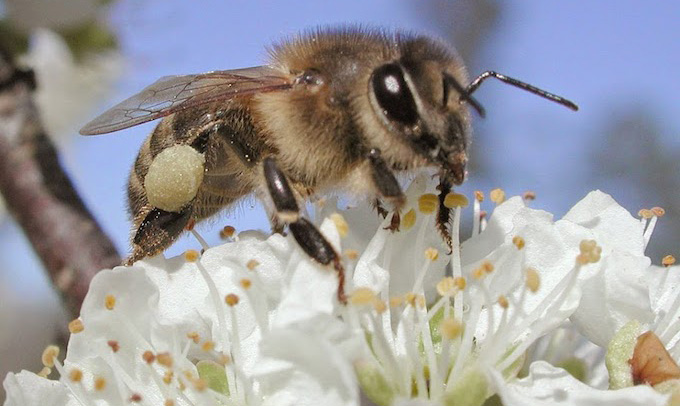
From the current issue of Conservation online, a review of the latest science on one of our favorite topics:
SHOULD POLLINATOR RESEARCH FOCUS ON REGIONS WITH MALNUTRITION? September 19, 2014
Pollinators + plants = food. Right? The domesticated honeybee, along with a handful of wild bee species, is in decline. But 75 percent of the 115 major crop species grown around the world rely on pollinators to give us that food. This equation is woefully out of balance.
Pollinator-dependent crops make up only a fraction of total agricultural revenues, but that’s because the nine priciest crops, which together comprise half of global agriculture as measured by revenue, can become pollinated by wind, or can pollinate themselves. But the economic value of agriculture is only one way to understand the value of different crops. Another is the value of the different crops to human health and nutrition. Continue reading

It has been some time since we posted on the topic of altruism, but it is one of the words we come back to directly and indirectly nearly every day, one way or another. We watch out for our own stories to explain this phenomenon. Raxa Collective works in locations categorized as developing economies. Some among our ranks are from so-called developed economies, with among the highest per capita incomes in the world, while others among our ranks are from economies at the other end of the per capita income range.
A consensus has developed among those of us who have worked across a spectrum of countries, a consensus which we considered a bit of a paradox (and a completely unrealistic and unfair generalization, but still we noticed it this way), that poorer people do more surprisingly generous things considering that they would seem to have less with which to be generous.


 Organikos