Grouse, Green Goals, Collaboration Required

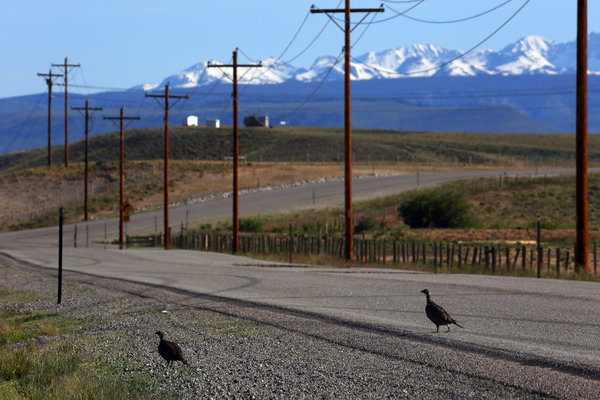
Sage grouse in a part of Wyoming where Shell has gas fields. Credit Jim Wilson/The New York Times

Sage grouse in a part of Wyoming where Shell has gas fields. Credit Jim Wilson/The New York Times

Conservation is a classic collective action challenge. Collaboration is a requisite for success. This New York Times report on the struggle between the energy needs of a country, and efforts to conserve a bird species illustrates how green priorities can sometimes conflict in unexpected ways, and how cooperation can prevail for the common good:

…On paper, at least, the Wyoming plan is in line with federal goals, officials say. It cordons off large areas as critical for the bird to survive, and its authors say it is the best compromise they could fashion.

Nestled in the gray-green sagebrush on the sprawling ranches or pecking their way along the dusty roads near the Pinedale Anticline gas fields, the squat, mottled-brown birds appeared unruffled. But they are persnickety creatures easily disturbed by human activities. Every year, males return to relatively open areas called leks, splaying their tail feathers and puffing up their chests as they waddle and call to attract hens. Vulnerable to predators like coyotes and eagles, the grouse depends on vast expanses of sagebrush for food and shelter. Wyoming’s plan would restrict development to levels that would not disturb the birds. For example, it would limit surface disturbance to 5 percent a square mile and ban activity within 0.6 miles of the leks. Continue reading


A New Way Of Tasting

BN-DS230_2LYONS_DV_20140716073028Does the world really need a new lifestyle magazine at this moment in time? If the magazine is created by someone who revolutionized the way wine is evaluated, the answer may be yes:

CAN A WINE EVER be perfect? If so, who is qualified to pass that judgment? Is it the winemaker who is trained in viticulture or oenology? The merchant with a fabled palate who buys the wines year after year? Or is it the critic, with no formal training but a strong sense of smell, a notebook and an ability to taste 10,000 wines a year?

Continue reading

Ramayana Masam

Photo credit: Ranjith

The Ramayana is the holy book of Hindus. In Kerala during Karkkidaka Masam, which is the last month of Malayalam calender, the epic Ramayana is read in Hindu homes and temples. This year Ramayana Masam begins on July 17th and ends August 16th. Continue reading

One From The Long-form Pantheon

BusinessAdventures

This may not be the first, and certainly will not be the only place you see this reference to Bill Gates’s favorite business book.  We have a longstanding love of long-form journalism, aka detailed descriptive story-telling. So we link to the post on gatesnotes in celebration of an otherwise-might-have-missed-it book:

…Brooks was also a masterful storyteller. He could craft a page-turner like “The Last Great Corner,” about the man who founded the Piggly Wiggly grocery chain and his attempt to foil investors intent on shorting his company’s stock. I couldn’t wait to see how things turned out for him. (Here’s a spoiler: Not well.) Other times you can almost hear Brooks chuckling as he tells some absurd story. There’s a passage in “The Fate of the Edsel” in which a PR man for Ford organizes a fashion show for the wives of newspaper reporters. The host of the fashion show turns out to be a female impersonator, which might seem edgy today but would have been scandalous for a major American corporation in 1957. Brooks notes that the reporters’ wives “were able to give their husbands an extra paragraph or two for their stories.” Continue reading

Burt, Bees, Believe

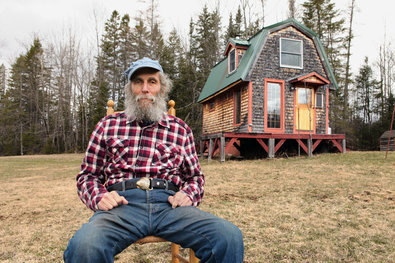
Jody Shapiro. A quiet conversation with the founder of Burt’s Bees.

Jody Shapiro. A quiet conversation with the founder of Burt’s Bees.

More bees, please. More bees pleases. Thanks to the New York Times for satisfying our appetite for bee-related news and features:

Burt Shavitz, the World’s Most Famous Retired Beekeeper

If You Happen To Be In New York

Book Launch


We believe in, and care about biophilia, which is a phenomenon first identified and named by E.O. Wilson. Thankfully, we are not the only ones. We appreciate the intersection between art and science in elucidating biophilia evident in this book. Thanks, Polly:

Polly Brown is a London based artist, and photographer. Continue reading

Elephants, Friends In Need

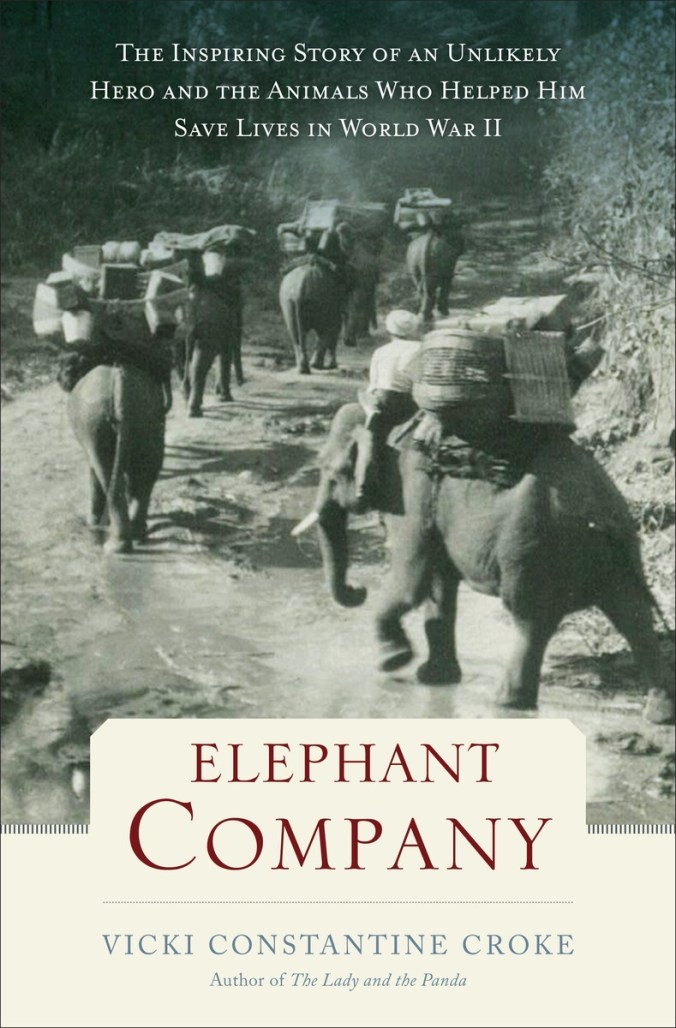
Elephant Company - cover

In the New York Times this book is currently reviewed by Sara Gruen, reminding us of the elephants all around us in Kerala, where there is a long history of domestication. At the Periyar Tiger Reserve, where Cardamom County is situated, there is a hint of the domesticated variety on the outskirts of the Reserve, but a large healthy population of the wild form persists inside the Reserve.

They are also in Ghana, surrounding Zaina Lodge’s perch. We have greater interest in elephants in their natural habitat. Wild. Still roaming freely, with all the messy and dangerous realities that sometimes involves. At the risk of trivializing a tough subject with trite, cliche phrasing, elephants have been friends to humans during times of need (friends in the sense that they saved lives, that is in terms of their impact, not necessarily a reflection of their own volition). It seems only fair that we should return the favor, when we look at the challenges facing elephants in today’s world. The Boston Globe has this to say by way of book review:

…Blending biography, history, and wildlife biology, Croke builds her story around Williams’s exotic adventures. As the book opens, Williams, an English World War I veteran, is just arriving in Burma in the 1920s to work in the Bombay Burmah Trading Corp.’s teak-harvesting operations. It was a lucrative business that contributed to the Empire’s riches, one that took its toll on European recruits, who had to contend with malaria and other tropical maladies. Williams, however, took to the isolated, nomadic existence of the forest manager, traveling hundreds of miles on his rounds. Continue reading

Straw Bale Construction: Part 3/3

Guest Author: Virginia Carabelli

For Part 2, click here, or if you’re new to the post this is Part 1.

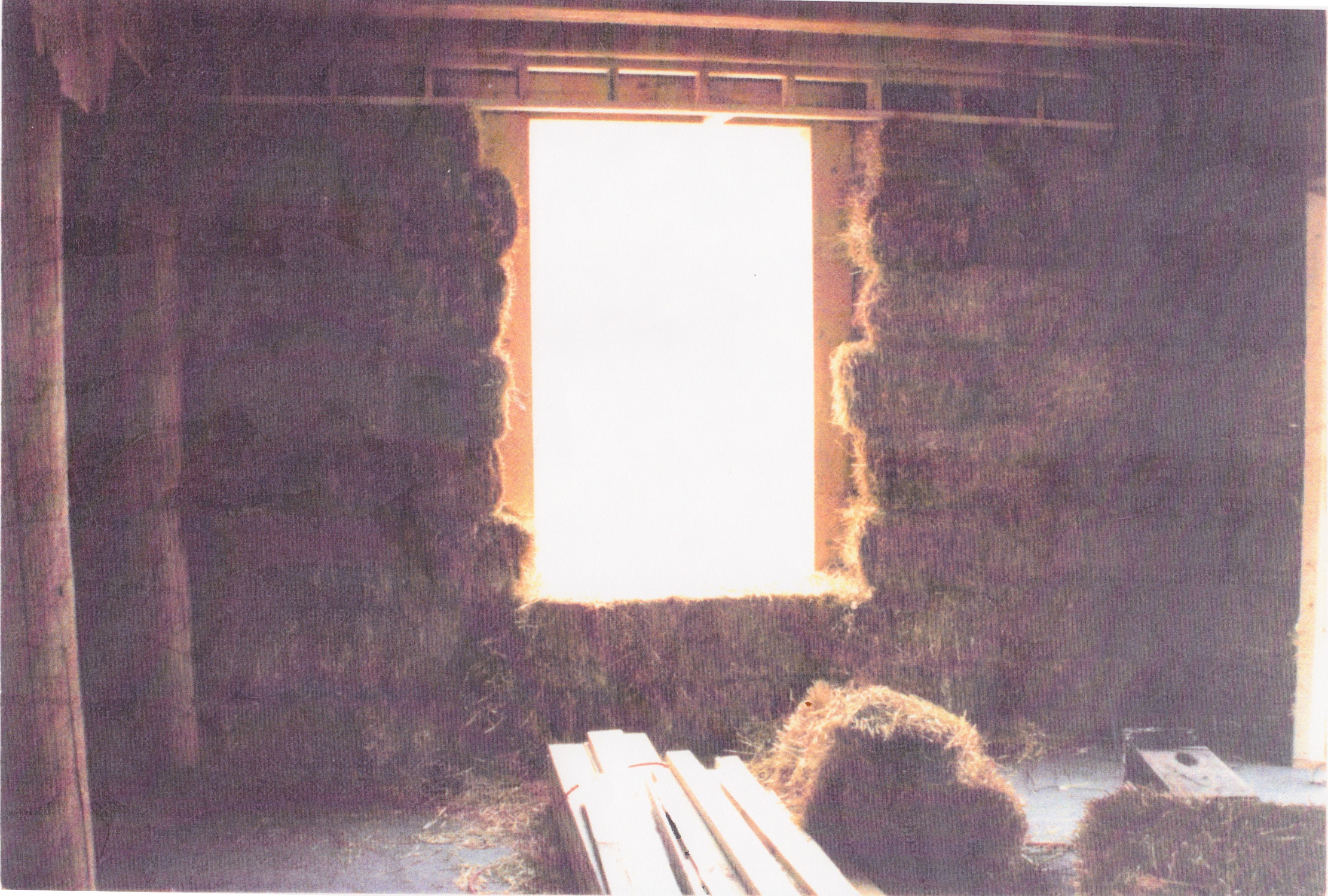
You might wonder at this point, what about permits? All materials used for building in the US have to be tested in a federally approved lab. Straw bales not only passed the required standards, but exceeded them in many tests. Federal building codes supersede state building codes, meaning that no state can legally forbid its use. Most people, including many building departments, are unaware of this fact. Each state, has slightly different requirements. For example, if you live in a seismologically active area, your building code will reflect that (by the way, straw bales perform exceedingly well in earthquakes).

So if you want to build a post and beam structure with straw bale insulation (which is the basic building technique), you should have no problem. However, if you want to build a load-bearing structure (no post and beam to support your roof), you will have to restrict yourself to a small building, following a given formula depending on the size of your straw bales. You might run into some resistance in certain states, although load-bearing was one of the required tests passed by this material. Here in New York, several lovely load-bearing straw bale structures have been legally built. Continue reading

Michelia champaca – The Perfume Magnolia

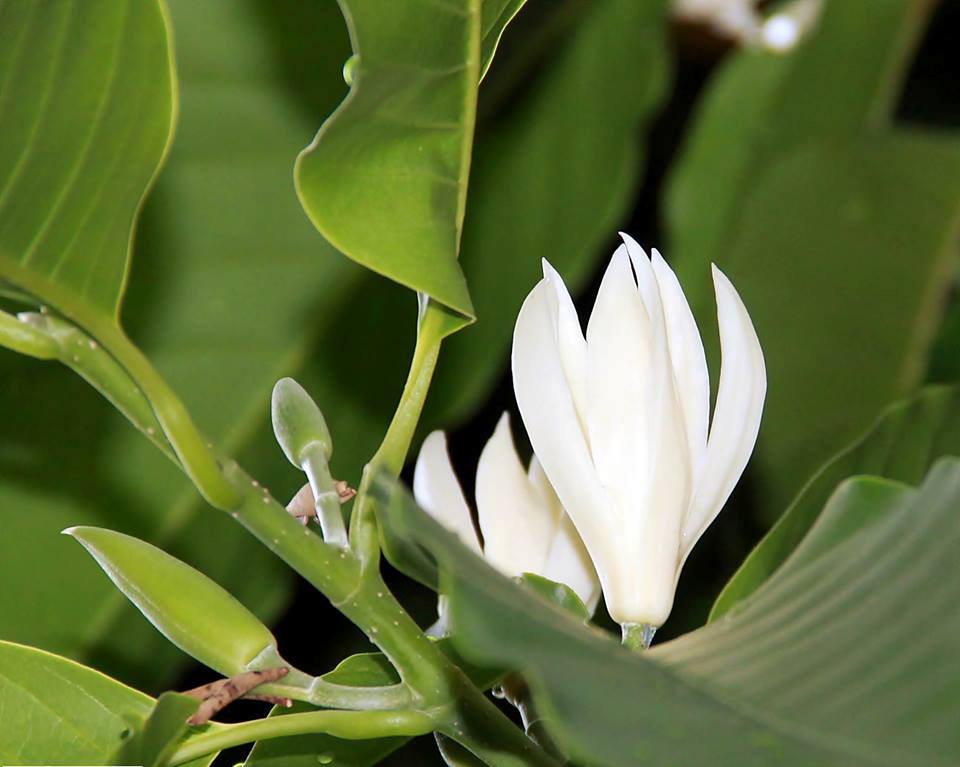
Photo credits: Shymon

Photo credits: Shymon

Michelia champaca is native to India, and is best known for its strong fragrance. A relative to the magnolia tree, this species grows in the wild throughout India’s Western Ghats. It is a sacred flower for Hindu temple grounds and around homes. Continue reading

If You Happen To Be In London

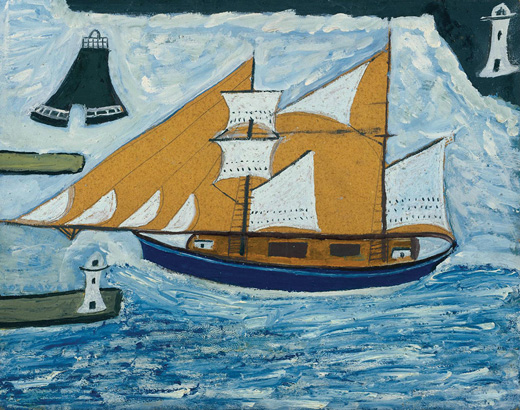
bell03_3613_04

We have been meaning for nearly a year to recommend this article on the relationship between one man and several artists who were otherwise completely unrecognized by the art establishment over many decades. With this man as a champion, after a long effort the artists have finally come into the recognition previously denied to them.

This new show in London reminds us not only to share that article, but to share this review. What explains our interest in this sort of exhibit is the outsider status of the artists. Not “bad boy” outsiders clamoring for attention, but innovators. Thanks to London Review of Books for this review of a current show at the Tate:

‘Proud’ is an epithet that extends from the parade to the workbench. The swagger of troops marching down the street is transferred by the carpenter to the nail that juts out, no less cocky, no less full of itself. There’s much in Tate Britain’s new exhibition, British Folk Art (until 31 August), that straddles both forms of pride. It opens with a fanfare of stout, galumphing tradesmen’s signs: the outsize models of boots, keys, teapots, top hats and so on that dangled over high streets two centuries ago. Continue reading

Straw Bale Construction: Part 2/3

Guest Author: Virginia Carabelli

Before

Before

In case you missed the first part of this post, click here.

At this point, let me get the three things that may be on your mind out of the way, before I move to introduce the building technique, without getting too technical.

1. Fire – Fire needs oxygen to burn, a compacted straw bale + encasing in cement or mud plaster offers no oxygen for fire to take hold. Try and burn your phone book as is (do they still make them?) and you’ll see what I mean. At worse, it will smolder.

2. Pests – Straw is like a little stalk of bamboo, in a way. It is the stem of grains whose function is to carry nutrients to the head. It has no nutritional value, protein, etc., so bugs are not very interested in it—they prefer hay or alfalfa. In fact, Continue reading

The Value Of A Manta

manta-shutterstock_148271486-680x450

MANTA RAYS ARE WORTH MORE ALIVE THAN DEAD

The title may sound a bit obvious, but this article is anything but (thanks to Jason G. Goldman and  Conservation magazine):

Manta and mobula rays, together the “mobulids” are among the most recognizable, charismatic fish in the world. They’re also particularly vulnerable, thanks primarily to the use of their gill plates in Traditional Chinese Medicine. That’s despite the fact that mobulid gill plates are not officially recognized by most practitioners of Traditional Chinese Medicine. There are so many nonsensical aspects to this story that it’s hard to know where to start. Continue reading

Home On The Range

Prairie Project

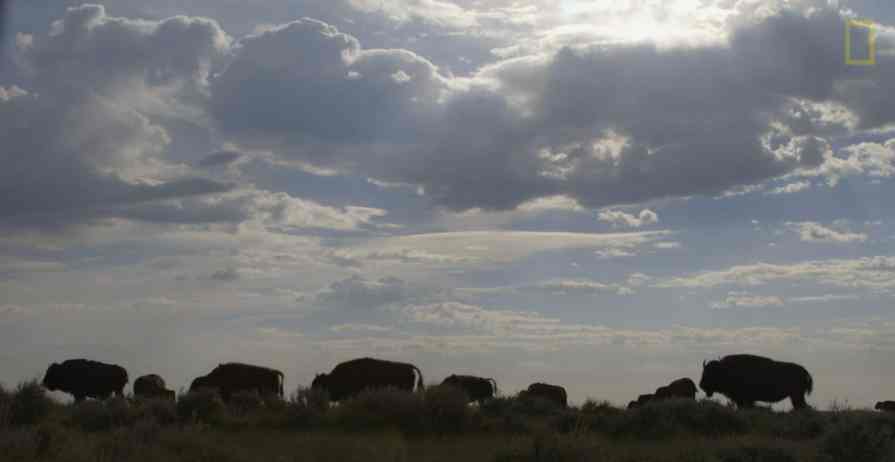
The great plains play an important role in both the history and prehistory of North America on many levels–in terms of wildlife, ecosystems and human occupation–and the American bison were an integral part of all three. The American Prairie Reserve is an ambitious project to reintroduce herds of the species into 3.5 million acres of public and private land patched together to create a protected area roughly the size of the state of Connecticut.

Sean Gerrity is passionate about the project, so much so that he is able to leverage his successful Silicon Valley business acumen into creative 21st-century solutions to the world’s conservation challenges with ideas that include the 73 bison calves awaiting their release into the wild the next day.

If all goes well, this bull calf will spend the rest of his life roaming grasslands that once teemed with millions of his forebears. He will encounter herds of elk, deer, and pronghorn. He will sniff the wind nervously for the scent of cougar and bear and wolf. Prairie dogs will dive for cover at the tremor of his hooves while hawks soar hungrily overhead in the endless sky. He will run for miles, for days, with no fence to hinder him.

If all goes well, this bull calf—or perhaps this calf’s children or his children’s children—will belong to a herd 10,000-bison strong, the largest conservation herd in all the world and the cornerstone inhabitants of the American Prairie Reserve, which has set its sights on becoming the largest wildlife reserve in the continental United States. Continue reading

Straw Bale Construction: Part 1/3

Guest Author: Virginia Carabelli

Hello everyone, I am delighted to be invited by RAXA Collective to participate in such a wonderful community! My name is Virginia Carabelli. I was born in Italy and raised both there and in France. I moved to the US in my late teens to attend college and fell in love with this beautiful country. I have always been more comfortable in nature and silence and have never been very interested in the rat race and busi-ness. I would much rather be than do.

I’ve always found our human ways mostly destructive and superficial, and had a plan since childhood to live life on my own terms as much as possible. In 1989 I achieved one of my childhood dreams: I bought a beautiful piece of property in a verdant valley in New Mexico, where I could live at least partially off the land. The community was mixed Spanish/Pueblo Indian, and many families lived in trailers (by that I do not mean a nice double-wide, but rather a large shipping container on cement blocks). Ecologically speaking, the valley was a fragile environment. With those two things in mind I said a simple prayer asking for guidance to build a home that would be in harmony with nature and also provide some good affordable housing for those in need. I had no idea how to do this, but I had only to wait a couple of weeks for Matts Myhrman to coincidentally walk into my life. Continue reading

Flora By Knight

This slideshow requires JavaScript.

The New Yorker’s website highlights with the images above the newly updated version of a book we intend to add to our collection:

The herbarium at the Natural History Museum in London contains nearly six million plant specimens, many of which are centuries old and were gathered from far-flung parts of the world. The British photographer Nick Knight was introduced to the collection in 1992, while exhibiting his own work at the museum. In the following years, he sifted through the collection, photographing thousands of what he considered to be the most visually alluring samples. The eighth edition of Knight’s book “Flora” is now available for purchase through Schirmer/Mosel.

All photographs by Nick Knight/Schirmer/Mosel.

The photographer’s publicist has this to say:

Continue reading

It Could Be, Costa Rica

Screen Shot 2014-06-30 at 6.47.12 AM

Several Raxa Collective contributors in India were up until 4am today at Cardamom County, watching Costa Rica play against Greece in the World Cup. They were simul-texting with a Raxa Collective contributor in Costa Rica, who reported watching in a friend’s home near Xandari while the streets outside were empty and silent, erupting echoes of cheer or anguish in the distance from time to time. The google doodle at this moment could be representing Costa Rica’s red white and blue, its tropical sense of fun, or it could be a representation of any country having a chance at the beautiful game. Continue reading

A Different Brand Of Men’s Linen Suit

how-to-make-greek-armor

Raxa Collective is fortunate to have classicist contributor, James, currently in the field with Seth in Costa Rica. Slacklining, occasional ichnologizing, and restoring a coffee plantation are (we think) the perfect prelude to a Ph.D. program in Classics. James will be in Cambridge, Massachusetts for the next few years, utilizing the Latin, Classical Greek and other languages he has already mastered, preparing to teach the next generation in the liberal arts. We never know, nor really need to know, where the liberal arts may take us. They are important for the sake of thinking and communicating effectively, in any walk of life, and we hope they remain alive and well in perpetuity for undergraduate university students.

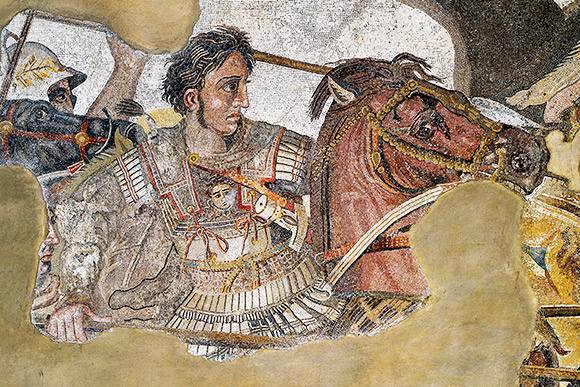
We also hope that while he is in Costa Rica James has the chance to visit the home Seth grew up in, across the Central Valley from Xandari, where some of Raxa Collective’s contributors have had the opportunity to see the uniform of Seth’s great-great grandfather on display. More than a century old, and lovingly restored by a friend of Seth’s family who does museum restoration work, the uniform looks something like what Alexander the Great may have worn. After seeing it James may have more to say on this post by Joshua Rothman on the New Yorker website’s “New ideas from the arts and sciences” section:

Intellectual life thrives on mystery. When it comes to ancient Greece, one of those mysteries is the linothorax—the flimsy-looking, hip-length armor that you see warriors wearing on Greek vases. (Linothorax means, literally, “linen chest.”) Why go to war, archaeologists have wondered, in what looks to be a linen minidress? While a linothoraxlets you show off your muscular legs to great effect, it hardly seems like practical protection against the enemy’s swords and arrows. And yet, judging by how frequently linothoraxes are represented in Greek art, they were extraordinarily popular among soldiers in ancient Greece and around the Mediterranean between 600 and 200 B.C. Because no linothoraxes have survived—linen doesn’t last—no one knows why. Continue reading

Time Drives Change

Screen Shot 2014-06-28 at 9.47.22 PM The roads and the things that inhabit them in India are evolving before our eyes. In good ways, we assure you. So, thanks to the New York Times for their commitment to India Ink and its excellent coverage of India and its changing circumstances:

“When the Ambassador car was born in 1957 to a newly independent India, it was the height of style and status,” Nida Najar wrote in The New York Times. ”It was standard issue to senior civil servants and government officials; its possession implied status, and its ubiquity was a sign of an earlier, seemingly simpler India.” Continue reading

In The Rough, Big As Can Be

Photograph by Antonio Zambardino/Contrasto/Redux.

Photograph by Antonio Zambardino/Contrasto/Redux.

Who knew? Diamonds, forever and ever the best friend of half of us, can be otherworldly:

The biggest diamond ever found on Earth, known as the Cullinan diamond, weighed three thousand one hundred and six carats before it was cut, or about one and three-tenths pounds. The biggest diamond ever found in the universe, whose discovery was announced this week, has no name, will never be cut, and weighs approximately a million trillion trillion pounds. This makes it as massive as the sun, and no wonder: it’s the corpse of a star that once looked very much like the sun, lying nine hundred or so light-years from Earth. Continue reading

Theyyam Face Make-up

Photo credits: Jithin Vijay

Photo credits: Jithin Vijay

Face painting is one of the most important parts of Theyyam, an ancient form of worship in certain parts of Kerala. Theyyam dance make-up should be made from as many natural materials as possible. Coconut leaves are used as brushes, and the make-up artist should have perfect knowledge of how to combine colours.  Continue reading