
Photo credit: Angela Wranic
Tacacori, Costa Rica
Photo credit: Angela Wranic
Tacacori, Costa Rica
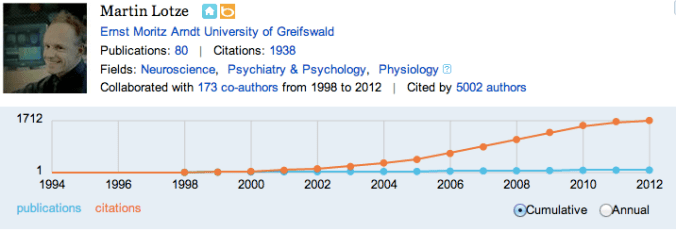
The graph above tells a story about what happens when an author-researcher writes compellingly about scientifically rigorous findings. Citations build. In this particular case, some of those citations are of research about the brain’s inner workings during the process of writing. Carl Zimmer’s attention to the work of Martin Lotze, in the Science section of the New York Times, is as scintillating as Zimmer gets:
…A novelist scrawling away in a notebook in seclusion may not seem to have much in common with an NBA player doing a reverse layup on a basketball court before a screaming crowd. But if you could peer inside their heads, you might see some striking similarities in how their brains were churning. Continue reading
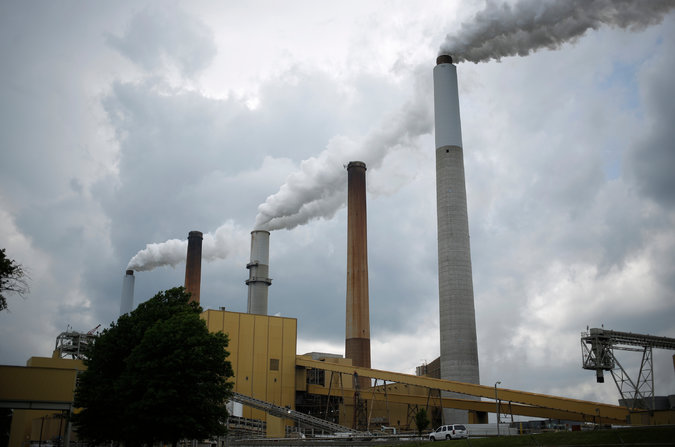
Carbon dioxide emissions like those from coal-fired power plants should be taxed to spur energy innovation. Credit Luke Sharrett for The New York Times
Denial and obfuscation about climate change have been well documented strategies of those who would promote current enrichment and consumption over future well being. And even non-deniers have been hard-pressed to do anything substantial to counter the deniers. It tough economic times, anything goes, it seems. We need more heroic behavior from influential business leaders.
Henry M. Paulson, chairman of the Paulson Institute at the University of Chicago, former secretary of the Treasury of the United States, former chairman of Goldman Sachs, and notably a long-time member of good standing and service to the political party stacked with politicians and business leaders who deny the reality of climate change, has this to (heroically dare to) say in the Opinion section of this week’s Sunday New York Times:
The Coming Climate Crash
Lessons for Climate Change in the 2008 Recession
THERE is a time for weighing evidence and a time for acting. And if there’s one thing I’ve learned throughout my work in finance, government and conservation, it is to act before problems become too big to manage.
For too many years, we failed to rein in the excesses building up in the nation’s financial markets. When the credit bubble burst in 2008, the damage was devastating. Millions suffered. Many still do. Continue reading

Disruption is a theory of change founded on panic, anxiety, and shaky evidence. Illustration by Brian Stauffer.
In an interview published on Friday, at the very end there is a sentence that caught our attention:
…I could list all kinds of problems that we still need to resolve, because a theory is developed in a process, not an event. [Disruption] has never happened in the hotel industry, for example…
It jumped from the page at us because “disruption” is such a powerful concept in current business strategy thinking, and because Raxa Collective develops and manages hotels; we have every reason to be concerned about disruption (of the normal variety, of course, but especially the strategic variety).
On whether disruption has never happened in the hotel industry: “chain” formation a century ago disrupted the millenia-old universal business model of owner-operated lodging; more recently, online travel agencies have altered the fortunes of the hotel industry sufficiently to force transformation of how hotels distribute their product; and at the same time the internet has enabled segments of the hotel industry that were previously dependent on travel agencies for survival to distribute their product independently of intermediaries, which seems disruptive.
Over the weekend our attention turned from that sentence above to what spurred it. The interview refers to an article from the current issue of the New Yorker magazine that we have now read in entirety. A historical analysis of one of the driving forces of today’s entrepreneurial culture makes clear how a paradigm can take hold without anyone questioning its underpinnings. When a prominent history professor challenges the fundamental premises of a prominent business school professor (and virtually the entire business world following that professor’s prescriptions) with language and imagery this rich, fireworks were a foregone conclusion:

We hope it is both bark and bite (that the idea catches and results in young entrepreneurs getting the support they need in an an otherwise very old school economic culture that would definitely benefit from more startups) and will track it; but for now, fyi: Continue reading

Photo credits : Jithin Vijay
The Koorkencherry Pooyam festival is celebrated in the Sri Maheswara Temple, situated in the Thrissur district of Kerala. One of the main attractions of the Pooyam is Kavadiyattom. Kavadiyattoms are divided into two types, Pookavadi and Ambalakavadi. The performing groups start these ritual dances in the morning of the festival. Continue reading

Thanks to Atlantic‘s website for this post on a topic (or topics, if ice cream is counted separately from our ongoing discussion of the meaning and importance of natural food) of interest to many of our readers:
Last month, Vermont became the first state to require that all foods that are entirely or partially produced with genetically modified ingredients be labeled as such. This month, a coalition of food industry groups, including the Snack Food Association and the Grocery Manufacturers Association, filed a lawsuit, saying that the measure is arbitrary and impedes interstate commerce. Continue reading
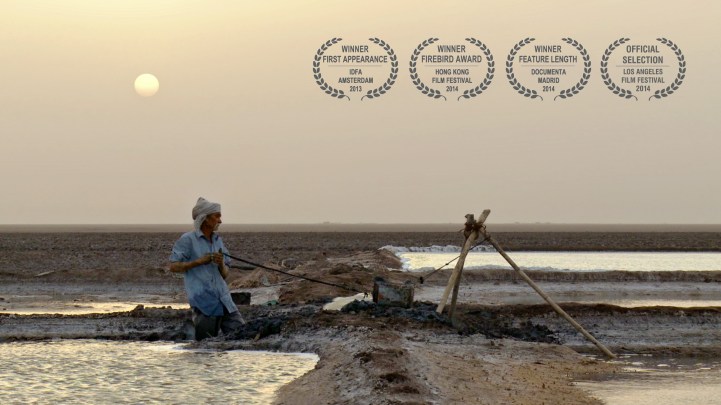
Salt is a quiet seasoning, making its culinary point by bringing out the best in the dish it’s been added to. The crystaline mineral is so ubiquotus that we often don’t consider its vast history in the forging (and funding) of empires. Neither do we think about the labor it takes to bring it forth from the earth and water around the world.
Indian film maker Farida Pacha has the perfectionist sensibility to share the story of the families who return to the saline desert of Gujarat’s Little Rann of Kutch to laboriously extract the salt from the desolate landscape. This seasonal migration has been going on for generations and the work is a matter of pride more than economy.
Director’s Notes: This is not a social issue film, even though the story of the salt people and their exploitation is a shocking one. What attracts me is the more fundamentally tragic question at the heart of their existence: what compels them to return to the desert to labor tediously year after year, generation after generation? What meaning do they find in this existence? Continue reading
Thanks to the CS Monitor for this welcome news:
Obama seeks to create world’s largest marine sanctuary
With the aim of protecting marine wildlife, President Obama is considering greatly expanding the Pacific Remote Islands Marine National Monument, an ocean preserve that lies between Hawaii and Samoa.
President Barack Obama is looking to create the largest marine preserve in the world by protecting a massive stretch of the Pacific Ocean from drilling, fishing and other actions that could threaten wildlife, the White House said.
Aiming to protect marine wildlife, Obama will also direct the government to create a program to deter illegal fishing. The executive steps come as Obama is searching for ways to leave his second-term mark on the environment despite opposition from many Republicans in Congress.
Obama was to announce the steps Tuesday in a video message to those participating in an “Our Ocean” conference that the State Department and Secretary of State John Kerry are hosting. Continue reading
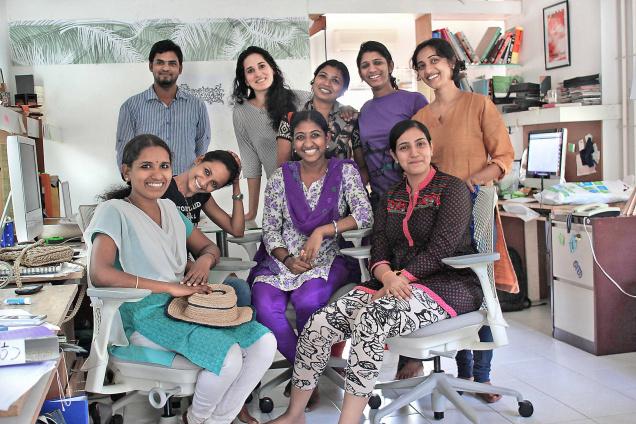
Via Kerala uses Malayalam as a motif to bridge the gap between the traditional and the contemporary
Our friends at Thought Factory and Via Kerala are important members of our collaborative tribe, so of course we were thrilled to read this article highlighting their efforts. We manage their flagship store in Thekkady at Cardamom County, and the new RAXA Shop at Spice Harbour also showcases some of their iconic products.
Malayalam alphabet and the Malayali’s personality have some things in common. Just as the rounded letters, we, as a people, are not aggressive and have rounded personalities. We are a bit complicated, too. Theresa J. George uses Malayalam typography as a metaphor for our culture and the very essence of being Malayali.
Her company Via Kerala uses Malayalam as a motif to bridge the gap between the traditional and the contemporary. “We are proud of our roots, yet there is a slight disconnect between it and the younger generation,” she says. Continue reading

200 crore is a uniquely Indian way of saying a number. Two billion; or 2,000,000,000 is the way to see the number written out in Western terminology, but the Indian deeds associated with this particular number are much more important, according to news headlines across India in recent days (here taken from the Hindu):
The government plans to plant 200 crore trees along the entire 1 lakh km National Highways network across the country to employ jobless youth.
“The length of National Highways in the country is one lakh kilometre. I have asked officials to come out with a plan to plant 200 crore trees along these stretches which in turn would create jobs for the unemployed on the one hand and protect the environment on the other,” Road Transport, Highways, Shipping and Rural Development Minister Nitin Jairam Gadkari said in New Delhi on Friday.
A similar scheme could be implemented under MNREGA (Mahatma Gandhi National Rural Employment Gurantee Act) along the village and district roads and state highways. That has the potential to employ 30 lakh youth, he said while inaugurating a conference on “Regeneration of Rivers”.
Mr. Gadkari said Gram Panchayats will be taken into confidence and the unemployed youth could be assigned 50 trees each which could fetch livelihood for them from the produce. Continue reading

Thanks, prince (and New York Times for the video record of a noteworthy collaborative act of conservation, with a dash of altruism, and creative definition of commons):
Bringing Back Europe’s Bison
A German prince is leading an effort to bring back the European bison, Europe’s largest land mammal, in Bad Berleburg. The animal almost went extinct in the early 20th century.
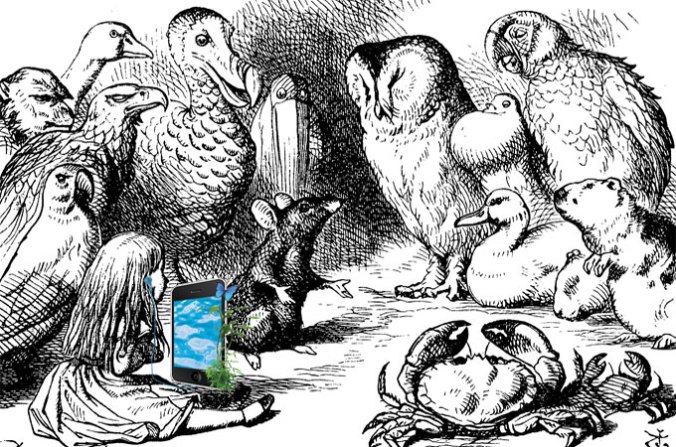
It’s not all fun and games when it comes to games featuring the environment. With some green game apps, not only can you live in your world and play in it, you can learn stuff too.
Thanks to Conservation magazine for this article, published coincidentally exactly at the time when several Raxa Collective contributors were visiting the Cornell Lab of Ornithology, which itself is participating in the App business (more on which, by Seth soon) in a manner resonant with the focus of this article:
DIALING INTO THE OUTDOORS THROUGH PHONE APPS
The Nature Deficit
Judging from the amount of time my grandkids hunch over their iPhones and iPads for game time, I’d have to say games have garnered a major portion of the younger set’s mindshare. And in my book that’s a shame. While more and more studies find that children’s outdoor time contributes to their well-being — by mitigating obesity, promoting cardiovascular, musculoskeletal, and mental health, as well as boosting academic achievement — the number of hours children spend outdoors is on the decline. (See also here.) Continue reading
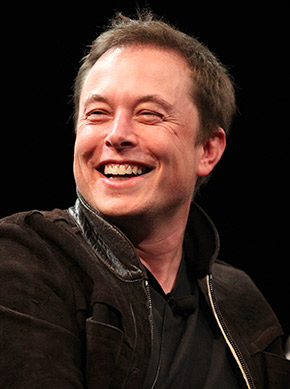
Photograph by Dario Cantatore/Getty.
We like him more the more we hear of him, and while we do not know enough to gush, nor to promote his automotive products, we pass along this interesting news as recorded on the New Yorker‘s website:
Yesterday, one of the more interesting people in Silicon Valley did one of the more interesting things that the car industry has seen in a while. Elon Musk, the C.E.O. of Tesla, opened up all of his patents. “Tesla will not initiate patent lawsuits against anyone who, in good faith, wants to use our technology,” he wrote in a blog post. Tesla’s competitors can now freely take advantage of its batteries, chargers, or sunroofs. Continue reading

Last year, and the year before, were successes to say the least. But, after the jump, see what makes this year‘s worth attending if at all possible:
Following on from the success of 2012’s inaugural Here symposium, we returned to the splendid surroundings of The Royal Geographical Society in the summer of 2013 to do it all over again. From Nelly Ben Hayoun and Adam Buxton to Kate Moross, Wayne Hemingway and Erik Kessels, our international line-up once again dazzled and delighted the audience with a series of engaging and exciting creative talks.

Sarah Anne Ward for The New York Times. Food stylist: Maggie Ruggiero. Prop stylist: Maeve Sheridan. Parmesan-Crusted Rack of Lamb
With Spice Harbour‘s restaurant, 51, open and having passed through the swelter of late summer, we find ourselves sampling new dishes that work well in a water-front setting during these luscious monsoon showers.
At the same time, we are approaching the opening of what we believe will be Kerala’s most fabulous beach resort and its restaurant will offer cuisine worthy of this sort of a “comfort zone” hideaway.
Between Spice Harbour and Marari Pearl we have done more sampling (someone has to do it) than is generally good for the waistline, but we are committed, dear reader, to your comfort.

Photo credits: Jaimon
Attappadi is one of the largest tribal settlements in Kerala. Situated in Palakkad district, the Attappadi region is a beautiful synthesis of rivers, forests and moutains. This scenic, hilly area is rich flora and fauna, with the Bhavani river flowing from the mountains. Continue reading
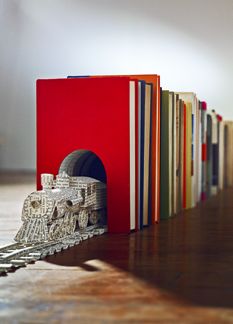
In a climate of embattled bibliophilia, authors have been undertaking reading stunts to prove that reading—anything—matters. Construction by Stephen Doyle.
Our occasional posts on books and book-ish things, on libraries and library-ish things, on authors and author-ish things, all grow out of the obvious: books are essential to humanity. We do what we can in the general interest of books. So, this item on the New Yorker‘s website about stunts in the stacks is welcome here and now:
In the nineteen-nineties, when you bought a book at Barnes & Noble the cashier slipped it into a plastic bag bearing a black-and-white illustration of an author’s face—Mark Twain, Oscar Wilde, Edith Wharton. Recently, I was poking around a bookstore in Manhattan and noticed a canvas tote for sale. In a simple red heart, the word “books” was spelled out in white letters. This tale of two bags is the story of decades of change in the publishing industry. “Books,” O.K.—but which ones? Continue reading
This set of photographs, noted on the New Yorker‘s website, are a collection related to water that, in the artist’s words, deserves our attention:
“While trying to accommodate the growing needs of an expanding, and very thirsty civilization, we are reshaping the Earth in colossal ways. In this new and powerful role over the planet, we are also capable of engineering our own demise. We have to learn to think more long-term about the consequences of what we are doing, while we are doing it. My hope is that these pictures will stimulate a process of thinking about something essential to our survival; something we often take for granted—until it’s gone.” Continue reading

 Organikos