Ornithologist’s Masterpiece At Auction

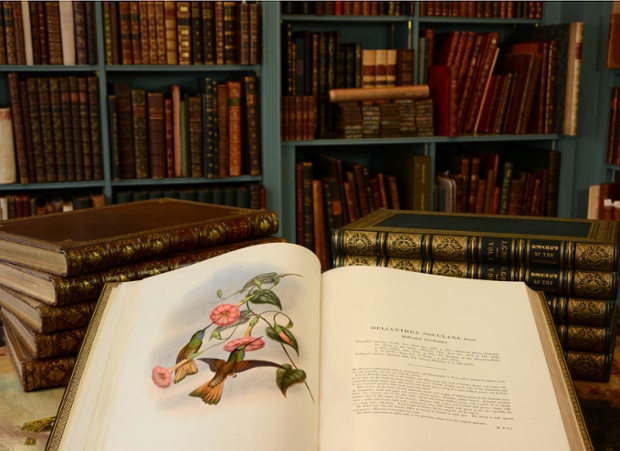
One of the 44 volumes containing over 3000 hand-coloured lithographs included in the sale


The Guardian notes the auction many of our ornithologically-oriented readers and contributors might find worth attending, even if not as bidders (given the expected final sale price) in order to see some of these prints up close (see samples after the jump):

Rare set of John Gould’s bird books for sale – in pictures

John Gould was one of the most brilliant ornithologists of the 19th century, and a talented artist to boot. He worked with Charles Darwin, travelled the world to research the beautiful folio works he produced, and set up a publishing company to sell them.

Continue reading

Architecture And National Identity

morephaidoninvenicetalk

Our interest, invariably, is to showcase authentic culture in each project in every location where we play a role. Mostly, this means how our team members showcase their communities to visitors from other communities in other parts of the world. But it also means something about architecture and design. With the recent opening of Spice Harbour, and the soon-to-open Marari Pearl, we have found ourselves describing the architecture of each property without reference to local or national architectural style so much as to what is “appropriate” to the location.

We admit we do not always know exactly what we mean when we say this. On the other hand, we are content to note that even the “experts” do not always have neat answers to such complex questions, as noted on Phaidon’s website about a forum at the Venice Biennale:

…The debate was ably chaired by the British Council’s Vicky Richardson who began by asking Stephan Petermann a little about the brief set by Koolhaas for this year’s biennale.

“What we were hoping for is that the countries would reveal themselves and their national characteristics by looking at their own history,” he said. “We think they have. It might not be as blatant as the provocation we made, but (you can see it) in the subtleties of the details and angles that some countries take. I hope that people enjoy the diversity of the directions we took.”

Continue reading

Mulaipari Festival – Tamil Nadu

Photo credits : Ramesh Kidangoor

Photo credits: Ramesh Kidangoor

Mulaipari Festival is unique South Indian festival popular in Tamil Nadu, which is celebrated on the 18th day of the Tamil Month of Adi (July). This festival is a famous ritual that takes place at almost every celebration for a village goddess. The women devotees in the procession carry earthen pots filled with the growing plants of nine different types of grains on their heads. Continue reading

New Tesla Model Test Driven

Samuel Gibbs test-drives a Tesla Model-S. Photograph: Antonio Zazueta Olmos

Samuel Gibbs test-drives a Tesla Model-S. Photograph: Antonio Zazueta Olmos

Its availability is limited to a few places. Its numbers are limited, period. But in the UK it is about to grow a new market, so this review is timely. We are not in the business of promoting automobiles or other consumer products but several La Paz Group contributors have been in the vicinity of the home location of this car and its claims of zero emissions are such that we could not help noting this remarkable thing:

…Inside it’s all premium Silicon Valley technology. Musk likes to think of Tesla as the “Apple” of cars, which might explain why there is what looks like a large iPad complete with Apple-style graphics where the centre console should be. The 17in touchscreen controls almost everything about the car, from the air conditioning and music to opening the sunroof and firing up the heated windscreen wipers. Continue reading

Race Beyond All Reason

Barkely Race

If you have to ask why, chances are that this sort of thing will not make sense to you under any circumstance.  But since Chris Heller has taken the time and made the effort to beautifully elucidate, you might give a few minutes to this video on the Atlantic’s website, which makes us think of the Patagonia Expedition Race, except on steroids:

The Roughest, Toughest Race in the World

Jun 09, 2014 | Chris Heller

Continue reading

An App For Greener Gardening

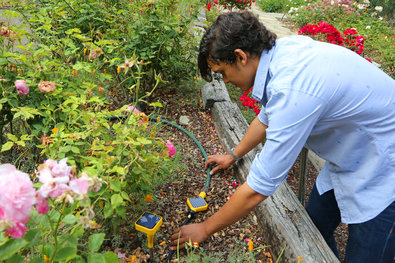
Jim Wilson/The New York Times. Jason Aramburu examining a sensor he developed that monitors the condition of soil in gardens.

Jim Wilson/The New York Times. Jason Aramburu examining a sensor he developed that monitors the condition of soil in gardens.

Thanks to the New York Times Science section for this good news about a smartphone app to monitor plant health and assist their resistance to drought and other challenges:

PROTOTYPE

Planting for Profit, and Greater Good

By CLAIRE MARTIN

If You Happen To Be In London

folkartbanner

Tate Britain: Exhibition

10 June – 31 August 2014

During the next few months the exhibition will be at the Tate, and then moving to at least one other venue:

Discover the extraordinary and surprising works of some of Britain’s unsung artists in the first major exhibition of British folk art.

Steeped in tradition and often created by self-taught artists and artisans, the often humble but always remarkable objects in this exhibition include everything from ships’ figureheads to quirky shop signs, Toby jugs to elaborately crafted quilts. Continue reading

Architectural Moveables

carrybuildingslead

Casa Transportable ÁPH80 by Ábaton is one of the Atlas choices

Thanks to Phaidon for their attention to architecture that not only moves users, but which users can move:

Regular Phaidon readers will already be familiar with our recently launched Online Atlas, the dedicated resource website for architects, students and true lovers of architecture .

The site, which features over 130,000 images, 3,079 projects from 1,537 architects in 115 countries around the world is an invaluable aid to anyone who works in the industry and needs to know who did what, where – and, of course, how.

The Atlas editors have a regular feature in which they focus on a specific, occasionally left field aspect of architecture or an architectural project each week. It’s called Editors’ Focus and the first one was all about small buildings; a more recent post dwelt on nine of the hardest to construct buildings listed. This latest round-up takes in portable architecture. Continue reading

Images Of India And Mexico

501Z-143-28A

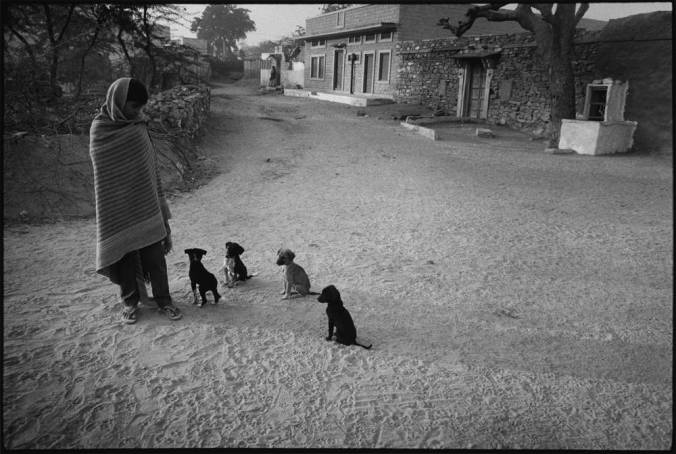
The Wittliff Collections offered a look at this new book, and a talk with the photographer, Mary Ellen Mark, for the launch of her 19th book, Man and Beast. That was some moons ago. We missed the launch, but the New York Times review from Sunday is worth a read, and gives the clear indication that the book is worth a long sitting as well: “Mark has been shooting in Mexico and India since the 1960s, and in “Man and Beast,” she brings together her black-and-white photographs into an affectionate, annoying, stubbornly beautiful book.” Thanks to Leica’s blog for this interview with the photographer:

…Q: Finally let’s talk about this boy with a puppy.

A: That was shot with a 35 mm lens on a Leica. This is one of my favorite dog pictures. It was early morning in Rajasthan, India. It was kind of chilly; that’s why he has a shawl around him. He was just standing there with his puppies. Continue reading

Dairy Story, India Edition

A dairy in India, covered as a feature story in the New York Times?  This catches our attention because our conservation initiative, Amboli Reserve (more about this 2,000 acre project soon), is in the same state and likely within driving distance for our guests to visit:

…On a 26-acre farm a couple hours’ drive inland from Mumbai, hundreds of black-and-white Holstein-Friesian cows laze around, dining on seasonal greens and listening to a custom playlist of rap, pop, classical and even devotional music. They are treated to a routine medical checkup before heading to a ‘rotary milking parlor,’ where their udders are gently squeezed, until the cows step away, at will… Continue reading

Big Business, Conservation, Innovation

We have written about and linked to others’ thoughts on altruism more than once, thinking we will eventually have an ultimate illumination on its origins and how to increase its likelihood. Likewise on our main theme as an organization, with regard to entrepreneurial conservation. We also keep a watch out for big companies (versus entrepreneurs) and governments (as in the case of the state initiative in the banner above, which is discussed below) doing the right thing.

Thanks to this article in the New Yorker for bringing our attention to the efforts to bring sustainable and affordable water to the good folks of Texas, and at the same time raising our awareness of the tightrope walking between big businesses that have many motivations to participate in innovative conservation schemes, and the organizations that have been the innovators in this regard for decades:

Mark Tercek, the head of the Nature Conservancy, recently took a tour of the largest chemical-manufacturing facility in North America: the Dow plant in Freeport, Texas. The Nature Conservancy, which is responsible for protecting a hundred and nineteen million acres in thirty-five countries, is the biggest environmental nongovernmental organization in the world. Tercek, accompanied by two colleagues, had come to Freeport because the facility—a welter of ethylene crackers and smokestacks built next to a river that flows into the Gulf of Mexico—is at the center of a pilot collaboration that he hopes will reshape conservation.The key idea is to create tools that can assign monetary value to natural resources. Continue reading

Saving Species–One Paper, One Video, One Course, And One Initiative At A Time

saving-species-logo-long-small

We thank Stuart Pimm for his ongoing excellent contributions to conservation through science and education, as well as creative activism, and congratulate him and his colleagues for their most recent publication:

new scientific paper was published today in the prestigious journal Science and it has important findings for biodiversity. Though it reaffirms what we already know—that there is a global extinction crisis and it is worse than we believed—it also details how technology and smart decision-making are offering hope for endangered species and their habitats. Continue reading

Mobile Art Exhibitions

The Rodi Gallery, parked in Astoria Park in Queens. Credit Aaron Graham

The Rodi Gallery, parked in Astoria Park in Queens. Credit Aaron Graham

Thanks to the New York Times for its coverage of the arts in general, and for this specific reporting on the efforts to get art where it may be seen outside the normal venues:

On a recent Saturday, Elise Graham and her 22-year-old son, Aaron, pulled a 12-foot van into a parking spot on West 14th Street in Greenwich Village, swung open the back doors, lowered the aluminum stairs, and welcomed visitors inside their mobile Rodi Gallery.

Around the United States, art is on the roll. Inspired by the success of food trucks, gallery owners like the Grahams, who are based in Yorktown Heights, N.Y., have been taking their show on the road. For the last year, they have traveled to populated spots like the meatpacking district of Manhattan, the Peekskill train station and Astoria Park in Queens. This Saturday, they are parking in the center of Bushwick Open Studios, a three-day festival in Brooklyn. Continue reading

Climate Rescue Plan’s Price Tag

This slideshow requires JavaScript.

The New York Times continues to prove its journalistic value in the realm of today’s most important topics, notably with regard to the environment:

KEWAUNEE, Wis. — Bryan T. Pagel, a dairy farmer, watched as a glistening slurry of cow manure disappeared down a culvert. If recycling the waste on his family’s farm would help to save the world, he was happy to go along.

Out back, machinery was breaking down the manure and capturing a byproduct called methane, a potent greenhouse gas. A huge Caterpillar engine roared as it burned the methane to generate electricity, keeping it out of the atmosphere. Continue reading

Kerala’s Mission 676

676_1923608f

Not all of it is spectacular (zoos are not our cup of tea, generally speaking) but especially the “budding birders” initiative has our attention; we are grateful for the Hindu’s coverage of some the news about several conservation schemes to be established in Kerala:

A primary environment care project with the cooperation of grama panchayats; Rs.259-crore ‘Krishi Raksha’ scheme to protect crops from wild animals; forest academy at Arippa; and ‘Urinunarvu Kadinunarvu’ for the development of Adivasi settlements are among the projects identified by the Forest Department for implementation under Mission 676. A Rs.15-crore project will be launched to conserve water in the catchment areas of rivers and forests during the summer. Continue reading

If You Happen To Be In Dublin

This slideshow requires JavaScript.

Thanks to Genevieve Fussell for pointing this exhibition out to all of us:

In 2009, the Irish photographer Paul Gaffney walked nearly five hundred miles through northern Spain along the Camino de Santiago. Inspired, in part, by his interest in Buddhist meditation, he set off, three years later, on a series of walking trips through rural Spain, Portugal, and France. Continue reading

Young Master Word-Crafters

Ansun Sujoe, of Fort Worth, Texas, and Sriram Hathwar, of Painted Post, N.Y., were named co-champions of the 2014 Scripps National Spelling Bee on Thursday. Their siblings helped them celebrate the first shared title since 1962. Manuel Balce Ceneta/AP

Ansun Sujoe, of Fort Worth, Texas, and Sriram Hathwar, of Painted Post, N.Y., were named co-champions of the 2014 Scripps National Spelling Bee on Thursday. Their siblings helped them celebrate the first shared title since 1962. Manuel Balce Ceneta/AP

Thanks to National Public Radio (USA) for keeping us apprised of who’s who in the world of words, spelling edition:

For the first time in 52 years, the Scripps National Spelling Bee crowned two winners last night, after the final two competitors exhausted the word list. The winners were Sriram Hathwar, an eighth-grader from Painted Post, N.Y., and Ansun Sujoe, a seventh-grader from Fort Worth, Texas.

“I like sharing the victory with someone else,” Ansun said. “It’s been quite shocking and quite interesting, too. It’s very rare.”

Here are the words that brought Thursday night’s competition to a close, from the Scripps Spelling Bee site (we’re including the definitions just in case you’ve forgotten them): Continue reading

Britain’s National Collection of Yeast Cultures (Beer Aficionados, Read This)

lead (1)

Shutterstock/KuLouKu

We appreciate the increased interest, across all the media we track, to the cultural and environmental aspects of beer production. Thanks to the Atlantic‘s intrepid investigators for this one:

In late November of 2009, the town of Cockermouth, in the Lake District of England, had a flood. Heavy rains—16 inches in 24 hours—led the rivers Cocker and Derwent to overflow their stone barriers; the buildings of the medieval town, as a result, ended up submerged in 10 feet of water. Among those buildings was Jennings Brewery, one of the few establishments in the world that brews real ale—a beer, rich and dark and featuring a texture that connoisseurs might call “chewy.” Real ale is, to the extent that beers resemble animals, endangered. This is partly because it requires a very particular type of yeast in its brewing: a yeast that, during fermentation, sits on top of the wort, the sugary liquid extracted from the mashing process, rather than sinking to the bottom. Continue reading

How Coral Reefs Grow By Crawling

coral-reef-shutterstock_116387641-680x450

shutterstock.com

In its weekly “good reads” section Conservation has this following summary of an article in Scientific Reports, of interest to our reef watchers/protectors:

In November 1835, the HMS Beagle visited Tahiti, in the South Pacific. Climbing up the island’s slopes, the young Charles Darwin looked across the sea to nearby Moorea, and saw an island surrounded by a barrier reef. During and after his voyage, Darwin constructed a theory for reef formation that explained how fringing reefs grow into barrier reefs, which then convert into atolls. “The close similarity in form, dimensions, structure, and relative position between fringing and encircling barrier-reefs, and between these latter and atolls,” he wrote, “is the necessary result of the transformation, during subsidence, of the one class into the other. On this view, the three classes of reefs ought to graduate into each other.” Continue reading