Antarctic Melt Under The Sea

West coast of Antartica

Photograph by Robert Harding/Corbis

A blog post at the New Yorker‘s website rounds up recent news from the Antarctic’s underwater environs, and its not what could be mistaken for good:

It’s been an exciting news month for the polar ice sheets. A study published on May 28th in the journal Nature indicated that, fourteen thousand six hundred years ago, the rapid shedding of Antarctic icebergs raised the world’s median ocean levels by six and a half feet in a little more than a hundred years. That bit of paleoclimatology comes on the heels of a pair of studies, published two weeks ago, concluding that glaciers in the West Antarctic have passed a tipping point and are now doomed to disintegrate and melt. Sea levels will rise by four feet, and up to ten feet if the rest of the West Antarctic ice sheet follows. A third study concluded that parts of Greenland’s ice cap will be eaten away from below, since it is piled atop newly discovered canyons, which will allow warm ocean water to encroach inland for up to sixty-five miles. The rising waters won’t be witnessed by anyone reading this post, as the really big effects lie hundreds of years in the future. But, if the predictions are correct, all of Florida south of Fort Lauderdale will eventually drown. So will broad swaths of the coastal countries bordering the Indian Ocean. Continue reading
Reading Recommendations For Raxa Collective’s Extended Community, And From Raxa Collective Interns

Many universities in the western and northern regions of the world are concluding their academic years about now as summer break begins, which means it is time for Raxa Collective to begin welcoming interns. Some who join have already completed their undergraduate degrees, and prior to beginning their “real” careers they come to spend time in one of our communities, collaborating with our staff, local communities, etc..

One such case is a contributor who has just completed an undergraduate degree; before heading to New England to pursue Ph.D. studies he will carry out projects at Xandari that will allow him to perfect his Spanish language skills. Since he is going to be in the same community as these people below, starting in August, we post this “suggestions on summer reading” article from Harvard Gazette as a prompt for James to make his own summer reading recommendations in a new post. If he takes us up on this prompt we will see who follows his lead and shares their own reading recommendations…

Stephanie Mitchell/Harvard Staff Photographer. Yeats and Bishop made Bret Anthony Johnston's summer reading list but, he said, "I’m eager to happen upon unexpected used bookstores, tag sales, and library fundraisers, where I often buy books outside of my typical reading inclinations."

Stephanie Mitchell/Harvard Staff Photographer. Yeats and Bishop made Bret Anthony Johnston’s summer reading list but, he said, “I’m eager to happen upon unexpected used bookstores, tag sales, and library fundraisers, where I often buy books outside of my typical reading inclinations.”

Bret Anthony Johnston
Paul and Catherine Buttenwieser Director of Creative Writing

This summer I’m going to read W.B. Yeats and Elizabeth Bishop, and “Wynne’s War,” a new novel by Aaron Gwyn about special forces on horseback in Afghanistan.

Continue reading

Portraiture Of Self-Sufficiency

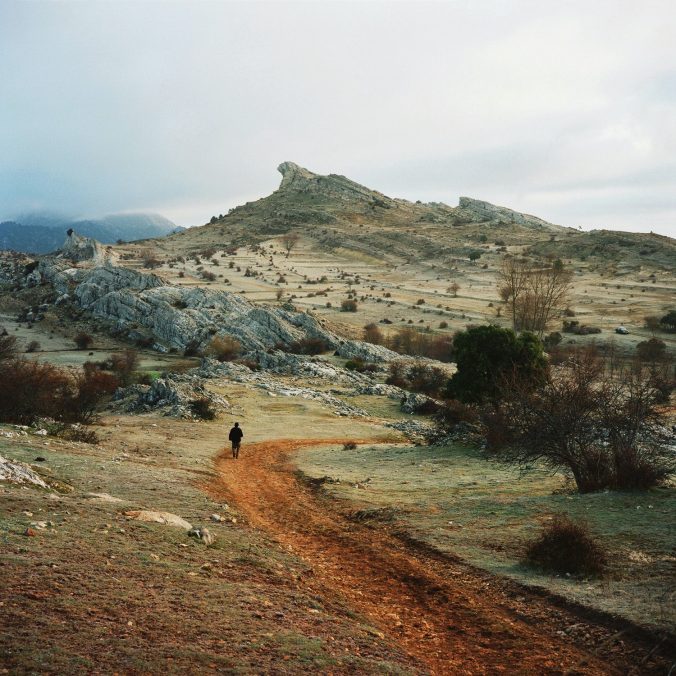
A view of the village of El Pardal, Sierra de Cazorla, Spain, 2013.

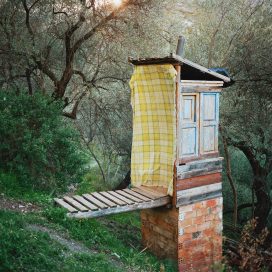
A composting toilet, Sierra Nevada, Spain, 2013.

Many contributors to our platform here, and its readers, have probably considered life off-grid.  Most will experiment during their travels, but stop short of the full monty, which would mean divestiture or most/all possessions and hitting the road. Thanks to this photographer (and the New Yorker‘s far-reaching sampling) for giving us both candid and portrait-like views into some examples of “self-sufficient” lives:

In 2006, while he was backpacking in Australia, the French photographer Antoine Bruy signed up with an international exchange program for volunteers who want to work on organic farms.

Continue reading

If You Happen To Be In Norwich

An egg mistakenly cracked by Charles Darwin is among the items in The Wonder of Birds exhibit. Photograph: Norwich Castle Museum & Art Gallery

An egg mistakenly cracked by Charles Darwin is among the items in The Wonder of Birds exhibit. Photograph: Norwich Castle Museum & Art Gallery

Thanks to the Guardian for pointing us to an exhibition that will be of interest to ornithologically-inclined readers of this blog:

It is an unassuming object, a smallish, strangely glossy brown egg, and it is broken because of the carelessness of the last person you would expect – Charles Darwin.

“He squashed it into too small a box and it cracked, unfortunately,” said curator Francesca Vanke, explaining the state of the spotted tinamou egg going on display at Norwich Castle Museum and Art Gallery.

The object is the only known surviving egg from Darwin’s HMS Beagle voyage during the 1830s. Probably drawn to its glossy sheen, Darwin signed it C. Darwin and brought it back to Britain after collecting it in Uruguay. Continue reading

Relationships Across The Boundaries Of Photography And Architecture

Tadao Ando's Monterrey house, by Edmund Sumner

Tadao Ando’s Monterrey house, by Edmund Sumner

Thanks to Phaidon for this story on the relationship between architecture and photography, or rather architects and photographers:

By the time Edmund Sumner was given his first camera, at the age of eight, he was already surrounded by, and wholly obsessed with, design. Edmund’s father was an interior designer whose clients included the likes of The Rolling Stones; his sister took up the paternal profession, while his brother became an architect.

Sumner, for his part, decided to photograph buildings for a living, and working with his wife, the architectural journalist Yuki Sumner, has specialised in architectural photography, with particular emphasis placed on contemporary Japanese design.

Continue reading

New York Public Library’s Good And Sensible Decision

ILLUSTRATION: TOM BACHTELL

ILLUSTRATION: TOM BACHTELL

Thanks for this (and other recent) attention from the New Yorker‘s stable of super-writers (and others, elsewhere) on a topic of ongoing interest to us, especially this important comment:

The New York Public Library’s announcement that it is abandoning its Central Library Plan has been praised as a good and sensible thing, and indeed it is. The C.L.P. would have sold off the Mid-Manhattan Library and the Science, Industry, and Business Library (called sibl; five of its floors not open to the public have been sold already). The collections of those libraries would have been moved to the main research library, on Fifth Avenue, and elsewhere. That hundred-and-three-year-old edifice (now known as the Stephen A. Schwarzman Building), with the stone lions out front, would have been reconfigured: seven floors of its stacks taken out, a lending library added to what had been a research library only, more than a million books moved off-site, and a four-level atrium and other new elements put in, following a design by the architect Norman Foster. Continue reading

Congratulations, Annie Leonard And Greenpeace

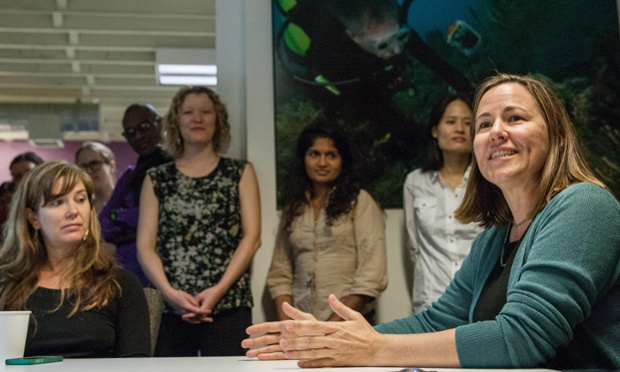
Annie Leonard, a veteran environmental campaigner, is taking over as the new head of Greenpeace USA. Photograph: Erin Lubin/Greenpeace

Annie Leonard, a veteran environmental campaigner, is taking over as the new head of Greenpeace USA. Photograph: Erin Lubin/Greenpeace

We have linked to her work more than once, and this time it is a story of her new commitment that pulls our attention in her direction (thanks to the Guardian for their coverage). Just as we have noted about Paul Watson, not everyone agrees with all the tactics of environmentalists and the organizations they lead, but it is still our interest to share moments of importance like this one:

One of the first things Annie Leonard was asked on being named the new leader of Greenpeace USA this month was: are you willing to get arrested?

“I said: ‘Absolutely! I just need to figure out who is going to drive the car pool’,” Leonard told The Guardian. “It’s going to be interesting being a single mum doing this,” she said.

The last time Leonard worked for Greenpeace, over 20 years ago, the campaign group was known – only half-jokingly – as “boys and their boats”, because of its reputation for dangerous, high-visibility actions. Continue reading

Please Contribute To Kerala’s State Heritage Survey


Thanks to the Hindu’s ongoing coverage of this important work:

The Centre for Heritage Studies at Tripunithura is embarking on a novel effort to document the state’s heritage.

The research and training institute is planning a heritage survey that will stretch across the state and involve the work of students, senior historians, local body officials and the common man.

“We will train students and they will go to the panchayat and ward levels to conduct the heritage survey. The students will speak to local body officials, people across the social strata, elders in the community, and anyone else who can contribute to the study of the region’s heritage,” said N.M. Nampoothiri, dean of academic affairs of CHS. According to Dr. Nampoothiri, the students will go door-to-door and collect information about historical documents, artefacts, architecture and the oral history of each region. The interdisciplinary survey would provide a detailed picture of the social, economic, and political structures of each region. Continue reading

Critter-Countering Collaboration

A section of tree showing holes made by the Asian long horned beetle. The city of Boston, the Mass. Dept. of Agricultural Resources, the Dept. of Conservation and Recreation, and the US Dept. of Agriculture celebrate the eradication of the Asian longhorned beetle at the Arnold Arboretum. The event lifts the 1.5 mile quarantine that had been placed around Faulkner Hospital (including the Arboretum) after the discovery of infested trees there in 2010. Jon Chase/Harvard Staff Photographer

A section of tree showing holes made by the Asian long horned beetle. The city of Boston, the Mass. Dept. of Agricultural Resources, the Dept. of Conservation and Recreation, and the US Dept. of Agriculture celebrate the eradication of the Asian longhorned beetle at the Arnold Arboretum. The event lifts the 1.5 mile quarantine that had been placed around Faulkner Hospital (including the Arboretum) after the discovery of infested trees there in 2010.
Jon Chase/Harvard Staff Photographer

Harvard Gazette reports on this collaborative effort to deal with a determined pest that has ravaged forests in recent years:

“The whole country knows about Boston. When a challenge presents itself, the entire community here comes together. The eradication of the Asian longhorned beetle is a great example of that,” said Gary Woodward, the U.S. Department of Agriculture’s deputy undersecretary of marketing and regulatory programs.

Continue reading

Google, Maps, And Modern Conservation

StreetViewGrandCanyon-1-630

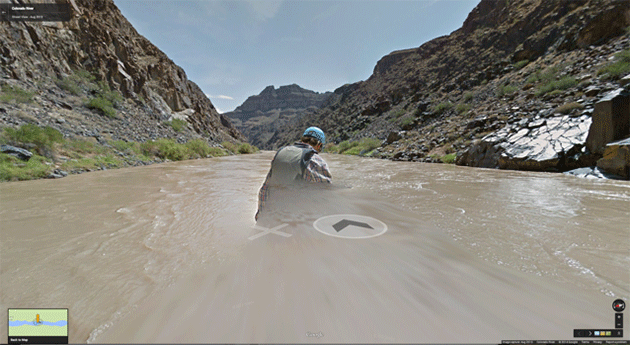
Screen capture from Google’s Street View Grand Canyon

We have not been sourcing from Harper’s, one of the great magazines covering topics of interest to Raxa Collective. We will mend our ways starting now:

Grand Plan

Why has Google added the Grand Canyon to Street View? By Jeremy Miller

Continue reading

Unexpected Problems With Urban Farming

Above: A rendering of City Slicker Farms’ plans for a farm and park in West Oakland. Image courtesy City Slicker Farms.

Above: A rendering of City Slicker Farms’ plans for a farm and park in West Oakland. Image courtesy City Slicker Farms.

In interesting juxtaposition to the article on urban farming we linked to yesterday, a post on the New Yorker‘s website covers a related topic from a completely unexpected angle:

In 2012, Linnette Edwards, a Bay Area real-estate agent, produced a video promotingNOBE, a name conjured up by developers for an area covering parts of Oakland, Berkeley, and the town of Emeryville. She posted it on NOBE Neighborhood, a Web site she created to drum up buzz among potential home buyers. The video includes interviews with enthusiastic young residents, a local cupcake maker, a bartender at a new watering hole, and with Edwards herself. It also features a local, volunteer-run enterprise called the Golden Gate Community Garden. “We’re super psyched that there’s a community garden across the street—it’s definitely a bonus to this block,” a new homeowner says, over footage of greenery. “The fabulous edible garden movement is in full swing,” the NOBEWeb site notes. “It’s not uncommon to find neighbors crop swapping their homegrown edibles and frequenting the local Farmer’s Markets.” The site listed several neighborhood community-gardening programs, including one run by a nonprofit called Phat Beets Produce. Continue reading

National Trust, Innovator With Alternative Energy

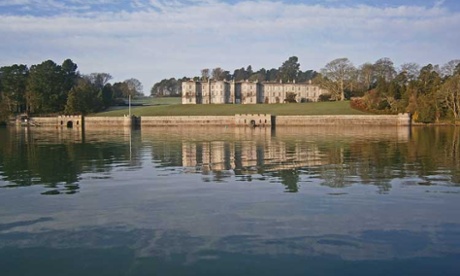
Plas Newydd National Trust property in Wales, where a new marine pump has been installed. Photograph: National Trust

Plas Newydd National Trust property in Wales, where a new marine pump has been installed. Photograph: National Trust

Thanks to the Guardian for its environmental coverage (which used to be more abundantly interesting, but credit still due for its commitment to coverage), and this story in particular:

A 300-year-old country mansion is to get environmentally-friendly heating from the ocean with the UK’s biggest marine source heat pump, the National Trust said. Continue reading

Unexpected Benefits Of Urban Farming

A converted Minnesota brewery now combines hydroponics and fish farming Urban Organics

A converted Minnesota brewery now combines hydroponics and fish farming Urban Organics

While the article opens with some hairy, crunchy stereotypes of organicistas (left out here because of their tedium) we nonetheless are happy to see an old school publication like Newsweek paying attention to such important issues more often left to specialist publications:

…It’s a huge, airy space, completely climate-controlled, filled with racks of vegetables that reach up to the ceiling. There’s no dirt—plant roots are suspended in water that flows through the racks like a gentle river. On the far wall past the vegetables, large, circular, windowed tanks of fish reside on raised platforms four feet off the ground. The platforms look like big decks, and pipes connect the fish tanks to the racks of plants. Bugs? Not a one—but if workers do find one with their Integrated Pest Management system, it’s dealt with sans pesticide, in compliance with organic guidelines from the U.S. Department of Agriculture. Haider and co-founders Fred Haberman, Chris Ames and Kristen Koontz Haider ask visitors to clean their feet at the door so as not to track in anything unsavory. Continue reading

Something In The Air

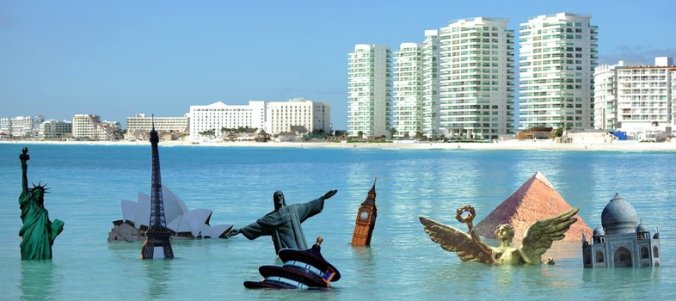
A Greenpeace protest juxtaposed the drowning of some of the world's most iconic structures with Cancun, Mexico's, rising skyline. Juan Barreto/AFP/Getty Images

A Greenpeace protest juxtaposed the drowning of some of the world’s most iconic structures with Cancun, Mexico’s, rising skyline. Juan Barreto/AFP/Getty Images

After this recent story, we maybe are just more aware of this theme and watching for it, or else there is something sticky about it:

Climate Change: A Time For Humor, A Time For Action

Continue reading

Xandari Featured On Costa Rica’s Favorite News Show

The Xandari Resort, located just 4 miles north of downtown San Jose, was commended in the prestigious Forbes magazine and recommended to his readers as an excellent hotel for business or tourism. publication specializing in business and lifestyle, described place as a piece of mountain paradise and a clear example of the culture of “pure life.” Author is an experienced travel journalist who was especially impressed by the hotel’s philosophy, focused 100% sustainability and well-being of their guests . Xandari According to the manager, is the people that makes this resort special.

Steven Pinker Profile

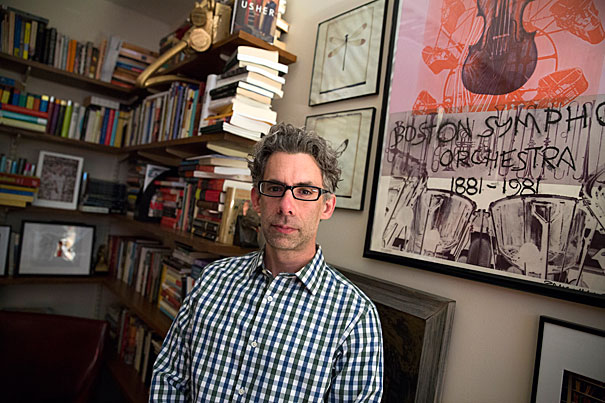
Steven Pinker is a Johnstone Family Professor in the Department of Psychology at Harvard University. He is pictured in his home in Boston. Stephanie Mitchell/Harvard Staff Photographer

Steven Pinker is a Johnstone Family Professor in the Department of Psychology at Harvard University. He is pictured in his home in Boston. Stephanie Mitchell/Harvard Staff Photographer

We have noted his thoughts on the work of others, including unflattering thoughts, but until now we have not had the opportunity to point our attention to the man himself, so thanks to Harvard magazine for the occasion to do so:

‘What could be more interesting than how the mind works?’

Steven Pinker’s history of thought

Steven Pinker follows Sara Lawrence-LightfootMartha Minow, and E.O. Wilson in the Experience series, interviews with Harvard faculty members covering the reasons they became teachers and scholars, and the personal journeys, missteps included, behind their professional success. Interviews with Melissa Franklin, Stephen Greenblatt, Laurel Thatcher Ulrich, Helen Vendler, and Walter Willett will appear in coming weeks. Continue reading

China’s Environmental Laws Just Got Stronger

20140517_CNP004_0

Where there’s smoke, there’s ire

Thanks to the Economist magazine for this update on a set of laws that have not been able to keep up with the pace of development:

Environmental protection

Green teeth

The government amends its environmental law

AT LAST year’s annual session of the National People’s Congress, China’s legislature, Li Keqiang, the prime minister, said the notoriously bad air quality in Chinese cities made him “quite upset”.

Continue reading

Help Hanging Rock, If You Can

18064a9e-466d-40ea-86d7-2a6ade5ee448-460x276

Government funding for Hanging Rock will support the upkeep of picnic areas, wetlands and protection of plant and animal life. Photograph: John Crook/AAP

Fans of Peter Weir will be inclined to heed the call, if they can, to help ensure Hanging Rock is not spoiled:

Controversial plans to build a tourist resort at Victoria’s Hanging Rock have been scrapped after the state government committed $250,000 a year to maintain the landmark.

The funding, announced on Friday, will fund the upkeep of trails and signs along the rock, as well as the nearby picnic areas, wetlands and protection of plant and animal life. Planning protections in the area would be strengthened to shield the area from “inappropriate development in the long-term”, the Victorian planning minister, Matthew Guy, said.

Plans by the Macedon Ranges shire council to build a 100-room resort, eco-cabins, a “nature-focused adventure facility” and a day spa near the unique volcanic rock formation had divided the small community north-west of Melbourne. Continue reading

Solutions For An Invasive Plant Species Found In Waters Everywhere

water-hyacinth

Thanks to Conservation, a magazine published by the University of Washington, for this fascinating article on the invasive species known all too well by those of us based in Kerala’s backwaters:

The scene at Florida’s Crystal River National Wildlife Refuge in Kings Bay last October would have been familiar to anyone who has ever engaged in the battle to control the spread of invasive plants. Eager volunteers scurried about the shoreline of this manatee wintering ground, carting large plastic bins stuffed with water hyacinth, a notorious aquatic weed that’s caused headaches on five continents. Closer inspection, however, would have revealed the activity to be anything but business as usual: instead of hauling water hyacinth outof the bay, the conservationists were putting it back in—almost 4,300 gallons’ worth by day’s end. Continue reading

Landscape Restoration

Tianjin-225x132

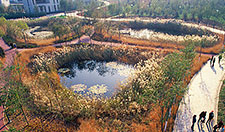
Turenscape Qiaoyuan Wetland Park in Tianjin, China, has terraced ponds that incorporate designed experiments to monitor benefits.

We watch for stories about innovative approaches to fixing things in the natural environment, wherever those stories may be found.

And whatever name they may be given.

Thanks to Yale360 for their ongoing attention, including this recent article:

Rebuilding the Natural World: A Shift in Ecological Restoration

From forests in Queens to wetlands in China, planners and scientists are promoting a new approach that incorporates experiments into landscape restoration projects to determine what works to the long-term benefit of nature and what does not.

by Richard Conniff Continue reading