About Those Dancing Frogs


Thanks to National Geographic’s website for extending the details of this  news we first shared here:

…The spectacular haul more than doubles the number of Indian dancing frogs, a family named for the bizarre courtship displays of their foot-waving males, to 24 species. Continue reading

Explaining Elephant Ears

Photo © Disney

Photo © Disney

When we look for scientific answers to interesting questions, the name Disney does not normally come to mind, but credit where due (thanks to Science Friday for this):

Why Are Elephant Ears So Big? And Other Pachyderm Questions

BY JULIE LEIBACH

Joseph Soltis, a research scientist at Disney’s Animal Kingdom, recently chatted with SciFri about the “words” that African elephants use to communicate. Below, Soltis has addressed a few of your pachyderm questions:
How do researchers keep bias towards human languages out of the study of elephant languages? Do a linguistics study as if the elephants were human?—@CyberResearchUS
You always have to be careful not to freely ascribe human-like capabilities to animals without evidence. For language, this is especially important. We [humans] can make a simple distinction between sentences with lots of words strung together following grammatical rules and a simple vocabulary of individual words.

Continue reading

Visualizing Carbon


Carbon, and what to do about it, has been a constant topic of interest to our readers since we began this site. The single most-read post, Carbon Emissions Series: Vacationers’ Diets is on this very topic. But how can we visualize carbon such that we care more about it? Thanks to the website of the magazine Conservation for this link, whose title says it all:

CARBON VISUALS: ANIMATING THE WORLD’S CARS

A short animated film from Carbon Visuals is being used to engage managers around the world about the fundamentals of sustainability, how sustainability is relevant to their role and its importance to business success.

Continue reading

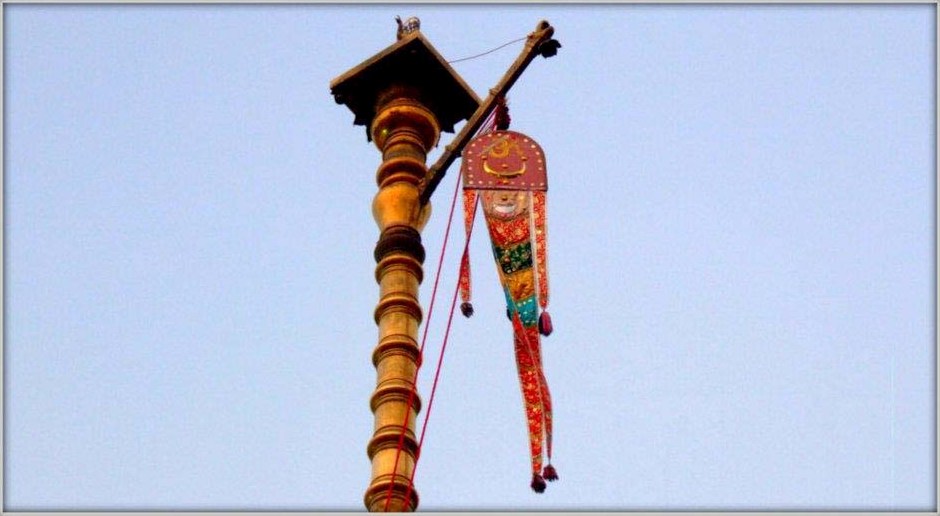
Dwajasthambam – Temple Flag Pole

Photo credit : Ramesh Kidangoor

Photo credit: Ramesh Kidangoor

Dwajasthambam is the traditional Hindu temple flag pole placed between the temple gopuram (entrance) and the sanctum sanctorum. They are traditionally made of wood, copper sheets, and gold coating. A cloth flag with Hindus symbols, holy words and figures of Gods or Goddess is usually hoisted on the pole during temple festivals. Continue reading

“It’s Like A Travel Book”

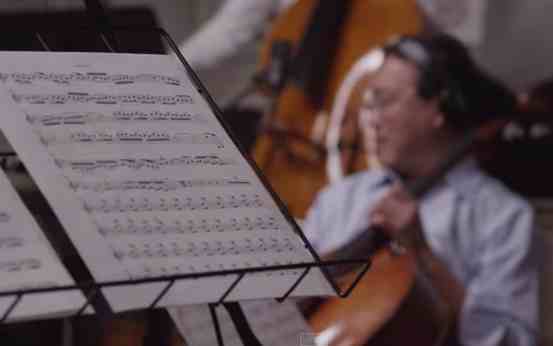
Music forms a type of universal memory the crosses cultures and continents, and Yo-Yo Ma’s Silk Road Ensemble that brings together musicians and composers from more than 20 countries is a lyrical example of what we hold dear at RAXA Collective. The 2,000 year old history of the Silk Road also coincides with the Spice Road, which is also a subject we take very personally.

The extent of exchange of art, ideas and innovations between cultural groups trading on the routes is illustrated by the eighth-century Shôsôin collection of artifacts. Culled by a Japanese emperor, it contains luxury goods from the Mediterranean, Persia, India, Central Asia, China, Korea and Japan…

Continue reading

Big Living Things

It has been a while since we linked to Krulwich Wonders, which we have done too many times to link back to all previous posts, but now is as good a time as ever to do so again:

A Question Of Biggitude: What’s The Largest Creature On Earth

by 

What’s the biggest living thing on earth? I can think of two. I’m not sure which is biggest, but neither of them is a blue whale. These are weirder. Much, much weirder.

One is a tree. The other eats trees.

This is the tree.

Continue reading

Discovering Frogs In South India

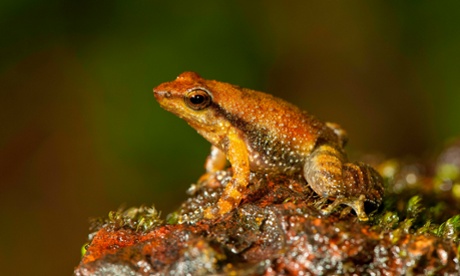
One of the 14 new species of so-called dancing frogs discovered by a team headed by University of Delhi professor Sathyabhama Das Biju in the jungle mountains of southern India Photograph: Satyabhama Das Biju/AP

One of the 14 new species of so-called dancing frogs discovered by a team headed by University of Delhi professor Sathyabhama Das Biju in the jungle mountains of southern India Photograph: Satyabhama Das Biju/AP

Thanks to the Guardian for their coverage of environmental news stories, and considering the role frogs play as an indicator of ecosystem well-being, this counts as a big one:

Scientists have discovered 14 new species of so-called dancing frogs in the jungle mountains of southern India. Indian biologists say they found the tiny acrobatic amphibians, which earned their name with the unusual kicks they use to attract mates, declining dramatically in number during the 12 years in which they chronicled the species through morphological descriptions and molecular DNA markers. They breed after the yearly monsoon in fast-rushing streams, but their habitat appears to be becoming increasingly dry. Continue reading

New York Public Library’s Evolving Plans

08LIBRARY-hp-sfSpan

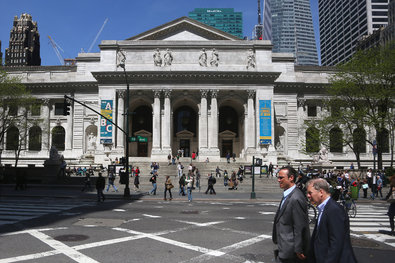
Chang W. Lee/The New York Times. The New York Public Library has abandoned its controversial plan to turn part of its research flagship on 42nd Street into a circulating library.

Our interest in public libraries, as pillars of their communities, is frequently leading us to stories about the interplay between new technology and how libraries or used; or supposed challenges to the relevance of libraries. We remain convinced of their relevance and are interested in stories that highlight innovative solutions to the challenges these institutions face. Continue reading

Germany’s Nature Photography Contest Winners

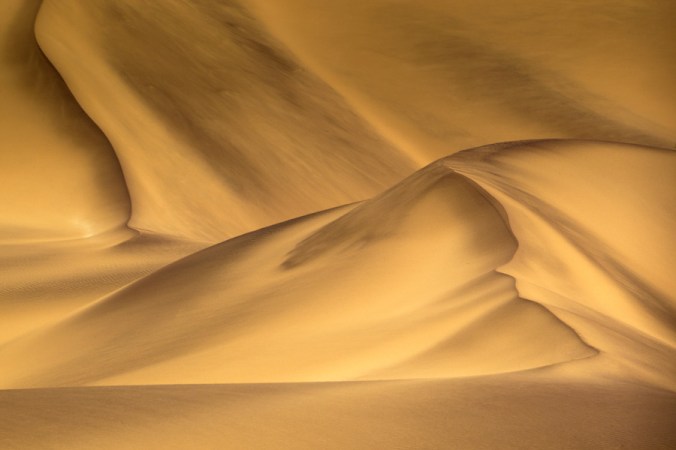
K6_Paul_Kornacker_ArtDunes

Paul Kornacker

GDT NATURE PHOTOGRAPHER OF THE YEAR 2014

We never tire of sharing the results of contests to produce the best nature photography. The photo above is the winner of this year’s Gesellschaft Deutscher Tierfotografen–a new organization and contest for us–but we are slightly partial to one or two other finalists. Continue reading

There Might Never Have Been A Better Time To Visit India

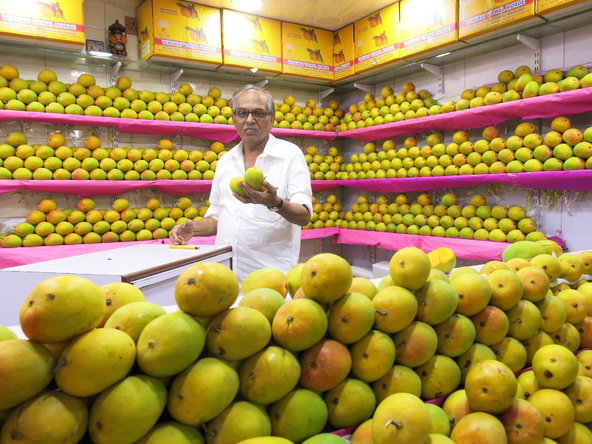
Neha Thirani Bagri Arvind Morde, a mango retailer and exporter, at the Crawford market in Mumbai, Maharashtra.

Photo credit: Neha Thirani Bagri. Arvind Morde, a mango retailer and exporter, at the Crawford market in Mumbai, Maharashtra.

Europe’s loss may be the gain for those of us who find ourselves living in India. That includes 1.2 billion locals and a few more of us who now have a few more of the most amazing edibles on this planet (thanks to India Ink for the story):

Alphonso Mangoes Flood Indian Market After E.U. Ban

MUMBAI, India — The Indian mango, and in particular the Alphonso, is a much-coveted and much-fetishized fruit by Indians, loved as much for its flavor as for its scarcity. Continue reading

If You Do Not Happen To Be In Monterey Bay, You Might Want To Be

This slideshow requires JavaScript.

Something is happening in the Bay Area, and it is worth a listen, or a quick read. National Public Radio (USA) has a podcast version of this story here:

Monterey Bay on California’s central coast rests atop one of the largest underwater canyons in the world. It’s deeper than the Grand Canyon, making it possible for lots of ocean life — including humpback whales, orcas, dolphins and sea lions — to be seen extremely close to shore. That is, given the right circumstances. Lately, the right circumstances have converged, and there’s more marine and wildlife in the bay than anyone’s seen in recent memory. Continue reading

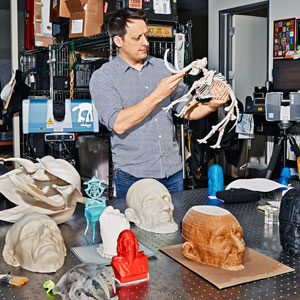
“Here’s the digital avatar. Researchers, 10-year-old kids, artists—have at it.”

Screen Shot 2014-05-05 at 9.19.09 AM

dinosaur-scanner-01-0514-mdn

Thanks to Carl Zimmer, a science writer we feature from time to time (and then again and again and whenever when we can) for reminding us why our youth-time go-to publication for tech-stuff is still worthy of visitation:

One morning in November 2011, trucks were roaring down the Pan-American Highway, carrying loads of ore from mines in the Atacama Desert to the port town of Caldera, Chile. The trucks screamed past a young goateed American paleontologist named Nicholas Pyenson, who was standing at the side of the road, gazing at a 250-meter-long strip of sandstone that construction workers had cleared in preparation for building new lanes. Continue reading

If You Happen To Be In New York

Carl Andre, 5 x 20 Altstadt Rectangle, 1967. Konrad Fischer Galerie. © Carl Andre/Licensed by VAGA, New York, NY.

Carl Andre, 5 x 20 Altstadt Rectangle, 1967. Konrad Fischer Galerie. © Carl Andre/Licensed by VAGA, New York, NY.

If you are in New York City you are close enough for a day excursion, so consider a visit some time in the next 10 months:

Dia Art Foundation to Present Carl Andre: Sculpture as Place, 1958–2010
May 5, 2014–March 2, 2015

The first major retrospective of Andre’s work in the United States since the late 1970s debuts at Dia:Beacon and then tours internationally

Andre’s signature floor-bound sculptures will be presented with the artist’s “typewriter drawings” and rarely exhibited objects known as Dada Forgeries

New York, NY–Tracing the full evolution over five decades of the thinking of Carl Andre, a crucial figure in the redefinition of contemporary sculpture, Dia Art Foundation will present Carl Andre: Sculpture as Place, 1958–2010 from May 5, 2014, through March 2, 2015, at Dia:Beacon. The retrospective will include approximately 50 sculptures displayed in Dia:Beacon’s main galleries; over 200 poems and works on paper presented in wooden vitrines designed by the artist; a selection of rarely exhibited assemblages known as Dada Forgeries; and an unprecedented selection of photographs and ephemera. This will be the first survey of Carl Andre’s entire oeuvre by a museum, and the first retrospective in North America since 1978-80. Continue reading

Food, Form, Philibuster

Tasters have compared Soylent to Cream of Wheat and “my grandpa’s Metamucil.” Photograph by Henry Hargreaves.

Life without food as we know it? After our inspiration and efforts to launch 51, and all kinds of other good reasons to love food as we know it (and all the forms of food we have yet to know), some tech fellows want to do away with all that? Food without form that we can recognize is fine for short term bursts of unusual pleasure, but not as a dominant replacement. We will resist and delay this as long as our breath and imaginations hold out:

In December of 2012, three young men were living in a claustrophobic apartment in San Francisco’s Tenderloin district, working on a technology startup. They had received a hundred and seventy thousand dollars from the incubator Y Combinator, but their project—a plan to make inexpensive cell-phone towers—had failed. Down to their last seventy thousand dollars, they resolved to keep trying out new software ideas until they ran out of money. But how to make the funds last? Rent was a sunk cost. Since they were working frantically, they already had no social life. As they examined their budget, one big problem remained: food. Continue reading

Another Million Reasons To Listen

We have had a thing for India/USA crossover, for various reasons, since the outset of this blog. Today, a new landmark. Bollywood’s music man, for what seems like a million films here in India, meets Hollywood. Again. The Wall Street Journal review of this new film focuses on the topic we can most relate to, which is the continued crossover of India’s most important film scorer, who is noted for that Slumdog movie but not as much for Inside Man, which used perhaps his most obsessively loved (for good reason, we think) film music:

‘Slumdog’ Composer Steps Up to Bat for ‘Million Dollar Arm’

Disney Baseball Movie Will Feature Rahman’s Original Compositions

By CHRISTOPHER JOHN FARLEY  May 4, 2014 10:56 p.m. ET

Continue reading

If You Happen To Be In Amsterdam

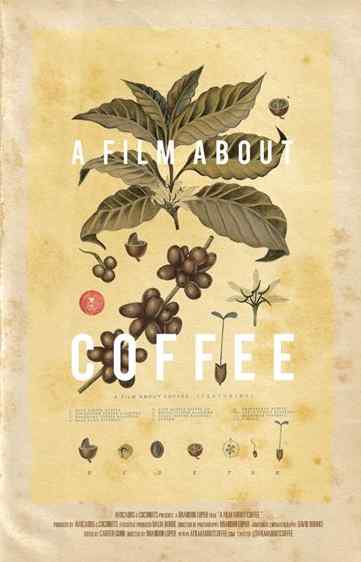
Most of our followers know we love coffee. We love how it grows. We love how it tastes. We love the settings where we can drink it. Which makes it all the more unfortunate that we’re in India and not in Amsterdam this weekend to experience Coffee Week NL 2014.

The festival collaboration with the Allegra Foundation makes participation all the more enticing:

50% of all ticket sales to The Amsterdam Coffee Festival will go towards Project Waterfall, the charitable components of NL Coffee Week. Continue reading

Nature Has The Long View

MobiusII

When you love what you do, the hope is that you will do it indefinitely. E.O. Wilson shows little sign of slowing down any time soon, and his new book is the best evidence to date. Not exactly light weekend reading, nor summer beach fare, but from the sound of this review, worth the effort:

LOOKING FOR ETERNITY? LOOK TO NATURE

A Review of “A Window on Eternity” by E.O. Wilson

By Bill Chameides

To say that E.O. Wilson, arguably the greatest living biologist, is prolific is a bit of an understatement. At 84, Wilson continues to churn out books at a rate of one to two each year. Yesterday, Earth Day 2014, marks the release of his latest book, A Window on Eternity: A Biologist’s Walk Through Gorongosa National Park  (Simon and Schuster), and a DVD companion titled “The Guide.” Continue reading

In With Flynn

Another look at Flynn, this one in the Sunday Magazine of the New York Times some months ago (click above for the video and below for the story):

MAGAZINE

The Kid’s Table

Flynn McGarry wants to open the best restaurant in the world. So what if he’s only 15?

Travel, Stimulation, Writing

Prochnik-2a In a post on the New Yorker website just now we discovered that last August we had neglected to read what we surely would have passed along here, an article that fits our blog’s themes well. George Prochnik had us with the first sentence:

Travel is my favorite stimulant, and while I was writing “ The Impossible Exile,” a portrait of the Viennese author Stefan Zweig, hunting-and-gathering expeditions to Zweig’s far-flung haunts felt imperative. Zweig was born in Vienna in 1881, but he became one of the most representative Viennese writers largely in absentia—idealizing the city’s cosmopolitanism while doing his best to embody it by making himself at home all across Europe. After the First World War, he set up his primary residence in Salzburg, but for large parts of the following years he was on the move—writing, in hotels, the short stories, essays, and biographies for which he became famous  Continue reading

Jack Fruit, Again

Jackfruits grow on the branches and trunks of tall trees. You don't wait to harvest until they drop of their own accord — by that time, they'd be overripe. iStockphoto

Jackfruits grow on the branches and trunks of tall trees. You don’t wait to harvest until they drop of their own accord — by that time, they’d be overripe. iStockphoto

We recently started noticing interest in our hometown fruit, and here is some more courtesy of the Salt program on National Public Radio (USA):

It’s not every fruit that gets its own international symposium.

Then again, the jackfruit is not your typical fruit. It’s got a distinctive, musky smell, and a flavor that some describe as like Juicy Fruit gum.

It is the largest tree fruit in the world, capable of reaching 100 pounds. And it grows on the branches — and the trunks — of trees that can reach 30, 40, 50 feet. (Trunk-growing is a good thing because it reduces the odds of a jackfruit bopping you on the head.) Continue reading