Building An Invasivore Economy

wild-city-pigeon Since Phil first started posting his series on possible solutions to invasive species last year, in conjunction with the theme of citizen science that Seth has been writing about for the last couple years, we have been on the look out for citizen solutions to environmental challenges–stories that match our interest in entrepreneurial conservation. Phil’s series suggests that citizen science may be the best path to building what might be called an invasivore economy. As it happens, just after his first couple posts there was an article in Conservation that dealt with this very issue:

SEND IN THE INVASIVORES

Recipes for Ecosystem Recovery By Sarah DeWeerdt

“We’re trying to be unsustainable,” says University of Vermont conservation biologist Joe Roman. And he says it with glee. Roman runs www.eattheinvaders.org, a compendium of invasive species recipes. He is one of a growing number of people who advocate controlling invasives by eating them. Instead of relying on toxic pesticides, expensive eradication campaigns, or risky introductions of biological control agents, “why not use our own appetites to good advantage?” he suggests.

Continue reading

Bedeviling Bovine Biproducts

cow-butt

Roberta Kwok, over at Conservation, shares a new view on the humble cow:

COWS VS. COAL

To reduce emissions, the usual thinking goes, we should promote alternative energy and declare war on coal. But researchers argue that policymakers are ignoring a crucial climate threat: cows. Continue reading

Watersports In The Sand

7bbaea46aa80e06b975831377339502b2d3e2953_620x311

Something about the sand, and the artists, down under…we give thanks to the New Zealand Herald for this story which, among other possible interpretations, demonstrates that much a great time can be had with much lower carbon footprint while engaging in sport at the beach, and on better yet it is a collaborative effort among several artists:

A group of imaginative artists has shown magic can be made from a few simple lines in the sand. Continue reading

Coconut Palm Leaf Roofing

Photo credits : Shymon

Photo credits: Shymon

In rural communities around the world it’s a common sight to see structures made from 100% natural and sustainable materials, and Kerala is no exception, especially in the Alappuzha district. In thatched homes the roof and walls are made out of coconut leaves. Continue reading

Innovation In Humanities, Essential To Our Future

Image by Corbis Images.  Thomas Rowlandson’s view of the library of the Royal Institution in London, circa 1810

Image by Corbis Images.
Thomas Rowlandson’s view of the library of the Royal Institution in London, circa 1810

We have been monitoring Harvard Magazine and some of its kindred publications since the early days of this blog, as constant sources of interesting articles relevant to our interests; and now this:

Toward Cultural Citizenship

New gateways into the humanities for students “still fully molten as human beings” by Jonathan Shaw  May-June 2014

Continue reading

Another Reason To Visit The High Line

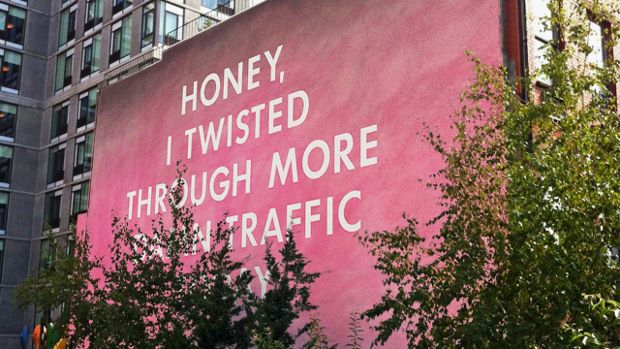
Rendering of Ed Ruscha's forthcoming High Line commission

Rendering of Ed Ruscha’s forthcoming High Line commission

Friends of the High Line, we try to remain steadfastly.  So, we count the following as good news. Thanks, as always, for the excellent arts coverage by Phaidon:

Ed Ruscha’s first public commission in NYC

His 1977 word painting will appear as a large hand-painted mural beside The High Line next month

Unveiled a few weeks after the city’s new mayor announced his commitment to lowering New York’s road deathsEd Ruscha’s High Line commission could be read like a vernacular traffic report.

Continue reading

If You Happen To Be In New York City

Screen Shot 2014-04-26 at 9.36.32 AMClick the image at left to learn more about two performances which, if you happen to be in New York City or close by this weekend, you might enjoy if you are a danceophile, Indophile, or both. Thanks to New York University for hosting a sample of our home country culture:

Following unforgettable performances by Shantala Shivalingappa and Rama Vaidyanathan in 2011, and Nrityagram Surupa Sen & Bijayini Satpathy in 2013, Dancing the Gods weekend festival highlighting classical Indian dance returns in 2014 with more striking artists.

“…both briskly exciting and exacting, [Dandekar’s turns are] a wonder…” THE NEW YORK TIMES

Continue reading

Small Ukrainian Museum’s Outsized Support Keeps Tradition Alive And Well

pysanky-easter


This qualifies as an unexpected form of entrepreneurial conservation, except among a few with insider knowledge. Several Raxa Collective contributors are amateur pysankyists, some bordering on master level, so this post is a tribute not only to a great museum which these contributors know well, but to the many non-Ukrainians who are inspired by this tradition enough to keep a Ukrainian art form alive and well:

Vegans, avert your eyes while the rest of us consider the egg. We’ve finally reached its season, at least as far as symbolism goes: spring, birth, something that the Theosophical Society calls “the origin and secret of being”—and that’s just the beginner-level stuff. What the grain of sand was to William Blake, the egg has been to just about everyone else. Brahma emerged from an egg, and so did the Tahitian god Ta’aroa and Pangu, the Chinese creator. The ancient Greeks practiced oomancy, divination by boiled egg white. Continue reading

Welcome Back, Dot Earth

An illustration from a children’s book published in 1888.

An illustration from a children’s book published in 1888.

Out of nowhere, a few days back, Andrew Revkin and Dot Earth came back from who knows where. In our first year or two they were among our most consistent sources of excellent reportage on environmental issues. Then, nothing. Now, something, sneaking into view within the Opinion pages of the New York Times (really, we need their old excellent reporting more than we need opinion, but…):

dotearth_postENVIRONMENTAL POLICY

No Time to Waste: Students Pursue Environmental Progress Instead of Exam Grades

By ANDREW C. REVKIN APRIL 22, 2014, 12:13 PM

Continue reading

Brown University Keeps Giving

Ackerman-290We have a tradition of honoring Brown University from time to time because of the many gifts to the world that come from that place. The letter to the Editor (the New Yorker‘s) below is one of those. Why? Mainly, just because. It is about the quality of writing, in this case. If you read it and do not feel it is worthy, no problem. Tempting to think one must have read the original piece to appreciate the letter in full, but not really. Professor Ackerman has simply written the perfect pithy paragraph:

Re “All the Letters That Are Fit to Print,” April 10th online: Of course, I am delighted with Andrew Marantz’s piece about me. But I have three small bones to pick. First, he quotes me as saying, “I then decided that I would probably live longer if I was less fat.” He also says I speak “hypergrammatically.” So I certainly hope I said, “if I were less fat.” Continue reading

A Minor Detraction From Aging’s Major Detractors

old-tree

Thanks to Roberta Kwok for her ever-concise summaries of remarkable scientific findings on Conservation‘s website, this one following the theme of a companion post with regard to aging organisms:

SCORE ONE FOR THE REALLY OLD GUYS

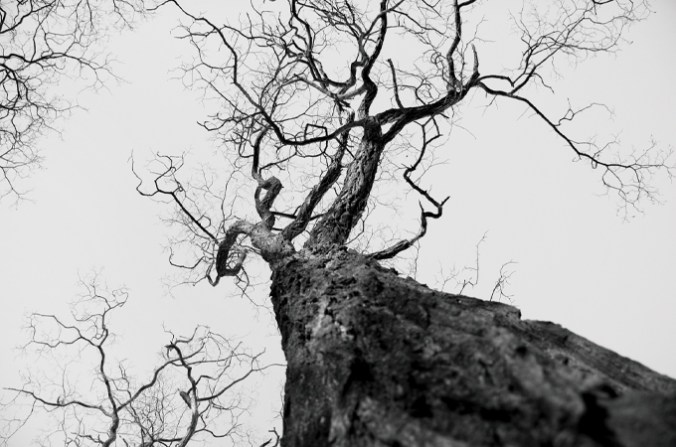
Aging is generally associated with slowing down. But scientists have found that trees actually grow faster as they get older, making them star players in a forest’s carbon storage. In fact, one old tree can fix as much carbon in a year as the total amount of carbon in a “middle-aged” tree. Continue reading

Collaboration On Oldest Living Things

Thanks to Jonathan Minard for the short film above presenting Rachel Sussman Carl Zimmer and Hans Ulrich Obrist, and the book that they collaborated on:

Since 2004 artist Rachel Sussman has been researching, working with biologists, and traveling all over the world to photograph continuously living organisms 2,000 years old and older. The work spans disciplines, continents, and millennia: it’s part art and part science, has an innate environmentalism, and is driven by existential inquiry. She begins at ‘year zero,’ and looks back from there, photographing the past in the present. Together, her portraits capture the living history of our planet – and what we stand to lose in the future.

Continue reading

Taste Of Xandari At 51

10155003_752610181446587_5118148078119598173_nRecently we passed a quarter million views on this site. We have no clue whether that is wow-alot or woeful-low; what metrics indicate how well we address the interests of both contributors and readers other than by comparing the performance of individual posts versus other posts? Carbon Emissions Series: Vacationers’ Diets, approaching 10,000 views and our most popular post, tells us alot about what our readers care about.
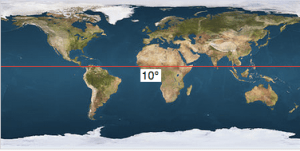
In short, they seem to love reading about good food that is also good for the environment and is healthy. This tells us why readers have also responded well to our posts about Xandari. To get a sense of the love, you can read a bit; to feel it, there is no choice. You must visit the resort. In case that is not in the cards in the near future, how about a taste?

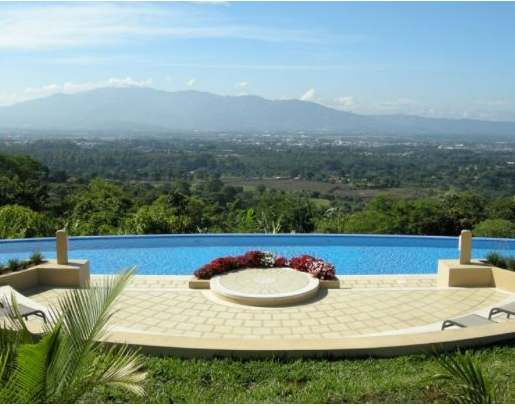
Screen Shot 2014-04-23 at 4.07.00 PMIn Kerala, visit the Mattanchery neighborhood of Fort Cochin and stop in at 51 to sample one of the best-loved salads at Xandari. Since both Kerala and Costa Rica are situated within the tenth parallel north, chefs in both locations have many of the same farm-fresh ingredients to work with.

Jackfruit, Kerala’s Mega Food

Jackfruit (Artocarpus heterophyllus) growing in Kerala, India. Photograph: Olaf Krüger/Corbis

Jackfruit (Artocarpus heterophyllus) growing in Kerala, India. Photograph: Olaf Krüger/Corbis

Based in the epicenter of jackfruit habitat, we did not need to know this news (thanks, Hindu) to enjoy this season when these giants come down from the trees, but it sweetens the taste just a bit to know how much more important they may become:

It’s big and bumpy with a gooey interior and a powerful smell of decay – but it could help keep millions of people from hunger.

Researchers say jackfruit – a large ungainly fruit grown across south and south-east Asia – could be a replacement for wheat, corn and other staple crops under threat from climate change. Continue reading

Congratulations, Xandari, On Five Years Of The Highest Praise–It’s Called Love

___08LOGO-R&SSeveral La Paz Group team members and early contributors have been loving Xandari for most of the two decades since it began operations. Great expectations are not new to us.

XCNT

Others within our community are just getting familiarized. Click the image above and other links here to feel the love. We do not shy away from your having great expectations too.

The Platinum Circle

These Gold List superstars—including hotels, resorts, and cruise lines—have made the list every year for the past five years running. Click here to view the 2014 Platinum Circle.


A Story About The Wind And The Cloud

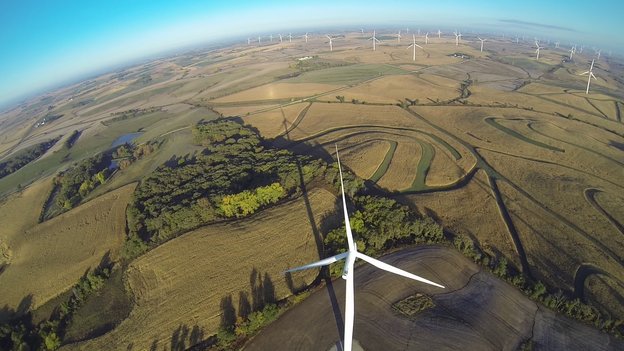
MidAmerican Energy's wind farm in Adair, Iowa. Facebook is working with MidAmerican to build a similar wind farm near Wellsburg, Iowa, where it will help power Facebook's planned data center. Courtesy of MidAmerican Energy

MidAmerican Energy’s wind farm in Adair, Iowa. Facebook is working with MidAmerican to build a similar wind farm near Wellsburg, Iowa, where it will help power Facebook’s planned data center. Courtesy of MidAmerican Energy

Thanks to National Public Radio (USA) for this story about sourcing power for the special needs of modern technology:

You hear the term “the cloud” or “cloud computing,” and you picture something puffy, white, clean and quiet. Cloud computing is anything but.

Even from a distance you can hear the hum of a modern data center. Last week, I visited one of the largest in Santa Clara, Calif., in the heart of Silicon Valley. It’s called SC1, is owned by DuPont Fabros Technology and is about a quarter-mile long.

“It’s about the same size and length as a Nimitz aircraft carrier,” says Paul Hopkins, a regional vice president for the company, shortly after buzzing me through the door.

The entrance is guarded, and employees need fingerprint scans to get in and out. Hopkins has agreed to show me around. Continue reading

‘Empty Room’ Artist Maya Lin On Changing The Course Of The World

Screen Shot 2014-04-21 at 6.28.17 PM

Aren’t we all? (Trying to change the course of the world, in our own chosen way.) Some by manual labor, some by intellectual labor, some by more typically defined fine art, among others. We appreciate any venue chosen by those who want to make a difference. Click the image above, or click here, to go to the video of artist Maya Lin, with excerpts of her recent lecture at Cornell University discussing:

her work, including her recent sculptures and the installation Empty Room, from her What is Missing? memorial, on view as part of beyond earth art • contemporary artists and the environment at the Milstein Hall Auditorium. 

Green Economy Realism

There’s no way toward a sustainable future without tackling environmentalism’s old stumbling blocks: consumption and jobs. And the way to do that is through a universal basic income.

Illustration by Edward Carvalho-Monaghan

Illustration by Edward Carvalho-Monaghan

There is nothing wrong, per se, with wishful thinking. It is when those wishful thoughts are left in dream state that they can become tedious, even dangerous. Action matters. It is where dreams meet reality. Reality matters at least as much as dreams in getting to a desired outcome. This is true with regard to environmental issues as with any other. We appreciate reminders whenever, wherever we find them:

For as long as the environment has existed, it’s been in crisis. Nature has always been a focus of human thought and action, of course, but it wasn’t until pesticides and pollution started clouding the horizon that something called “the environment” emerged as a matter of public concern.

In 1960s and 1970s America, dystopian images provoked anxiety about the costs of unprecedented prosperity: smog thick enough to hide skylines from view, waste seeping into suburban backyards, rivers so polluted they burst into flames, cars lined up at gas stations amid shortages, chemical weapons that could defoliate entire forests. Economists and ecologists alike forecasted doom, warning that humanity was running up against natural limits to growth, extinction crises, and population explosions.

But the apocalypse didn’t happen. The threat that the environment seemingly posed to economic growth and human well-being faded from view; relieved to have vanquished the environmental foe, many rushed to declare themselves its friends instead. Continue reading

Sea-Level Summer, Citrus, And Chilling At 51

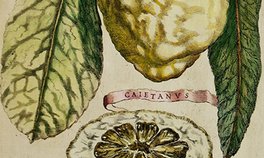
From Plate 205: Limon Caietanus by Giovanni Battista Ferrari (1584-1665)

From Plate 205: Limon Caietanus by Giovanni Battista Ferrari (1584-1665)

Helena Attlee
THE LAND WHERE LEMONS GROW
The story of Italy and its citrus fruit
272pp. Particular Books. £20.
978 1 84614 430 2

The views, not to mention recent temperatures, lead most guests to sit outdoors with the breeze on the deck, on either the ground level or mezzanine, watching the fishermen haul in their catches, or the tug boats, or the ferries. 51 is alive with citrus in these sea level summer days and evenings, starting with a tall glass of iced minted-lime cooler, continuing with a chilled avgolemono soup;  and so on. Clarissa Hyman, a freelance food and travel writer, catches our attention with this book review in the Times Literary Supplement:

A paradox pervades the Sicilian citrus groves and gardens. The scent is intoxicating but too often the fruit lies rotten on the ground, unwanted and worthless. In this maddening, singular island, where they say the sun drives you crazy and the moon makes you sad, the irony is your breakfast orange juice will most likely be diluted, long-life concentrate from oranges grown in Brazil. Continue reading

Field Trips-R-Us

Science teachers huddle over bacteria colonies at Chicago's Museum of Science and Industry. The museum plans to train 1,000 area educators to be better science teachers in the next five years. Linda Lutton/WBEZ

Science teachers huddle over bacteria colonies at Chicago’s Museum of Science and Industry. The museum plans to train 1,000 area educators to be better science teachers in the next five years. Linda Lutton/WBEZ

We are partial to field trips. Bravo to these educators for recognizing their value and putting their own two feet forward first (thanks to NPR, USA, for the podcast and published story):

In a classroom across from the coal mine exhibit at the Chicago’s Museum of Science and Industry, students are huddled around tables, studying petri dishes of bacteria.

But these aren’t school-age kids — these students are all teachers, responsible for imparting science to upper-elementary or middle-school students.

That’s a job that many here — and many teachers in grammar schools around the country — feel unprepared for. Continue reading