Ricardo Solis, Come To Kerala!

This slideshow requires JavaScript.

We have a soft spot for anyone who, young or old, finds a way to link art and nature. Ricardo Solis has a particular view, one which makes us smile, so here is a bit about him:

Ricardo Solis was born in Guadalajara, Jalisco, Mexico.  He graduated from the School of Visual Arts and acquired expertise in workshops taught by outstanding teachers. He has participated in several exhibitions nationally and internationally and his work is in major collections.

From a young age Ricardo was attracted to art and nature.  Continue reading
Useful Or Not, Therein Lies The Rub

Horace Dediu

Horace Dediu

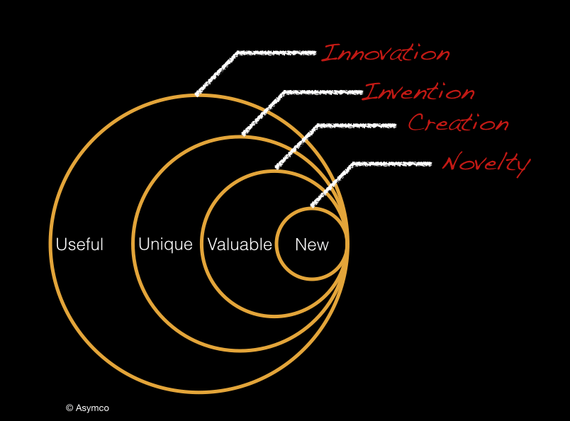
We frequently link to stories about innovation related to protecting natural and cultural heritage, particularly our own favored practice of entrepreneurial conservation. We do so with the hope, and sometimes blind faith, that what we are focused on is not only effective (as in, accomplishing what we set out to accomplish), but also useful (as in, of lasting, rather than just short term value). So, Horace Dediu has our attention. Not the clever new terminology, which is not what we find innovative, but the basic point behind it seems to be:

Innoveracy: Misunderstanding Innovation

Illiteracy is the inability to read and write. Though the percent of sufferers has halved in the last 35 years, currently 15% of the world has this affliction. Innumeracy is the inability to apply simple numerical concepts. The rate of innumeracy is unknown but chances are that it affects over 50% of us. This tragedy impedes our ability to have a discourse on matters related to quantitative judgement while policy decisions increasingly depend on this judgement.

But there is another form of ignorance which seems to be universal: the inability to understand the concept and role of innovation.

Continue reading

Deep Caving

This slideshow requires JavaScript.

This video short, captured in a few screen shots above, accompanies an earlier post linked to in which:

Burkhard Bilger writes about the ongoing effort to explore what may be the deepest cave in the world, located in Mexico. It’s “a kind of Everest expedition turned upside down,” he observes. Above, watch the cavers scale slippery walls, swim through frigid water, and make camp in a cloud forest, as Bilger narrates.

Continue reading

Thinking In Unexpected Places

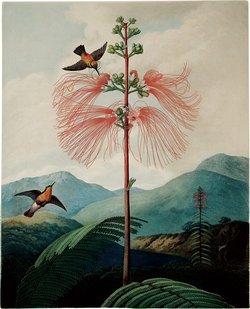
The Large Flowering Sensitive Plant, whose ‘plant electricity,’ Oliver Sacks writes, ‘moves slowly…as one can see by watching the leaflets…closing one by one along a leaf that is touched.’ Illustration from Robert John Thornton’s The Temple of Flora (1799–1807), published in a new edition by Taschen.

The Large Flowering Sensitive Plant, whose ‘plant electricity,’ Oliver Sacks writes, ‘moves slowly…as one can see by watching the leaflets…closing one by one along a leaf that is touched.’ Illustration from Robert John Thornton’s The Temple of Flora (1799–1807), published in a new edition by Taschen.

Thanks to the New York Review of Books for engaging one of the great thinker-researcher-writers of our time for this story The Mental Life of Plants and Worms, Among Others:

Charles Darwin’s last book, published in 1881, was a study of the humble earthworm. His main theme—expressed in the title, The Formation of Vegetable Mould through the Action of Worms—was the immense power of worms, in vast numbers and over millions of years, to till the soil and change the face of the earth. But his opening chapters are devoted more simply to the “habits” of worms.

Worms can distinguish between light and dark, and they generally stay underground, safe from predators, during daylight hours. They have no ears, but if they are deaf to aerial vibration, they are exceedingly sensitive to vibrations conducted through the earth, as might be generated by the footsteps of approaching animals. All of these sensations, Darwin noted, are transmitted to collections of nerve cells (he called them “the cerebral ganglia”) in the worm’s head.

Continue reading

World Heritage Day At Raxa Collective Properties

University_Salamanca18 April 2013

Prepare the International Day on Monuments and Sites!

India does not appear on the Events list, but no matter. We take matters into our own hands. Cardamom County‘s relationship with its neighbor, Periyar Tiger Reserve, is stronger than ever; River Escapes has been a pioneer of ecological good practices in Kerala’s backwaters; and now Spice Harbour is contributing to the renaissance of Mattanchery. We encourage our readers, if close to any of the events, to join in:

At the heart of the work of ICOMOS lies the understanding, the protection and the conservation of those structures, sites and ensembles whose interest is linked to history and memory. The value of these elements of our cultural heritage is associated with the history of societies and peoples, as well as the arts and sciences they developed.

Continue reading

Caveat Emptor For Intangibles

In case you do not already know about him and his writing on topics related to modern technology as it intersects with the law, the post excerpted below by Tim Wu is a good place to start. It seems possible to simultaneously agree with the specific point of this post, and also be confused with the general implication. Agreement could stem from reading enough of Tim Wu to implicitly trust his expertise. Confusion could stem from the itinerary planning screen-captured and shown above, which reminds that not everything we buy is re-sellable. Still, we click “Hold” to ponder this just a bit more to hopefully clear the fog:

…we tend to overlook the milder forms of truth-stretching that have come to shape online living, and it’s hard not to. They’re often perpetuated by big and reputable companies, like Apple, Seamless, and Amazon.

Take search. General search sites, like Google and Bing, are pretty straightforward: you type in a query and get results ranked by some measure of relevance; you also see clearly marked advertisements. This experience tends to shape our expectation that searches deliver relevant results. But the same search on sites like Amazon or Seamless turns up not only relevant results but disguised advertisements, as well. Continue reading

Bats, Rice And Coexistence

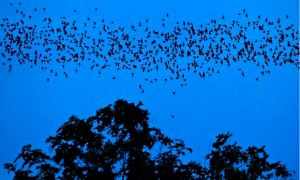
Scientists believe wrinkle-lipped bats could prevent annual paddy losses of nearly 2,900 tons, enough to feed 26,000 people for a year. Photograph: Barbara Walton/EPA

Scientists believe wrinkle-lipped bats could prevent annual paddy losses of nearly 2,900 tons, enough to feed 26,000 people for a year. Photograph: Barbara Walton/EPA

Good news out of Thailand for both bats and rice and also for the concept of mutually beneficial coexistence:

Bats that prey on a major rice pest in Thailand could save paddy harvests worth millions of dollars and help contribute to better food security, claim scientists in a paper published in Biological Conservation.

Continue reading

Going Deep Into Caves

Atanasio, a cliff-face opening in the Sierra de Juárez mountains of Oaxaca, Mexico. The mountains are home to the Chevé system, some eighty-five hundred feet deep—potentially the deepest cave in the world.

Atanasio, a cliff-face opening in the Sierra de Juárez mountains of Oaxaca, Mexico. The mountains are home to the Chevé system, some eighty-five hundred feet deep—potentially the deepest cave in the world.

The writer who brought you the inside scoop on wild things gone wild, brings you a journey deep into the earth:

On his thirteenth day underground, when he’d come to the edge of the known world and was preparing to pass beyond it, Marcin Gala placed a call to the surface. He’d travelled more than three miles through the earth by then, over stalagmites and boulder fields, cave-ins and vaulting galleries. He’d spidered down waterfalls, inched along crumbling ledges, and bellied through tunnels so tight that his back touched the roof with every breath. Now he stood at the shore of a small, dark pool under a dome of sulfurous flowstone. He felt the weight of the mountain above him—a mile of solid rock—and wondered if he’d ever find his way back again. It was his last chance to hear his wife and daughter’s voices before the cave swallowed him up. Continue reading

51-Spiced Vegetarian Lunch With View

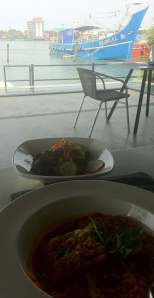
Seasonal vegetables wrapped in chickpea crepe

51-spiced vegetables, wrapped in chickpea crepe, with summer tomato coulis

It is good to sit by the water at lunchtime, on occasion, and read while tasting something new (thanks, kitchen!). Here, an incidental passage from a book review that fit yesterday’s midday meal at 51:

…When my grandmother taught me to make banana pancakes, which we did every Wednesday night through much of my childhood, she would counsel “Hold the bowl” as I stirred, which became, in our letters to each other, code for “I love you.” At the beginning of Nigel Slater’s memoir “Toast: The Story of a Boy’s Hunger,” the author puts it this way: “It is impossible not to love someone who makes toast for you.”

Surely none of this was on my mind on April 5, 2013, when I purchased “Vegetarian Cooking for Everyone,” by Deborah Madison. I had, exactly a month previously, met a swell fellow, who happened to be vegetarian… Continue reading

Collaborative Shorts From Brown

We have been watching those folks at Brown University since the early days of this blog, and more recently too. They are a community we never tire of learning more about, and from. In the five years since they first started offering simple but imaginative explanations for complex phenomena (many, but not all, oceanographically topical), we have almost come to expect a six minute short on how to save the world’s high seas from over-fishing collapse. Not likely, but we appreciate their efforts with each new short, most recently from about six weeks ago.

The New York Times, one of our many regular sources for excellent science writing, paid attention to this project late last year. We look forward to more. Background on, and credits for, the shorts:

Continue reading

Know Your High Seas, EEZs, And 1-2-3s

EEZs are shown in green and high seas in blue. EEZs comprise 42% of the planet’s oceans.

EEZs are shown in green and high seas in blue. EEZs comprise 42% of the planet’s oceans.

We are in awe of the scientists who help us understand this topic we write on and link to from time to time. The metrics required to understand overfishing in any meaningful way cannot be simple. But, a marker for a fishing zones we had not even known existed–the EEZ–is a good place to start counting:

The ocean is a big place, but not all seas are created equal. While 58% of the seas are classified as “high seas,” and open to access from all nations, there are over 150 exclusive economic zones (EEZs), which are the sole domain of the countries that operate them. EEZs comprise the remaining 42% of the ocean. The patchwork quilt of economic interests that blanket the ocean pose a problem for the fish who live there and the fisheries that exploit those fish. Continue reading

Time Zone Adjustments For Sleep


It is a drag. Just saying the two words that are the inspiration for this app below is a drag. So instead we will say it more soothingly, discussing the need for adjustments for sleep based on crossing time zones. This is definitely of interest to many of the travelers who make their way to properties we manage. Raxa Collective remains firmly rooted in Kerala, India–a long haul flight from most places–while expanding our project reach into Western Africa and Central America, which makes us susceptible to the attraction of this app brought to our attention by National Public Radio (USA):

Jet lag is nobody’s idea of fun. A bunch of mathematicians say they can make the adjustment less painful with a smartphone app that calculates the swiftest way to adjust.

Users plug in the time zone they’re traveling to, and the app will do the calculations before spitting out a schedule specifying when the user should stay in bright light, low light or be in the dark, says Olivia Walch, a graduate student at the University of Michigan who designed the app.

“The conventional wisdom is for every hour you’re shifting, it’s about a day of adjustment,” Walch says. So Washington, D.C., travelers going to Hong Kong — a 12-hour time difference — could take up to 12 days to adjust. The app can reduce that time to roughly four or five days, the inventors say. Continue reading

If You Happen To Be In London

ANDREAS GURSKY. EARLY LANDSCAPES     SPRÜTH MAGERS LONDON   APRIL 15 – JUNE 21 2014

Andreas Gursky Alba, 1989, 87 x 108 7/8 x 2 3/8 inches Copyright: Andreas Gursky / DACS 2014  Courtesy Sprüth Magers Berlin London

Andreas Gursky Alba, 1989, 87 x 108 7/8 x 2 3/8 inches Copyright: Andreas Gursky / DACS 2014 Courtesy Sprüth Magers Berlin London

Thnaks to Phaidon for bringing this exhibition to our attention:

…No one else has captured the queasy beauty of the modern world quite as well as this 59-year-old German. Yet, while his best-known images feel as if they faithfully capture contemporary life, it’s perhaps a little dispiriting to hear that Gursky admits to digitally manipulating some of his photographs. Continue reading

Birding’s Big Catch

The world of birding, it is safe to say, is growing. Occasionally we read about a noted person having established a passion for birdwatching and/or related conservation. Normally we do not take a humorist literally, but David Letterman, in announcing his retirement, seemed to give birds and in particular a newfound interest in bird identification a special credit in realizing he wanted to do something else with his time now:

…Letterman told the audience that people have always asked him how long he would continue to host. His answer is usually, “When this show stops being fun — I will retire 10 years later.”

Continuing his tale, Letterman said that he wanted to share an anecdote: Last fall, he went fishing with his 10-year-old son, Harry, and during the outing, they saw a giant, crazy-looking bird. So when Letterman got into work that following Monday, he spent the entire day making calls to bird societies, e-mailing the photo to his outdoorsy friends, and launching a full-scale investigation to find out what type of bird they saw. Continue reading

Chicago’s Vertical Farming

Plant Chicago, NFP/Rachel Swenie

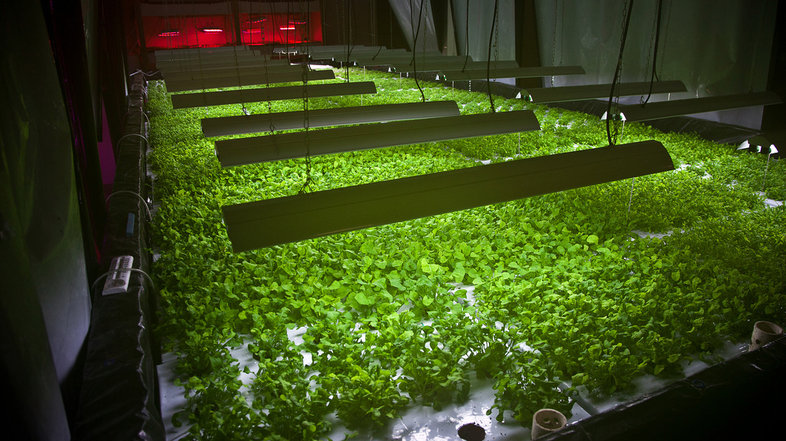
Arugula plant beds inside The Plant, a vertical farm operation in Chicago. Plant Chicago, NFP/Rachel Swenie

Thanks to National Public Radio (USA) for this story on their weekly program called The Salt:

From plant factories fueled by the magenta glow of blue and red LED lights, to the 30-foot tall Ferris wheel for plants in Singapore, we’ve shown you the design possibilities for growing vegetables up instead of out.

But critics ask, what kind of stresses does that put on the plant? And how do you feed this kind of intensive cultivation without spending more than what you get back in the harvest? Continue reading

If You Happen To Be In New Britain


home_030714

We have been following James Prosek since first learning about his work, and more recently have been looking for an opportunity to catch one of his in-person exhibitions. This opportunity is just around the corner:

bg_logoNaming Things in the Natural World
Monday, Apr. 21, 2014

9:30 a.m. Welcome reception with Coffee
10 a.m.-2:30 p.m. Program
Continue reading

If You Happen To Be In New York City

04-nypl-580

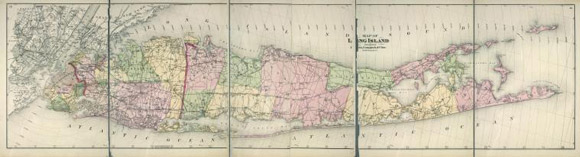
It has been a while since we have seen any old maps of Iceland, or old images of anything for that matter, so combined with a few select Raxa bloggers receiving a near-final copy of Seth’s honors thesis for review a few moments ago, this announcement came as a pleasant surprise:

Last week, the New York Public Library released twenty thousand maps from its extensive collection, which includes more than four hundred thousand sheets and twenty thousand books and atlases, as free, high-resolution digital downloads. In announcing the newly accessible maps, the N.Y.P.L explained that the holding includes more than a thousand maps of New York City from the seventeenth century to the twentieth century, “which detail transportation, vice, real estate development, urban renewal, industrial development and pollution, political geography among many, many other things.” Continue reading

Flynn, Come To Kerala!

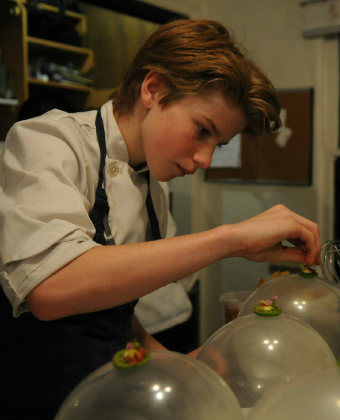
Awesome people get invited places. Awesome people who cook well, probably even more so. We think Flynn, who we first learned about when he was 13 years old, and who we were reminded about more recently in his 15th year of awesomeness, qualifies:

At the age of ten, Flynn McGarry wanted to cook. He began practicing his knife skills afterschool, and then soon after started creating dishes, simple at first, for a few of his mother’s friends. At eleven, came the purchase of Thomas Keller’s The French Laundry cookbook, then Grant Achatz’s Alinea. The influence was immediate…

As noted more than once recently, development of 51 and Spice Harbour have sensitized us to the intersection between food, art, and design so Flynn’s story continues to thrill us. Continue reading

Craft Beer, Designed

What with Spice Harbour and 51 design projects behind us, and the second biennale just ahead, stories about art, design, food and beverage catch our attention more than ever. On the latter, we might think each craft beer is itself an artist’s design searching for masterpiece status, but we might be wrong:

Milton Glaser Critiques Modern Beer Art 

The 84-year-old graphic-design legend who created the Brooklyn Brewery identity weighs in on what craft breweries are doing right and wrong.

Professors, aka Heroes, Who Teach What Others Might Shun

Thanks to the New York Times for the weekly Tuesday Science section:

08CONV_SPAN-thumbStandardA CONVERSATION WITH

What Fish Teach Us About Us

Neil H. Shubin, the paleontologist who helped discover a fossil hailed as a missing link between sea and land animals, talks about his television series, “Your Inner Fish,” and why he teaches anatomy classes.