Good Arcs Make Good Stories

Thanks to Maria Popova for sharing Kurt Vonnegut’s brief lesson on the basics of story-telling, a reminder to all of us that shaping the lines of the telling is key to the story-listener’s hearing of it.  As Seth shapes the story of Iceland’s role, and travelers’ story-telling roles, in the early precursor to modern nature tourism, the rest of us contributors to this site likewise note our own task in telling our stories effectively. In a written version on the same topic, Vonnegut put it this way:

…Now, I don’t mean to intimidate you, but after being a chemist as an undergraduate at Cornell, after the war I went to the University of Chicago and studied anthropology, and eventually I took a masters degree in that field. Saul Bellow was in that same department, and neither one of us ever made a field trip. Continue reading

A Non-Holi Technicolor Moment In Delhi

Max Bearak. Amitabh Kumar painting a wall in Shahpur Jat, one of South Delhi’s urban villages

Max Bearak. Amitabh Kumar painting a wall in Shahpur Jat, one of South Delhi’s urban villages

Normally we have thought of vivid color in conjunction with India’s amazing holy days, especially those called Holi. Thanks to India Ink for this story about the street art going up, up north in India’s capital city:

Street Art Festival Brings Color to the Walls of Delhi’s Urban Villages

By Max Bearak

NEW DELHI — While looking out from a balcony in one of Delhi’s many urban villages – former villages that were swallowed up by the ever-expanding capital — more often than not, one is confronted by a boring, gray wall – the bare side of another building. Continue reading

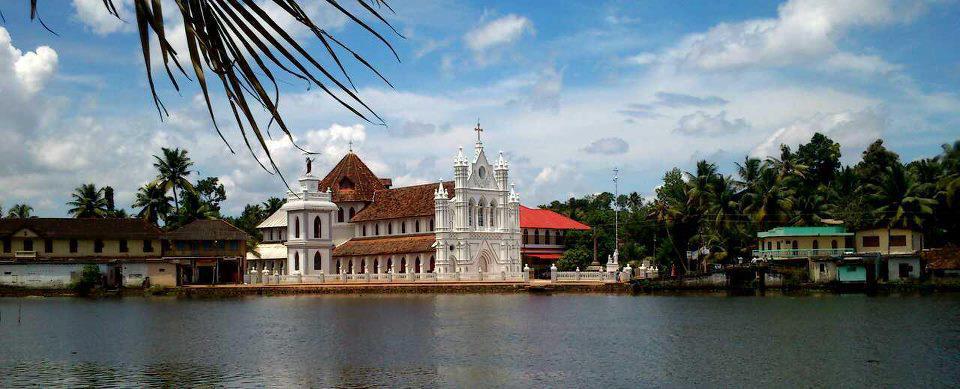
St. Mary’s Forane Church, Pullincunnu- Alleppey

Photo credits : Ramesh Kidangoor

Photo credits: Ramesh Kidangoor

St. Mary’s Forane Church is one of the oldest Christian Churches in India. This church is situated at Pullincunnu on the bank of Pampa River. The village is part of the Kerala Backwaters, a network of lakes, wetlands, and canals. Pulincunno is notable for the annual Rajiv Gandhi Trophy boat race. Continue reading

Making The Best Of A Surprise, Geothermal Energy Moves Forward In Iceland

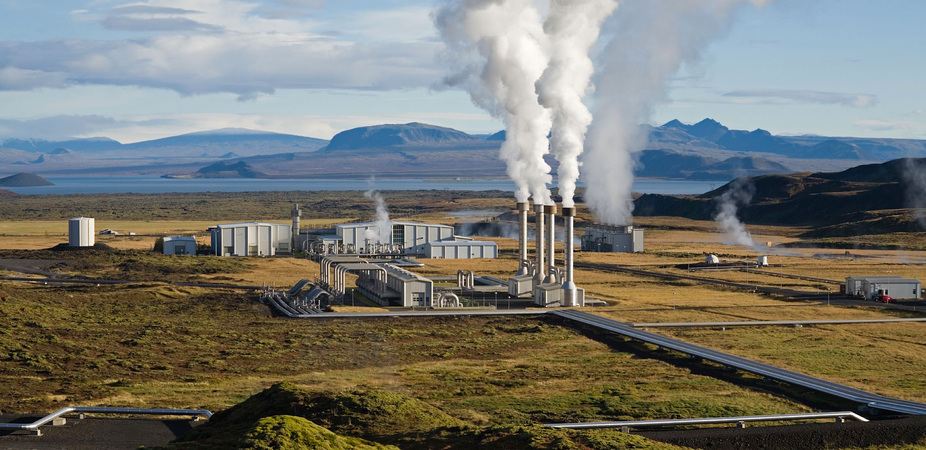
Getting into hot water - one of Iceland’s geothermal power plants. Gretar Ívarsson

Getting into hot water – one of Iceland’s geothermal power plants. Gretar Ívarsson

Frankly, we are more attuned at this moment to the historical vantage point, with this series reminding us of the earth’s untamed appearance via Iceland in centuries prior; but mindful of the future, of the need to find suitable energy solutions, and generally of our interest in scientific discovery the following article catches our attention:

Can enormous heat deep in the earth be harnessed to provide energy for us on the surface? A promising report from a geothermal borehole project that accidentally struck magma – the same fiery, molten rock that spews from volcanoes – suggests it could.

The Icelandic Deep Drilling Project, IDDP, has been drilling shafts up to 5km deep in an attempt to harness the heat in the volcanic bedrock far below the surface of Iceland. Continue reading

First Porsche, First Green Automobile?

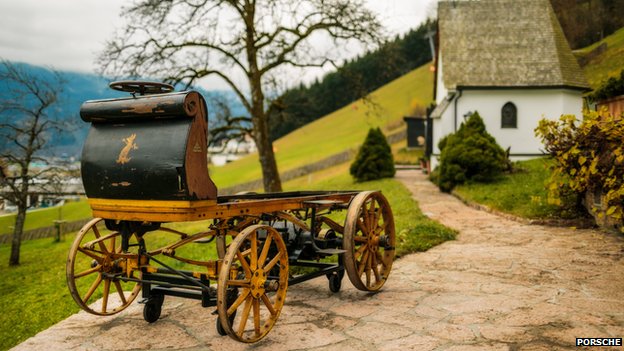
This is the first Porsche-designed vehicle, which had been stored in an Austrian garage since 1902

This is the first Porsche-designed vehicle, which had been stored in an Austrian garage since 1902

We are decidedly not the go-to source for information about automobiles, though from time to time we have been known to point out the innovations related to green tech and cars. Thanks to the BBC for their coverage of this intriguing conservation story we might file under cultural heritage, or alternative energy vehicles, or both:

Luxury automaker Porsche has revealed the first car designed by its founder was electric, in a show at its museum in Stuttgart-Zuffenhausen, Germany.

Ferdinand Porsche’s design was dubbed the Egger-Lohner electric vehicle C.2 Phaeton model, or the P1 for short. Continue reading

Gujarat Street Photographer, Pranlal Patel

Thanks to India Ink for bringing his work to our attention:

A Pioneer of Street Photography Leaves Behind Strong Images of Indian Women

By Zahir Janmohamed

AHMEDABAD, Gujarat — A little over five weeks before his first exhibition in the United States,  Continue reading

Mindfulness, Effectiveness And Health Benefits

Layout 1

Take a brilliant, creative social scientist, without any respect for conventional wisdom and you get Ellen Langer. She is a fantastic storyteller, and Counterclockwise is a fascinating story about the unexpected ways in which our minds and bodies are connected. – Dan Ariely, Ph.D., author of Predictably Irrational

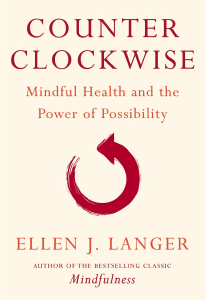
We are in constant search of better ways to focus our efforts and achieve more effective results. The work of Ellen Langer, whose new book (click the image above to go to her website) continues her “mindfulness” theme on into the realm of health, brought to our attention in a post on the New Yorker’s website today:

In the mid-nineteen-seventies, the cognitive psychologist Ellen Langer noticed that elderly people who envisioned themselves as younger versions of themselves often began to feel, and even think, like they had actually become younger. Men with trouble walking quickly were playing touch football. Memories were improving and blood pressure was dropping. The mind, Langer realized, could have a strong effect on the body. That realization led her to study the Buddhist principle of mindfulness, or awareness, which she characterizes as “a heightened state of involvement and wakefulness.”

But mindfulness is different from the hyperalert way you might feel after a great night’s sleep or a strong cup of coffee. Continue reading

A Science Writer’s Public Service

41EWvquSk3L_SL500_AA300_.5095659_std

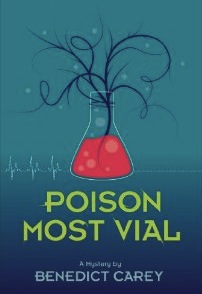
The famous forensic scientist Dr. Rama is dead – murdered – and suspicion has fallen on Ruby Rose’s father, the only family she has. Ruby is new to her school and is having enough trouble just making a friend; now she has far bigger problems. To save her father, she will have to solve the murder herself, relying for help on an elderly neighbor who used to be a toxicologist. But is this woman reliable? And is there enough time?

Benedict Carey is better known as a science reporter for the New York Times, but that is just his day job.  It certainly qualifies as public service, but in addition he moonlights on further public service. He explains his purpose:

Both books are adventures in which kids use science to save themselves and solve a mystery. It’s real science, accessible but not obvious, and builds understanding of some fairly advanced principles – transcendental numbers (among other things) in “Island of the Unknowns,” and mass chromatography in “Poison Most Vial.”

In a trailer park called Adjacent, next to the Folsom Energy Plant, people have started to vanish, and no one seems to care. At first Lady Di and her best friend, Tom Jones, barely notice the disappearances—until their beloved math tutor, Mrs. Clarke, is abducted, too. Mrs. Clarke has left them clues in the form of math equations that lead them and other kids all over the trailer park, through hidden tunnels under “Mount Trashmore,” and into the Folsom Energy Plant itself, where Lady Di and Tom Jones and a gang of other misfits uncover the sordid truth about what’s really happening there. That's Di on the left and Tom on the right.

In a trailer park called Adjacent, next to the Folsom Energy Plant, people have started to vanish, and no one seems to care. At first Lady Di and her best friend, Tom Jones, barely notice the disappearances—until their beloved math tutor, Mrs. Clarke, is abducted, too. Mrs. Clarke has left them clues in the form of math equations that lead them and other kids all over the trailer park, through hidden tunnels under “Mount Trashmore,” and into the Folsom Energy Plant itself, where Lady Di and Tom Jones and a gang of other misfits uncover the sordid truth about what’s really happening there. That’s Di on the left and Tom on the right.

Perfectly principled reality: if you had been restricted to Benedict Carey’s better known science reporting for the New York Times, that would be not such a bad thing. He also serves on the board of Edge, a non-profit which seeks to “arrive at the edge of the world’s knowledge, seek out the most complex and sophisticated minds, put them in a room together, and have them ask each other the questions they are asking themselves.” Again, not bad.

But we like in particular the effort to branch out further, reaching the next generation and aiding the mathematical and scientific efforts of educators who otherwise compete with entertainment of all sorts for the hearts and minds of youth.

That said, do not miss his reporting. He is a master at this trade, and improves the quality of conversation we are determined to engage in more often. His most recent article for the Times reviews the research into cognitive performance and aging and with humor and gravitas all at once he acknowledges why as we get older we tend not to be too interested in these findings: Continue reading

Better About The Weather

c714f9b2f

Click the image above to go to a post on the Atlantic‘s website by Senior Editor and technology writer Alexis Madrigal about being better prepared to discuss the weather.  Not the way a previous generation might have talked about it, but no thanks at all to the climate conundrums confronting this and future generations:

Talking about the weather used to be a euphemism for not talking about anything at all.

But lately, that once-innocent diversion has become mottled with darkness. No matter how many times scientists tell us that weather isn’t climate, the day-to-day weather sure does remind us of the long-term trends that together form the climate.

Is the unseasonably warm, dry weather we’re having in California a pleasant occasion for pleasantries or an impending sign of planetary doom? Maybe both. Continue reading

Fair Use In The Ever-Modernizing World

We have no doubt, as we post our several items a day on this blog, that we should credit photographs, writing and all other content whether original to our own contributors, linked to a third party website, or whatever the case may be.  But we admit sometimes there are borderline cases where we learn by trial and error what the rules of fair use are.  We appreciate all learning opportunities on this topic. Click the banner to the left to go to the magazine’s website Technology section, where this article illuminates the shadowy borders of fair use, with a story about two remarkable young entrepreneurs and the ethical, if not legal, issues they face in building traffic over the internet:

There is a new ubiquitous media brand on Twitter.

No, I’m not talking about Pierre Omidyar’s First Look Media or BuzzFeed or The Verge, or any other investor-backed startup.

I’m talking about @HistoryInPics, which, as I discovered, is run by two teenagers: Xavier Di Petta, 17, who lives in a small Australian town two hours north of Melbourne, and Kyle Cameron, 19, a student in Hawaii. Continue reading

If You Happen To Be In New York City

This slideshow requires JavaScript.

Raxa Collective has favored photography that captures natural and/or cultural heritage at its best in documentary mode.  But we are interested in the boundaries of this medium, not least because several contributors cross those boundaries in their other work.  If you are interested in these issues, and happen to be in New York City any time in the next few months this show looks worth a visit:

Organized by ICP Curator Carol Squiers, What Is a Photograph? will explore the intense creative experimentation in photography that has occurred since the 1970s. Conceptual art introduced photography into contemporary art making, using the medium in ways that challenged it artistically, intellectually, and technically and broadened the notion of what a photograph could be in art. A new generation of artists began an equally rigorous but more aesthetically adventurous analysis, which probed photography itself—from the role of light, color, composition, to materiality and the subject.What Is a Photograph? brings together these artists, who reinvented photography.

From the press release for the exhibit:

On view at the International Center of Photography from January 31 through May 4, 2014, What Is a Photograph? explores the range of creative experimentation that has occurred in photography since the 1970s. Continue reading

Butterflies of Kerala

Photo credits : Shiny Jose

Photo credits: Shiny Jose

Kerala’s butterflies are a richly diverse and scientifically interesting group of insects, which number around 330 species in the state. The largest butterfly in India, the Southern Birdwing, has a wingspan of about 25 centimeters, and the smallest, called the Grass Jewel (pictured below), has only a 1.5 to 2 centimeter wingspan. Can you name the species in the photo above? Continue reading

Early Adopters Of Agricultural Ethics

In conversation with Milo recently, several of us concluded that we might soon expect a series of illuminating posts from him on the topic of alternative agriculture, much as we have had from him over the last few years illuminating and visually arresting series of posts on dragonflies, mushrooms and photography itself.  So, we share the article below from the Science section of the New York Times this week, in anticipation of those posts on a topic of great interest to Raxa Collective:

FARM-slide-V3OF-thumbStandard-v2The Elders of Organic Farming

By CAROL POGASH

For nearly a week, two dozen pioneers of sustainable agriculture from the United States and Canada shared decades’ worth of stories, secrets and anxieties.

Bhutan, Inspiration For A Happier World

Click the image to the left to go to the Kingdom of Bhutan’s website, which we have been visiting in recent months in advance of a planned visit for work. Our friends to the north will surely appreciate the sentiments and insights of this essay in the current issue of Orion magazine, which we find useful background preparation in case our visit, and prospective new project, come to pass:

FROM THE FORESTED HILLSIDE above us, a bulldozer sends giant rocks and tree limbs sailing down onto the hundreds-of-years-old footpath leading us from the Paro Valley floor to Dra Lhakhang, a cliffside temple where the six of us plan to sleep on the first night of our three-day hike to, Dragipangtsho, a lake considered holy. Karma Wangchuk, the leader of our hiking party, blows his pocket whistle and screams along with the rest of us, hoping our distressed voices will penetrate the roar of the machine. Finally, the bulldozer stops and the road crew hollers and waves down to us in acknowledgement, oblivious to our peril. Continue reading

Vivid Performance Art, Clearing The Fog Surrounding Climate Change

eva-mosher1Sometimes, as with a good cup of coffee in the morning, our wake up is enhanced with a dose of intoxicating taste to get our senses going. As we swing from polar vortex to the next big thing in climate change, thanks to the dean of Duke’s Nicholas School of the Environment for this article on Eva Mosher and the important role performance art may play in the needed wake up call:

Convincing Americans that climate change is a real and present danger has proven to be a daunting and often frustrating challenge for scientists. Despite the growing evidence of climate change, and humanity as the driver of that change, there remains a hardcore 20 percent or so that reject the whole notion of it and a healthy percentage that remain unconvinced that humans are causing it. And on top of those dismal statistics, more than half of Americans believe that climate change does not represent a threat to them.

Scientific Data vs. Vividness and Accessibility Continue reading

Sustainable Forestry And Eco-efficient Wood Heating

This slideshow requires JavaScript.

Thanks to Harvard Gazette for this follow up story shedding more light on the role of forests of Massachusetts in better understanding the planet’s ecological needs:

In heavily wooded New England, forests are dynamic ecosystems that support a range of plants and animals, and their ability to soak up carbon also makes them an important piece of the climate-change puzzle. How changes to forests over time affect the flow of carbon through the atmosphere has long been a focus of researchers at the 3,700-acre Harvard Forest. Now, three wood-fired boilers are providing those scientists with a new tool to expand their understanding. Continue reading

Maps, More Than A Practical Tool

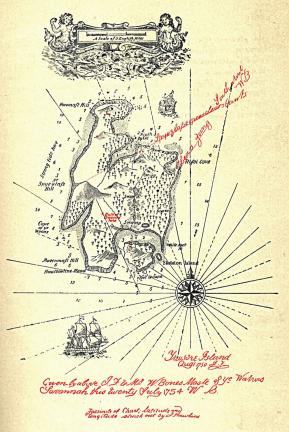
Map of Treasure Island, from Robert Louis Stevenson’s “Treasure Island.”

Map of Treasure Island, from Robert Louis Stevenson’s “Treasure Island.”

Travel without a map can be fun, sometimes, if adventure is the objective; but context and direction helps more than it hurts most of the time. The same is true when maps are there just for the sheer pleasure or comfort, in environmentally sensitive, creative graphic design, or for historical research. This post on the New Yorker‘s website captures the sentiment well:

For years, I carried the same map wherever I went. When I wasn’t travelling, Scotch Tape held it to the back of my bedroom door: it was visible to me when the door was closed, but invisible to almost everyone else. That map moved from dorm rooms to apartments and houses, from the Eastern Shore of Maryland to New England, from New England to the United Kingdom, and back again.

When I felt homesick, I would drag my fingers up and down the map’s paper folds, tracing its shorelines and rivers, wishing they were the real thing. But touching that map only made me more homesick. Continue reading

20 Years Of Camera Traps In India

4640_photo_kdlffejdk6syhb2fejxe7v66csguoo4tfzqnozlypf2gukfxr27q_850x638

Thanks to the National Geographic Society’s excellent website (membership required) for this story on a topic close to our hearts. Camera traps are the source of some of the best nature photography we have seen, as made clear by these authors:

By Krithi K. Karanth and Arjun Srivathsa

With close to 50 species of wild carnivores, India is a haven for elusive families of cats, dogs, hyaenas, bears, otters, civets and mongooses. The Wildlife Conservation Society-India Program has been camera-trapping critters in India for more than 20 years. Continue reading

Science Writers Contribute To The Conversation

As we have more conversation in 2014 and beyond, it will definitely be improved with the science writers we have been following the last few years, and their successors who follow in their footsteps.

For example, we appreciate Virginia Hughes and the kind of writing that she publishes all over the place, and which National Geographic‘s Phenomena website collects, with this most recent example of hers:

An Old and Optimistic Take On Old Age

I’ve been reading and thinking a lot lately about the process of aging. Many scientists who study it argue — quite convincingly — that it’s the most important scientific topic of our time. In his 1997 bestseller Time of Our Lives, biological gerontologist Tom Kirkwood writes that the science of human aging is “one of the last great mysteries of the living world.” Continue reading

Starling Murmuration Season

This slideshow requires JavaScript.

Thanks to the Guardian for this photographic spread on one of our favorite bird phenomena:

From October to March thousands of starlings flock together to perform extraordinary displays across the UK. This gallery captures the murmurations of starlings as they swirl in the sky above reed beds where they roost at night. Some of the pictures were sent to us by our readers via GuardianWitness and via Guardian Environment desk’s Flickr group Green Shoots.