One Birthday, Two Remarkable Men

lead

Birthdays do not really matter. But ideas do. And when big ones come along, we celebrate the men and women who shared them in various ways. One way, pedestrian as it may seem, is remembering them on their birthday. Artists and musicians, likewise. We had not remembered, when we posted this yesterday, of this coincidence, but the Gopnik essay mentioned below (we now recall) is worth reading and we thank the Atlantic‘s website for reminding us via this blog post by Alexis Madrigal:

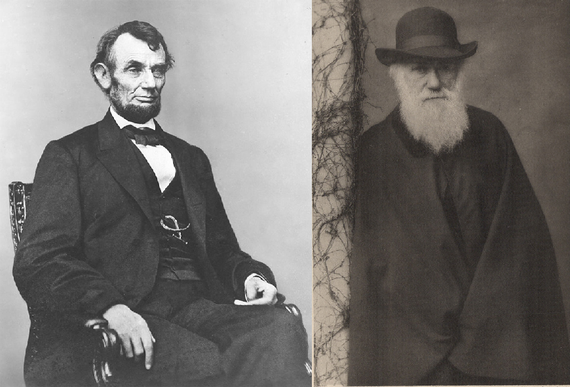
February 12 was a big day in 1809. Abraham Lincoln was born in a wild Kentucky; Charles Darwin was born in a refined Shrewsbury, Shropshire. One man held together the Union. The other developed a theory that resonates through the sciences and beyond to this day. While it’s often difficult to unspool the impacts that individuals have on the world, it seems fair to say that these two minds did something consequential on this rock.

And in a 2009 essay, writer Adam Gopnik tried to get at the shared method of their influence. Continue reading
When In Doubt, Musical Theater

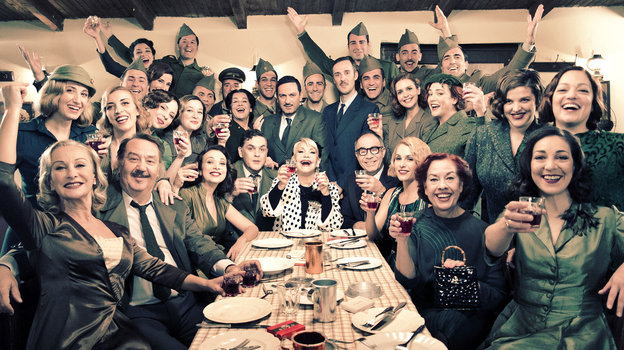
Greek vocal icon Marinella, center, sings "Children of Greece," a song once sung to Greek soldiers as Italian and German forces invaded the country. As they endure hard times today, Greeks are turning to theater that shows triumphs over adversity in the last century.

Greek vocal icon Marinella, center, sings “Children of Greece,” a song once sung to Greek soldiers as Italian and German forces invaded the country. As they endure hard times today, Greeks are turning to theater that shows triumphs over adversity in the last century.

Thanks to National Public Radio for this story from Athens, where several Raxa Collective members have family and friends who attest to the tough times there. The story is interesting because it is counterintuititve to us, with no offense to those who appreciate musicals, that this form of theater has proven so popular at such a time as this. It is not what we might have first thought up as an antidote for tough times, but who are we to argue with effective salves:

It’s a full house at the 2,000-seat Badminton Theater in Athens. On stage is a musical about the singer Sofia Vembo, whose warm contralto voice comforted Greeks during World War II.

The song that is bringing the audience, mostly Greeks in their 60s and 70s, to tears and applause is called “Paida Tis Ellados, Paidia,” or “Children of Greece.” Sofia Vembo sang it to Greek soldiers as Italian and German forces invaded the country.

On this evening, it’s sung by 75-year-old Marinella, the platinum-haired icon of modern Greek music. She’s joined by a young cast in 1940s dresses and military garb.

In the audience, a young, green-eyed dermatologist named Fiori Kousta is passionately singing along.

“This song gives me hope,” she says, “because it reminds me that Greeks have been through much worse than what we’re going through today. Continue reading

If You Happen To Be In New York

This slideshow requires JavaScript.

Thanks to the New Yorker‘s website for keeping us posted on the first show of a new curator at MOMA, in a medium of expression we care about for various reasons both aesthetic and technical:

In this week’s issue of the magazine, Vince Aletti talks to Quentin BajacMOMA’s new chief curator of photography, about “A World of Its Own: Photographic Practices in the Studio,” his first show for the museum:

“I’m a bit tired of the predictable history from the daguerreotype to the digital print,” says the Paris-born Bajac, who comes to MOMA from stints at the Musée d’Orsay and the Centre Pompidou, where he was the head of the photography department from 2007 to 2013. Continue reading

205 Years Ago On This Date

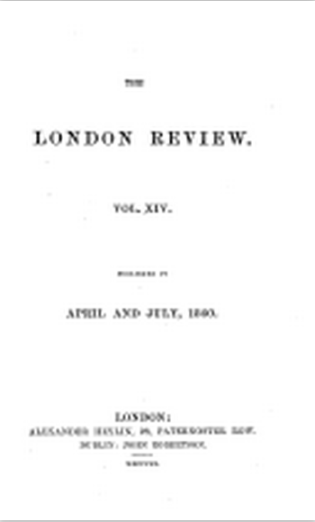
The London Review: Volume 14. John Telford Benjamin Aquila Barber. January 1, 1860. J.A. Sharp – Publisher

He has plenty of detractors, and while those detractors are less likely to read anything on these pages we still reach out with a thought: Charles Darwin’s birthday is an important one, to the degree any birthday is important after someone is no longer among us.  A day to remember someone who lived what can only be called a good, important life.  Below we link to a quotation that Seth found, as archival researchers and modern folk are likely to do, in a journal reviewing On the Origin of Species early in 1860:

Hitherto we have said nothing of the aim of this book. It is an attempt to prove that all existing plants and animals have not been created in their present sharply-defined specific forms, but have been gradually changed in the course of millions of millions of generations, under the operation of a law of unlimited variation. ‘Probably all the organic beings that have ever lived on this earth have  Continue reading

Walking City, For Design

For our design-oriented readers/viewers, a worthy eight minutes from the folks at Universal Everything:

Referencing the utopian visions of 1960’s architecture practice Archigram, Walking City is a slowly evolving video sculpture. The language of materials and patterns seen in radical architecture transform as the nomadic city walks endlessly, adapting to the environments she encounters. Continue reading

Cold, Hard Truths

Photograph by Martin Rollins.

Photograph by Martin Rollins.

Thanks to Maria Konnikova on the New Yorker‘s website for this post showing how one’s personal experience, for example with weather, can impact one’s perception of broader range of phenomena, such as climate change:

The winter of 2010 was brutal. In February, three blizzards smashed into the mid-Atlantic in the span of three weeks, burying the region under record amounts of snow. Thousands of people lost power; grocery-store shelves were stripped bare; cars were abandoned on highways; even the federal government shut down. The first two blizzards, which were Category 3 winter storms, paralyzed cities from Washington, D.C., to New York and became known, collectively, as the Snowmageddon. Lisa Zaval, a researcher studying perceptions of global warming, told me that she noticed that the storm also had a “strange side effect: an increase in skeptical remarks about global warming.” News reports, she said, expressed disbelief in the phenomenon, while blogs like If Global Warming Is Real Then Why Is It So Cold? began to pop up. “People seemed to be taking the extreme cold weather as evidence against global climate change,” she said. Continue reading

Temple Architecture – Thrikkaikunnu Mahadeva Temple

Photo credits : Immanuel Abraham

Photo credits: Immanuel Abraham

Kerala has more than 20,000 temples dotting its landscape. Unique in their design and construction they stand out when compared to other Indian temples. Unlike other regions of the country, Kerala’s temples are primarily wooden structures that stress horizontal lines rather than tall towers and pillars. Continue reading

Vegetarian Music

This slideshow requires JavaScript.

While we complete our design and planning for the menu and the musical accompaniment at 51, the restaurant at Spice Harbour, we seem to have hit two birds with one stone in our research today. We tend more and more to the preferences of vegetarian travelers, and to the tendency of many non-vegetarian guests generally to reduce consumption of animal protein. And everyone loves good music. So this caught our attention, thanks to a slideshow on the Reuters newsfeed; this orchestra’s website tells the story (with a great video here):

Worldwide one of a kind, the Vegetable Orchestra performs on instruments made of fresh vegetables. The utilization of various ever refined vegetable instruments creates a musically and aesthetically unique sound universe.

The Vegetable Orchestra was founded in 1998. Based in Vienna, the Vegetable Orchestra plays concerts in all over the world. Continue reading

India’s Visa On Arrival Program, Expanding Dramatically

Prakash Singh/Agence France-Presse — Getty Images. Travelers waiting at immigration counters at the Indira Gandhi International Airport in New Delhi on July 14, 2010.

Prakash Singh/Agence France-Presse — Getty Images. Travelers waiting at immigration counters at the Indira Gandhi International Airport in New Delhi on July 14, 2010.

The program started recently, to ease the red tape for visiting India, has been deemed successful enough to be worthy of expansion; and then some. Thanks to India Ink for pointing out this news, which will be welcome news to Raxa Collective’s many visitors from outside India:

India said it would seek to expand its visa-on-arrival program to tourists from 180 countries, including the United States and China, to encourage more people to visit the country. Continue reading

Kanakakunnu Palace – Trivandrum

Photo credit: Ramesh Kidangoor

Kanakakunnu Palace was built during the reign of Sree Moolam Tirunal (1885-1924), one of the most popular ruler’s of Travancore state.  Situated near the Napier Museum, it was mainly used for the Royal family guest entertainments. Continue reading

Indians In Jamaican Territory

Photograph by Alex Livesey/Getty.

Photograph by Alex Livesey/Getty.

Samanth Subramanian–an author we hope will pay us a visit in Kerala one day soon, considering how much of his authorship overlaps with our own interests, especially this book–has posted on the New Yorker‘s website a blog post about a remarkable young man, and two fellow countrymen from India, very much worth the read. The Jamaican bobsled team gets all the attention, and it is well deserved, but they are, rather surprisingly, in good company. We excerpt from the second half of the post because the first half is a too-familiar “dirty laundry” story which we would rather not repeat, but what follows is inspirational:

…The thirty-two-year-old Keshavan will be participating in his fifth Winter Games. He set a speed record for Asia in 2012 and won the Asian Luge Cup in 2011 and 2012, but he has not been so dominant on the world stage; his best Olympic performance remains a twenty-fifth-place finish at Turin, in 2006. Continue reading

Photographs Competing For Honor, Via Sony

This slideshow requires JavaScript.

Thanks to the Atlantic for this link over to the 33 photos chosen as finalists for this great annual competition; from the website of the WPO:

…Selected from 139,544 images from 166 countries, WPO today reveals the shortlist for the 2014 Sony World Photography Awards. The highest number of entries in the awards’ seven year history, this year’s jury selected an eclectic shortlist representing the very finest in international contemporary photography from 2013. Continue reading

Get To Know The Baffler

This post is simply a link to a resource that we think furthers the case for the liberal arts tradition. In case you do not yet know it, get to know it here:

The epigraph stamped on The Baffler no. 1, from Arthur Rimbaud’s “Morning of Drunkenness,” introduced it as a punk literary magazine. It was the summer of 1988. The founders, Thomas Frank and Keith White, were recent graduates of the University of Virginia. They named their magazine as a joke on academic fads like undecidability, then in fashion. The Baffler was born to laugh at the baffling jargon of the academics and the commercial avant-garde, to explode their paralyzing agonies of abstraction and interpretation. Continue reading

Snowy Owls

We first shared news of this fascinating species’ strange movements late last year, and since then the unusual Bubo scandiacus behavior has only been more eye-catching.

Last week, the New York Times reported that the Boston area is “seeing the largest number of snowy owls ever recorded,” and that birdwatchers had even spotted a Snowy Owl in Bermuda. See the excerpt from John Schwartz’s article below:

01-SNOWY-1-master675

Norman Smith releasing a snowy owl in Duxbury, Mass., that had recently been captured at Logan airport in Boston. Photo by Gretchen Ertl for The New York Times

“This year’s been bizarre,” said Dan Haas, a birder in Maryland. “The numbers have been unprecedented. Historic.”

No one is sure why so many snowies are showing up in so many places — whether it can be attributed to more food in their Arctic habitats than usual, or climate change at the top of the world. “Think about the canary in the coal mine,” said Henry Tepper, the president of Mass Audubon, “you think about the snowy owl in the Arctic.” Continue reading

India’s Exuberant Art Market

Courtesy of Jhaveri Contemporary gallery An installation by Rana Begum that was sold by Jhaveri Contemporary gallery in Mumbai, Maharashtra.

Courtesy of Jhaveri Contemporary gallery. An installation by Rana Begum that was sold by Jhaveri Contemporary gallery in Mumbai, Maharashtra.

Thanks to India Ink for this update on the expanding market for contemporary art in India (click the image above to go to the source):

NEW DELHI — On the heels of Christie’s successful auction in India, the sixth edition of the India Art Fair demonstrated that demand in the country’s art market remains strong.

Spread across three tents and 200,000 square feet, this year’s fair, which ran from Thursday to Sunday, featured 91 booths and modern and contemporary works by over 1,000 artists from India and overseas…

Bedeviling Tasmanian Conservation Conundrum

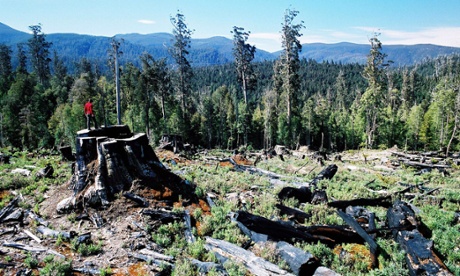
The Wilderness Society says more than 93% of the disputed area is old growth, rainforest or intact natural forest and non-forest. Photograph: AAP

The Wilderness Society says more than 93% of the disputed area is old growth, rainforest or intact natural forest and non-forest. Photograph: AAP

The Guardian today reports on a disturbing attempt to roll back conservation in Tasmania:

Fallout from the federal government’s request to Unesco to remove 74,000 hectares of Tasmanian forest from world heritage listing has erupted into a war of words and pictures over the status of the disputed land.

On Friday the Coalition announced it would follow through on an election commitment to request a rollback of last year’s 170,000 hectare extension of world heritage listed forest. The final proposal sought to delist a smaller area of 74,000 hectares but was met with strong opposition from environmental groups, the Tasmanian state government and representatives of the timber industry. Continue reading

Really, Syngenta?

Hayes has devoted the past fifteen years to studying atrazine, a widely used herbicide made by Syngenta. The company’s notes reveal that it struggled to make sense of him, and plotted ways to discredit him. Photograph by Dan Winters.

It has been many months since we last read something that a company did that made us think–Really?–in this manner that we have on several earlier occasions. We are sparing in these kinds of posts because we still believe most companies, most of the time, want to do the right thing.  But when they clearly do not, they must be called out.

This post is a reminder to all of us to support public funding of science and private funding of journalism–subscribe to the New Yorker! Thanks to Rachel Aviv’s reporting, we see the fire behind the smoke, and it is not good fire. Two paragraphs of her story are shared here, but spend the 30-60 minutes digesting the whole story on the New Yorker‘s website, where thankfully it is not behind the subscription wall, and be sure to share it widely:

…Three years earlier, Syngenta, one of the largest agribusinesses in the world, had asked Hayes to conduct experiments on the herbicide atrazine, which is applied to more than half the corn in the United States. Hayes was thirty-one, and he had already published twenty papers on the endocrinology of amphibians. Continue reading

Science Writers’ Craft

At the aggregating blog Medium, a few tips from a great science writer, with a reiteration of what some non-science writers say about effective writing, where they do it, their routines, etc.:

If you want to get a handle on what’s happening at the frontier of biology, Carl Zimmer is your man. He’s the author of numerous books, including Evolution: The Triumph of an Idea, writes a regular column on science for the New York Times, and his award-winning blog, The Loom, is part of National Geographic’s Phenomena collective.

We asked him how he writes.

What’s the one thing you’ve learned over time that you wish you knew when you started out?

I wish someone told me I shouldn’t be making ships in a bottle. To write about anything well, you have to do a lot of research. Even just trying to work out the chronology of a few years of one person’s life can take hours of interviews. If you’re writing about a scientific debate, you may have to trace it back 100 years through papers and books. To understand how someone sequenced 400,000 year old DNA, you may need to become excruciatingly well acquainted with the latest DNA sequencing technology. Continue reading

Animal, Insect, Vegetable Altruism

It’s been said that there’s an imbalanced focus on ornithology within our site, but we can also claim to have a slightly skewed preference for sloths as well. Whether it’s their permanently gentle grin or their slow, methodical movements we’re not sure, but we know we’re not the only ones who find them fascinating.

Sloths are found in both rainforest and dry tropical forest ecosystems but the biodiversity of their habitat is nothing compared to what they carry around with them in their arboreal lives. A team of biologists from the University of Wisconsin led Jonathan N. Pauli and M. Zachariah Peery has recently tackled a 35-year-old mystery about sloth behavior.

The sloth is not so much an animal as a walking ecosystem. This tightly fitting assemblage consists of a) the sloth, b) a species of moth that lives nowhere but in the sloth’s fleece and c) a dedicated species of algae that grows in special channels in the sloth’s grooved hairs. Groom a three-toed sloth and more than a hundred moths may fly out. When the sloth grooms itself, its fingers move so slowly that the moths have no difficulty keeping ahead of them.

Every week or so, the sloth descends from its favorite tree to defecate. It digs a hole, covers the dung with leaves and, if it’s lucky, climbs back up its tree. The sloth is highly vulnerable on the ground and an easy prey for jaguars in the forest and for coyotes and feral dogs in the chocolate-producing cacao tree plantations that it has learned to colonize. Half of all sloth deaths occur on the ground. The other serious hazard in its life is an aerial predator, the harpy eagle.

Why then does the sloth take such a risk every week? Researchers who first drew attention to this puzzle in 1978 suggested that the sloth was seeking to fertilize its favorite tree. Meanwhile, the algae that gave the sloth’s coat a greenish hue were assumed to provide camouflage.

Writing last week in Proceedings of the Royal Society B, the Wisconsin researchers assembled all these pieces in a different way. They started by trying to understand what would compel the sloth to brave the dangers of a weekly visit to ground zero. Continue reading

Dictionary As Map To Identity

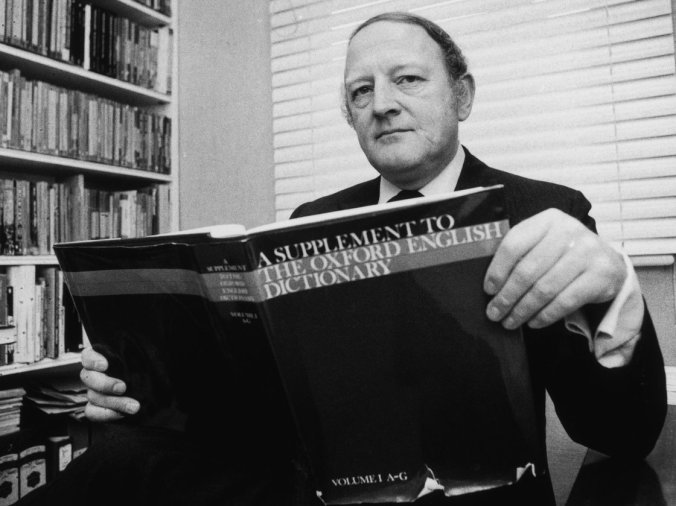
English writer and broadcaster Robert Robinson holding the first volume of A Supplement To The Oxford English Dictionary in 1977. Evening Standard/Hulton Archive/Getty Images

We love dictionaries, but apart from the Scrabble usage, we do not always know why. Thanks to Alva Noe for these clues (click the image above to go to the story on NPR’s Cosmos & Culture website):

Among the clutter and furniture of our intellectual lives, there are dictionaries. Although they have probably disappeared from the bookshelves of most college students, they haven’t disappeared. They’ve migrated online.

I thought of this while reading an article in The New York Times on the truly Herculean labors going on at the offices of the Oxford English Dictionary, where a team of scholars are busy producing the OED’s third edition. They started in 1994 and now anticipate finishing in 2037. It’s going to be a long book, if it ever comes out in book form. The second edition, published in 1989, was nearly 22,000 pages. (As reported in The New York Times.) Continue reading