Worlds And Distant Times Apart, Bridged By Ideas (Or Ideology)

Future Shlock

The New Republic is not a magazine we scan often, because its focus rarely intersects with our focus; even its Must Reads are to us, not-often-must; but occasionally we stumble on something of interest.  Perhaps because the first link of today had a technology component, we got on a roll thinking about the relationship between technology, ideas, culture. This particular article is worth reading simply for the quality of both content and style:

The sewing machine was the smartphone of the nineteenth century. Just skim through the promotional materials of the leading sewing-machine manufacturers of that distant era and you will notice the many similarities with our own lofty, dizzy discourse. The catalog from Willcox & Gibbs, the Apple of its day, in 1864, includes glowing testimonials from a number of reverends thrilled by the civilizing powers of the new machine. Continue reading
Technology, Globalization And Over The Top To Do’s

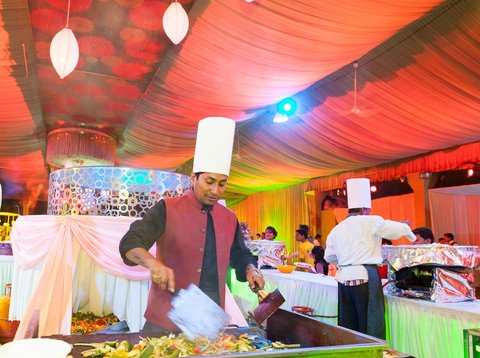
Courtesy of Ravi Sinha/Lucky Malhotra Photography.  Ravi Sinha preparing grilled vegetables to be served with saffron rice and romesco sauce, at a wedding banquet in Bangalore, Karnataka.

Courtesy of Ravi Sinha/Lucky Malhotra Photography. Ravi Sinha preparing grilled vegetables to be served with saffron rice and romesco sauce, at a wedding banquet in Bangalore, Karnataka.

Saritha Rai provides important insight into technology’s impact on the cultural practices of one community in India, and in particular with regard to their most sacred affairs:

Ravi Sinha, an entrepreneur in Bangalore, innovates constantly, tracking all the latest trends and occasionally outsourcing to outside specialists. Research and development are critical to his profits, and globalization has helped shape his business. Continue reading

On Language, Travel And Imagination

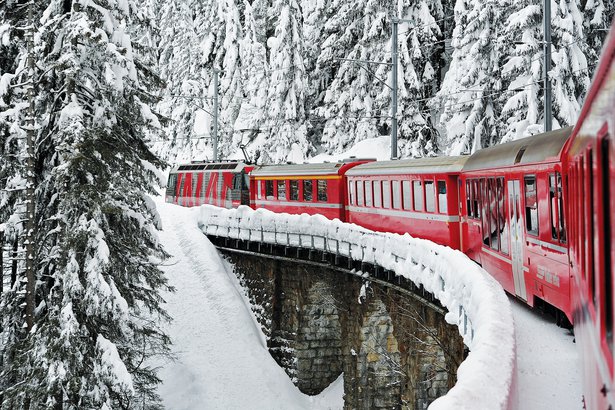
The snow-covered mountains and punctual trains of Montreux, Switzerland, summon childhood train sets, and the daydreams that accompanied them. (Harold Cunningham/Getty)

The snow-covered mountains and punctual trains of Montreux, Switzerland, summon childhood train sets, and the daydreams that accompanied them. (Harold Cunningham/Getty)

If we failed to get you reading him here, shame on us. If you choose to ignore this short piece of his, well, you have only yourself to answer to. He has had a running series of blog posts on the Atlantic‘s website dealing with the frustrations and wonders of language acquisition as an adult, a phenomenon several of us at Raxa Collective can relate to perfectly well.  He captures some of the many benefits of the process and the outcome, especially the collaborative part, in short order here:

When I was about 6 years old, I started collecting model trains with my father. We would assemble the track in the attic, put a foam mountain with a tunnel over the top, and, through the magic of a transformer, watch the trains make their rounds. My dad took me to train shows, and for my birthdays back then, I always got train sets or trestles. I had books on model trains, and books on actual trains. Both kinds showed pictures of big mountains parted by trains, small towns bisected by trains, and trains adorning white Christmas-scapes. Continue reading

Climbers, Sherpas And Everest

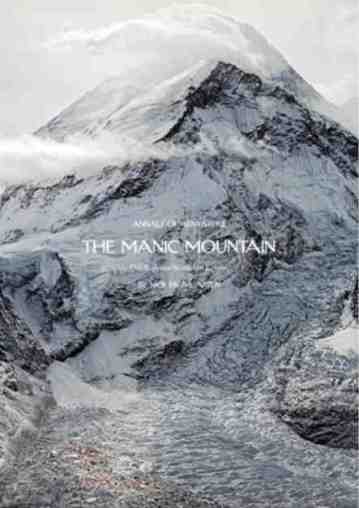
We recently linked to a post at India Ink that gave some backstory to an incident that was mainly of interest to people who follow the “Everest culture”–a group of people enlarged enormously by one book (if you only read the original the updated version with a new afterword is worth the price of a new copy of the book)–and members of the climbing culture. Climbers and non-climbers alike will appreciate Nick Paumgarten’s article in the current issue of the New Yorker about the Swiss climber Ueli Steck:

…who made a name for himself climbing mountains at high speed with no ropes. In a recent climb, on Mt. Everest, Steck and his climbing partners got into a violent confrontation with Nepalese Sherpas…

Continue reading

Creative Collaboration For Laughs And More

Carl Reiner and Brooks teamed up as a comedy duo in 1960, creating such now-legendary skits as "The 2,000-Year-Old Man." "Carl's still my best friend in the world," says Brooks.

Carl Reiner and Brooks teamed up as a comedy duo in 1960, creating such now-legendary skits as “The 2,000-Year-Old Man.” “Carl’s still my best friend in the world,” says Brooks.

You do not have to be a fan of his many genres of creativity to appreciate the fact that this man knows how to thank the people who have helped him be funny and successful.  The most famous of those collaborations is with his best friend of 60+ years, but in this Fresh Air interview he demonstrates the grace of gratitude for this and many other collaborations:

On Hitchcock and ‘High Anxiety’

“I wrote a letter saying, basically, ‘Dear Mr. Hitchcock, I do genre parodies and in my estimation you are a genre. I don’t mean that you’re overweight. I mean that you’ve done every style and type of movie, and that you’re just amazing, and I would like to do a movie dedicated to you based on your style and your work.’ And … he called me and he said, ‘I loved Blazing Saddles. I think you’re a very talented guy, and come to my office.’ Continue reading

If You Happen To Be In Sydney


This slideshow requires JavaScript.

Down under, where there is no aurora borealis, the do-it-yourself creatives have taken matters into their own hands, using vivid colors to attract your attention–and thrown a big party to boot (May 24 – June 10 according to this press release):

…“Vivid Sydney is where technology, commerce and art intersect—delivering real business outcomes. With 37 per cent of Australia’s creative industries located in NSW, supporting creative industries through events like Vivid Sydney is key to the NSW Government’s strategy to grow the NSW economy,” Mr Stoner said. Continue reading

Iceland In The Air

Lopez Williams, courtesy of FSG.

Lopez Williams, FSG

Our daily scanning of magazines, blogs, news websites, etc. for inspiration led us to the conclusion recently that Iceland has captivated a lot of minds.  We do not know why, but it is popping up everywhere.  For example, this portion of a wonderful post on Paris Review‘s website about a recent event at Scandinavia House:

…It’s a young crowd, trendy, expectant, giddy even, though I’m surprised to see so many empty seats. It turns out Scandinavia House closed their RSVP list weeks earlier, almost immediately after announcing the event, grossly botching the numbers and no doubt needlessly turning away scores of would-be attendees. But it’s no matter to those of us here—in fact it makes the evening feel all the more intimate. Continue reading

Save Soil, Perhaps Even Improve It By Drinking Organic Coffee

SaveOurSoil_LOGOThe news we pointed to about coffee-making best practices was mainly about the last step of a long chain–when the coffee is just about to give its olfactory, gustatory and other pleasures upon consumption.  It linked to an earlier post about the artisanal agriculture link in the coffee-making value chain, but here we add one more link on that topic. It has strong recommendations about what else we as consumers might do to assist in coffee-making best practices. It brings to mind topics we have covered in non-coffee posts, such as altruism, which we have considered more than once; and collective action, likewise more than a passing interest.

When we have the opportunity to support a good cause, at minimum we can give it attention here by linking to it, and with great pleasure we do so for our friends at Counter Culture Coffee:

Our soils are in crisis. Conventional, chemical-based farming is destroying soil health, leaving farms with increasingly barren earth. Extraordinary coffee – that which we are dedicated to – needs rich, thriving soil, since healthy soil leads to healthy coffee trees, prosperous farms, and delicious coffee. Continue reading

Krulwich On Insect Communities Understood Through Mathematics

Another of those wonders, this time about bees, brought to you by the godfather of fun science reporters:

Solved! A bee-buzzing, honey-licking 2,000-year-old mystery that begins here, with this beehive. Look at the honeycomb in the photo and ask yourself: (I know you’ve been wondering this all your life, but have been too shy to ask out loud … ) Why is every cell in this honeycomb a hexagon? Continue reading

Siberian Tigers Return, Humans Shrug In Ambivalence

Decades of poaching and logging in China and elsewhere have ravaged the Siberian tiger population, with only about 500 left in the wild worldwide. Photograph: Tim Davis/Corbis

Decades of poaching and logging in China and elsewhere have ravaged the Siberian tiger population, with only about 500 left in the wild worldwide. Photograph: Tim Davis/Corbis

In our day to day work, how humans and wild animals interact is often a matter of personal fulfillment, though at times we tend to the challenging aspects as well.  The Guardian‘s coverage of the fate of charismatic mega-felines falls into this latter category with a mixed message of one wild animal’s population rebound and what can only be described as practical human reaction:

…Decades of poaching and logging have ravaged the population of the big cat, also known as Amur tigers– only about 500 still live in the wild worldwide. In 2010, Chinese authorities launched an initiative to boost numbers in the Hunchun National Siberian Tiger Nature Reserve near the country’s border with Russia and North Korea. Continue reading

Best Practices, Coffee Edition

Coffee

Click the image to the left to go to the video, if you are the coffee-loving type.  The follow up to this earlier story is here:

It’s not hard to brew a great cup of coffee—at least, it shouldn’t be. There are only two ingredients: coffee and water. And there are only two firm rules: these ingredients must be combined and then, sometime later, separated. (In fact, this second rule is somewhat less firm: when professionals are evaluating coffee, they typically let the grounds settle at the bottom of the cup, and use a rounded spoon to scoop small mouthfuls from near the surface.) Continue reading

Dispatch From Everest

This slideshow requires JavaScript.

India Ink has a story about a group of young Indians collaborating in the upper reaches of the region’s mountains, at a time when many are celebrating the six decades-old historic accomplishment in the same region:

KHUMBU GLACIER —It was nearly 60 years ago this month that Tenzing Norgay, the Sherpa guide, and Sir Edmund Hillary from New Zealand scaled the highest peak in the world, Mount Everest. Continue reading

Barefoot College

This slideshow requires JavaScript.

This organization and its founder came to our attention recently in a by-now familiar manner: our go-to podcast for interesting and inspiring stories of entrepreneurs, From Scratch, featuring Bunker Roy. Read about Barefoot College here and then click through their site to see more about their accomplishments:

In the late 60’s, a very small group of determined individuals in India, coming out of a sound educational system, felt it necessary to look for alternative ways of living, thinking and looking for rural solutions. Continue reading

Idukki Dam – Asia’s First Arch Dam

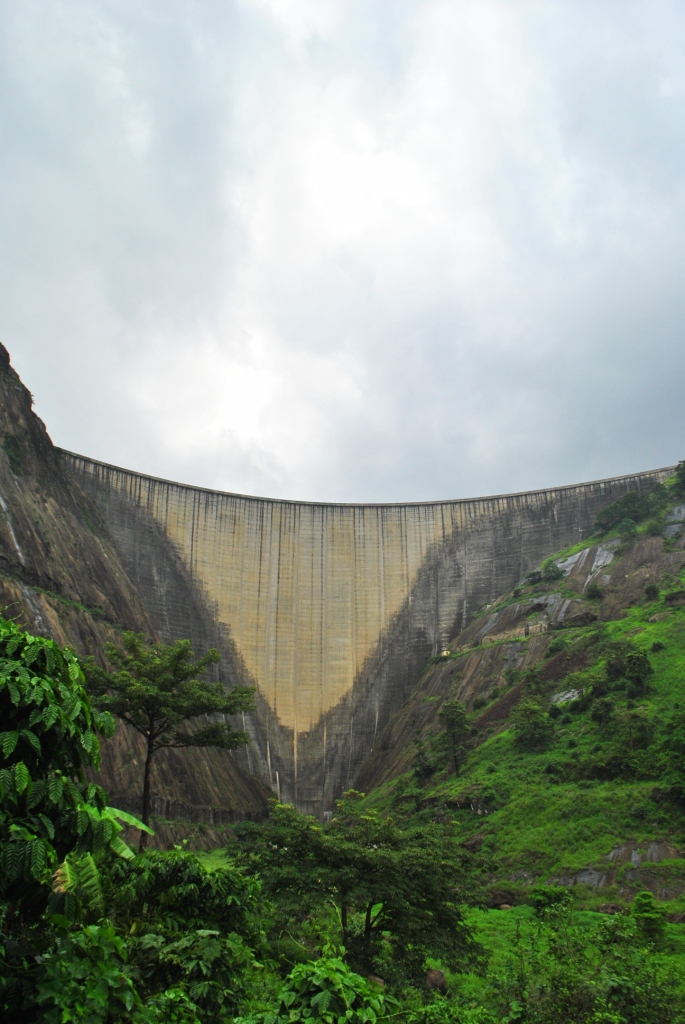
The Idukki Dam is the first arch dam built in India, as well as the country’s third tallest. Located in the Idukki district of Kerala, this 554 ft tall and 650 ft wide dam stands between the two mountains named Kuravanmala and Kuratimala, meaning Kuravan– A tribal, Kurati– His wife and Mala-mountain. It is nearly 50 km away from Thekkady.

Smithsonian In Deep Water

This slideshow requires JavaScript.

New (to us) thanks to the Smithsonian and its supporters:

The Ocean Portal is part of the Smithsonian Institution’s Ocean Initiative. Together with the National Museum of Natural History’s Sant Ocean Hall and the Sant Marine Science Chair, the Ocean Portal supports the Smithsonian’s mission to increase the public’s understanding and stewardship of the Ocean. Continue reading

7 Ways To Understand Man’s Impact On The Earth In Recent Decades

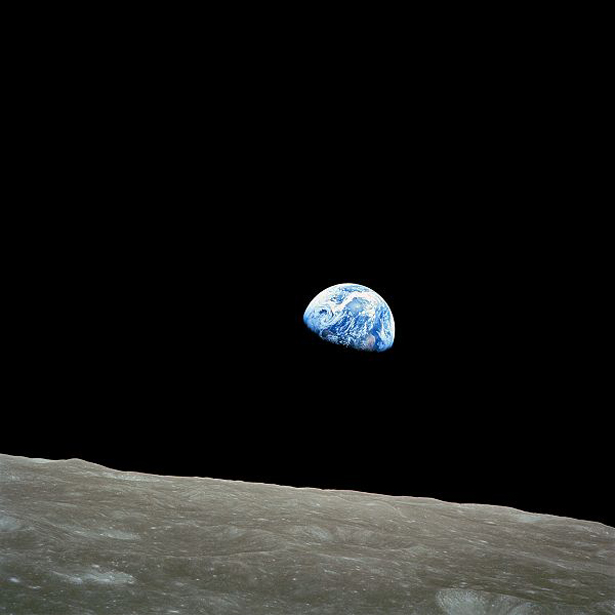
The news headlines started carrying this story more than a week ago, but it was not until now that we had the chance to understand it.  Thanks to the Atlantic‘s coverage:

The project was built in conjunction with the U.S. Geological Survey, NASA, and TIME. The images come from the USGS-NASA’s satellite program LANDSAT, which were often stored on tapes like those in the thumbnail to the right. Google started sorting through a collection of 2,068,467 images back in 2009 — 909 terabytes of data, according to Google — finding the highest quality pixels (which is to say, shots not obscured by clouds), “for every years since 1984 and for every spot on Earth.” Continue reading

Captain Robert Scott’s South Pole Expedition, Exposed Again

This slideshow requires JavaScript.

People with an interest in exploration, expeditions, adventure have a higher likelihood of knowing who Captain Scott was.  Only an expedition photography geek, a historian, or otherwise quirky know-it-all is likely be familiar with the name Ponting. Thankfully, such people exist and they have brought Ponting back from the archival grave. Outside magazine’s website has this collection on display. The captions follow in order of the slideshow above:

1. A program for Herbert Ponting’s lectures on Captain Scott. Ponting’s lectures, which accompanied his silent films at the Philharmonic Hall in London, were a huge success, with over 100,000 people going in to hear him, including leading politicians and celebrities of the day. His films were a significant milestone in the history of the cinema. Continue reading

Natural Substitute For Some Plastics

In the first couple of years of posts, Milo was our primary resource for information related to the subject covered in this article in the current edition of the New Yorker. Others contributed information too, but Milo’s interest and seemingly encyclopedic knowledge translated into action; he started a culinary grade oyster mushroom cultivation project at Cardamom County; outlined a myco-remediation solution to a perplexing water drainage problem; and took at least hundreds, probably thousands of photographs cataloguing edible, medicinal and neither-edible-nor-medicinal mushrooms and fungi in the Periyar Tiger Reserve.  He did the latter often in the company of the knowledgeable guides from the local indigenous community, sometimes learning from them and other times vice versa.

Now that Milo is in another part of the world, this article reminds those of us in India of his myco-opportunism, and that we must do our own foraging for innovations in this realm:

Gavin McIntyre, the co-inventor of a process that grows all-natural substitutes for plastic from the tissue of mushrooms, holds a pen or pencil in an unusual way. Continue reading

A Particularly Indian Sense Of Community

Anupam Nath/Associated Press. An Internet cafe in Guwahati, Assam.

Anupam Nath/Associated Press. An Internet cafe in Guwahati, Assam.

An article in India Ink today explores the odd (from the perspective of non-Indians, at least) phenomenon of elites downgrading their socio-economic status in the interest, apparently, of a stronger sense of community belonging:

If you are an Indian reading this, you are very likely among the top 10 percent in the country, since you have Internet access. Continue reading

Biophilia in Action

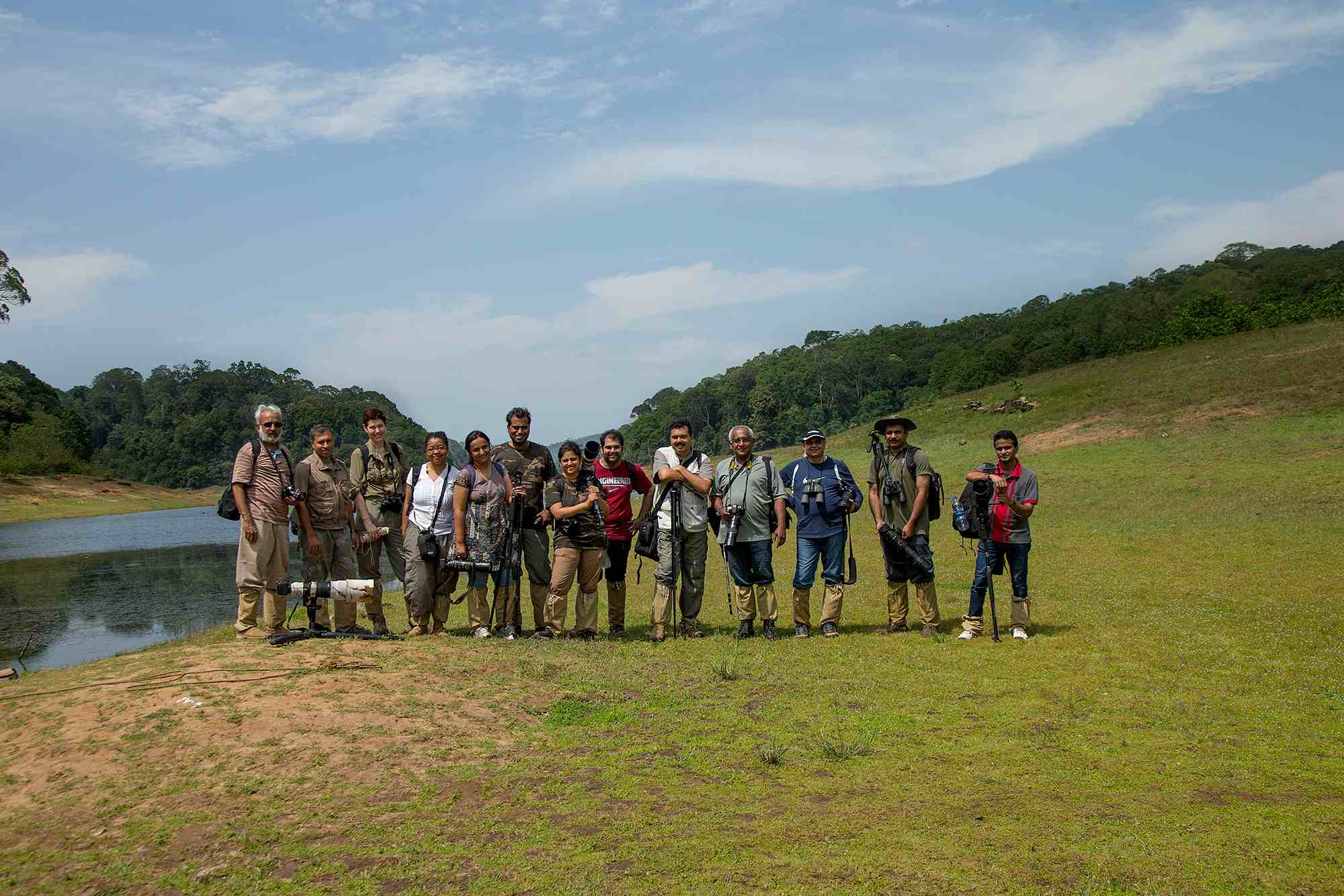
Master Wildlife Photography class in Periyar Tiger Reserve

Master Wildlife Photography class in Periyar Tiger Reserve

We’ve referred to the concept of Biophilia on these pages beforedefined by the Oxford English Dictionary as “A love of or empathy with the natural world, esp. when seen as a human instinct”—in other words, it’s an innate human desire to seek out nature.

This concept was played out last weekend when a group of photographers gathered at Cardamom County at the edge of the Periyar Tiger Reserve to attend a Master Class with Sudhir Shivaram, a renowned wildlife photographer in India. The fact that the majority of the participants have “day jobs” in the worlds of IT, engineering and medicine make the word Biophilia all the more relevant. Continue reading