Lost Civilization, Collaborative Discovery

Seekers of past Honduran, Mexican civilizations to speak Wednesday at Meeting of Americas
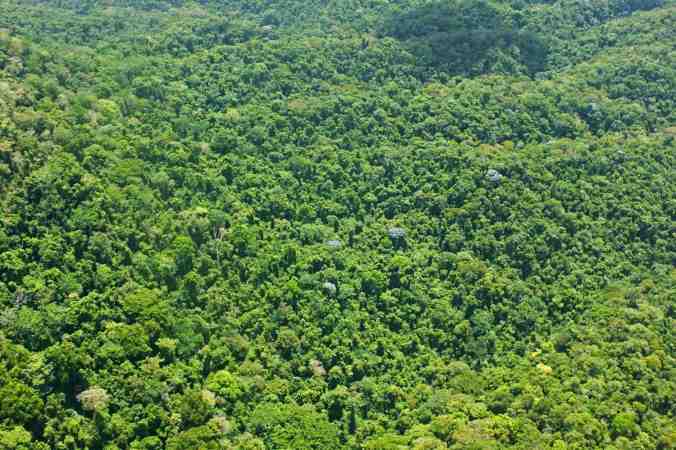
We should not be surprised at the headline above or that the article we linked to here was a precursor to the pre-conference press release issued this week by the AGU:

A high-tech archeological exploration team of scientists and a filmmaker, who announced a year ago that they had glimpsed remnants of what might be a fabled ancient city in the Honduran rain forests, plans to speak about the team’s discoveries here tomorrow (15 May) at the 2013 Meeting of the Americas, and to show previously undisclosed images of apparent archeological sites. Continue reading
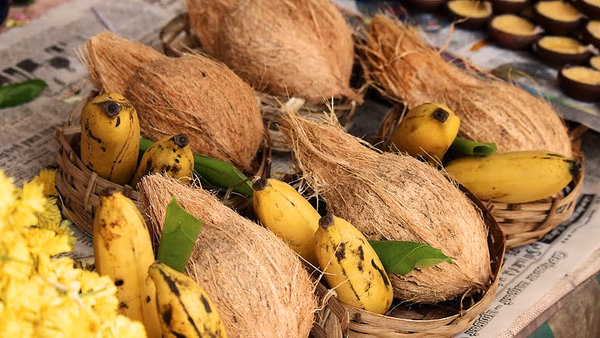
Renowned Chef Joan Nathan Cooks In The Shadow Of The Periyar Tiger Reserve


When we last saw New York Times contributor Joan Nathan she had written a lovely article about the fading tradition of a cuisine in India–exactly the type of story we love to share on this blog, but somehow we failed to.  This time, failure is not an option. We missed her at Cardamom County, but found her now in the New York Times.  She was in our neighborhood, walking our walk and talking our talk:

Kumily, India — One of the best parts of traveling, at least for me, is bringing back a food story, a new ingredient or a recipe. My family journeyed last year from the verdant tea plantations of Munnar down to the Cardamom Hills of Kerala, in southwestern India. Our driver, Janaki Raman, who had proved himself by dodging many a cow on the winding mountain roads, asked whether we might like to go to a local cooking class. Continue reading

Out On A Limb

Dr. “Canopy Meg” Lowman, uses the canopy walkway to study leaf growth and defoliation in the forest canopy

Dr. “Canopy Meg” Lowman, uses the canopy walkway to study leaf growth and defoliation in the forest canopy

Nicknamed the “Real-Life Lorax” by National Geographic and “Einstein of the Treetops” by the Wall Street Journal, Meg Lowman pioneered the science of canopy ecology. She is currently the Director of the Nature Research Center at the North Carolina Museum of Natural Science, and research professor at NCSU. For over 30 years, “Canopymeg” has solved mysteries of insect pests and ecosystem health in the highest layer of the world’s forests, designing the tools of the trade- hot-air balloons and walkways for treetop exploration- as she went. Her personal mantra is “no child left indoors.” Continue reading

Indonesia’s Tipping Point

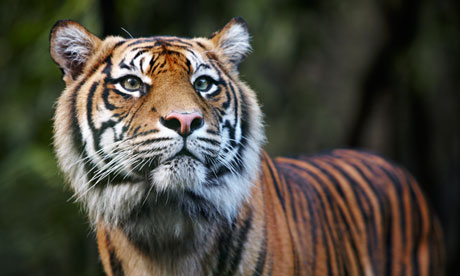
A Sumatran tiger, one of thousands of species threatened by palm oil plantations and paper and timber businesses. Photograph: Allan Baxter/Getty Images

Photograph: Allan Baxter/Getty Images. A Sumatran tiger, one of thousands of species threatened by palm oil plantations and paper and timber businesses.

A recent headline in the Guardian‘s Environment section was titled:

Indonesia’s tropical forests set to benefit from further clearing ban

Susilo Bambang Yudhoyono expected to sign extended deal to help restore habitat of tigers and orangutans

This was bound to get our attention, especially after a series of articles in recent months showing that this could go in either direction, not only for Indonesia but any number of countries in the region.  Indonesia is a developing country whose fulcrum might allow market forces to push (or pull?) it to ecological dystopia, or toward some more sane ecological outcome.

Continue reading

Crowdsourcing A Design Solution

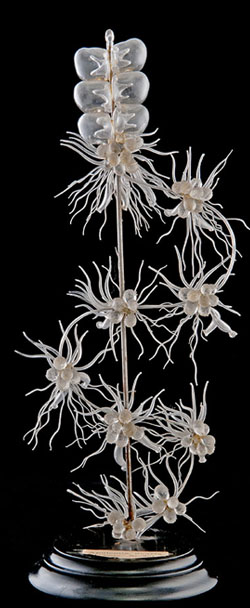
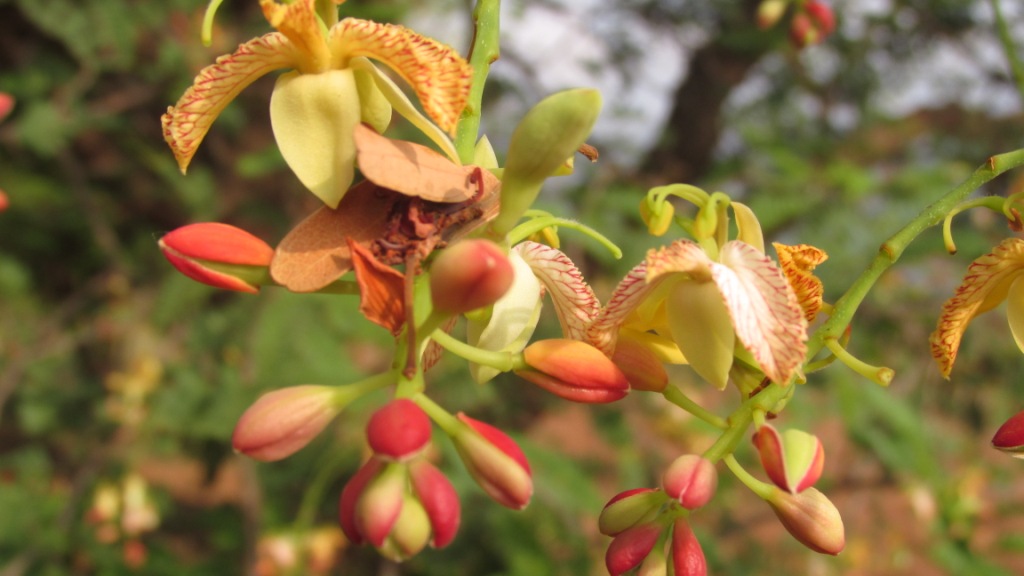
After our renovation of the reception area at Cardamom County last year, we decided to leave the largest wall–a spectacular, privileged space for art–completely white until we found exactly the right piece.  Given the property’s location in the hills where the best cardamom in the world grows, we formed a vision for a piece of art that would abstract cardamom in some beautiful way.  We spoke to the director of the government’s cardamom research laboratory, thinking they might have some molecular images of cardamom (more on which after the jump) but they did not.  And so we dropped that idea, but we are still looking.  And that is how we happened upon the image above, and the description of this and others by the same artist on a Japanese design website:

Using his background in computer graphics and illustration, media artist Makoto Murayama creates technical, scientific blueprints of flowers that look like they belong in a manual for semiconductors. In fact, his work has just been selected as part of thesolaé art gallery project, an initiative to bring art into the offices of Tokyo Electron, one of Japan’s largest semiconductor companies. Continue reading

World Building Through Media

Every day for the past three years or so we have posted a few personal accounts, links to news stories, sometimes told through video, etc. all in the interest of highlighting collaborative, community-based contributions to conservation.  We reach far and wide for inspiration, and some daily features are there not as a direct statement about conservation but about the world we see around us. So when we see a story about world building though media, and a name like 5D Institute, it catches our attention. According to their website, the future of narrative media is a form of world building, and an important contribution to it can be found here:

5D Institute is a cutting edge USC non-profit Organized Research Unit dedicated to the dissemination, education, and appreciation of the future of narrative media through World Building. World Building is the interdisciplinary process of building worlds that evolve into containers for the new narrative resolutions. World Building is the intersection of creativity and technology for students in academia and industry who need to understand now how to thrive in the media jungle of the future. World Building works beyond the edges of known media to express the full arc of our creative role in making new narrative worlds. Continue reading

Entomological Wonders

The New Yorker’s website has a post by Michael Lemonick describing a natural wonder than most people would not likely rate as highly as, say, an aurora borealis. But if you happen to be in the USA during the coming months, prepare for a natural shock and awe:

…The chirp of a single Magicicada septendecim, a type of cicada, is hardly noticeable. The simultaneous chirping of a million of them—a very rough estimate of how many insects will populate each infested acre—is not quite deafening, but it’s certainly overwhelming. The sound, a shrill, relentless whine, has been likened to the screech of a jet engine. Continue reading

Collaboration At High Altitude

Percy Fernandez for The New York Times. Norbu Sherpa on the Khumbu Glacier near the Everest base camp in Nepal.

Percy Fernandez for The New York Times. Norbu Sherpa on the Khumbu Glacier near the Everest base camp in Nepal.

Mountain-climbing is often perceived as a solo, even lone wolf style pursuit of adventure.  The higher the climb, the more collaboration is required for success. Over at India Ink, Malavika Vyawahare shares her conversation with one of Mt Everest’s great guides:

NEW DELHI—Norbu Sherpa, 32, has been working as a climbing guide in the high mountains of Nepal, over 6,000 meters (19,685 feet) for more than a decade. He has been a member of seven expeditions to Everest, the highest peak in the world, at 8,848 meters (29,029 feet), and reached the summit five times. Norbu, who was educated in Darjeeling, is currently part of a National Cadet Corps Everest team from India.

Continue reading

Astronaut Coffee Taste Test

Thanks to Megan Garber, one of the Atlantic‘s other intrepid investigative writers for this story of collaboration by members of the food and astronaut communities:

So we finally have an answer to that age-old culinary question: What do professional foodies think about … space coffee?

Two celebrity chefs — David Chang of Momofuku and Traci Des Jardins of Jardiniere — made a trip to the Johnson Space Center in Houston. Their particular mission? To do some testing of the culinary offerings developed in the Space Food Systems Laboratory. Continue reading

Replacing Street Lamps With A Natural Glow

Thanks to the New York Times for the link to this tree-hugger’s get rich quick scheme:

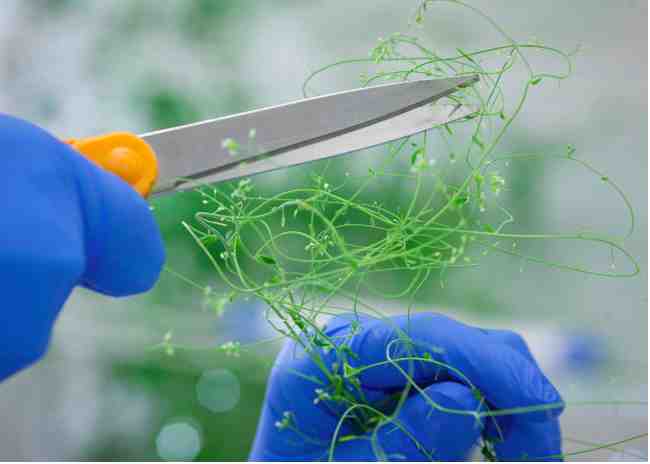
Hoping to give new meaning to the term “natural light,” a small group of biotechnology hobbyists and entrepreneurs has started a project to develop plants that glow, potentially leading the way for trees that can replace electric streetlamps and potted flowers luminous enough to read by. Continue reading

Tribal Ecology Lesson

08-bhramaputra-pic-IndiaInk-blog480

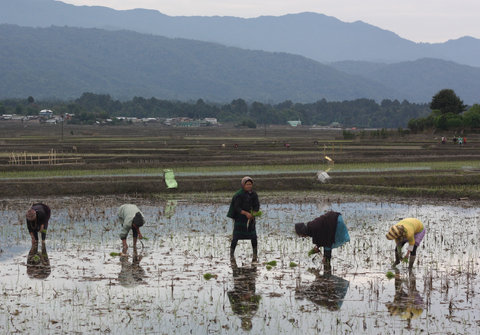
Photo: Brian Orland. Farmers belonging to the Apa Tani tribe transplanting paddy in the Lower Subansiri district of Arunachal Pradesh.


Thanks to India Ink for the reference:

ZIRO VALLEY, Arunachal Pradesh — The end of April is planting time for the women of the Apa Tani tribe. Their 50-square-kilometer valley is a meticulously groomed jewel of green conservation, compared to the flood-beset Assam plains below or the slash-and-burn plots that neighboring tribes cultivate in the shrinking forests of the surrounding hills. Continue reading

Artisanal Glass & Natural History

Intro jelly fishAn article in today’s New York Times by C. Drew Harvell profiles the Blaschkas, glassmakers who were commissioned to create anatomically perfect sculptures of marine creatures for scientific purposes starting in the late 1800s, and current efforts to find living specimens of the same. From the introduction to one of the original collections, at Cornell University:

Before Jacques Cousteau and the aqualung, before Kodachrome and underwater photography – there were the Blaschkas, father and son glassworkers who produced some of the most extraordinary glass objects that have ever been made. Their work has been described as “an artistic marvel in the field of science and a scientific marvel in the field of art.”

Artifacts inevitably reflect the cultural values leading to their creation. In 19th century Europe and America, an explosion of interest in science and education directly affected Leopold and Rudolf Blaschka. Reflecting these interests, new museums were built and opened to the public. They differed from earlier museums not only by admitting the public but also by featuring collections that illustrated science and natural history and often displayed systematic arrangements of plants and animals.

Continue reading

Community-Enhanced Blogging

On occasion we have linked to stories in The Atlantic, one of the oldest continuously published magazines in the world. Most recently we have been paying attention to a science writer there. One writer we have not had occasion to link to is Ta-Nehisi Coates, who writes often about race, social justice, politics and other topics we care deeply about but which are not the focus of this blog.  He writes for the print magazine but he is also among the most prolific bloggers on the magazine’s website.  He has just posted a profound note (pasted in full below, but please click here so he gets full “internet metrics” credit for it) about the importance of community, aka The Horde, in his writing:

Last night The Atlantic won two awards. The first was for best website. The second was for essays and criticism. The essay in question was written by me. In my mind, these awards are linked. Writing for the website has fundamentally changed how I write in print. Continue reading

Kerala’s Classical Music

Photo Credits: Ramesh Kidangoor

Photo Credits: Ramesh Kidangoor

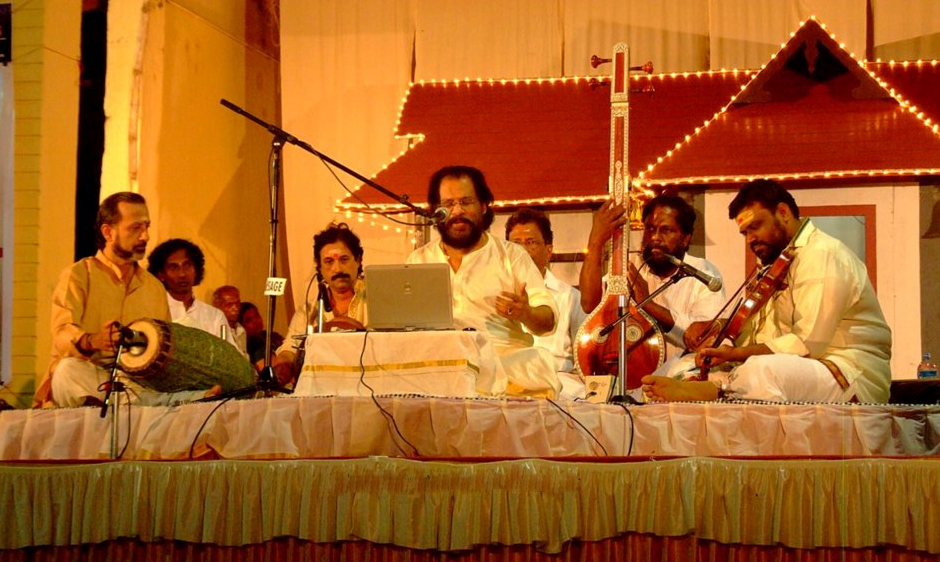
Musical traditions in Kerala consists of both vocal and instrumental forms, the latter gradually overtaking the former in terms of popularity. Sopana sangeetham (classical music) is a typically Keralan style of music. The name comes from the fact that it was recited at the steps of the temple. Some consider sopana saneetham as merely a rustic variation of a local style of singing, sharing some elements with classic Carnatic music. Continue reading

If You Happen To Be In Phoenix

Click the image above to go to the website of these entrepreneurs who seem to be on their way with a new form of aviation.  Just today the plane made its first landing and stayover en route from West to East coast of the USA.  You can visit the plane if you happen to be in Phoenix between today and Tuesday:

The first leg of the 2013 Across America mission was concluded successfully. Bertrand Piccard did a wonderful job throughout the flight, bringing HB-SIA safely from San Francisco to Phoenix, and landing at 00:30 am MST (UTC-7) on Runway 08, Saturday May 4th. Continue reading

Getting It Done, With Attitude

Richard_Saul_Wurman2

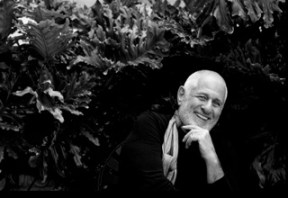
Harvard Magazine writes about a man we have appreciated since hearing him interviewed on a show whose podcasts with some of our heroes we have mentioned in previous posts.  It is easy to perceive Wurman as a world class pain in the neck. Listen to the end of that podcast and you learn that he is self-aware of this. For those who know ourselves to come across as unreasonable, contentious, etc. Wurman is an inspiration worthy of the pantheon:

Described by Fortune magazine as an “intellectual hedonist with a hummingbird mind,” Wurman created and chaired the TED conference from 1984 through 2002, bringing together many of the world’s pathbreaking thinkers to share their ideas and spark discussion.  Continue reading

Madagascar Pochard, Rescued From Expected Extinction

This slideshow requires JavaScript.

We are always more than happy to share news stories where a turn of luck, a bit of effort, and/or the will to survive keep a species in the game.  Here we thank Dr. Lee Durrell, the WCT and the WWT for their news release on the return of a nearly gone group of ducks:

The Madagascar pochard – arguably the world’s rarest bird – has bred successfully in captivity building hope that it can be saved from extinction.

Eighteen precious pochard ducklings are being reared at a specially built centre in Antsohihy, Madagascar, opened last year by Dr Lee Durrell. The birth of the ducklings is a key milestone in the conservation of the species, including an emergency expedition two years ago to take eggs into captivity. It is the ducks from those eggs that have now bred for the first time. Continue reading

Food As Good As Possible

This slideshow requires JavaScript.

Maisie Greenawalt, a graduate of Cornell Hotel School (’93) shares her company’s approach to good food served to corporate clients. For any non-vegetarian, these are important and tough to solve issues.  She puts those issues right out there and if she does not hide from them, neither should we.  Click here to view on the Cornell website or here to view her TEDx presentation on an external site.  According to the Cornell presentation of this talk she is

vice president of strategy for Bon Appetit Management Company, which provides from-scratch food service to corporations, universities, and museums in 32 states. She’s been instrumental in shaping the company’s many pioneering commitments to social and environmental responsibility. Continue reading

Underdogs, Against All Odds, Stage Successful Comeback

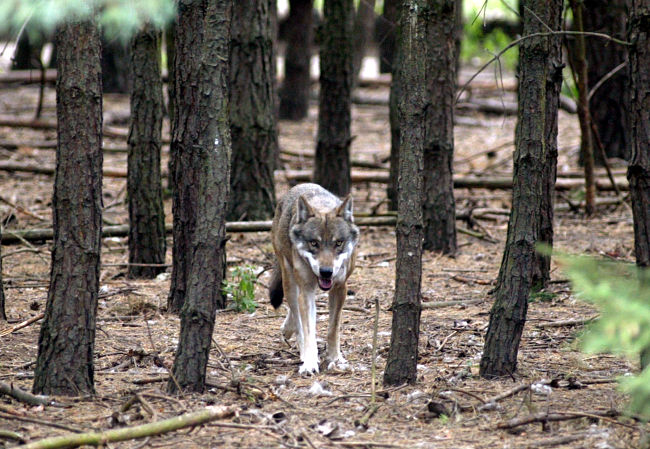
Thanks to the Atlantic Monthly‘s website for this story (click the image above to go to the source) about the resurgence of one of nature’s most historically feared beasts. Although the return of these animals has made relations between conservationists and farmers more difficult in Germany as elsewhere, the net gain for our natural world speaks for itself:

…Wolves have been absent from Germany for nearly a century, hunted out of existence by the end of the 1800s.

But over the past 10 years, they’ve made a comeback as packs from Poland and Russia have migrated into the sparsely populated eastern German state of Brandenburg. Today, some 160 wolves in 17 packs rove south and east of the capital Berlin, occasionally wandering into the city. Continue reading