Engaged In The Temple Of Abstraction

Searching for the truly authentic image: Gerhard Richter’s paintings invite a deep engagement. Abstraktes Bild 809-4. Photo by Peter Macdiarmid/Getty Images

We are finding more reasons to pay attention to this publication each time we dig deeper into it. This artist, his art form, this writer, and the intersection of these ideas are all worth the 30-40 minutes this article grips your attention for:

I was in my teens when I first started to really look at paintings. Although I didn’t just look, I bathed in them, and I was perpetually teased by my friends for the tremendous length of time it took me to navigate an art gallery. This pleasure of looking and of being completely absorbed in painting has remained constant; whether ancient or modern, figurative or abstract, and whatever the style, I am prepared to give every work the chance to lure me in.

What is so compelling? When art was an adjunct of religion, its power was clear. But from the Renaissance on, painting, at least in the Western tradition, has preoccupied itself as intensely with secular as with overtly religious subject matter, or else with no subject at all. Continue reading

Recommissioning, Stronger Attention To Our Oceans

This slideshow requires JavaScript.

Folks we respect and admire, not retiring nor shrinking from the challenges, but rethinking what’s next, state their case here on opening day:

‘Outstanding opportunity for change’ – Global Ocean Commission launches

The Global Ocean Commission, an independent body of international leaders, launches today (12th February) with the aim of reversing degradation of the ocean and restoring it to full health and productivity.

Chaired by former Costa Rican President José María Figueres, South African cabinet minister Trevor Manuel and former UK Foreign Secretary David Miliband MP, the Commission brings together senior political figures including former Heads of State, Foreign Ministers and Finance Ministers from around the world, alongside business leaders and development specialists. Continue reading

Changing Business Models

hikers on a mountain

Patagonia’s connection to the wilderness has a big impact on the company’s approach to environmental issues, says Vincent Stanley, vice-president of marketing at Patagonia. Photograph: Daniel Garcia/AFP/Getty Images

From the Guardian‘s Sustainable Business blog:

Patagonia plans global campaign for responsible capitalism

The outdoor clothing and equipment company says we need to develop very different measures of success if we are to prevent environmental collapse

In the true spirit of adventure, mountaineering and surfing company Patagonia reaches one summit and immediately searches for an even tougher peak to climb.

Fresh from taking a pot shot at our consumerist society with its challenging “don’t buy this jacket” advertising campaign, Patagonia now has the whole capitalist system in its crosshairs. Continue reading

Bicycle Information & Chitchat, UK Edition

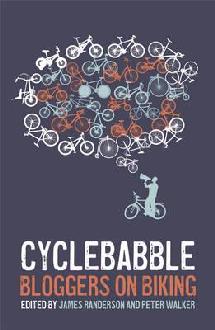
We are not in the business of selling books nor promoting purchases at any particular outlet, but we do have a thing for bicycles.  More would be good.  Better regulations would be too.  Safety rules that everyone follows, check.  A book that covers these and other topics? Yes.  Will zany be more effective than serious-wonky?  Judge for yourself. Only certain island nations can pull off this sort of thing:

‘Cycling is the King of A to B. Whatever our differences, we love one another: Lycra mankini or tweed trousers tucked into your sock? Traffic lights – a suggestion or an order? Racer or hybrid, helmet or commando, freewheel or fixie? Nothing sours the bond.’ Zoe Williams Continue reading

Taking The Geek Out Of Greek

We have already sung Stephen Greenblatt‘s praises several times, but why stop there? He has done something remarkable, making classicism classy:

Glories of Classicism

FEBRUARY 21, 2013

Stephen Greenblatt and Joseph Leo Koerner

The Classical Tradition

edited by Anthony Grafton, Glenn W. Most, and Salvatore Settis Belknap Press/ Harvard University Press, 1,067 pp., $49.95

Over a thousand pages in length, with some five hundred articles surveying the survival, transmission, and reception of the cultures of Greek and Roman antiquity, The Classical Tradition is a low-cost Wunderkammer, a vast cabinet of curiosities. Take the entry on the asterisk: you learn that this ubiquitous critical sign, named from the Greek for “small star,” originated in Ptolemaic Alexandria, where the great textual scholar Aristophanes of Byzantium and his student Aristarchus of Samothrace used them to mark repeated lines in the Iliad and Odyssey.

Continue reading

If You Happen To Be In Brooklyn

This slideshow requires JavaScript.

In anticipation of Raxa Collective’s collaboration with colleagues in Ghana starting this month (more on which soon), we are particularly susceptible to any mention of Ghana in the news and El Anatsui has been on our radar recently.  There is plenty to make us optimistic about Ghana’s future, not least its contributions to fine arts.  This show just opening at Brooklyn Museum looks worthy of a visit:

The first solo exhibition in a New York museum by the globally renowned contemporary artist El Anatsui, this show will feature over 30 works in metal and wood that transform appropriated objects into site-specific sculptures. Anatsui converts found materials into a new type of media that lies between sculpture and painting, combining aesthetic traditions from his birth country, Ghana; his home in Nsukka, Nigeria; and the global history of abstraction. Continue reading

Thought For Food

Since the launch of this site in 2011 we have made a commitment to point out as many news stories, analyses and other documentation as possible with positive, proactive examples of how we can best deal with issues that matter to us.  However, some of the less pleasant information we find is essential reading or viewing. Case in point here with the BBC segment in a series from last year about food. Disturbing. Important. Worth an hour of our time:

In the past year, we have seen food riots on three continents, food inflation has rocketed and experts predict that by 2050, if things don’t change, we will see mass starvation across the world. Continue reading

Coffee Rust

John Vandermeer.  A mild infection of coffee rust on a tree in Mexico.

John Vandermeer. A mild infection of coffee rust on a tree in Mexico.

Several contributors to this blog live(d) and work(ed) in Central America and know exactly what you mean. Those of us based in south India–where there is high quality arabica growing in the Coorg-Chikmagalur corridor–are hopeful that this “rust” is contained quickly.  So, Dear John, please succeed:

Until this year, John Vandermeer, an ecologist and coffee researcher at the University of Michigan in Ann Arbor, had never lost a tree to fungus. Continue reading

Collaboratively Clean City

Jose Beceiro, the Director of Clean Energy Initiatives eat the Chamber of Commerce in Austin, Texas notes the role of collaboration in his city’s remarkable economic development:

As one of the first smart-grid-powered communities, a revolutionary technology incubator, and the host of a conference promoting clean energy investment; Austin, TX has proven itself a leader in the clean technology sector, and the region is poised to continue making significant strides in building a strong clean  Continue reading

Mammals, Emotions And Human Intelligence

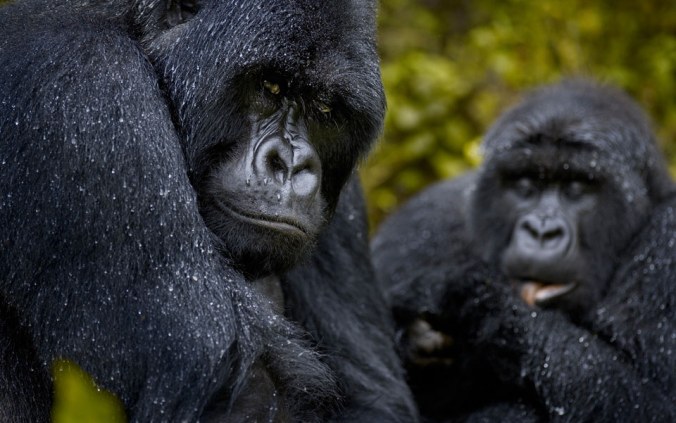
Close cousins: a gorilla family in Rwanda. Photo by Charles L Harris/Gallery Stock

Close cousins: a gorilla family in Rwanda. Photo by Charles L Harris/Gallery Stock

Another great item in a publication we recently started following:

‘If he grabs you, just go limp and let him throw you around. If you tense up, he’ll take it as a dominance challenge.’

‘Um. Okay.’ Continue reading

If Green Is The New Black, Perhaps Polar Bear Is The New Panda

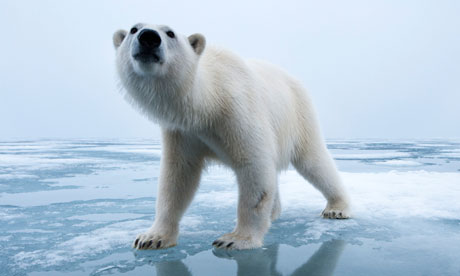
Some polar bears may have to be placed in temporary holding compounds until it is cold enough for them to go back on to the sea ice, say scientists. Photograph: Paul Souders/Corbis

Some polar bears may have to be placed in temporary holding compounds until it is cold enough for them to go back on to the sea ice, say scientists. Photograph: Paul Souders/Corbis

This story in the Guardian‘s Environment section, one of the longest stories that section has ever run, is worth the time to read.  It raises a kind of semi-doomsday scenario, and in the process heightens sensitivity to this particular magnificent charismatic megafauna.  Decades back, WWF leveraged the Panda into a strong iconic hot-button for the need of donations to conservation NGOs.  This article got us thinking whether the polar bear is now the hot button icon for increasing the sense of urgency needed to do something about climate change:

The day may soon come when some of the 19 polar bear populations in Canada, Alaska, Greenland, Norway, and Russia will have to be fed by humans in order to keep them alive during an extended ice-free season or prevent them from roaming into northern communities. Some bears may have to be placed in temporary holding compounds until it is cold enough for them to go back onto the sea ice. In worst-case scenarios, polar bears from southern regions may have to be relocated to more northerly climes that have sufficient sea ice cover. Continue reading

More On Internal Compasses

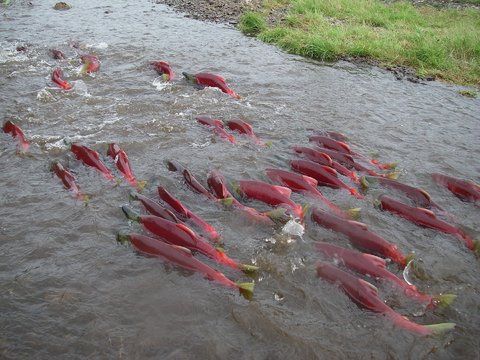
Tom Quinn/University of Washington.  Sockeye salmon migrating from saltwater to fresh water.

Tom Quinn/University of Washington. Sockeye salmon migrating from saltwater to fresh water.

More and more stories addressing the understanding scientists are developing about internal guidance systems:

Every summer, millions of sockeye salmon flood into the Fraser River in British Columbia, clogging its shivering waters with their brilliant blushing bodies.

Scientists and spectators alike have long been awed by the sockeye’s audacious struggle to swim upstream to spawn. And while it has been known for years that a salmon can smell its way up the river to find its natal stream, no one has been able to explain just how these beautiful and economically vital fish find their way back from the open ocean, 4,000 or 5,000 miles away, to the right river mouth. Continue reading

Really, Nevada?

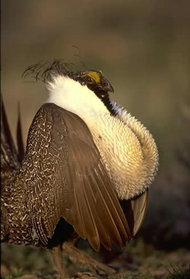
In the spirit of enthusiasm with which we welcomed the news of one politician’s move in an interesting direction, we grouse with equal enthusiasm about the actions of another politician, this one inclined in the opposite direction of entrepreneurial conservation (click the image to go to the story):

The ouster of a Nevada wildlife official has fanned a debate over whether the sage grouse can best be kept off the Endangered Species List by protecting its habitat or by killing more of its predators.

Kenneth Mayer, who had been the director of the Nevada Department of Wildlife and serves on regional and national committees that deal with sage grouse conservation, startled environmentalists and many Nevadans last week by announcing that Gov. Brian Sandoval had demanded his resignation. Continue reading

If You Happen To Be In Chennai (Or These Other South Indian Cities)


header-new-800

Recently the New Yorker posted news that was music to the ears of all banjo-lovers.  Most baby boom-aged Americans know who Steve Martin is, but many did/do not know he is a seriously talented banjoist–he does not just use the instrument as a comedic prop. A smaller subset of Americans know who Edie Brickell is (not just that she is Mrs. Paul Simon), but they remember her music with the New Bohemians with intense affection.  She disappeared for a while, but she is back, and back with Steve Martin of all people:

Of the rushing river of records heading toward us, there are two I’d like to mention, one imminent and one on the horizon: “Love Has Come for You,” by Edie Brickell and Steve Martin, which arrives in April…Brickell and Martin’s record is a banjo-and-singer collaboration, a form without many footprints…

Anyone who loves banjo is almost by definition a lover of collaboration, which is why we pay attention to this particular instrument more than most. This got us thinking: What is Béla Fleck up to these days?  If you do not know who he is, and you at least like the banjo, you should find out by clicking the banner above. And to our delighted surprise, he is playing gigs near us in south India over the next few weeks.  After the jump below, you can see the schedule, and also you will get a sense of what we mean by banjo collaboration. Continue reading

Entrepreneurial Conservation In The Cabinet

idy0zePVhYWU

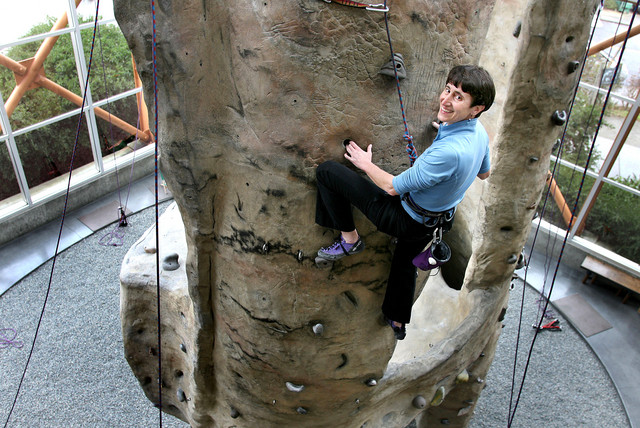
Recreational Equipment, Inc. (REI) CEO Sally Jewell climbs the 65-foot rock climbing pinnacle at REI’s Seattle flagship store. Photographer: Scott Cohen/AP Photo

We stay out of politics, for the most part, but point to interesting events when we notice them. This news qualifies, because it seems the leader of one big country has captured the spirit of entrepreneurial conservation in a rather visible way, choosing a business leader to run the largest conservation component of the federal government. Oddly, she appeals to both environmentalists and industrialists, but that is the point. This choice is outside the box, and seems to tap into some of our favorite “c” words. As the article below notes, this business person has led some important collective action initiatives, building a community to ensure that this political leader gives conservation the attention it deserves. We laud both of them for cooperating in such a creative manner:

President Barack Obama said he has selected Sally Jewell, chief executive officer of Recreational Equipment Inc., to be secretary of the U.S. Interior Department in his second-term Cabinet.

Jewell’s background as an engineer and experience in the banking, energy and retail industries give her the skills needed to run a department that oversees 500 million acres of public land, Obama said as he introduced her at the White House. Continue reading

Plant Physics

Another in the excellent series of Cornell luminaries sharing their work in informal presentations (i.e. “in the stacks”) for lay folk like us.  Click the image to the right to go to the video of this talk:

Over 90 percent of all visible living matter is plant life. Plants clean the air, provide food and fuel, fibers for clothing, and pharmaceuticals. Interweaving themes that emphasize biology and physics, the book explains how plants cannot be fully understood without examining how physical forces and processes influence growth, development, reproduction, evolution, and the environment. Continue reading

Sea Turtles, A Worthy Effort

Photo by Karl Phillips, University of East Anglia. Because sea turtles live far out to sea, little has been understood about their breeding habits until now.

Thanks to our friends in East Anglia, for the extra effort:

Studying any animal in the wild is hard enough, let alone one that spends 30 years at a time out at sea. Because of its ocean-faring lifestyle, scientists know next to nothing about the life style of the critically endangered hawksbill sea turtle, save for the fleeting observations they make when female turtles come to beaches to lay their eggs. Continue reading

Another View On Miraculous Silicon Valley

Click the banner above to read the whole entry at its source:

Diary

Rebecca Solnit

The buses roll up to San Francisco’s bus stops in the morning and evening, but they are unmarked, or nearly so, and not for the public. They have no signs or have discreet acronyms on the front windshield, and because they also have no rear doors they ingest and disgorge their passengers slowly, while the brightly lit funky orange public buses wait behind them. Continue reading

Bird Lovers, Unite Around Cats To Go

We appreciate the Guardian‘s coverage of this issue, and activists like this one:

Last week Gareth Morgan, an economist and conservation campaigner, called for cats to be confined or eradicated from his native New Zealand to protect the wildlife. Meanwhile, in the US, a study published this week in the journal Nature found cats are killing more birds and mammals than previously thought. Writer Tom Cox, who shares his home with four cats, and Morgan discuss whether it’s time we learned to live without our feline friends. Emine Saner listens in.

Continue reading

Tenant’s Manual For Earth

Click the image at left to go to the video of this presentation by the author of his book:

In “Earth: A Tenant’s Manual,” distinguished geologist Frank H. T. Rhodes, President Emeritus of Cornell University, provides a sweeping, accessible, and informed guide to the home we all share, showing us how we might best preserve the Earth’s livability for ourselves and future generations. Continue reading